November 16,2023
Enterprise Name
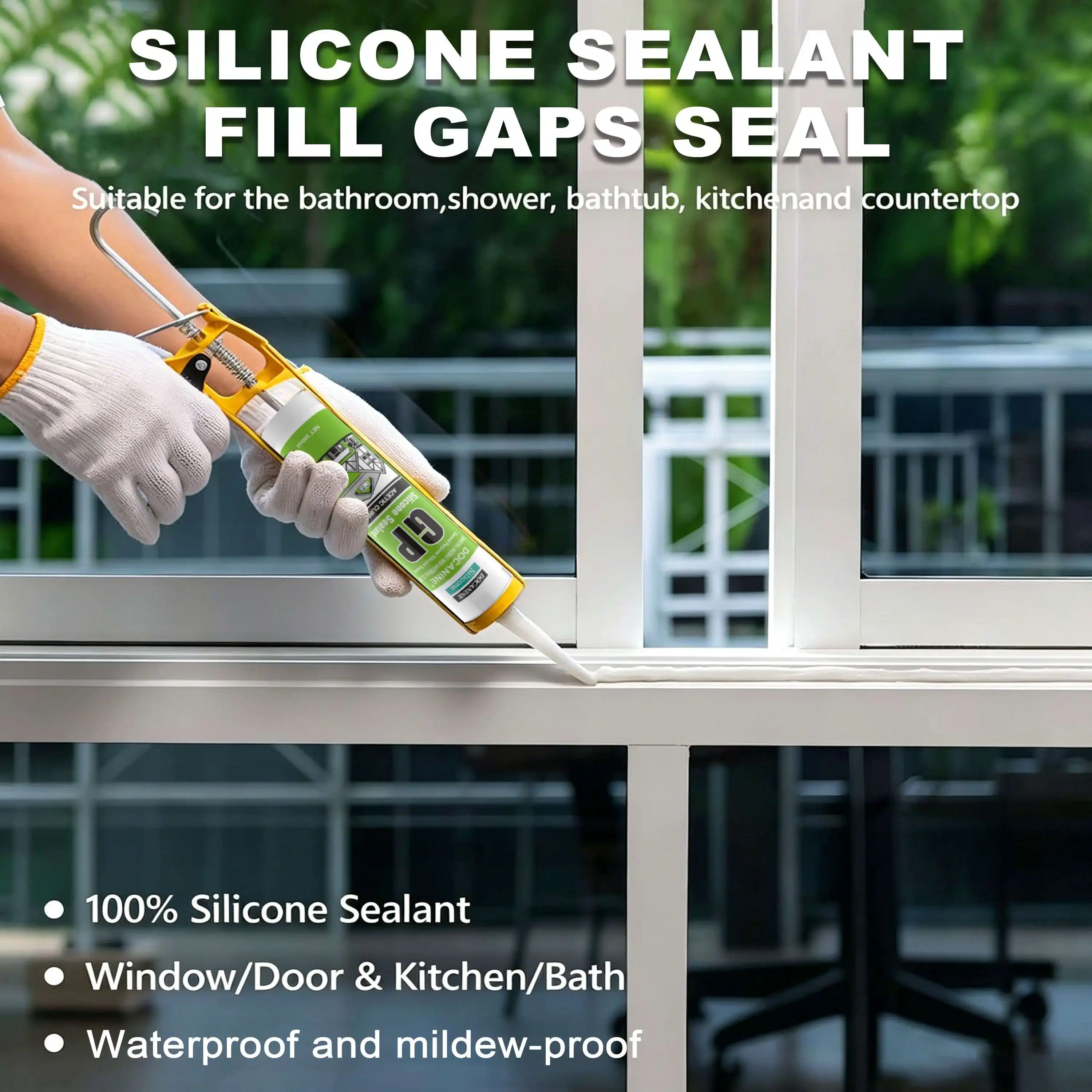
The sealant has very strong adhesion and performs well even on glass and aluminum. After curing, it remains flexible and shows no cracking. Perfect for our facade projects.
Oct 1, 2026
If you source sealing materials for door and window manufacturing, you already know that bond failure is not just a quality complaint — it is a liability. The GP silicone sealant high adhesion formula addresses that problem directly. Engineered as a one-part RTV acetoxy-cure silicone, it delivers a maximum bond strength of 1.5 MPa on glass and aluminum without requiring a primer, achieves tack-free time in 15 minutes, and maintains flexibility across -50°C to +150°C. For importers and OEM manufacturers shipping into demanding markets, this specification profile translates to fewer returns and stronger brand credibility.
Most low-cost GP silicones use heavy hydrocarbon extenders to keep the price down. This lowers the amount of solid silicone polymer and makes the adhesion weaker over time. A high-adhesion acetoxy formula has more organofunctional silane adhesion promoters and a higher ratio of polydimethylsiloxane polymer. The silane groups react chemically with metal oxides and glass surfaces. This is why the peel adhesion test (ASTM C794) on this formula shows cohesion failure instead of adhesive failure: the sealant tears inside before it pulls off the base.
The item comes in 300 ml tubes or 600 ml sausage packs as a mix. At 18, the shore hardness of the cured bead keeps it soft enough to handle building movement. It can stretch more than 300% and move up to 50 percent of its original length. This is very important for metal curtain wall systems because changing temperatures can make the frame expand. It can be used for 12 months from the date it was made. You can choose from white, black, gray, and unique colors to meet OEM branding needs.
The mixture sticks straight to glass, ceramic tile, stone, concrete, anodized and powder-coated aluminum, and vinyl steel profiles. Before applying, you have to wipe the surface with isopropyl alcohol to get rid of any oils, but these materials don't need an extra prep. This one step cuts down on the time it takes to put together doors and windows on a production line. This is important when you have high-volume shifts and any extra prep work adds up over thousands of units per week.
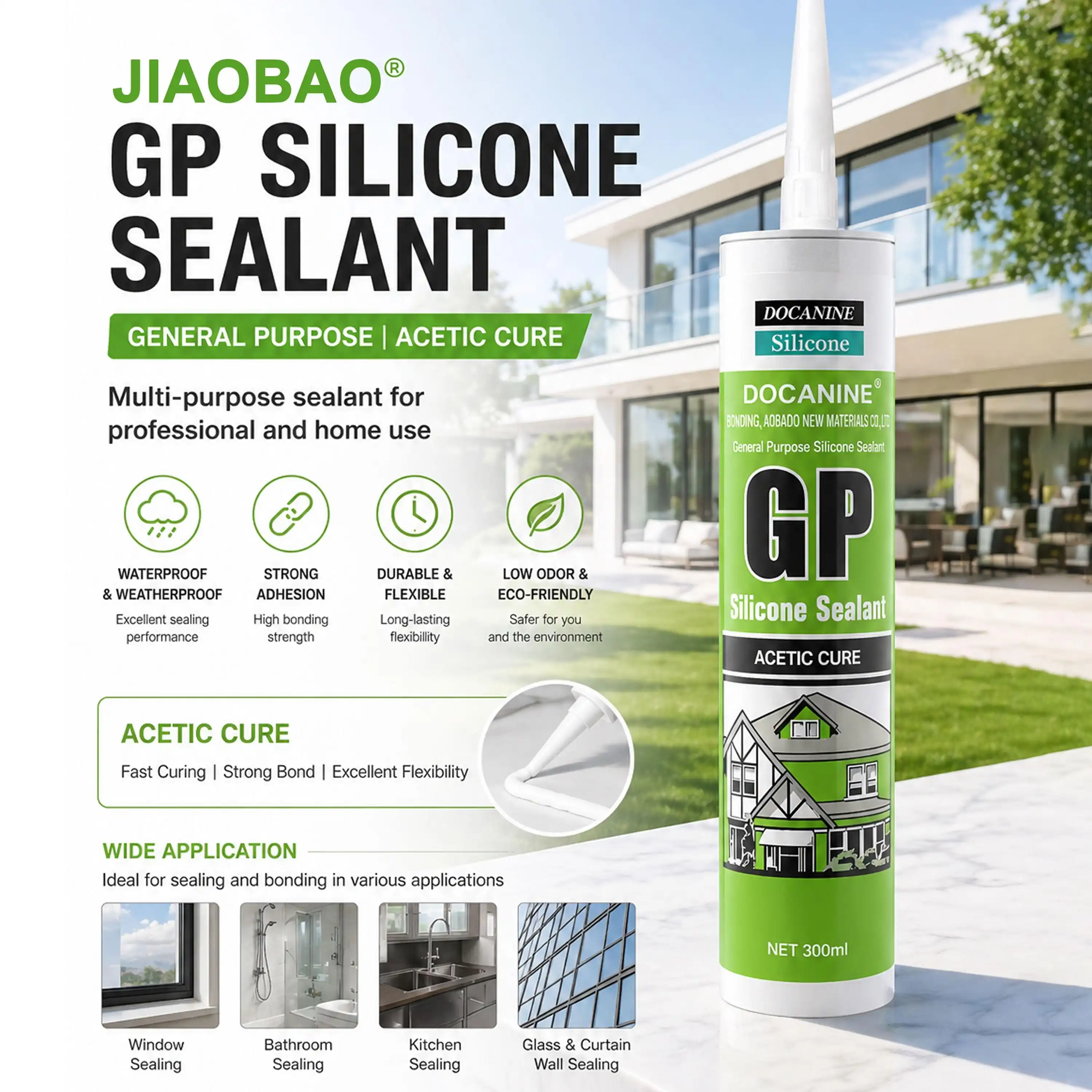
Manufacturers of windows and doors say that most warranty claims in the field are due to adhesive failure on aluminum-to-glass joints. That weakness is taken away by a sealer that passes the dual-substrate peel test on both anodized metal and float glass. It adopts GP silicone sealant high adhesion formula. The acetoxy fix system also forms skin faster (15 minutes), which lowers the risk of contamination on busy production floors compared to neutral silicones that heal more slowly.
Here are some of the main situations where this formula works well:
Because of these strengths, the product is always a good fit for companies that send goods to the Middle East and Africa, where temperatures can vary a lot and quality control rules for foreign building materials have become stricter in recent years.
The cost of work per unit goes down because there is no need for a primer and the fix time is short. High batch consistency, which is shown by ASTM C1183 extrusion rate testing and specific gravity checks, means that workers on the production line feel the same application feel from one carton to the next. One of the most common issues about line efficiency in fenestration manufacturing is viscosity that doesn't stay the same. A stable specific gravity reading (0.88) from one batch to the next means that there isn't much filler variation between runs.
Standard GP silicone may be a cheaper way to waterproof basic things, but it usually fails to stick to smooth, non-porous surfaces like anodized metal after being heated and cooled many times. The high-adhesion version doesn't lose any flexibility, and the silane chemistry stops this failure mode from happening. This difference has a direct effect on the cost of the warranty for exporters whose customers check out installations in the field 12 to 18 months after they were put in.
It is possible to paint over polyurethane seals, but not over silicone ones. GP silicone sealant high adhesion formula performs well in outdoor scenarios. But polyurethane breaks down when it is exposed to UV light for a long time. In high-sunlight areas, it loses its flexibility and cracks on the surface within three to five years.
Because silicone doesn't react with UV light, it lasts longer when used to seal metal windows on the outside in export markets with a high UV index. Polyurethane is only a good choice when the sealed surface needs to be painted over, which doesn't happen with most metal fenestration shapes.
However, modified silicone (MS polymer) hybrids cure more slowly and cost more per unit than acetoxy silicone. They can be painted on and have a less strong smell. When painting is not needed, acetoxy silicone is a better value for money on high-volume production lines where speed and cost per meter of sealed joint are important.
Before you place a large order, make sure you get proof of three quality checks: the peel adhesion test result on both glass and aluminum substrates (look for cohesive failure), the tack-free time test according to ASTM C679 (should be between 10 and 25 minutes), and the specific gravity reading (deviations mean the product is diluted). If a manufacturer gives you these three pieces of information from every production run, you can use them to defend their quality record if a customer makes a warranty claim.
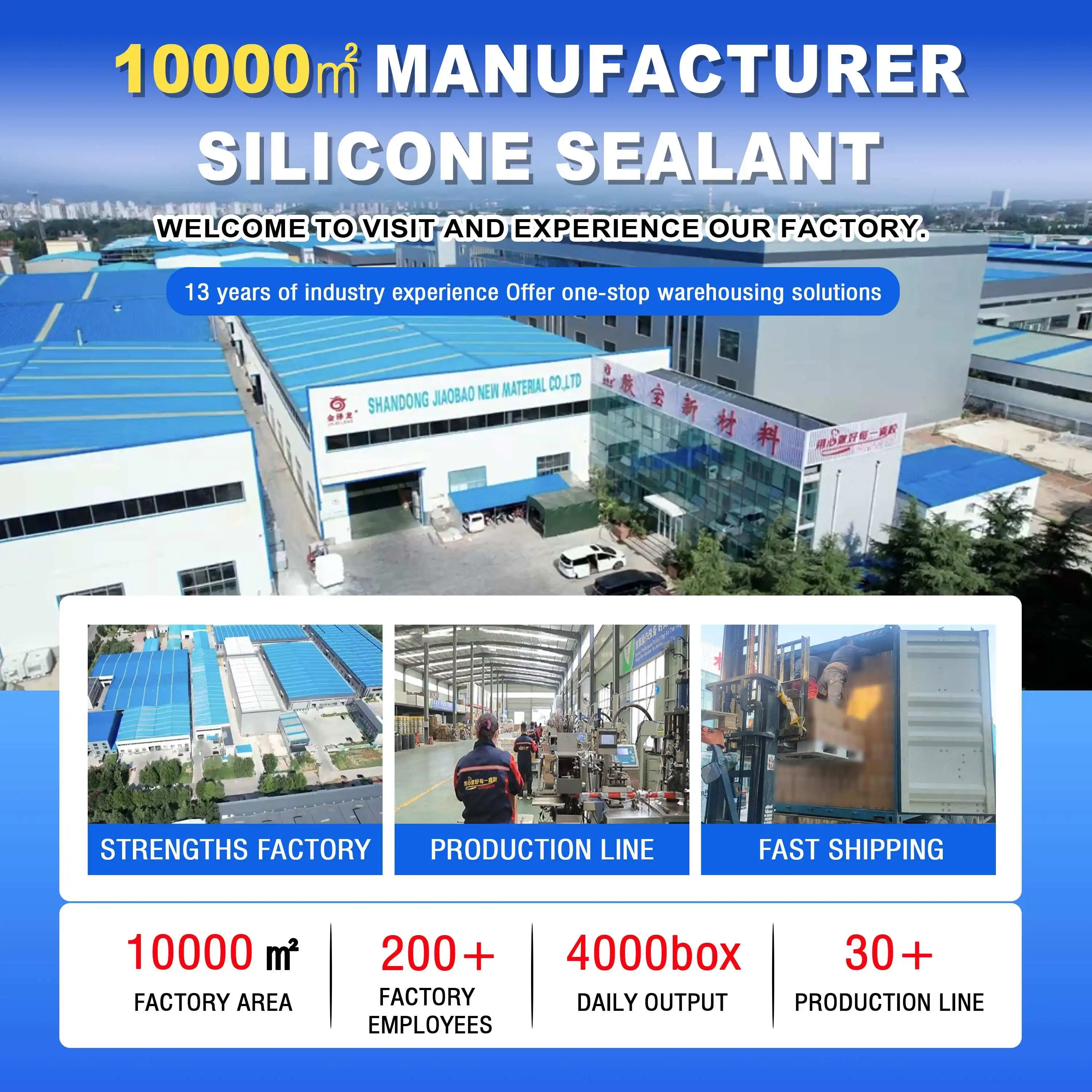
Jiaobao was established in 2013 and has been making silicone products for more than 13 years. They offer both OEM and ODM production. Custom choices include changing the viscosity for different application gun setups, changing the tack-free time to fit the conditions of the production floor, and private-label packing in both cartridge and sausage shapes. The usual time it takes to make something is one to two weeks. Products have ISO and CE approvals, which meet the requirements for import paperwork in markets in the Gulf Cooperation Council and Europe.
You can ship by land or sea, and the main trade routes to the US, the Middle East, and Africa are covered. GP silicone sealant high adhesion formula is available for these shipment options. If there is a problem with the quality during the shelf life, Jiaobao will either repay or replace the item. This promise made after the sale lowers the risk for importers who place yearly framework orders. If there was a problem with a single batch, it could throw off the whole production schedule.
To bond the surfaces, wipe them all down with isopropyl alcohol and let them dry completely before putting on the sealant. Get rid of any dust, grease, or leftover sealant. On metal shapes, make sure that the anodizing or powder coat is still in good shape. A damaged surface treatment makes the silane adhesion process less effective.
The sealant should be used when the temperature is between 5°C and 40°C and the relative humidity is above 40%. To cure, silicone needs moisture in the air. If it's very dry outside, mist the joint lightly with water to start the acetoxy cross-linking reaction. After putting on the bead, you should tool it within five minutes. At 23°C and 50% relative humidity, the full cure depth reaches about 2–3 mm every 24 hours.
Keep refills that haven't been used yet below 27°C and out of direct sunlight. First-in, first-out rule should be used to rotate stock. If a sealant is still sticky after 24 hours in a normal humidity environment, it's probably either old or contaminated with materials that don't work with acetoxy, like oil-based putty or asphalt, which stop the acetoxy fix system from working.
The acetoxy GP silicone sealant high adhesion formula meets a clear need: it bonds reliably on glass and aluminum without primers, it doesn't stick for a long time so that the production floor can run smoothly, and it can withstand harsh weather for years to come for export markets.
Standard ASTM tests can be used to confirm the technical specs, which are a 1.5 MPa bond strength, 300%+ elongation, and ±50% movement capability. When importers and fenestration manufacturers look at sealant suppliers, these numbers give them a clear way to compare different products.
Yes. The silane adhesion promoters in the mix stick to anodized and powder-coated metal surfaces right away. For most metal profiles, all that needs to be done to prepare the surface is a good IPA wipe to get rid of grease.
Not at all. The surface that has been fixed has low surface energy, like all pure silicone goods, so paint won't stick to it. An MS polymer hybrid sealant is the right product to use if you want to paint over the joint anyway.
During cross-linking, the acetoxy cure system gives off acetic acid as a waste product. This is normal and shows that the cure is working. Ventilate the work area while you're applying. Acetic acid can damage copper, brass, and mirror glass, so don't use this acetoxy formula on those things.
You can buy the item in 300 ml cartridges or 600 ml sausage packs. With an OEM agreement and a production wait time of one to two weeks, you can get custom packaging and private label choices.
In 15 minutes, the sealer is tacky-free, and after 24 hours at 23°C and 50% relative humidity, it dries to a depth of about 2–3 mm. In these conditions, it takes about 48 to 72 hours for a standard 6 mm joint to fully cure all the way through.
Silicone sealer has been sold by Jiaobao to makers and importers in Asia, the Middle East, and Africa since 2013. As a direct manufacturer of GP silicone sealant high adhesion formula, we offer ISO- and CE-certified goods, OEM formulation changes, one- to two-week wait times, and a clear policy for refunds or replacements for quality problems during the shelf life. To start your evaluation, email dorashen@cnjiaobao.com with your technical needs or ask for a sample. You can also go to shandongjiaobao.com.
1. ASTM International. ASTM C920: Standard Specification for Elastomeric Joint Sealants. ASTM International, 2022.
2. ASTM International. ASTM C794: Standard Test Method for Adhesion-in-Peel of Elastomeric Joint Sealants. ASTM International, 2018.
3. Wolf, A. T. Durability of Building Sealants. RILEM Publications, 1999.
4. Petrie, E. M. Handbook of Adhesives and Sealants. McGraw-Hill, 2007.
5. British Standards Institution. BS EN ISO 11600: Building Construction — Jointing Products — Classification and Requirements for Sealants. BSI, 2003.
6. Cognard, P. Handbook of Adhesives and Sealants, Volume 2: General Knowledge, Application of Adhesives, New Curing Techniques. Elsevier, 2006.
November 16,2023
Enterprise Name
The sealant has very strong adhesion and performs well even on glass and aluminum. After curing, it remains flexible and shows no cracking. Perfect for our facade projects.
November 16,2023
Enterprise Name
Stable quality across batches. Our customers especially like the smooth application and consistent extrusion. It helps reduce installation time on site.
November 16,2023
Enterprise Name
I used it for bathroom sealing. Excellent waterproof performance and no mold issues so far. It's been holding up very well in humid conditions.
November 16,2023
Enterprise Name
The neutral silicone works well on sensitive materials without corrosion. Very suitable for industrial applications requiring stable performance.
_1779347426672.webp)