November 16,2023
Enterprise Name
The sealant has very strong adhesion and performs well even on glass and aluminum. After curing, it remains flexible and shows no cracking. Perfect for our facade projects.
Oct 5, 2026
When it comes to sealing windows in high-end residential, commercial, or industrial settings, the adhesive you choose carries more weight than most people realize. MS sealant high bonding strength — derived from silane-modified polyether technology — delivers a tensile strength of approximately 2.2 MPa and an elongation at break of around 400%. That combination of structural grip and elastic recovery makes it a reliable solution for sealing window frames, façade joints, and gap-filling applications where traditional silicone or polyurethane sealants often fall short. Understanding exactly how this material performs helps procurement managers make smarter, longer-lasting decisions.
Modified silane (MS) polymer sealants harden when they come in contact with water. They create a dense, elastic polymer matrix that sticks strongly to glass, aluminum, PVC, and stone, often without the need for a primer. Silicone uses a condensation-cure method that gives off acetic acid or oxime byproducts. MS sealants, on the other hand, fix properly and give off very few volatile organic compounds (VOCs). They don't have any isocyanates like polyurethane does, which OSHA calls lung sensitizers. This formula doesn't contain isocyanates, so it's safe for both production line workers and installation crews. It also provides structural-grade adhesion.
When procurement engineers look at elastic glazing solutions and joint sealants, they use basic numbers to make choices. The one-part paste-form RTV MS Sealant from Jiaobao has been tested and found to have the following qualities:
The Shore A hardness is about 45, which is in the middle of the range of hardnesses needed for structural support and to allow for heat and earthquake movement. MS sealant high bonding strength delivers this balance, giving joints the rigidity to hold and the flexibility to move.
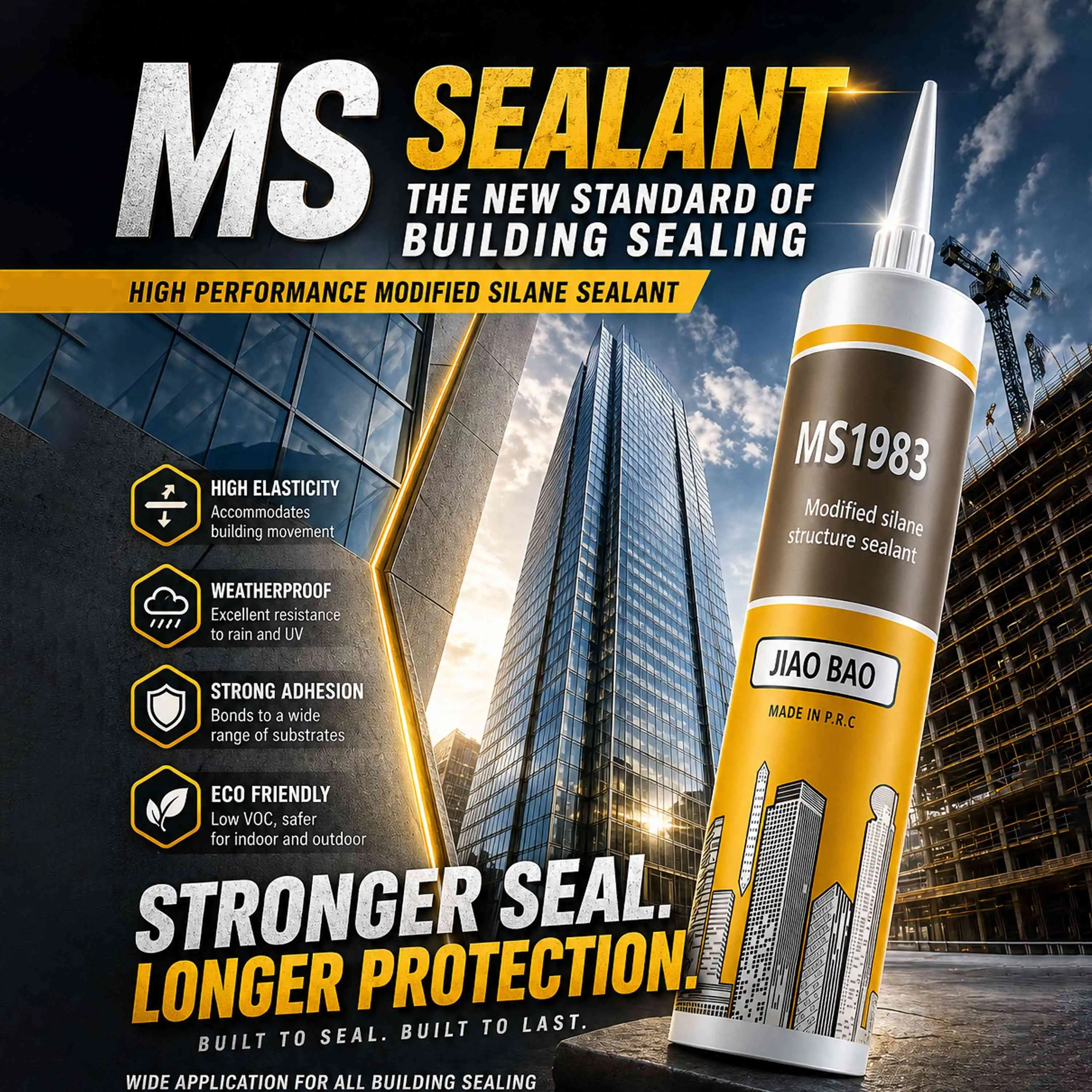
When installing windows, you need to pick an elastic adhesive sealant that will last, work with the substrate, be safe for the environment, and have a low total cost of ownership. MS sealants meet all four requirements in a way that other sealants can't fully match.
Here are the main performance benefits that make MS polymer sealants stand out in window applications:
There was no silicone oil contamination Low-molecular-weight cyclics are released by silicone seals and move into porous surfaces, staining marble, granite, and anodized metal. Since Jiaobao's MS sealant doesn't have silicone oil in it, it's the best choice for natural stone facades and high-end metal siding where stains aren't accepted for business reasons.
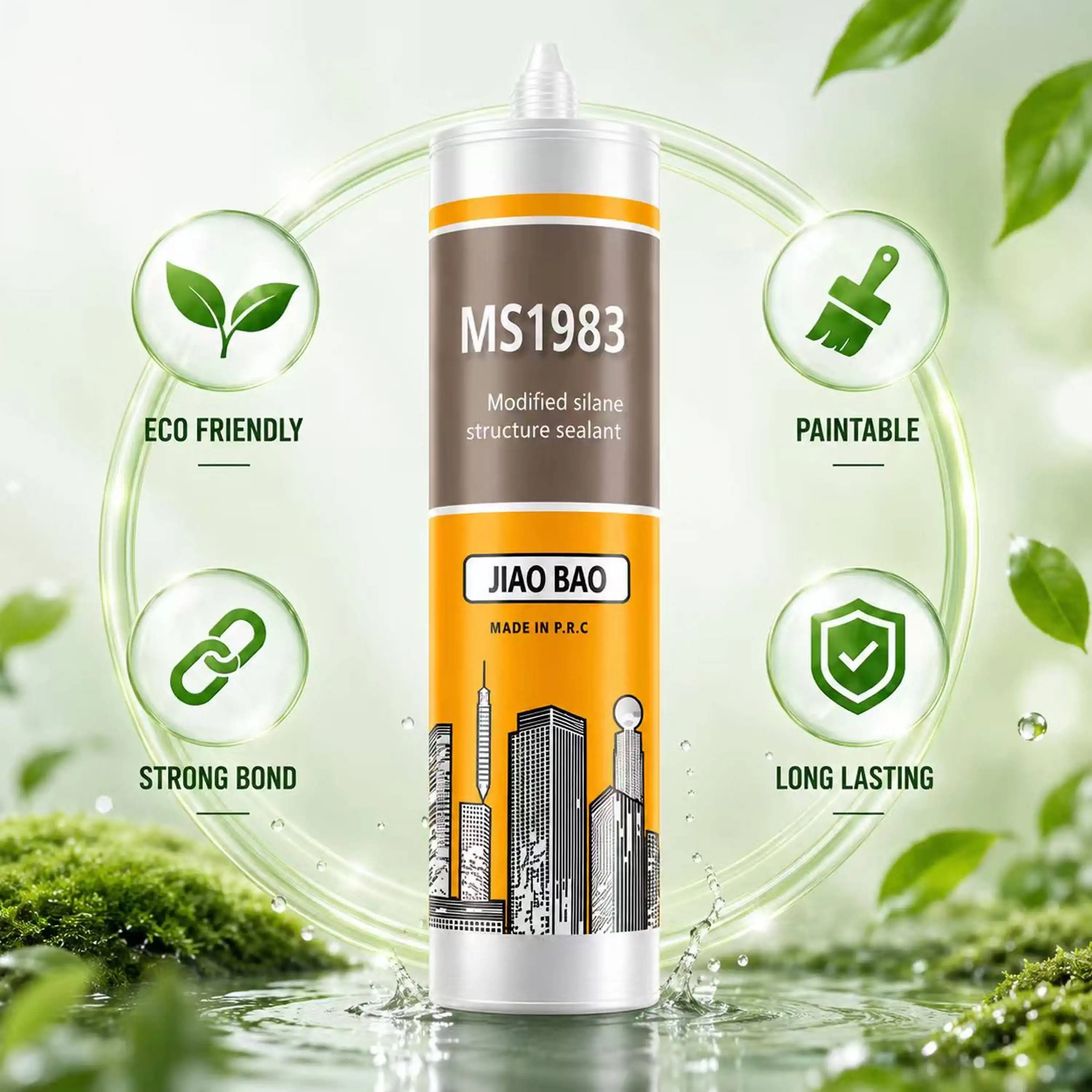
Silicone, polyurethane, acrylic, and MS polymer are all types of building sealants on the market. Each has a clear range of ability.
Silicone is very resistant to UV light, but it can't be coated and oil can seep into open surfaces. Polyurethane has high lap shear values, but it breaks down when exposed to UV light for a long time, and it can be dangerous to work with isocyanates. Acrylic-based lubricants are cheap, but they don't stretch well and crack easily in parts that move with temperature changes. MS polymer sealants are unique because they have all the benefits of silicone, like being resistant to UV light and weather, but they can also be painted on and work with a wide range of substrates, which polyurethane and silicone can't do at the same time.
This combination of qualities gets rid of the need for buying teams to choose between esthetics and structural performance when looking for elastic joint sealant for high-end window systems.
It takes more than a low unit price to find a reliable MS sealant high bonding strength supplier. There is quality control in the whole supply chain thanks to the following evaluation criteria:
-- List of certifications: Check for ISO and CE approvals as basic signs of safety. For projects that involve exporting, ask for TDS and SDS documents in English.
There are two types of packaging: sausage and cartridge. Brand-owning distributors entering the North American or European markets can get custom OEM labels.
Using the right application method decides whether a sealant's success in the lab will last in the field. The cleanliness of the surface is the most important factor. Any dust, oil, or remaining moisture on the substrate surface will stop the adhesion mechanism, no matter what kind of sealant is used. MS sealant high bonding strength still depends on proper surface preparation to deliver its full performance.
Before using any modified silane sealer, wipe the substrates clean with rubbing alcohol and let it dry completely. Cut the cartridge nozzle at a 45-degree angle that matches the width of the joint. Then, keep the bead pressure steady to keep air from getting trapped. If you tool the bead within the tack-free window, which is 25 to 40 minutes in the summer and 15 to 30 minutes in the winter, the tooling will stick well and the joint profile will be clean.
Curing happens at a rate of about 3.5 mm per day when the weather and humidity are normal. When it's cold or there isn't much air, drying takes longer. For the first 24 hours, don't let joints that aren't healed touch liquid water. It is possible to paint the joint surface after it has fully dried, and it stays chemically stable from -40°C to 120°C.
MS polymer sealants have redefined the performance baseline for window and façade sealing in high-specification construction and industrial manufacturing. The combination of structural tensile strength, elastic recovery, silicone-free formulation, and full paintability addresses gaps that silicone and polyurethane sealants cannot bridge simultaneously. Jiaobao's RTV MS Sealant delivers these properties in a certified, low-VOC, one-part paste format with a 12-month shelf life and flexible packaging options. For procurement managers prioritizing long-term joint integrity and project aesthetics, this product category warrants serious evaluation. MS sealant high bonding strength is the core advantage that makes this category a compelling alternative to traditional silicone and PU systems.
Yes. The cured MS polymer matrix is inherently hydrophobic and maintains adhesion under prolonged water exposure. Its 99% solid content means negligible shrinkage, which preserves the watertight seal geometry at window perimeter joints.
Tack-free time for Jiaobao's MS sealant runs 25–40 minutes in summer and 15–30 minutes in winter — broadly comparable to neutral-cure silicone. Full depth of cure progresses at approximately 3.5 mm per day, consistent with most one-part moisture-cure systems.
At minimum, confirm ISO and CE certifications. For North American projects, request SGS test reports and English-language SDS documentation. OEM buyers targeting green building markets should also inquire about low-VOC compliance documentation.
In most standard applications, no primer is required. The silane-modified polyether chemistry provides built-in adhesion promotion on aluminum, glass, and PVC. Surface activation may be advisable for very low surface energy substrates under high-load structural bonding conditions.
Yes. White, Black, and Grey are standard. Custom colors are available through Jiaobao's OEM/ODM program to support brand-specific or project-specific color requirements.
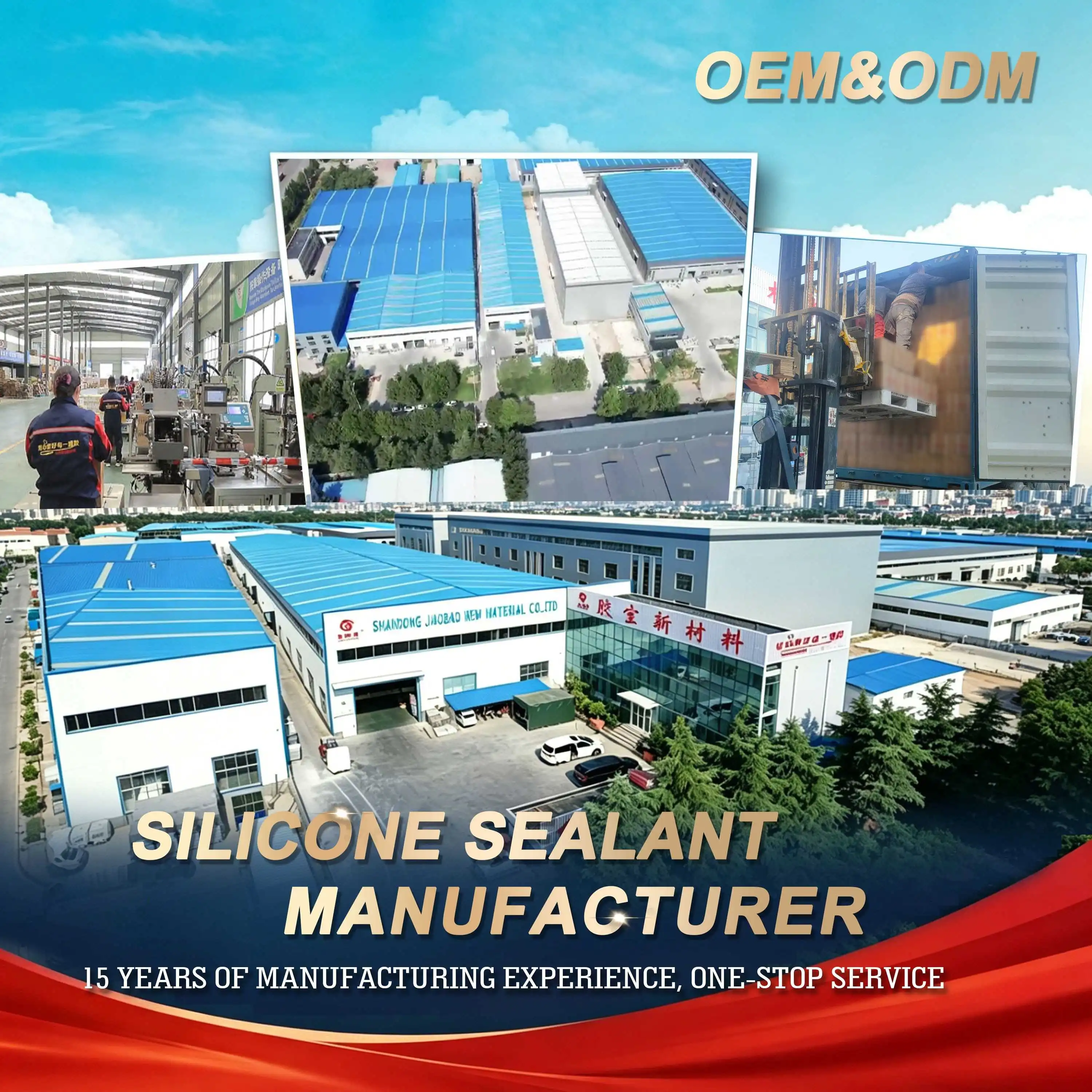
Jiaobao brings over 13 years of manufacturing expertise to every shipment. Our MS sealant high bonding strength supplier capabilities include ISO- and CE-certified production, 1–2 week lead times, custom OEM packaging, and dedicated after-sales coverage. Whether you need 300 ml cartridges for a fit-out project or bulk sausage packs for a manufacturing line, we deliver consistent quality at competitive pricing. Contact us at dorashen@cnjiaobao.com to request samples or a tailored quotation today.
1. Wolf, A. T. (2010). Durability of Sealants and Adhesives: Advances in Testing. ASTM International.
2. Petrie, E. M. (2007). Handbook of Adhesives and Sealants (2nd ed.). McGraw-Hill.
3. Klosowski, J. M., & Wolf, A. T. (2016). Sealants in Construction (2nd ed.). CRC Press.
4. Construction Sealants Market: Global Industry Analysis and Forecast 2023–2030. Persistence Market Research, 2023.
5. European Sealants Industry Association (ESIA). (2021). Guide to Sealant Selection for Façade and Glazing Applications. ESIA Technical Publications.
6. ASTM International. (2020). ASTM C920: Standard Specification for Elastomeric Joint Sealants. ASTM International.
November 16,2023
Enterprise Name
The sealant has very strong adhesion and performs well even on glass and aluminum. After curing, it remains flexible and shows no cracking. Perfect for our facade projects.
November 16,2023
Enterprise Name
Stable quality across batches. Our customers especially like the smooth application and consistent extrusion. It helps reduce installation time on site.
November 16,2023
Enterprise Name
I used it for bathroom sealing. Excellent waterproof performance and no mold issues so far. It's been holding up very well in humid conditions.
November 16,2023
Enterprise Name
The neutral silicone works well on sensitive materials without corrosion. Very suitable for industrial applications requiring stable performance.
_1779347426672.webp)