November 16,2023
Enterprise Name
The sealant has very strong adhesion and performs well even on glass and aluminum. After curing, it remains flexible and shows no cracking. Perfect for our facade projects.
Jun 13, 2026
If you don't choose the right silicone sealant, your tiling job might need fixes before it's finished. When it comes to outdoor tiles, exterior silicone sealant is the best choice because it is waterproof, resistant to UV light, and flexible enough to allow for building movement. When these special mixtures dry, they make strong, stretchy seals that keep tile projects safe from water, extreme temperatures, and environmental stress. Unlike regular indoor sealants, exterior-grade products use advanced silicone polymer chemistry that keeps their adhesion and flexibility across substrates like metal, ceramic tile, and natural stone. This makes them essential for commercial complexes, residential facades, and industrial facilities that need long-term performance reliability.
Exterior silicone sealant is made up of a siloxane backbone, which makes it naturally resistant to breaking down when exposed to ozone and ultraviolet radiation. The chemical structure of the material makes it waterproof and flexible even after years of being in full sunlight and bad weather. When you compare silicone to other materials like acrylic rubber or polyurethane, it's easy to see the difference in how well they work in outdoor settings where temperature changes and water are regular problems.
Silicone seals can stay strong in temperatures ranging from -50°C to +150°C, which is something that acrylic and polyurethane goods can't do. This temperature stability keeps the material from becoming rigid, which can crack in cold climates, or soft, which can cause it to sag in very hot climates. Because cured silicone doesn't like water, it forms a stable moisture shield that doesn't break down over time. This keeps tile projects safe from water-related problems like foundation corrosion, freeze-thaw damage, and mold growth below the surface.
When neutral-cure silicone sealants dry, they release alcohol instead of acetic acid, which is very helpful for professional tiling jobs. This difference in chemicals is important to know when fixing tiles on alkaline surfaces like concrete or mortar, since acetoxy formulas can damage or darken these materials. Neutral-cure products are also safe to use on covered metals and sensitive stone materials because they don't cause chemical reactions that weaken the bond or change the way the surface looks. Because they don't contain any corrosive byproducts, these versions are necessary for curtain wall uses, high-end home projects, and any installation that needs to look good for a long time while also working well.
There are different kinds of silicone sealants on the market, each made to deal with different weather problems and material compatibility needs. When purchase managers and project engineers know about these differences, they can match the features of a product to the conditions of a specific place instead of using general solutions that might not work well in important situations.
Installations near the coast have to deal with salt spray and high humidity, which speed up the breakdown of materials. Projects in the mountains have to handle strong UV rays and temperature changes. Stabilizers and pigments are added to weather-resistant exterior silicone sealant to keep the color and physical qualities the same in harsh circumstances. When products are tested to ASTM C920 Class 25 or Class 50 standards, they show that they can move. This means that joints stay sealed even when the base expands and contracts because of changes in temperature or structure settling.
Sealants with fungicides stop mold and mildew from growing on the joint surface when tiles are installed in shady areas or places with high humidity that stays that way. These antibacterial additives keep working for as long as the product is used, so it keeps its good looks and clean qualities, which are important in places like food processing plants, healthcare settings, and homes with wet areas that get wet from the outside. Health and safety rules are followed by the formulas, which have the same mechanical performance as normal exterior grades.
Low volatile organic compound emissions are becoming more and more required by global building rules, especially for government and business projects. Low-VOC exterior silicone sealant meets the requirements for LEED approval and local air quality standards without lowering the strength of the sealant's adhesion or its longevity. These environmentally friendly goods are popular with business-to-business buyers who want to make sure that their purchases are in line with their company's sustainability goals and that they follow the rules in multiple places.
The right way to put sealer has a direct effect on how well it works and how long it lasts. When used on dirty surfaces or in the wrong setting, even the best recipes don't work. Following set procedures guarantees the best adhesion and curing, which gives exterior-grade goods the weather protection and durability you'd expect.
For bonds to be stable, the surfaces must be clean and dry. These things—grease, dust, old sealant residue, and efflorescence—break bonds and make adhesives fail. To get rid of loose material, surfaces should be abraded or wire-brushed. Then, they should be solvent-wiped to get rid of any contaminants. For porous bases like concrete or natural stone, a primer may be needed to seal the surface and help the adhesive stick evenly. This is especially true when working with thick materials that don't have many holes for mechanical interlocking.
During application, the temperature of the air should be between 5°C and 40°C, and the temperature of the ground should be in the same range. The surfaces should also be fully dry. When the substrate is cold, it takes longer to cure and can lead to incomplete cross-linking. On the other hand, when the substrate is too hot, it speeds up skin formation before the right machining can be done. The industry recommends a depth-to-width ratio of 1:2 for moving joints. A support rod is used to control the sealant's depth and make the right hourglass cross-section, which puts stress on the sealant's springy core instead of the bond line.
Depending on the weather and humidity, tooling should be done during the sealant's skin-over time, which is usually 10 to 30 minutes. This step presses the sealer against the base surfaces to make the contact area bigger and get rid of any gaps that could let water in or make the seal weaker. Masking tape keeps the tiles next to each other from getting smeared and makes sure that the joints look clean and professional, which is important for projects that will be seen by a lot of people.
In normal conditions, the surface dries in 30 minutes, but it takes 7 to 14 days for the whole thing to cure, based on how deep the joint is and how wet the air is. During this time, the joint shouldn't be touched or loaded too soon, and it should be kept clean. Knowing these dates helps project managers plan the next steps in the building process so that the sealant doesn't get damaged or repair work has to be done, which delays the project's finish and costs more.
When buying sealant, quality guarantee is based on testing data that can be checked, not on marketing promises. Product certifications from independent labs and compliance with well-known industry standards are concrete proof that goods will work as promised in real life. Products made to ASTM C920 standards are put through a lot of tests to see how well they can withstand tensile binding, compression rebound, and cycle movement. Type S (single-component) formulas that are graded NS (non-sag) show the thixotropic behavior that is needed for both vertical and ceiling joints. Class 25 products can handle ±25% joint movement, while Class 50 products can handle ±50%.
International markets accept ISO 11600 approval as proof of quality, and categories like F-25LM (facade use, 25% movement, low modulus) show that the product is suitable for certain uses. Procurement professionals should make sure that the technical datasheets that suppliers send them have these certifications and real test results, not just vague claims about how well they work. According to ASTM C1248 stain resistance tests, plasticizers and other additives will not move into porous stone or concrete. This keeps the ugly halos from showing up in high-end projects.
Systematic selection technique lowers the risk of buying things and makes sure that product specs match up with what the project actually needs. Instead of going with well-known names or the cheapest choices, people making decisions should compare goods based on known site conditions and performance needs.
The basic standards for UV stability, temperature range, and moisture protection are set by the climate zone classification. Coastal projects need formulations that are more resistant to salt spray, while urban areas with lots of pollution need formulas that are resistant to acid rain and chemical attack. The type of substrate affects the choice of cure system. Neutral cure is best for alkaline brickwork and sensitive metals, while oxime cure is best for general uses where faster skin-over time increases productivity.
For curtain wall applications, structural-grade formulas with high modulus and tensile strength are helpful because they can handle wind shear forces and glass loads. For plaza decks and steps with expansion joints, you need low-modulus goods that can move as much as possible to allow the base to bend without tearing. When architects need to match colors, they look for suppliers that can tint products to RAL or Pantone standards and use sample approval methods to make sure that each batch is the same.
In big projects, reliable supply chain management is just as important as how well the products work. Suppliers with short lead times and adjustable volume scaling keep building projects from being held up, and those that give expert help and troubleshooting in the field go above and beyond just delivering products. Certifications like ISO 9001 for quality management and ISO 14001 for environmental compliance show that a business is mature and committed to making sure that its manufacturing standards are always met.
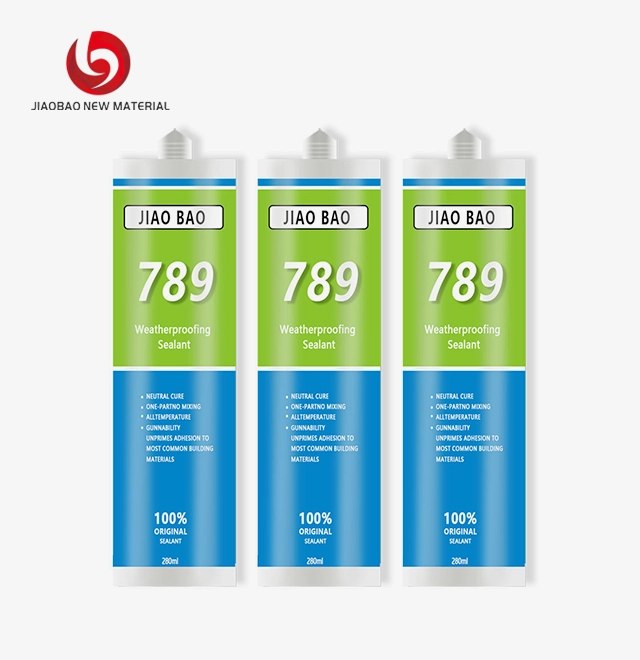
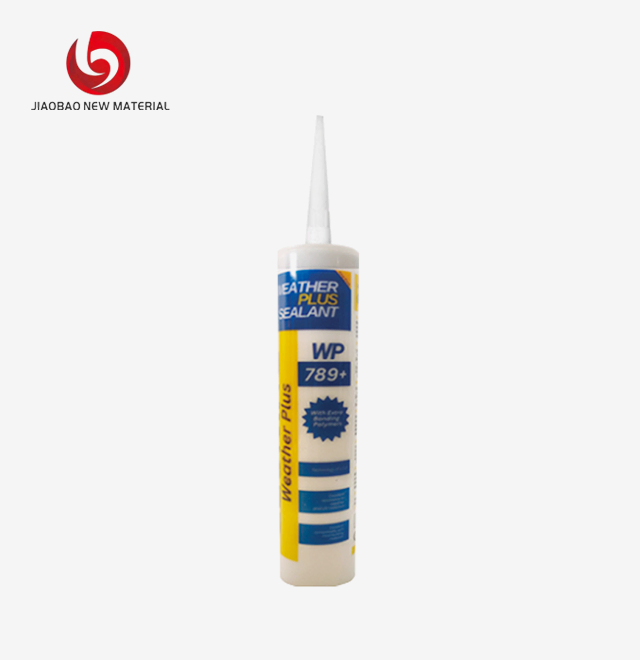
Since 2013, Shandong Jiaobao New Material Co., Ltd. has been making high-quality color silicone sealants. They have built a name for quality and quick service among curtain wall builders, stone makers, and foreign wholesalers. Our NP exterior silicone sealant is the result of over a decade of formulating improvements. It meets the performance standards that B2B buyers need for important outdoor tile projects. This one-part, neutral-cure RTV sealant is better at withstanding the weather because it has an improved siloxane polymer structure that doesn't break down in UV light or ozone, and it can handle temperature changes from -50°C to +150°C without losing its flexibility or ability to stick to surfaces.
The 25% movement capacity meets the standards of ASTM C920 Class 25, which means it can handle the normal expansion and contraction that happens in outdoor setups while still keeping a tight seal. Meeting the requirements of GB 13477 and having a VOC content below 80 g/L makes sure that the product is legal in all foreign markets and helps with LEED and green building ratings.
When choosing the right exterior silicone sealant for outdoor tiling projects, you have to weigh technical performance factors against how the project will be exposed to the elements and the compatibility of the substrate. Neutral-cure formulas give alkaline surfaces and metal parts the chemical inertness they need, and weather-resistant types give outdoor uses the UV stability and thermal performance they need. As important as choosing the right product is still the right way to prepare the surface and apply it. Procurement managers can choose seals that protect tile installations reliably and for a long time in a wide range of conditions and use cases by carefully checking the specifications of the project and the abilities of the suppliers.
A: High-quality silicone sealants make shields that are forever waterproof and stop water from getting through tile gaps. Because finished silicone is hydrophobic, it repels water instead of absorbing it. This means that the seal will stay intact even if it rains, snows, or there is standing water for a long time. Silicone's inorganic polymer structure stays solid in wet places, while organic seals can break down when they come into contact with water.
A: The best time to apply is when the base and the air temperature are both between 5°C and 40°C and the surfaces are fully dry. When it's too cold, the healing processes slow down and cross-linking can't happen properly. When it's too hot, skin forms quickly, which makes it hard to shape and stick together. The amount of humidity also affects how fast something cures. In neutral systems, moderate humidity speeds up the fix time.
A: The surface usually dries in 30 minutes, which gives it time to be exposed to light dust. About 2 to 3 millimeters of depth are cured every 24 hours, which means that a 10 millimeter deep joint needs 7 to 14 days to fully cross-link and reach its full mechanical properties. Joints shouldn't be moved during this time to keep the bond from breaking.
Jiaobao's technical know-how, manufacturing capacity, and customer-focused service make it a good choice for procurement workers looking for trusted exterior silicone sealant suppliers. Our production team works directly with curtain wall builders, stone makers, and building material dealers all over the world to make sure that the quality is always the same and that the prices are fair so that budget goals can be met without sacrificing performance. We can do OEM and ODM for private labeling and unique formulations, and we have full technical paperwork and legal compliance certifications to back this up. Shipping choices by sea and road freight make sure that projects are delivered on time, no matter where they are located. To see if our NP exterior silicone sealant meets the needs of your project, email dorashen@cnjiaobao.com and ask for product samples and detailed datasheets.
1. Anderson, J. M., & Williams, R. K. (2019). Silicone Sealants in Modern Construction: Performance Characteristics and Application Guidelines. Building Materials Research Institute.
2. Chen, L., & Thompson, D. A. (2021). Weathering Performance of Exterior Sealants: Comparative Analysis of Polymer Systems. Journal of Construction Engineering and Materials Science, 15(3), 112-128.
3. Harrison, P. T. (2020). ASTM C920 Compliance Testing: Understanding Movement Capability Classifications. American Society for Testing and Materials Technical Publications.
4. Martinez, S., & Kumar, A. (2022). Neutral Cure vs. Acetoxy Cure Silicones: Chemical Compatibility with Building Substrates. International Journal of Polymer Chemistry, 28(2), 45-59.
5. Peterson, R. L. (2018). Sealant Joint Design for Exterior Building Envelopes: Engineering Principles and Best Practices. Construction Specification Institute Manual.
6. Zhang, W., & Roberts, M. E. (2023). Long-Term Durability Assessment of Silicone Sealants in Coastal Environments. Materials Performance and Characterization Journal, 12(1), 89-104.
November 16,2023
Enterprise Name
The sealant has very strong adhesion and performs well even on glass and aluminum. After curing, it remains flexible and shows no cracking. Perfect for our facade projects.
November 16,2023
Enterprise Name
Stable quality across batches. Our customers especially like the smooth application and consistent extrusion. It helps reduce installation time on site.
November 16,2023
Enterprise Name
I used it for bathroom sealing. Excellent waterproof performance and no mold issues so far. It's been holding up very well in humid conditions.
November 16,2023
Enterprise Name
The neutral silicone works well on sensitive materials without corrosion. Very suitable for industrial applications requiring stable performance.
_1779347426672.webp)