November 16,2023
Enterprise Name
The sealant has very strong adhesion and performs well even on glass and aluminum. After curing, it remains flexible and shows no cracking. Perfect for our facade projects.
Sep 15, 2026
Installing a fire-rated seal around windows is not a cosmetic task — it is a life-safety measure. A properly applied fireproof building silicone sealant creates a certified barrier that resists flame penetration, blocks toxic smoke migration, and maintains structural integrity under sustained heat. Whether you manage commercial construction projects, fire protection engineering contracts, or large-scale industrial facilities, understanding correct installation practices directly determines whether your assembly passes inspection and performs during an actual fire event.
A fire-rated silicone sealant is made with chemicals that keep fires from spreading that regular architectural silicones don't have. When the cured bead is heated above 200°C, it forms a layer of carbonaceous char that physically stops gas and flame from passing through. Most sealants melt or burn through, leaving no protection layer at all.
It takes 45–60 minutes for the surface to dry and 3 mm to cure in 24 hours at 25°C and 50% relative humidity with Jiaobao's one-part RTV acidic silicone sealant. It can move up to ±50%, which allows building joints to move. This is a very important feature for curtain wall perimeter seals and window frame assemblies that are subject to thermal cycling.
Three types of products are available to meet different window closing needs. Standard fire-rated silicone can be used for gaps along the edges of window frames that are made of concrete or stone. Intumescent patches get bigger when heated and work well for holes that are close to flammable materials. Fire-retardant silicone is a cheap way to meet lower fire-rating standards in places that don't require approved intumescent chemistry.
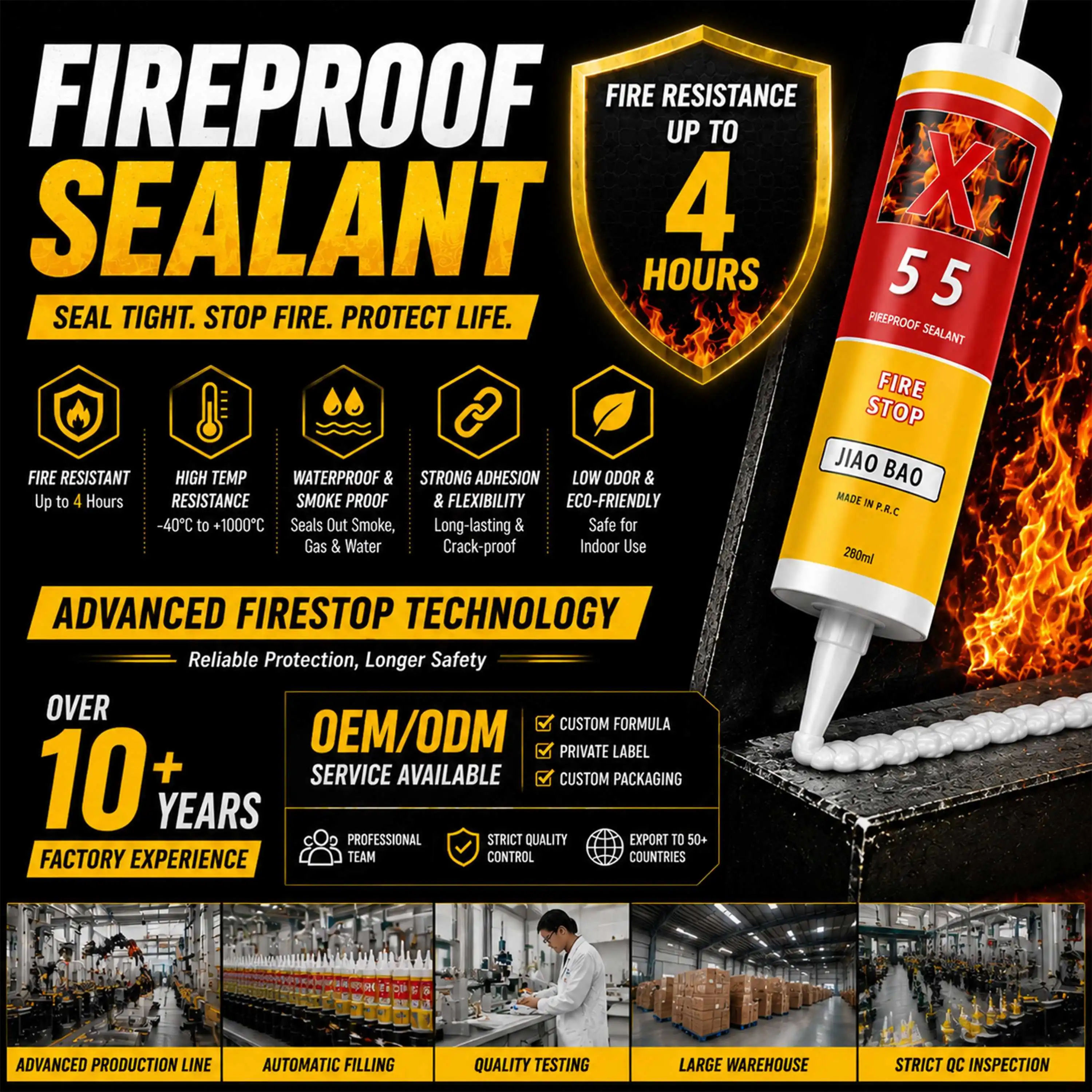
The state of the substrate has the most impact on the strength of adhesion. Get rid of any loose paint, oil, dust, and curing compounds from the window frame and the wall underneath it. Concrete and brick surfaces need to be completely dry. Primer should be used where the substrate is porous or where the joint will be subject to changes in moisture levels outside. Before applying fireproof building silicone sealant, make sure that the temperature outside is between 5°C and 40°C. Putting the material down on frost-damaged or wet surfaces will make it less adherent and cancel the fire certification.
In approved fire systems, the joint depth can't be changed. Depending on the width of the joint, a sealant depth of at least 6–12 mm is usually needed to get a 2-hour fire rating. Control the depth with a backing rod to avoid three-sided bonding, which makes it hard for joints to move and leads to unified failure when the structure is cycled.
For cartridge packing, use a regular caulking gun to put on a continuous line of sealant. For 600 ml sausage packs, use a high-volume pneumatic gun. Use a wet spatula to make sure the bead makes full contact with both joint faces right away. Don't fill in gaps or leave empty spaces for air to flow through. This makes uncertified thin sections that will fail in a fire.
Let the joint cure for at least 24 hours before putting water or pressure on it. Check visually for holes, cracks caused by shrinkage, or tooling that isn't complete. Keep batch records, application logs, and photos for projects that need official fire certification. The authority having jurisdiction (AHJ) will need these during inspection.
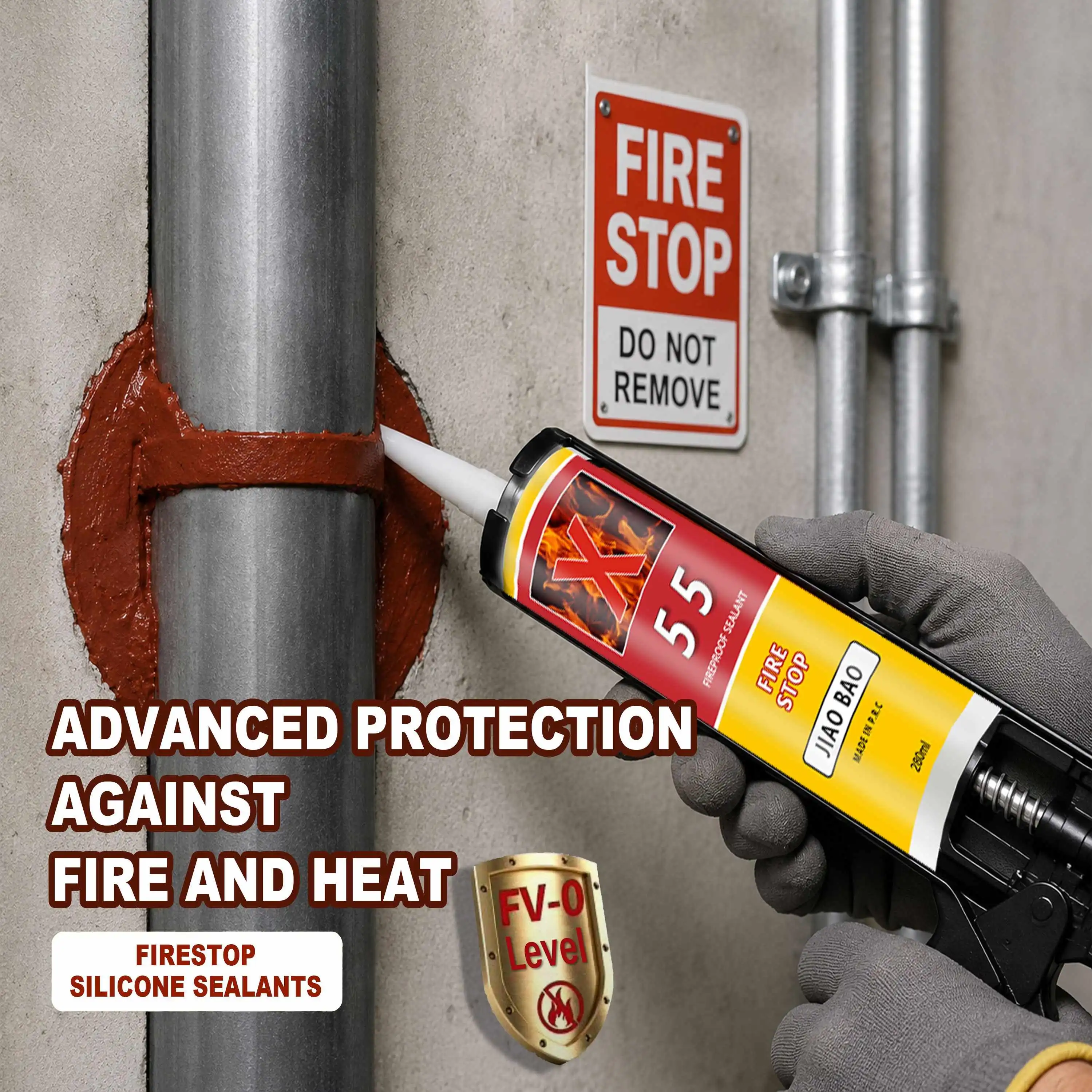
When it comes to fire safety engineering, buying things has legal effects that regular building purchases don't have. Even if it saves you a lot of money, choosing a sealant that isn't up to code can cause checks to fail, projects to be delayed, or you to be held responsible after an accident.
The main performance factors that set different options in the US market are listed below:
These differences are most important during pre-purchase sample proof and third-party laboratory testing, which are both normal parts of the process of buying fire safety products that follow the rules.
Putting on a surface bead instead of filling the joint to the tested depth is the most serious mistake. A shallow bead might look like it's all there, but it doesn't actually protect against fire. Before using, you should always check the joint sizes against the product's tested system data sheet.
If you don't use a primer, the paint won't stick to non-porous surfaces like painted steel or old concrete. If the primer fails, the sealant bead can peel off the substrate when the building moves, leaving a hole in the fire assembly. For suggestions on the right primer for each material, look at the product's technical data sheet.
Routine maintenance also deserves attention. Every year, check the edges of protected windows for signs of delamination, UV damage, or mechanical damage. If you quickly reseal any damaged areas, the fire room limit will stay in place for the life of the building.
For B2B procurement teams in the US and export markets, qualifying suppliers is more than just looking at prices. Use these criteria to judge any possible fireproof building silicone sealant supplier:
It is still best to ask for samples of a product before placing a large order. A third-party lab checking the sampled batch to see how well it resists fire and how well it sticks to other things gives concrete information that keeps both the buying team and the end client safe.
It's a technical field that blends material science, base preparation, and qualified assembly compliance to do the right job of installing fire-rated window sealants. Skimping on things like joint depth, surface preparation, or product specifications leads to real risk, not just hypothetical risk. Jiaobao's fireproof building silicone sealant has been tested and shown to work well across a wide temperature range. It also has a proven displacement capacity and non-volatile content that meet the needs of both domestic and international projects. Because it has been made for over 13 years and is ISO/CE certified, it is a reliable option to expensive foreign brands that doesn't skimp on quality.
Yes. Fire-rated silicone sealants have a Class 1 W water resistance rating, which means they can be used for perimeter joints outside that get wet and dry.
A fireproof sealant has been tried and has passed fire resistance rates (for example, 1-hour and 2-hour structures) that have been checked by independent labs. There is no approved assembly approval for a fire-retardant sealant, but it does slow the spread of fire and sparks.
Silicone-based fire sealants aren't made to crush and seal plastic penetrants that are melting. For frame materials that can catch fire, ask the designer what intumescent products they suggest.
Fire-rated silicone window seals will keep working for as long as a building is used as long as they are installed correctly and inspected once a year. The product can be kept for 12 months after it was made.
Material that has passed its expiration date might not heal all the way, leaving behind a soft, non-structural bead that doesn't fight fire. Before applying, you should always check the batch date.
Since 2013, Jiaobao has sold approved fire protection sealants to building firms and builders in both China and other countries. As a fireproof building silicone sealant maker, we can do OEM production, have short lead times (one to two weeks), and provide full ISO/CE certification paperwork. Contact our technical team at dorashen@cnjiaobao.com to request product samples, technical data sheets, or project-specific pricing.

1. ASTM International. ASTM E814: Standard Test Method for Fire Tests of Penetration Firestop Systems. ASTM International, 2023.
2. Underwriters Laboratories. UL 2079: Tests for Fire Resistance of Building Joint Systems. UL Standards & Engagement, 2019.
3. National Fire Protection Association. NFPA 101: Life Safety Code. NFPA, 2021.
4. International Code Council. International Building Code (IBC). ICC, 2021.
5. British Standards Institution. BS EN 1366-3: Fire Resistance Tests for Service Installations — Part 3: Penetration Seals. BSI, 2021.
6. Construction Sealants and Adhesives, 4th ed. Wiley, 2010.
November 16,2023
Enterprise Name
The sealant has very strong adhesion and performs well even on glass and aluminum. After curing, it remains flexible and shows no cracking. Perfect for our facade projects.
November 16,2023
Enterprise Name
Stable quality across batches. Our customers especially like the smooth application and consistent extrusion. It helps reduce installation time on site.
November 16,2023
Enterprise Name
I used it for bathroom sealing. Excellent waterproof performance and no mold issues so far. It's been holding up very well in humid conditions.
November 16,2023
Enterprise Name
The neutral silicone works well on sensitive materials without corrosion. Very suitable for industrial applications requiring stable performance.
_1779347426672.webp)