November 16,2023
Enterprise Name
The sealant has very strong adhesion and performs well even on glass and aluminum. After curing, it remains flexible and shows no cracking. Perfect for our facade projects.
Sep 8, 2026
When weighing mounting options in rental properties, Nail Free Glue Waterproof Type presents a compelling alternative to traditional screws. This advanced modified silane polymer adhesive delivers a tensile strength of 2.5 N/mm² and 300% elongation at break, providing robust bonding without drilling holes or risking wall damage. Unlike screws that leave permanent marks and violate many lease agreements, this waterproof adhesive creates secure, removable installations ideal for temporary housing situations. The moisture-cure formula excels in high-humidity environments like bathrooms and kitchens, where renters frequently need to mount towel racks, mirrors, and storage solutions without forfeiting security deposits.
Jiaobo's waterproof fastening glue is made of modified silane polymers that harden when they come in contact with water. Instead of using friction and compression like most mechanical fasteners do, this one-component formula directly joins with surfaces chemically. The glue has a stable paste look and a density of 1.55 g/ml. At standard room temperatures of 23°C and 50% relative humidity, it starts to dry on the surface in about 20 minutes. The curing process moves forward at a rate of 2.5 mm every 24 hours. This gives the material enough time to fully form its structure while still being flexible enough to handle changes in temperature.
The formula is waterproof because it has a hydrophobic material that doesn't break down when it comes in contact with water and keeps its binding strength even when it's exposed to water all the time. The tests show that the bond keeps more than 80% of its original strength after fully healing and being submerged in water at high temperatures for seven days. This performance is better than water-resistant options that can only handle light splashes. The neutral-cure chemistry keeps sensitive materials from rusting, so it can be used on glass backings and metal fittings where acidic formulations would break them down.
This glue can work in temperatures ranging from -40°C to 80°C, so it keeps its structural integrity even when the weather changes, which is common in rental homes in the United States. The material has a Shore A hardness of 50 ± 5, which is a good mix between being rigid enough for load-bearing uses and flexible enough to allow the base to move. During installation, the temperature range of 5°C to 35°C works for most indoor conditions. However, the best conditions for application are at room temperature with a moderate level of humidity to help the moisture-cure process.
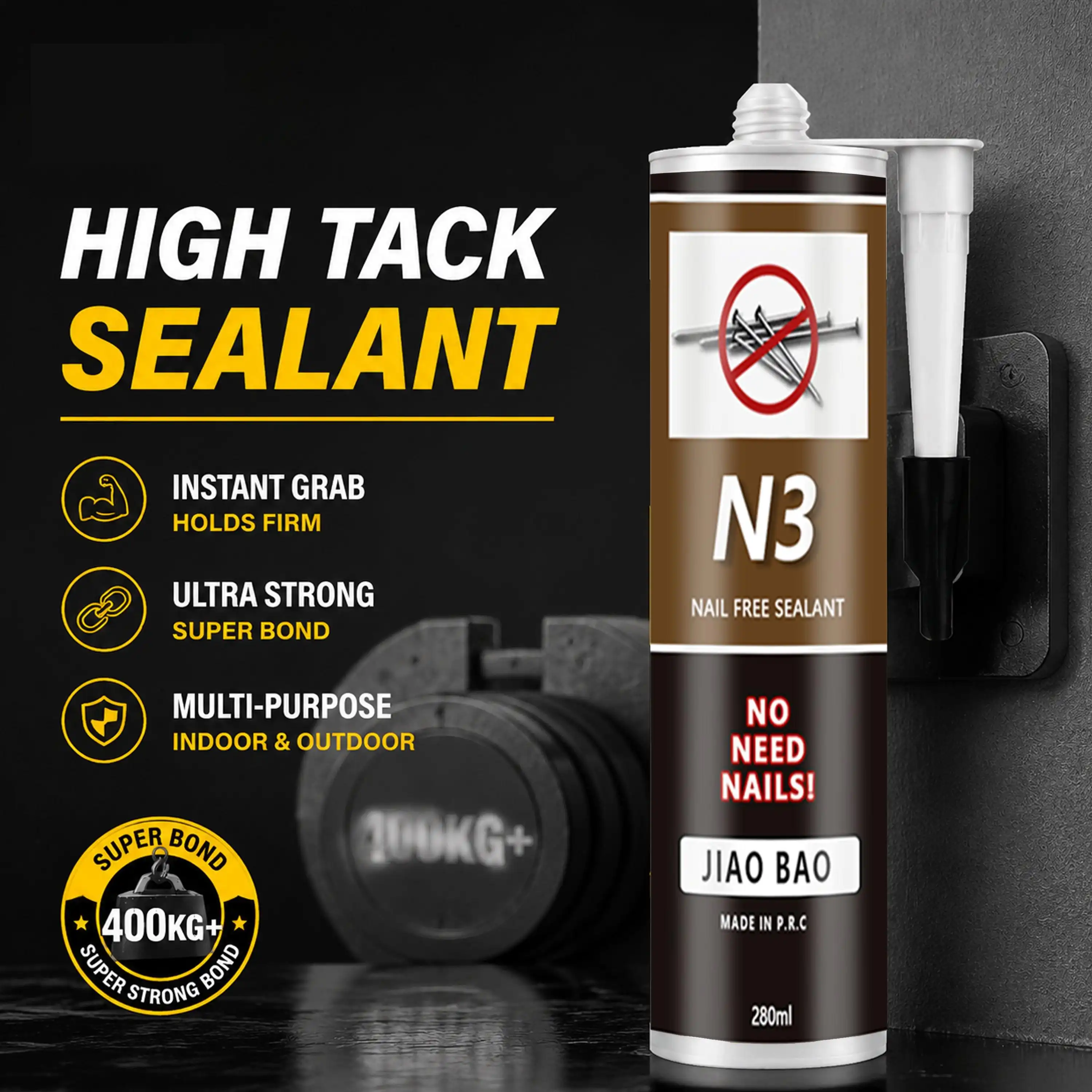
When screws go through walls, they leave lasting holes that are often damaging to ceramic tiles, drywall, and waterproof layers behind bathroom walls. Property managers often say that drilling damage is the main reason why security deposits are taken back. During installation, there is noise from the drill, flying debris, and the possibility of water or electricity problems from behind-the-walls equipment. Nail Free Glue Waterproof Type offers a drill-free alternative that eliminates these issues, preserving wall integrity and reducing installation risks.
These worries are completely taken away by waterproof fixing glue, which stick to the surface without going through it. Cleaning and properly preparing the surface are all that's needed for the application process. This keeps the wall's structure throughout the rental time. When it's time to move at the end of the lease, the glue can be cut manually without leaving the large holes that anchor bolts and toggle bolts do.
Screws are thought to be the best way to hold things together, but new glue technology questions this idea. When fully cured, high-quality waterproof bonding products have tensile shear strengths greater than 2.5 MPa, which means they can hold a lot of weight. If the glue on a bathroom towel rack is thick enough, it can safely hold wet towels without breaking. But how the weight is divided is very important.
Adhesives work best when the loads are spread out over the bonded surface area, while point loads may favor mechanical fastening. Renters can use sticky solutions to place light to medium-weight items like shower caddies, decorative mirrors, toilet paper holders, and coat hooks. These will work great for daily use.
Drills, driver bits, anchors for thin walls, and often a stud finder are some of the tools that are needed to put screws correctly. The process makes a mess, needs to be done carefully, and takes a long time for each fastener. Using adhesive mounting makes this a lot easier. After using alcohol or a similar degreaser to clean the surface, the beads are sprayed on using a normal caulking gun.
The device is then put in place, and the beads are given some time to grab before they fully cure. The 20-minute surface dry time lets you make small changes, and the 24-hour hardening cycle gradually increases the strength. For renters who don't have a lot of tools or do-it-yourself experience, using glue is much easier and gives them more confidence than using power tools.
Based on the initial costs of materials, waterproof structural glue usually cost more per unit than simple screws and bolts. Comprehensive lifecycle analysis, on the other hand, changes this view. Property managers have to think about the costs of fixing damage. For example, the costs of patching, sanding, priming, and painting drywall quickly add up when applied to many units.
When nails are used to remove a bathroom mirror, the cost of fixing it could be between USD 50 and USD 150. However, when adhesive-mounted fixtures are removed properly, they leave very little of a mark. When property care teams buy adhesives in bulk in 300ml or 600ml bottles with a 12-month shelf life, they can standardize on damage-prevention protocols that cut down on turnover costs and speed up the process of getting units ready for the next renter.
When looking for waterproof mounting goods, industrial buyers who put reliability first should check a number of quality signs. Compliance with foreign standards like ISO 11600 or ASTM C920 confirms performance benchmarks, and ISO approval shows that the manufacturing process is consistent. Nail Free Glue Waterproof Type meets these rigorous standards while offering strong adhesion and moisture resistance, and its neutral-cure formulations stop substrate corrosion, which is an important feature that is often missed in cheaper options.
Anti-mold additives make sure that the material is resistant to Grade 0 mildew, which is important for bathroom uses. Reliable sellers give out scientific data sheets that show the tensile strength, elongation percentages, and results of water plunge tests. Before placing a big order, buyers should ask for samples to be tested on real substrates in their own homes. These substrates should include ceramic tile, painted drywall, glass, and metal surfaces that are common in rented units.
Property management companies that are in charge of more than one building might benefit from branded adhesives that are made to fit their needs. Through OEM partnerships, colors can be custom-matched to common fixture finishes, such as white for bathrooms, gray for factories, or black for more modern looks. Customizing the packaging helps keep the brand consistent across all upkeep tasks and makes managing supplies easier.
Manufacturers with more than 13 years of experience, like Jiaobao, have flexible minimum order numbers and can make special formulas that meet the rules in each area. This customization even includes technical specs, so buying teams can choose the exact hardness ranges, healing speeds, or temperature performance that works best in their climate zone and in most installation situations.
How well a glue works depends on how well the material is prepared. Surfaces need to be dry, clean, and free of dust, grease, and other loose materials that could get in the way of molecules sticking together. Ceramic tiles and glass can be cleaned with rubbing alcohol to get rid of grease, and smoothing out shiny surfaces with fine sandpaper makes them fit together better mechanically.
Concrete and other porous materials may need to be sealed to stop too much glue from being absorbed. Checking the temperatures of both the adhesive and the substrate makes sure they are within the 5-35°C application window. Pay attention when moisture is present—moisture-cure adhesives work better in damp conditions than other types, but you should get rid of any extra water before applying them to keep the bond from diluting.
It depends on the size and shape of the fixture whether the adhesive is dispensed in continuous beads or strategic dots. Larger items need exterior beading with extra support in the middle, while small pieces may only need a few touch points. Using mild pressure when placing for the first time gets rid of air pockets and increases the contact area. The 20-minute surface dry time is an important window for making changes—renters can move things around a little if the placement looks off. Internal bond disruption can be avoided by not moving the material during the curing phase.
Heavy things might need temporary support like painter's tape or bars that can be taken off until they get strong enough. Full structural cure takes between 24 and 48 hours, depending on the thickness of the beads and the humidity in the air. After that, the structure can be used normally without any restrictions on load.
In order to end the lease, fixed items must be taken down without damaging the wall. Even though waterproof sealants last a long time, they can be broken with the right tools, especially when using Nail Free Glue Waterproof Type, which forms a strong but manageable bond. To cut through the adhesive layer mechanically, thin wire or fishing line can be worked behind the attached fixture in a sawing motion. For smaller things, dental floss can be used in this way. Using low-level heat from a hair dryer to soften the polymer makes it easier to work with.
Mineral spirits or special adhesive removers can be used to get rid of any leftover glue, but surface gouging can be avoided by being patient and gently scraping the surface with plastic tools. Although it needs to be done carefully, this way of removing something does a lot less damage than pulling out deeply embedded screws or fixing anchor holes in drywall or tile.
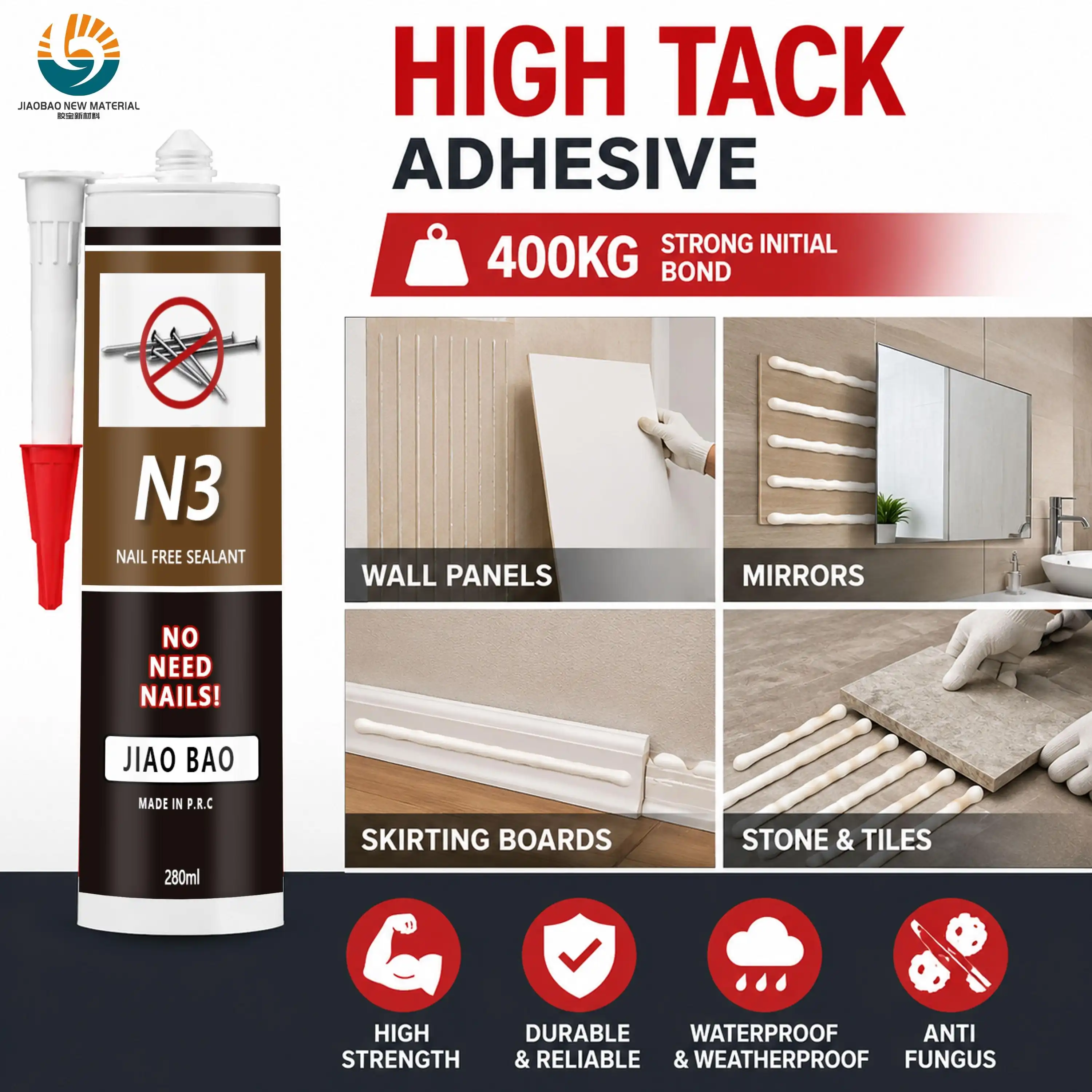
When property managers use adhesive-based fastening methods, unit turnover costs go down in a way that can be measured. Getting rid of drill damage claims protects security deposits, lowers renter conflicts, and speeds up move-in dates by cutting down on repair work. When standard glue processes are used instead of different drilling methods for each type of wall, the maintenance staff is more productive.
When drilling-related problems like broken pipes or electrical wiring are taken out of maintenance work, insurance companies are less likely to be sued. For multi-unit buildings, these benefits add up to big savings every year, which often covers the higher per-unit glue costs in the first year after they are put in place.
Americans are becoming more aware of the environment, which is driving demand for low-VOC and eco-friendly building materials. Modern silane polymer adhesives give off fewer volatile chemical substances than solvent-based options. This makes the air quality inside better, which is important in rental areas that are closed off. Formulations without harmful chemicals are in line with green building certifications and business sustainability promises that are becoming more and more common among owners of institutional property.
States like California are continuing to tighten rules on chemical emissions, which makes buying products that are compliant ahead of time a strategic advantage. When buyers look for goods that meet European standards like EC1, they make sure that they are compatible with the strictest global standards. This protects buyers' choices about what to buy from future changes in regulations.
Polymer chemistry innovations keep pushing the limits of efficiency in the adhesives business. Combining silane technology with other polymer systems in hybrid formulations improves certain properties, such as the ability to cure faster, withstand higher temperatures, or fill gaps better.
Smart adhesives with color-changing signals that mean the glue is fully cured take away the need to guess when to put something. New ways of packaging, like precision application tips or dual-chamber packs for two-part systems, make the user experience better and cut down on waste. Property managers who are keeping an eye on these changes can use new technologies to improve maintenance tasks and measure how happy tenants are.
People who work with rental properties are becoming more aware that waterproof structural adhesives can be used instead of screws for mounting purposes. The technology provides enough load-bearing capacity for most home fixtures while also preventing the wall damage that leads to security deposit disputes and high turnover costs. Modified silane polymer formulas offer real waterproof performance that is needed for installations in bathrooms and kitchens, and Nail Free Glue Waterproof Type is a prime example of such a reliable product.
They keep the bond strong even when humidity and temperature change. Property managers save money on repairs and can get units ready faster, and renters can install things without breaking the lease or having to use specific tools. As adhesive technology keeps getting better and environmental concerns become more important, this fixing solution is both a useful new idea and a smart move for property care workers.
When enough bonding area is used, good adhesives with a tensile strength of 2.5 N/mm² can hold bathroom mirrors in place. Figure out the total weight and make sure that the glue covering spreads the load out evenly. If you follow the right steps, installing a mirror that weighs less than 10 kg should be safe. However, very heavy or large mirrors may need to be mechanically fastened or installed by a professional to meet safety standards.
When you tighten screws, they become fully strong right away, while sealants need time to cure. The surface is dry in 20 minutes, which lets you handle it carefully, but it takes 24 to 48 hours for the whole structure to fix. However, applying glue is often faster than drilling, especially when there aren't any studs to be found or when working with difficult wall materials like tile that need special bits and lots of care when digging.
When a manufacturer works with businesses, they often offer volume discounts and flexible terms for buying things for property management companies. Different suppliers have different minimum order amounts, but well-known brands like Jiaobao can handle both small test orders and big contracts. OEM customization lets companies make branded products that meet their exact needs. Standard formulations usually have lead times of one to two weeks.
In Jiaobao, they make industrial-strength waterproof mounting adhesives that are designed to work well in rental properties. Our modified silane polymer formulation has been shown to have a tensile strength of 2.5 N/mm² and an elongation of 300%. It works reliably in temperatures ranging from -40°C to 80°C. We work with hardware dealers, property management companies, and do-it-yourself stores all over North America.
We have ISO approval, over 13 years of production experience, and flexible OEM capabilities. In humid places, our neutral-cure mixture keeps mold from growing while also stopping rusting. Products come in 300ml and 600ml sizes and can be white, black, gray, or a custom color. They ship within one to two weeks and come with full technical support.
You can email our team at dorashen@cnjiaobao.com to talk about buying in bulk, getting performance data sheets, or setting up sample tests. Find out why the biggest names in waterproof adhesive trust Jiaobao to provide safe, damage-free mounting solutions that protect your property investments and your relationships with your tenants.
1. Morrison, R. T., & Boyd, R. N. (2018). Organic Chemistry: Polymer Adhesion Mechanisms in Construction Applications. Pearson Education Limited.
2. American Society for Testing and Materials. (2020). ASTM C920: Standard Specification for Elastomeric Joint Sealants. ASTM International.
3. Zhang, H., & Liu, Y. (2019). "Modified Silane Polymers: Waterproofing Performance in High-Humidity Environments." Journal of Applied Polymer Science, 136(42), 48156-48165.
4. National Association of Residential Property Managers. (2021). Security Deposit Disputes: Analysis of Damage Claims in Multi-Family Housing. NARPM Research Division.
5. European Committee for Standardization. (2017). EN ISO 11600: Building Construction – Jointing Products – Classification and Requirements for Sealants. CEN Publications.
6. Thompson, K. M. (2022). Adhesive Technology Handbook: Modern Applications in Property Maintenance. William Andrew Publishing.
November 16,2023
Enterprise Name
The sealant has very strong adhesion and performs well even on glass and aluminum. After curing, it remains flexible and shows no cracking. Perfect for our facade projects.
November 16,2023
Enterprise Name
Stable quality across batches. Our customers especially like the smooth application and consistent extrusion. It helps reduce installation time on site.
November 16,2023
Enterprise Name
I used it for bathroom sealing. Excellent waterproof performance and no mold issues so far. It's been holding up very well in humid conditions.
November 16,2023
Enterprise Name
The neutral silicone works well on sensitive materials without corrosion. Very suitable for industrial applications requiring stable performance.
_1779347426672.webp)