November 16,2023
Enterprise Name
The sealant has very strong adhesion and performs well even on glass and aluminum. After curing, it remains flexible and shows no cracking. Perfect for our facade projects.
Nov 6, 2026
You should choose PU windshield auto glass sealant for fast curing repairs because it bonds glass to the vehicle body, stays flexible through vibration and temperature swings, and cures on a schedule that keeps service bays moving. Our Jiaobao formula has a tack-free time of 15 to 40 minutes, a cure speed of about 3.5 mm per day, and 400% elongation at break. Those numbers matter to repair chains that need the same result in every shop. I wrote this guide to explain how the product works, what to test, and how to buy it with confidence.
The polyurethane in PU windshield auto glass sealant makes it possible for auto glass to stick to painted metal and other acceptable car surfaces. Different sellers put different names on similar items, like PU windshield auto glass sealant, windshield adhesive, and auto glass sealing adhesive. I always tell them to read the technical data sheet instead of the title because people often get them mixed up. Our item is a paste that is ready to use and only needs one part. Like most one-part polyurethanes, it hardens from the outside in when it mixes with airborne water. The techs don't have to mix it, so they can get to work right away.
We can make the sealant in any color you want. It comes in black, white, and gray. They come in 300 ml and 600 ml sizes and carts or sausage packs. Gas or hand guns can use cartridges, which are good for shops that don't use them very often. Most of the time, you need a gun that fits sausage packs. When it comes to packing, they make less waste than hard cartridges. When a repair chain only uses one type of pack at each location, it's easy to keep track of stock, tools, and training. The shelf life is 12 months, so use that to figure out when to order more.
Screens do more than just keep the wind out. It keeps the roof in place, and when the passenger airbag goes off, it can count on it. Federal Motor Vehicle Safety Standard 212 says that the windshield must stay in place and have at least half of its edge connected on each side of the vehicle's centerline in a frontal barrier crash at 30 mph. In this case, the glue really does keep things safe. It also keeps out water, air, dust, and the sound of the road. When the bond line has holes, people often first notice leaks or noise, which brings the car back to your shop.
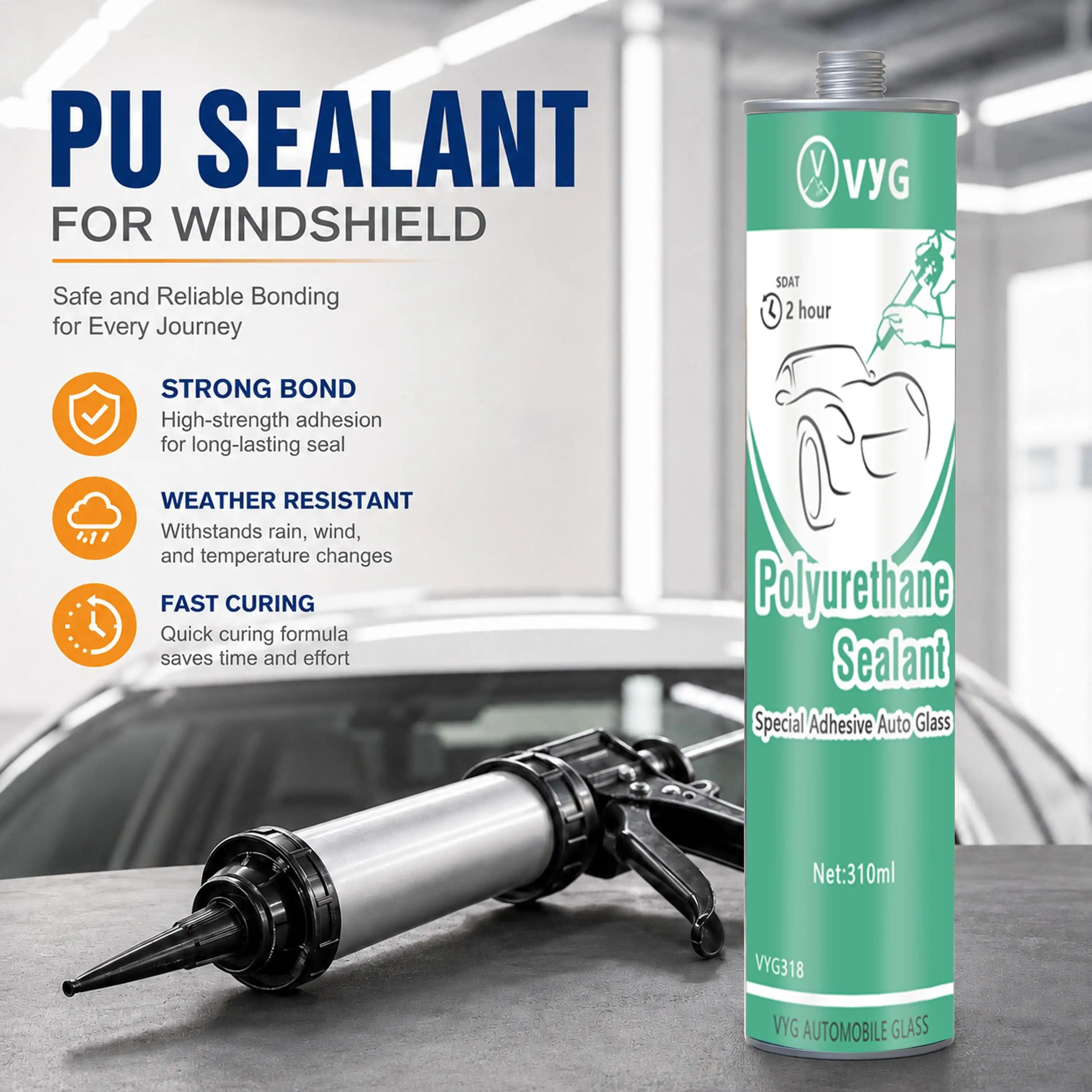
General-purpose silicone works well to seal up cracks and gaps around windows and doors. This sealant can also be used for other tasks. A different job is to keep structure glass in place. Window bonding needs to stick well to glass, metal edges, and painted surfaces in order to do its job. It should also be able to bend and shake with the body. Polyurethane is what professionals use for replacements because it does a good job.
ASTM C920 sorts elastomeric joint sealants by the kind they are and how well they let the joint move. But to fix a car, you still need something that was made and tested for joining glass. No matter what glue you choose, always follow the directions on the package to fix the problem.
People often mix up time terms. After a while, the surface won't feel sticky anymore. Based on the weather, ours lasts anywhere from 15 to 40 minutes. The whole bead gets hard during cure-through time. A 7 mm deep bead should be ready in about two days if the thickness is kept at about 3.5 mm per day.
When the car is safe to leave the shop is shown by the safe drive-away time. It's based on tests that showed how strong and how often something would crash. A quick skin doesn't mean a quick drive-away. You should test your shop rules with your guns, glass, and the weather before writing them down.
One-part PU, such as our PU windshield auto glass sealant, is better because it is easier to use. The worker only needs to put on the bead, set the glass, and add the cartridge or sausage pack. They don't need to worry about how much to mix. There is a chemical reaction that cures two-part systems. In controlled settings, this can make things go faster, but they have to do more work and use special tools to mix.
One-piece material is better for daily work in repair chains with a lot of small bays, and it keeps stock simple in all of them. If speed is important, two-part systems may work better for large OEM lines with automated dispensing. Before you look at prices, make sure that the chemistry works with the tools, air flow, and size of your shop.
We put these marks on our sealer. Ask any service provider for the same kind of information and the test method that was used to get each number. The paste can be black, white, or gray, and should have a uniform appearance. It should not sag and should be tack-free in 15–40 minutes, depending on the conditions. It should cure at a rate of about 3.5 mm/day and have a solid content of about 99%. It should be hard (about 45 Shore A), have a tensile strength of about 2.2 MPa, and stretch about 400% before breaking.
It should last for 12 months and come in 300 ml, 600 ml, sausages, and cartridges. It is possible to measure tensile strength and elongation with ASTM D412 and ASTM D2240. ASTM C639 and ASTM D412(a) both measure Shore A hardness. It is easy to bend a bead that is 45 Shore A hard. Before you switch, make sure you know if the company that made your car says you need a higher-modulus glue.
If you look at our product data sheet, you can see that our sealant can stick to glass, metal edges, painted surfaces, and other car parts without a primer. Even though you don't have to clean, that saves you a step. Check the paint and glass on your own first. From what we've seen, the dried bead doesn't turn yellow in direct sunshine, and it stays flexible from -40°C to +90°C (-40°F to 194°F). Water, oils, weak acids, and most car fluids can't hurt it either. When stretched 400%, the bead moves with the body instead of breaking. In the US, where it gets cold in the winter and hot in the summer, this is important.
Cure speed is not a set number. Temperature, humidity, the number of beads, the shape of the joints, air flow, and the amount of water on the ground can all change it. One-part PU hardens from the outside in, so a big or thick bead takes longer to harden than a small one.
Things take longer to happen when the air is dry and cold. Some shops may be able to handle 3.5 mm per day, but that's not always the case. I believe you should record how the cure works during test installations and then include that information in your standard operating procedure. That way, the timing will be the same everyplace.
First, take a close look at the car, the new glass, the paint, the old glue, and any brackets for GPS or cameras. Then, remove any dust, oil, moisture, release agents, or loose residue from the bond areas. Cleaners and activators should only be used if they are okay with both the company that makes the adhesive and the company that makes the vehicle.
Still, you should still do some work to get our PU windshield auto glass sealant ready to use. It can stick to glass without a primer. If the paint is chipped or the finish doesn't look right, you might need to try again before you go ahead with your plan. Prepare a bond well by following written steps. This will help everyone in the chain do it again.
Use a smooth, even bead that isn't stretched out, has gaps, or air trapped in it. Our zero-sag mixture stays round on flat surfaces, so the bead doesn't change shape when you move the glass. If you touch the glass, don't move it for at least 15 minutes. Set it down quickly and don't move it again. Once everything is set up, check to see if it is straight, waterproof, and the camera or sensor works. Write the batch number on the work order. Once a customer tells you about a problem, you can connect it to a certain lot thanks to that small step.
A lot of mistakes are made in different shops. Some people use a sealer that can be used for many things to join buildings together, which could make the link weak. People who don't think about temperature, humidity, or bead size may not understand why cure times vary. It is most likely that the link will not stay in a crash if you drive before the safe drive-away time.
Keeps things in bad shape, which can also cause trouble. Keep track of batches, store our sealant the way the label says to, and use older stock first. It will last for a year. Don't use old stuff again, even if it can still be pushed out. It's less expensive to teach techs these things than to fix a windshield.
Sunroofs, side windows, and passenger cars are just a few of the window and door types that have different needs when it comes to cure speed, shaking resistance, and bead control. A quick and easy-to-use paste might be good if your chain mostly works on public cars.
A fleet shop with lots of glass, on the other hand, might take longer to clean. To use the same sealant in more than one place, everyone needs to have the same tools and training. Try them out on your own glass, with your own guns, and in your own weather before you buy. Start with a test run in a few places, then move on to the rest.
The price per unit doesn't tell the whole story. For our PU windshield auto glass sealant, the final price depends on the formula type, how quickly it hardens, the pack size, the order volume, the color, the certifications, the testing, the customization, the freight, and the duties. To find the cost of landing, add up the costs of storage, gun compatibility, loss, and jobs that had to be redone because they didn't go as planned.
You should ask each supplier about the minimum order size, lead time, sample policy, private labeling, and urgent supply. You should also ask about the shelf life and temperature at which the goods should be stored. It takes one to two weeks to make something, and it can be shipped by sea or land. You have a lot of time to plan your stock for each area.
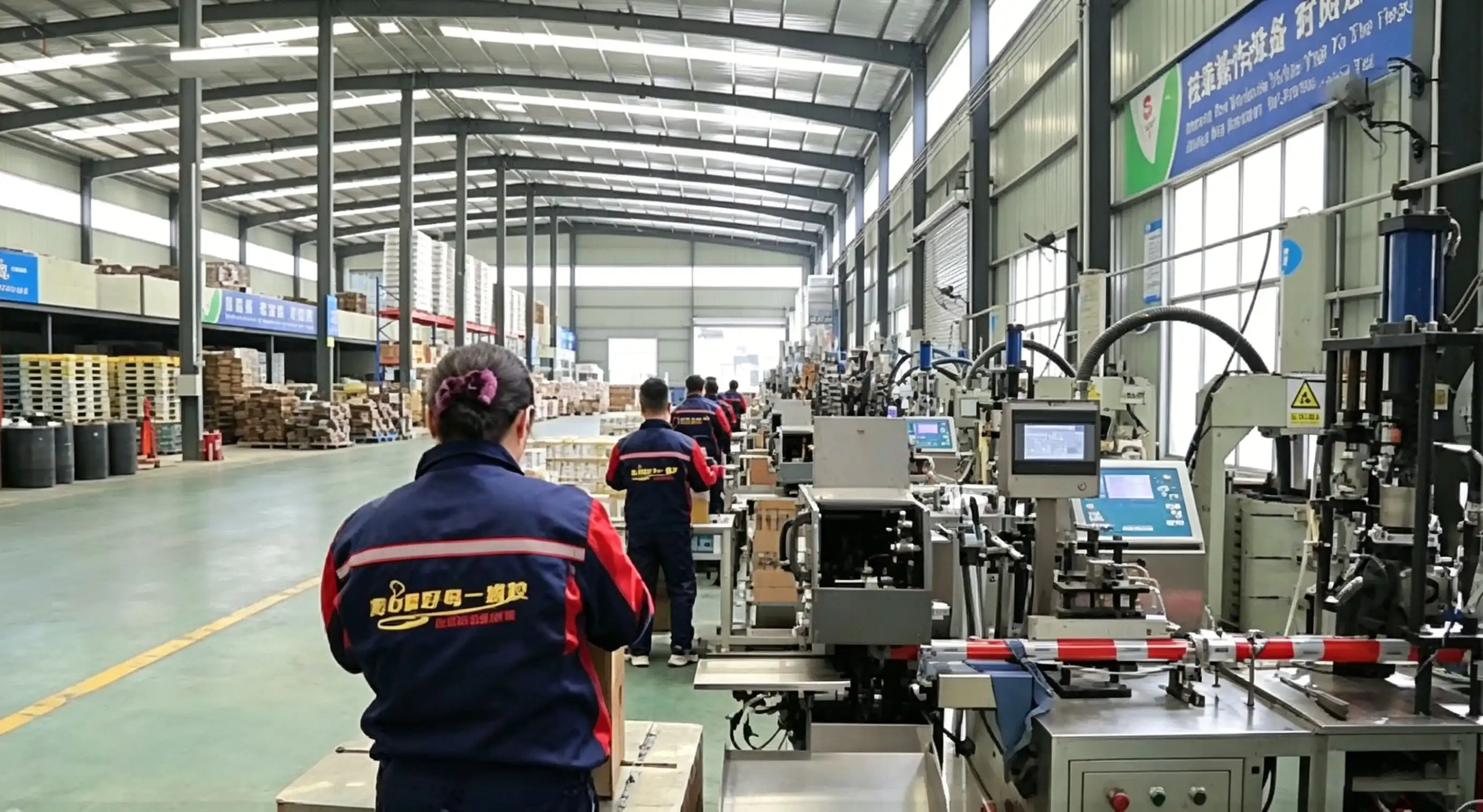
It's more important than any one data point that the consistency, discharge, cure, and binding don't change from batch to batch. Since its start in 2013, Shandong Jiaobao New Material Co., Ltd. has been making things for more than 13 years. ISO, CE, and other groups have checked our products to make sure they meet international standards.
You can tell us what colors and packages you want, and we'll make them according to your OEM/ODM needs. If the quality goes down during the shelf life, we will either give you a refund or send you a new one. It's safer for distributors, service chains, and OEM buyers to buy things with that help.
PU windshield auto glass sealant is good for fixes that need to dry quickly because it bonds structures together and seals in a flexible way. To make sure it's safe, it has to follow rules like FMVSS 212 and clamp metal to glass. Water, air, dust, and sounds can't get in. Other types of rubber don't work as well for protecting glass. The tack-free time, the cure-through time, and the safe drive-away time can all be changed.
The three times can change if the weather, humidity, or size of the beads do. If you know that it can go without tack for 15 to 40 minutes, stretch by about 3.5 mm per day, and elongate 400%, that's a good place to start. But tests on real glass, paint, and tools prove that it fits perfectly. There is the least risk of harm when the beads are even, the preparation is clean, and group records are kept. It is more important to look at total cost and batch consistency than unit price.
Building glass is held together with polyurethane. It works well on painted metal and glass, and the fact that it's bendable is helpful. General-purpose silicone can be used to seal gaps and joints around doors and windows, but it can't be used to stick auto glass in place instead of glue. Repair the car the way it was told to be fixed.
The glue dries in 15 to 40 minutes and about 3.5 mm per day. That number changes based on the beads' width, the temperature, and the humidity. You need to test your own adhesive system on its own to be sure of the safe drive-away time.
We have cartridges or sausage packs that can hold 300 ml or 600 ml. The colors we have are black, white, and gray. You can also ask us to make colors that you want. It will last for one year.
A company called Jiaobao makes PU windshield auto glass sealant. Their goods are ISO and CE certified, and they've been in business for 13 years. They also offer OEM/ODM service. Tell us about your cars, how much you need each year, how you like your packages, and the people you want to sell to. Then we'll help you choose a product and make models. You can email dorashen@cnjiaobao.com or visit shandongjiaobao.com to get a quote.

1. Code of Federal Regulations, Title 49, Section 571.212: Windshield Mounting, 2023
2. ASTM C920, Standard Specification for Elastomeric Joint Sealants, ASTM International, 2018
3. ASTM D412, Standard Test Methods for Vulcanized Rubber and Thermoplastic Elastomers—Tension, ASTM International, 2016
4. ASTM D2240, Standard Test Method for Rubber Property—Durometer Hardness, ASTM International, 2015
5. ASTM C639, Standard Test Method for Rheological (Flow) Properties of Elastomeric Sealants, ASTM International, 2015
6. Handbook of Adhesives and Sealants, Edward M. Petrie, McGraw-Hill, 2007

November 16,2023
Enterprise Name
The sealant has very strong adhesion and performs well even on glass and aluminum. After curing, it remains flexible and shows no cracking. Perfect for our facade projects.
November 16,2023
Enterprise Name
Stable quality across batches. Our customers especially like the smooth application and consistent extrusion. It helps reduce installation time on site.
November 16,2023
Enterprise Name
I used it for bathroom sealing. Excellent waterproof performance and no mold issues so far. It's been holding up very well in humid conditions.
November 16,2023
Enterprise Name
The neutral silicone works well on sensitive materials without corrosion. Very suitable for industrial applications requiring stable performance.

