November 16,2023
Enterprise Name
The sealant has very strong adhesion and performs well even on glass and aluminum. After curing, it remains flexible and shows no cracking. Perfect for our facade projects.
Nov 6, 2026
Yes, in many cases you can remove nail free glue for wall mounting with limited damage, but no one can promise zero damage on every wall. The result depends on the wall finish, adhesive strength, cure time, bead thickness, and removal method. Painted drywall, wallpaper, and plaster carry the most risk. On these surfaces, the glue can grip the top layer harder than that layer grips the wall. In this guide, I explain how the adhesive works, how to cut it free, which walls need extra care, and how to choose a product before installation.
Once inside, nail free glue for wall mounting works best on dry areas that are more concerned with how they look than how they move. The most common places to use it are on drywall seams, baseboards, crown molding, window sills, door frames, and lines that go from wall to ceiling. The structure doesn't move much because these parts are usually painted over.
A water-based paste fills the hole, forms a smooth bead, and blends in with the rest of the surface. Sometimes, how smoothly the wood trim meets the plaster wall is what makes a room look finished or rushed to an interior designer. We make it easy to seal up cracks and gaps around windows and doors with our one-part RTV product.
Choose a cartridge after checking the joint's size and how much it can move. Wide spaces need more filler, and thick beads dry more slowly and can shrink more. Conditions like temperature and humidity can make joints between different kinds of materials move. For instance, the joint where wood and plaster meet is a good example.
Depending on what kind of seal it is and how much it can move, ISO 11600 divides building seals into groups. Plastic groups are even made for joints that don't move around much. Following the guidelines in ASTM C1193 will help you make joints and use sealants correctly. Crystal clear formulas are good for small, stable parts. More flexible versions generally work better for joints that move around a lot during the year.
This type of product isn't always the best option. It isn't meant to be wet all the time, but its surfaces get wet in places like showers, tubs, and countertops. Outside walls let in more rain, sun, and temperature changes. Openings for glazing and expansion joints need to be able to move around more easily.
When this happens, I recommend silicone or another product that is rated for the service condition. Jiaobao also makes neutral and acetic silicone seals, so we can help you find the right stuff so you don't put it in the wrong place. Choose wisely now to avoid most callbacks later.
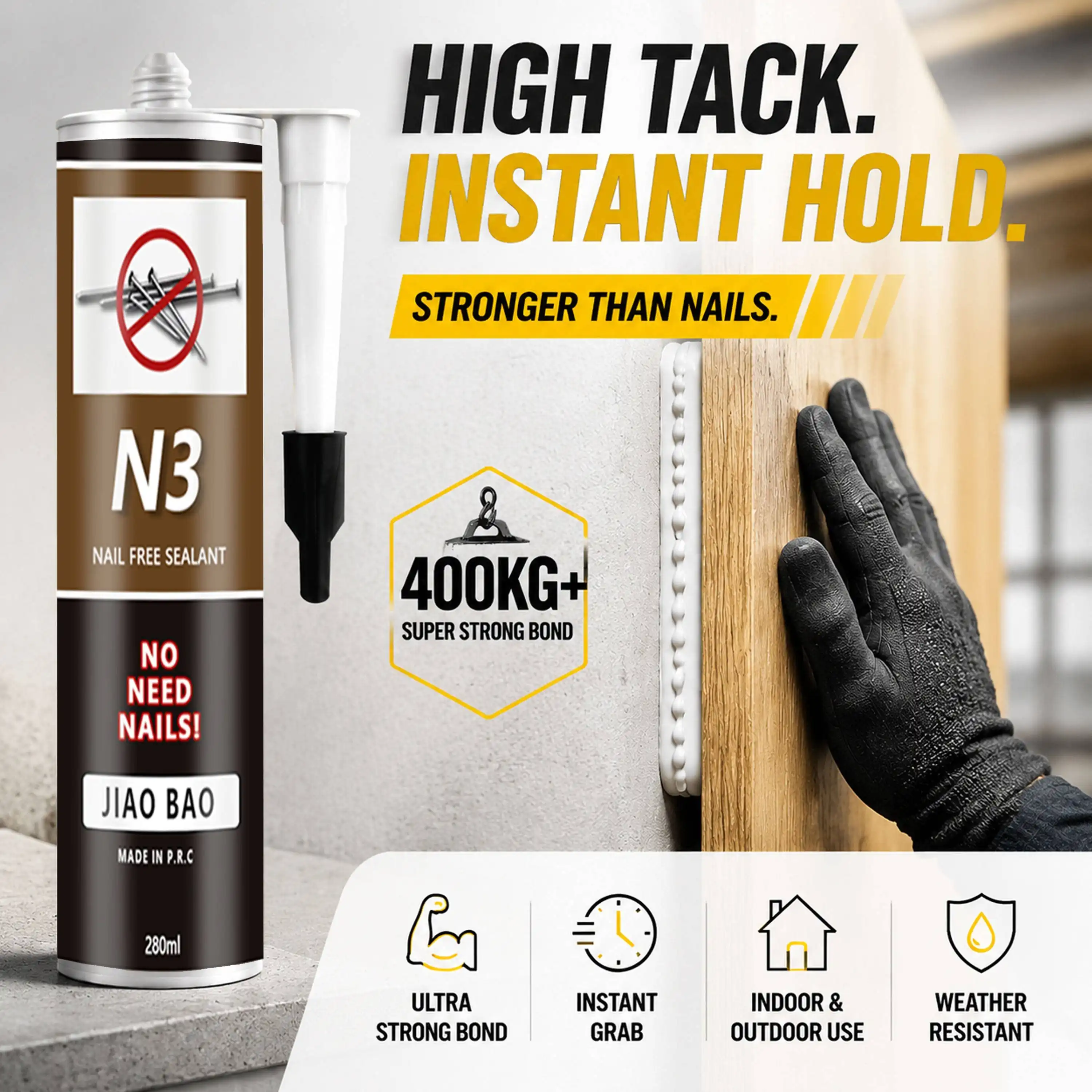
Start with movement and stickiness because they affect how long the bead stays in place. For example, a nail free glue for wall mounting that is too stiff for the joint will tear, and one that doesn't stick well will come off around the edges. Learn how much it can move and what surfaces it sticks to, such as concrete, plaster, gypsum board, wood, MDF, and painted trim, by looking at the technical data sheet.
The ASTM C1521 standard tells us how to check if silicone joints are sticking together properly. A hand-pull test on a fake site tells us a lot right away. No damage was found in our adhesion test, and at 23°C, it has a tensile strength of 0.64 MPa. Those numbers can help you begin your own study.
Shrinkage quietly ruins nice joints. Adhesive sealant beads lose volume when water evaporates from them. There might be a small crack or groove left behind by a thick bead. The groove brightens up in the sun and shows through the fresh paint. Spreadsheets show various shrinkage amounts.
Ensure that the beads don't go deeper than what the manufacturer says is safe, and smooth the surface with a tool before it skins. Later, check the dried finish for holes, bubbles, and changes in color. Buyers notice quickly if a line isn't smooth, so designers care most about surfaces that are smooth. Look at a sample instead of a print picture to judge the finish.
Here are the specifications I check first when a buyer asks for a data sheet.
| Property | Value |
|---|---|
| Chemical composition | Water-based paste |
| Surface dry time (23°C/50% R.H.) | 0.5 to 3 hours |
| Extrusion rate | 163 ml/min |
| Maximum tensile strength (ISO 37) | 0.64 MPa |
| Adhesion rate | No destroy |
| Operating temperature | Protect from freezing |
| Construction temperature | 5°C to 35°C |
| Colors / volume / shelf life | White, Black, Grey, or Custom / 300ml, 600ml / 12 months |
The skin dries in 0.5 hours and 3 hours, and the extrusion rate is 163 ml/min and ≥80 ml/min. Using ISO 7390 is a common way to find sag.
While arranging, matching colors is very important. White, black, and gray are the options, or we can make colors just for you. A nail free glue for wall mounting can then match dark trim, a light wall, or a feature panel. Pick white for most painted walls. Request a special color if you want to leave the part unpainted.
They come in 300ml and 600ml sizes and as cartridges or sausages. With handguns and small groups, cartridges work best. For larger groups that want to reload less often, sausage packs are better. This material will last for a year if you store it properly. Maintain a dry area that doesn't freeze for your stock.
Failures can be avoided by being well-prepared. The joint should be stable and stay within the allowed width and depth. Get rid of any oil, water, dirt, or paint that is sticking around. It's easier for the bead to stick to clean, dry, secure surfaces. When sealing joints correctly, ASTM C1193 says that the surface must be properly prepared.
A clean line that stands out on trim is made by painters tape on both sides. To keep the bead thin and stop it from shrinking too much for bigger gaps, add a backing material first. When working with a new base, like treated board or polymer trim, test it first in a hidden corner.
After cutting the tip to fit the joint, run a constant bead to keep air from getting stuck. Working the bead with a wet finger or a tool for smoothing is best done before the top layer of skin forms. Although you pull the tape, the bead should still feel soft. Let the sealant dry completely before painting. Additional time should be added if the beads are thick or the room is wet. Looking for pinholes, shrinking, uneven edges, or lifting after coloring along the line. Quickly fix any small mistakes; it's easier to do that than to explain them to a customer.
Products don't always cause problems. There won't be as much stickiness if you put nail free glue for wall mounting on top of dust, grease, wet surfaces, or paint that is flaking. A hard substance will break when applied to a moving part. Thicker beads take longer to harden and are more likely to shrink. Painting too early could make the film twist or change color. Most projects inside end with paint, so compatibility and drying time are closely related.
Harder surfaces tolerate removal better, but installing interior paste in a wet, outdoor, or high-motion area is not recommended unless the maker has given their approval for that use. During storage and shipping, water-based products also need to be kept from freezing. Avoiding these mistakes saves time, money, and image and doesn't cost anything. Check the technical data sheet to see the skin time, curing time, moving limits, and application temperature before starting work on hard substrates.
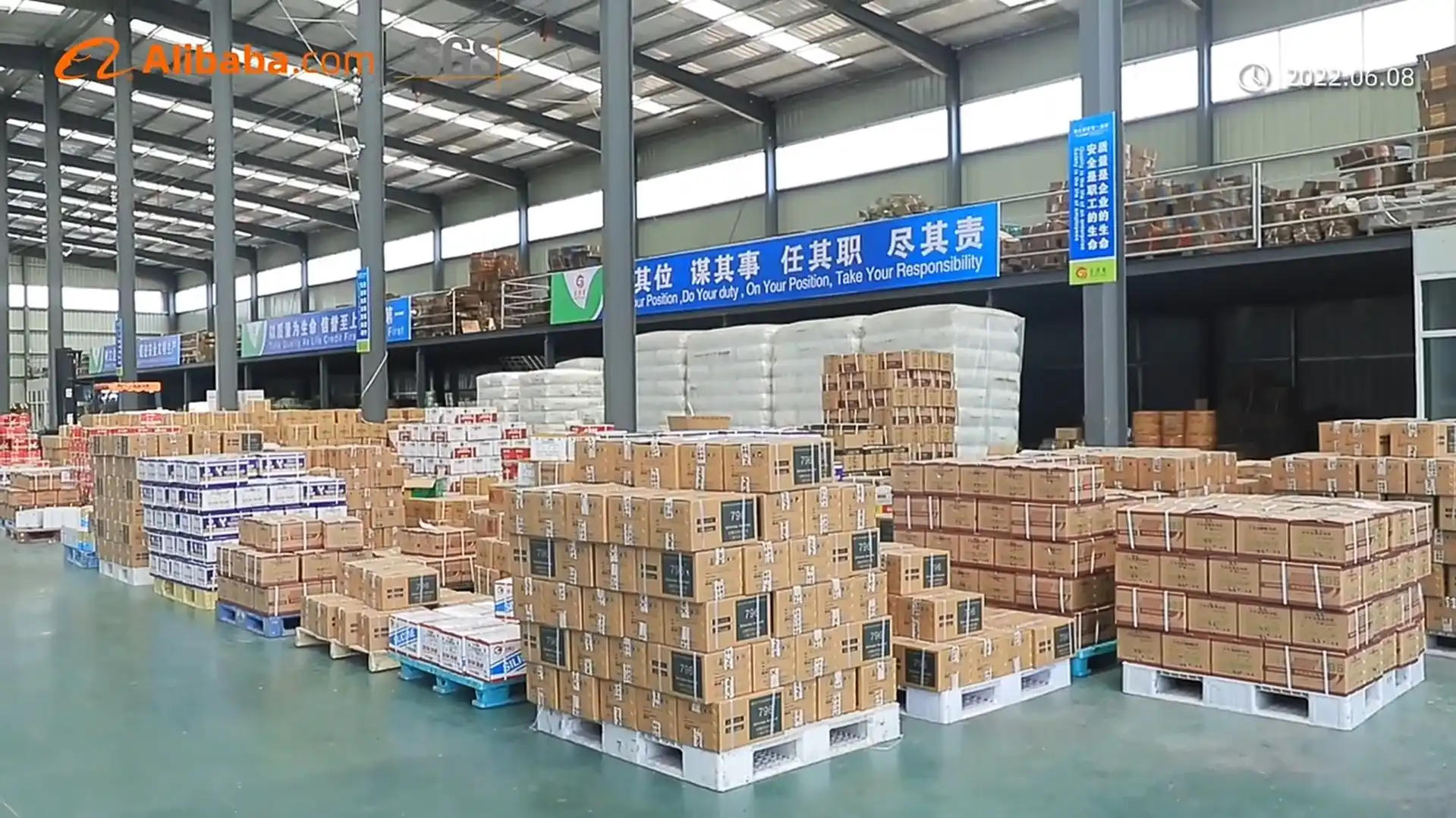
Failure to prepare the surface is a common error. There won't be enough adhesion if you apply material over debris or damp patches. Painting too early is another; wait until it's totally dry before adding the topcoat. For large orders, review batch testing, accurate filling, packing checks, certificates, and export papers. An stable quality control system has been in place at Shandong Jiaobao New Materials since it opened in 2013. Our products are approved by ISO and CE, and they can be sent by land or sea with a 1–2 week lead time.
Though "caulk" can mean a lot of different chemicals, it doesn't really tell you much about how well it works. Before buying something, always look at what it's made of. nail free glue for wall mounting is good for painting because it has a smooth surface that you can clean with water while it's still wet. While silicone doesn't soak up water and is easier to move, paint doesn't stick to it very well, so it's best for bathrooms and joints that get wet. Latex sealants are governed by ASTM C834, and elastomeric joint sealants are covered by ASTM C920.
The following short list should be used every time you buy something. Interior of the joint should be dry and not move around much. Examine how well the paint adheres to the surfaces and check to see if it works with them. See how many times extrusion, shrinking, and skin time have happened recently. Check the color and finish of a sample bead. See the format, volume, lead time, documents, and cartridge or sausage format. Lastly, don't just compare the unit price; also look at the total cost, which should include shipping, labor, repairs, and the risk of the guarantee.
Different buyers look at various things. Contractors and interior designers want it to be simple to extrude, have smooth tools, come together quickly, and work with regular guns. When importing and distributing goods, they care about how long they will last, how strong the packaging is, what sizes are popular, documents, and storage. Buyers look at things like technical quality, shipping speed, order minimums, and batch uniformity. Buyers from OEMs need to change the artwork, colors, samples, and packing. For these reasons, we offer 300ml and 600ml sizes and OEM/ODM support.
Decide on a nail free glue for wall mounting by looking at the joint itself. Plastic parts that get wet, are outside, or have a lot of movement should be made of silicone or a different type of product. This material is great for filling dry, low-movement gaps inside of doors, windows, trim, and wall-to-ceiling lines.
The final finish is affected by issues like movement, adhesion, shrinkage, paintability, and drying speed. This is how buyers can compare products using standards like ISO 11600, ASTM C834, and ASTM C1193. You can keep most mistakes from happening if you plan ahead, use the right tools, and wait long enough for the paint to dry.
Absolutely, nail free glue for wall mountings can usually be painted over once they're dry. After testing the paint on a small piece of wood, wait until it's totally dry before adding the topcoat to ensure no peeling occurs.
Thirty minutes later, our sealant is dry on the skin. Complete curing relies on how thick the beads are, the temperature, and the amount of moisture in the air. For stationary parts inside, wait for the full cure period before loading.
On the contrary, this works best for dry, stationary parts. Pick silicone or another product that is made for that purpose if the joint will get wet or be outside. For heavy safety-critical loads, mechanical fixings remain necessary.
Need a business that makes nail free glue for wall mounting? Available in white, black, gray, and custom colors, Jiaobao has 300ml and 600ml sausage or cartridge packs. They follow ISO and CE standards and provide OEM/ODM support. Leading time for production is one to two weeks. Emailing dorashen@cnjiaobao.com will get you samples, technical details, or a quote for buying in bulk. Visit shandongjiaobao.com to learn more.
1. ISO 37: Rubber, Vulcanized or Thermoplastic — Determination of Tensile Stress-Strain Properties, ISO, 2017
2. ASTM D3359: Standard Test Methods for Rating Adhesion by Tape Test, ASTM International, 2023
3. ASTM D4541: Standard Test Method for Pull-Off Strength of Coatings Using Portable Adhesion Testers, ASTM International, 2022
4. ASTM C920: Standard Specification for Elastomeric Joint Sealants, ASTM International, 2018
5. ASTM C794: Standard Test Method for Adhesion-in-Peel of Elastomeric Joint Sealants, ASTM International, 2018
6. ISO 11600: Building Construction — Jointing Products — Classification and Requirements for Sealants, ISO, 2002
November 16,2023
Enterprise Name
The sealant has very strong adhesion and performs well even on glass and aluminum. After curing, it remains flexible and shows no cracking. Perfect for our facade projects.
November 16,2023
Enterprise Name
Stable quality across batches. Our customers especially like the smooth application and consistent extrusion. It helps reduce installation time on site.
November 16,2023
Enterprise Name
I used it for bathroom sealing. Excellent waterproof performance and no mold issues so far. It's been holding up very well in humid conditions.
November 16,2023
Enterprise Name
The neutral silicone works well on sensitive materials without corrosion. Very suitable for industrial applications requiring stable performance.