November 16,2023
Enterprise Name
The sealant has very strong adhesion and performs well even on glass and aluminum. After curing, it remains flexible and shows no cracking. Perfect for our facade projects.
Oct 30, 2026
Why choose GP silicone sealant for glass and aluminum applications? The short answer is flexibility, weather resistance, and easy application. Glass and aluminum expand and contract at different rates. A general-purpose silicone stays elastic enough to absorb that movement in doors, windows, storefronts, and partitions. Jiaobao's one-component, moisture-curing acidic silicone has a 15-minute tack-free time, elongation above 300%, and a listed bond strength of 1.5 MPa. It comes in 300ml and 600ml cartridges and sausage packs. This article explains how it performs, where its limits are, and what to check before you buy.
The GP silicone sealant for glass and aluminum is a one-part elastomer that hardens when it comes in contact with water. It can be used for general sealing and weatherproofing. It changes based on the humidity in the air, so you don't need to mix it to use it. If you let water, UV light, or ozone hit it, it won't break. It will also stay flexible. It's used by builders on the outside of stores, on windows, doors, shower stalls, and home walls. But "general-purpose" can only mean a few things.
There is no mention of solid glass or service at high temperatures in this text. You should first decide what the joint will do. After that, you can pick the sealant. With that one simple step, you can avoid most problems where the product and the application don't match.
Soda-lime glass grows about 9 micrometers per meter per degree Celsius, while aluminum grows about 23 micrometers per meter per degree Celsius. That space means that the frame moves about 1.4 millimeters and the temperature changes by 50°C. If the glue was too strong, it would break or peel. The difference is filled by a stretchy silicone bead.
The right-sized bead also keeps air, water, and dust from getting between the frames and the front of the house. When you match a frame finish with white, gray, or black, the joint stays neat. It's ready to use, so it can be used for small production lines, fixes, and work on the job site.
Our acidic, one-component RTV silicone paste is used to seal door and window joints. It has a tack-free time of 15 minutes, a Shore hardness of 18, a maximum bond strength of 1.5 MPa, elongation of more than 300%, a service temperature range of -50°C to +150°C, a shelf life of 12 months, and various colors (white, black, gray, custom). It comes in sausage and cartridge packaging. The heat range works in hot and cold places, and the 15-minute tack-free time keeps things going. If you need a certain color, we can talk about unique matching.
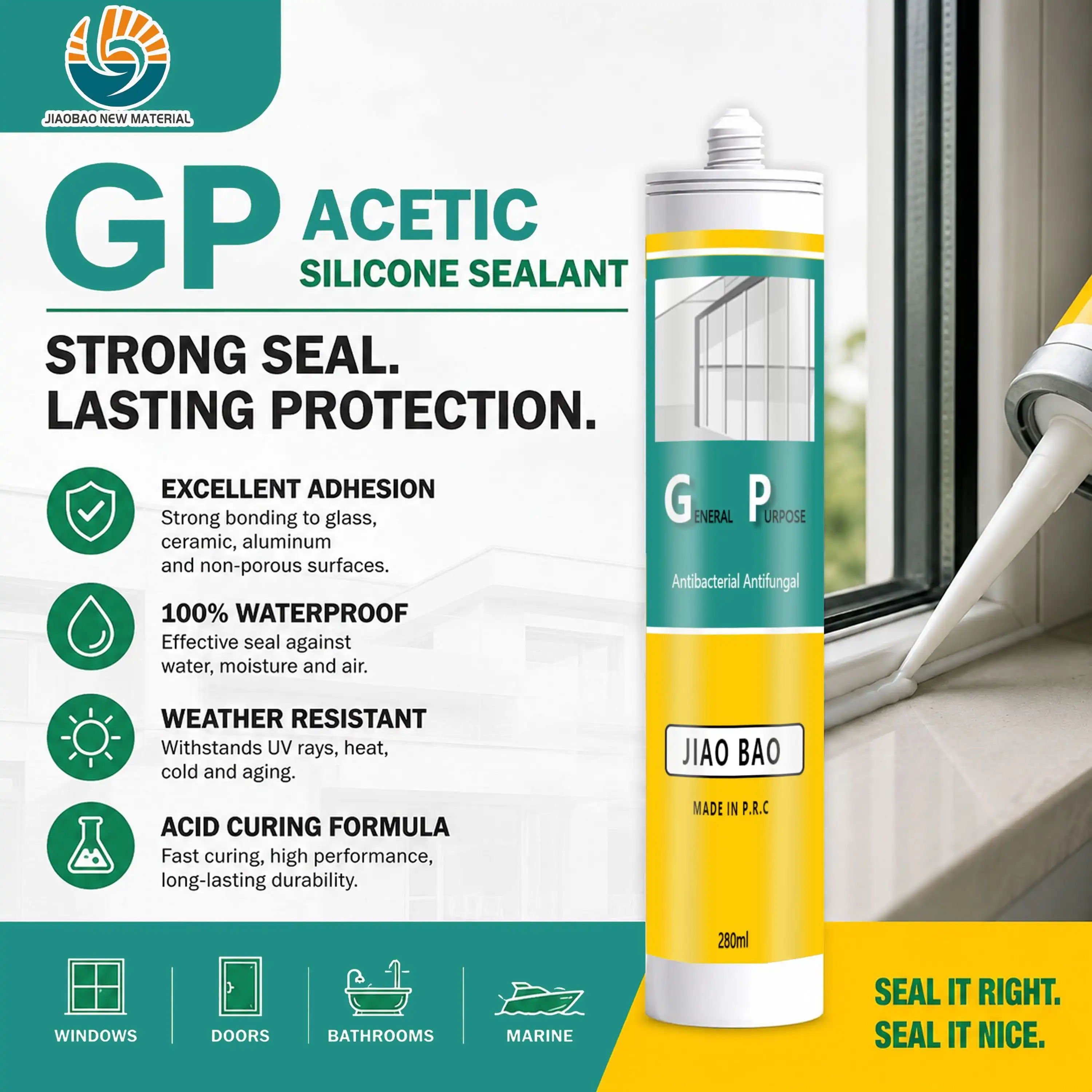
It gives off acetic acid as it cures, just like our acidic product does. It smells like vinegar and the skin forms quickly. The glue works well on powder-coated or anodized aluminum and glass. A by-product called acetic acid can hurt copper, brass, and untreated mill-finish aluminum. For these surfaces, neutral-cure silicone is better.
Once we know what your substrates are, we can help you find the right chemistry. Jiaobao also makes silicone seals that are neutral. You can't just pick something based on price; you also need to look at the aluminum, the finish, and any other materials that are close by.
Structural rubber can hold weight. And a GP silicone sealant for glass and aluminum product can't be used in place of it in structural glass because it needs to pass tests like ASTM C1184 and meet standards. Polyurethane can be sprayed on and works well in some mechanical situations. However, silicone tends to last longer when it is heated and exposed to UV light for a long time.
Make sure the aluminum frame is finished before you seal it, because you can't paint on silicone that has hardened. Standard work works best with goods that only have one part, while automatic, high-volume production works best with systems that have two parts. Choose a high-temperature rubber if the service temperature is higher than the built-in temperature. It's in the middle when it comes to weather sealing that isn't structural.
We like to be clear about what the limits are. To keep things safe, GP silicone sealant for glass and aluminum shouldn't be used to join structural glass, curtain wall systems that hold weight, or other parts that need to be stuck together. If you use it for something other than what it was tried for, it might lose its stickiness, leak, or not work right. There are efficiency guidelines that insulating glass units must meet, such as those in ASTM E2190.
Make sure that your butyl, spacer, and desiccant products will work with them before you start making them. When the base isn't round or the temperature is very high, you need a different method as well. Early on, let us know if your project fits into any of these groups, and we'll help you come up with a better work.
What makes a joint last longer is how well you prepare it. Oil, dust, old lube, and release agents should not be on the aluminum or glass. They should also be dry and clean. It's called a "two-cloth wipe." If you want to remove isopropyl alcohol quickly, you should use a clean, dry cloth to put it on and then another one to wipe it off.
The dirt won't come back this way. Whether the aluminum is mill-finish, anodized, painted, or powder-coated changes how well it sticks to other things. Do a small test to see how well the real stuff sticks before you make the whole batch. If you skip this step, many fields will fail.
First, check to see if the joint is inside or outside, moves or stays still, and is there for style or function. The backer rod controls the depth of the bead and makes sure the sealant has the right shape. Masking tape keeps the edges clean. Use a bead that goes all the way through and doesn't break. This will get rid of any holes or air spots in the sealer. Press it against both sides with a strong tool.
How long it takes to cure varies on the joint's depth, temperature, humidity, and air flow. GP silicone sealant for glass and aluminum loses its sticky feel after 15 minutes, but having a skin on top is not the same as being fully cured. Do not stress or wet the joint until the technical data sheet says it is ready.
People keep making the same mistakes: they seal over wet or dirty surfaces, they don't test the aluminum that has been covered, they use the wrong joint width, and they put on too much sealant depth. The skin can also form and heal more slowly in harsh weather, rain, and places where air can't flow.
Some glues that aren't very good have oil extenders in them. Less oil in the bead makes it shrink, and it can tear or pull away from the base. Follow the joint-design instructions from the manufacturer, use a backer rod if needed, and make sure the site conditions don't go beyond what the product can handle.
A sealant doesn't work by itself; it needs other parts to work. Learn about its range of temperatures, how it can move, how strong it is, how long it can stretch, how hard it is, how fast it extrudes, and how long it takes to cure. Our item has a Shore hardness of 18 and an increase of more than 300%. The bead is soft and stretchy, which is good for joints that move.
For projects that will be outside, it is common to need tests for temperature cycles, water absorption, UV aging, and adhesion after aging. In the US, ASTM C920 is the standard for rubber joint sealants. Ask any provider how their data fits into that standard. How long something lasts depends on how it was built, the weather, its orientation, and how well it is taken care of.
The information from the lab doesn't mean as much as the results of your own work. Test common samples on the real glass, the aluminum finish, and the things that are next to it. Write down what primer was used, how the surface was cleaned, how it dried, and what happened. ASTM C794 talks about a method called "adhesion-in-peel."
If the sealer tears inside itself, it means that the whole thing has failed. If the glue doesn't stick and the aluminum comes off easily, there is a problem. Before you approve a formula, give yourself time to test samples. We give you samples and talk to experts to help you with this step.
Once the work is approved, quality checks keep going. During application, check to see how clean the substrate is, how big the joints are, how the beads are connected, the tooling, and how the cure is going. Batch coding links items that have been bought and installed to production records. This makes troubleshooting go faster.
Find out from your provider what the safety and technical data sheets are, how long something will last, how to package it, and any compliance papers. We have been making things for more than 13 years, so our quality control method is based on that. Our goods are also certified by ISO and CE. Long-term checks should look for peeling, cracks, discoloration, warping, loss of adhesion, and leaks.
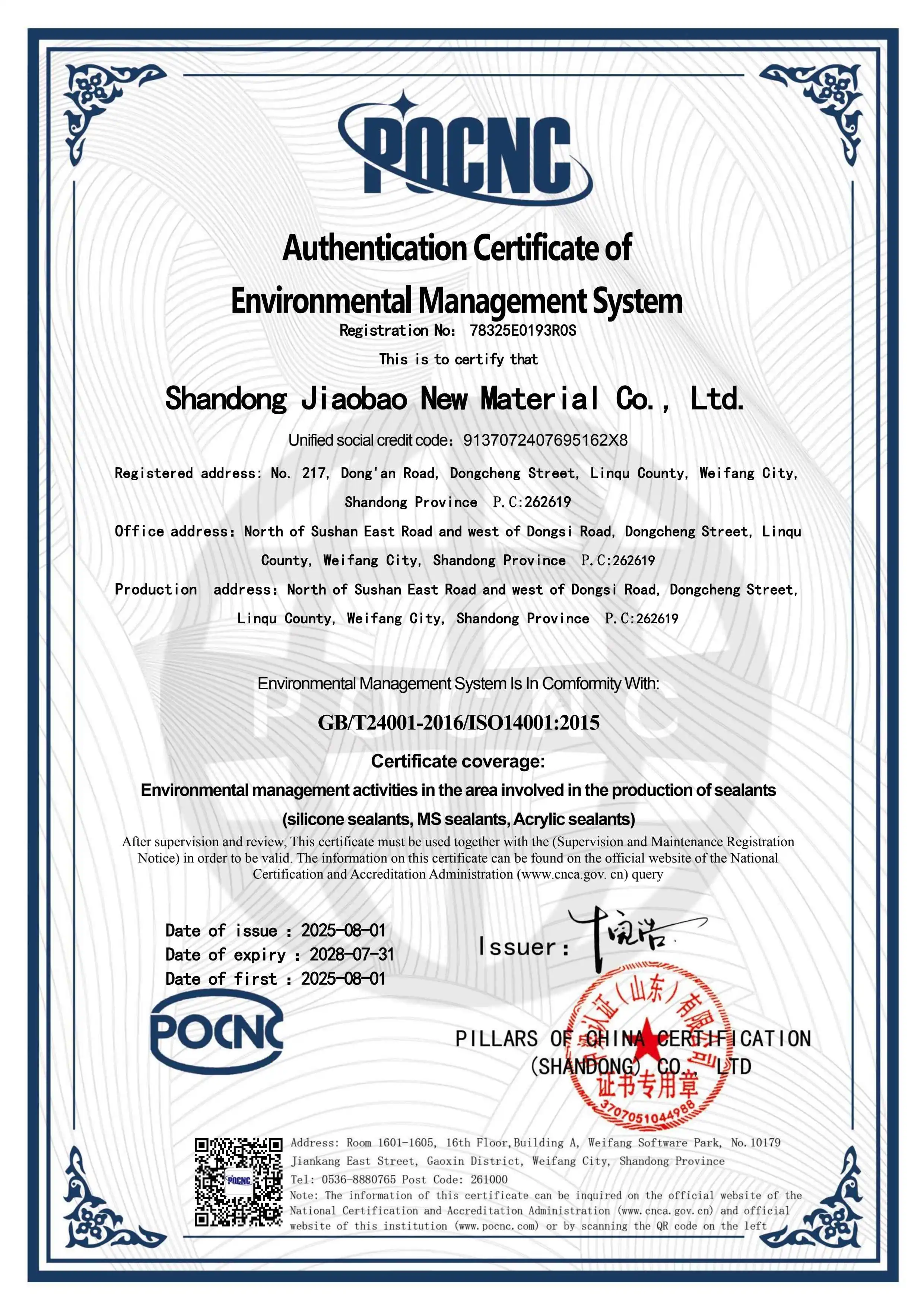
Starting with the project's goal, size, weather exposure, packing needs, and legal requirements is a good place to start. GP silicone sealant for glass and aluminum is widely supplied to window makers, facade contractors, glass processors, distributors, and private-label buyers who need different formulas and terms of supply. Check to see how it moves, dries, sticks, and responds to heat.
Also, see how well it works with nearby concrete, paints, gaskets, plastics, and stone.Then look at the chemical that cures it. It is best to use neutral cure on materials that are sensitive instead of acetoxy cure for most tasks. If you need to change the color or the way it's packed, our OEM/ODM service can do that for you. Our acidic sealant works well on door and window parts.
There should be more than one unit price used to judge big sales, not just the unit price. The final price is based on the quality of the formula, the size of the order, the color, the packaging, the need for certification, the freight, customs, waste, and where the package is going. Find out the minimum order size, capacity, wait time, shelf life, storing conditions, and if samples are available.
With a 12-month shelf life, it's important to plan how to rotate stock. We can ship by land or sea, and the wait time is one to two weeks. Before you approve a large order, you should look over the export documents, data sheets, and make sure the pallets are stable and that the packaging is safe from heat, moisture, and freezing.
A maker does more than just put together catalog items for a living. Large orders will all have the same cure, color, and stickiness because production is controlled, raw materials are always the same, and tests are done on each batch. Since it began in 2013, Shandong Jiaobao New Material Co., Ltd. has been the top company making colored silicone sealants, neutral and acidic types, sealants that keep out the weather, and building sealants.
Our skilled staff can check the types of glass, aluminum coatings, and joint conditions on a package before it is sent out. If the quality goes down during the shelf life, we will either give you a refund or send you a new one. Window makers, dealers, and OEMs are less likely to lose money when they buy because of this help.
GP silicone sealant for glass and aluminum sticks to both materials even when they move at different speeds. It doesn't react with water, UV light, or ozone, and it comes in a cartridge that is easy to use. There are metals that react better to acetoxy cures than to neutral cures. Also, neither can be used instead of structural silicone or insulated glass closure systems because each has its own needs. For good results, you need clean surfaces, the right joint design, and tests on real substrates to see how well the glue sticks.
You can do this with the help of standards like ASTM C920 and ASTM C794 for GP silicone sealant for glass and aluminum. It is also important to pick the right supplier. How things turn out in the long run depends on things like batch consistency, lead time, documentation, and the total cost of landing. The best seal is made by matching the product to a part that isn't structural and making sure it works before it's made.
Not all the time. Acetic acid is released when something cures, and it can damage copper, brass, and aluminum that hasn't been worked on yet. Any finish that has been anodized or powder-coated on aluminum should work with it, but check your own finish first. If the aluminum is sensitive, neutral cure works better.
Paint won't stick to rubber that's already set. Paint the aluminum frame before you seal it. Pick a different finish if you need to paint over the bead.
No, structural glass needs a silicone that can hold its own weight, like one that meets ASTM C1184. It is made to stick to most things and keep out the weather.
In 15 minutes, our item makes a skin that doesn't stick. Before putting stress or water on the joint, make sure to read the technical data sheet. The full cure depends on the temperature, humidity, air flow, and depth of the joint.
The business Shandong Jiaobao New Material Co., Ltd. makes GP silicone sealant for glass and aluminum. They've been in business for more than 13 years and are certified by both ISO and CE. They also offer OEM/ODM service, lead times of one to two weeks, and support for refunds or replacements during the shelf life. We'll help you find a product that works if you email us at dorashen@cnjiaobao.com with your materials, color, and number needs. Go to shandongjiaobao.com to find out more.
1. ASTM International, Standard Specification for Elastomeric Joint Sealants (ASTM C920), 2018
2. ASTM International, Standard Test Method for Adhesion-in-Peel of Elastomeric Joint Sealants (ASTM C794), 2018
3. ASTM International, Standard Specification for Structural Silicone Sealants (ASTM C1184), 2014
4. ASTM International, Standard Specification for Insulating Glass Unit Performance and Evaluation (ASTM E2190), 2019
5. Glass Association of North America, GANA Glazing Manual, 2008
6. Klosowski, J. M. and Wolf, A. T., Sealants in Construction, Second Edition, CRC Press, 2015
November 16,2023
Enterprise Name
The sealant has very strong adhesion and performs well even on glass and aluminum. After curing, it remains flexible and shows no cracking. Perfect for our facade projects.
November 16,2023
Enterprise Name
Stable quality across batches. Our customers especially like the smooth application and consistent extrusion. It helps reduce installation time on site.
November 16,2023
Enterprise Name
I used it for bathroom sealing. Excellent waterproof performance and no mold issues so far. It's been holding up very well in humid conditions.
November 16,2023
Enterprise Name
The neutral silicone works well on sensitive materials without corrosion. Very suitable for industrial applications requiring stable performance.