November 16,2023
Enterprise Name
The sealant has very strong adhesion and performs well even on glass and aluminum. After curing, it remains flexible and shows no cracking. Perfect for our facade projects.
Oct 5, 2026
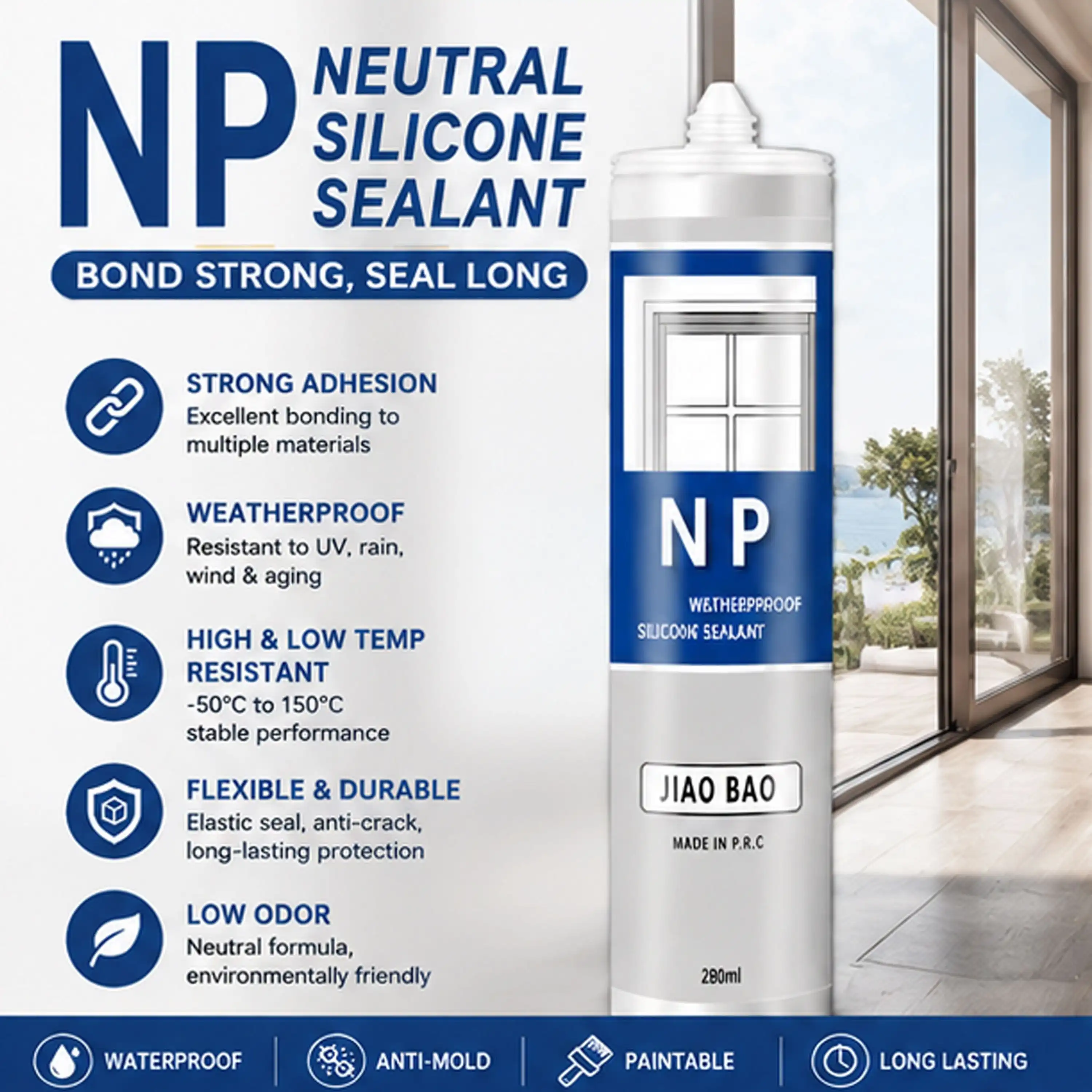
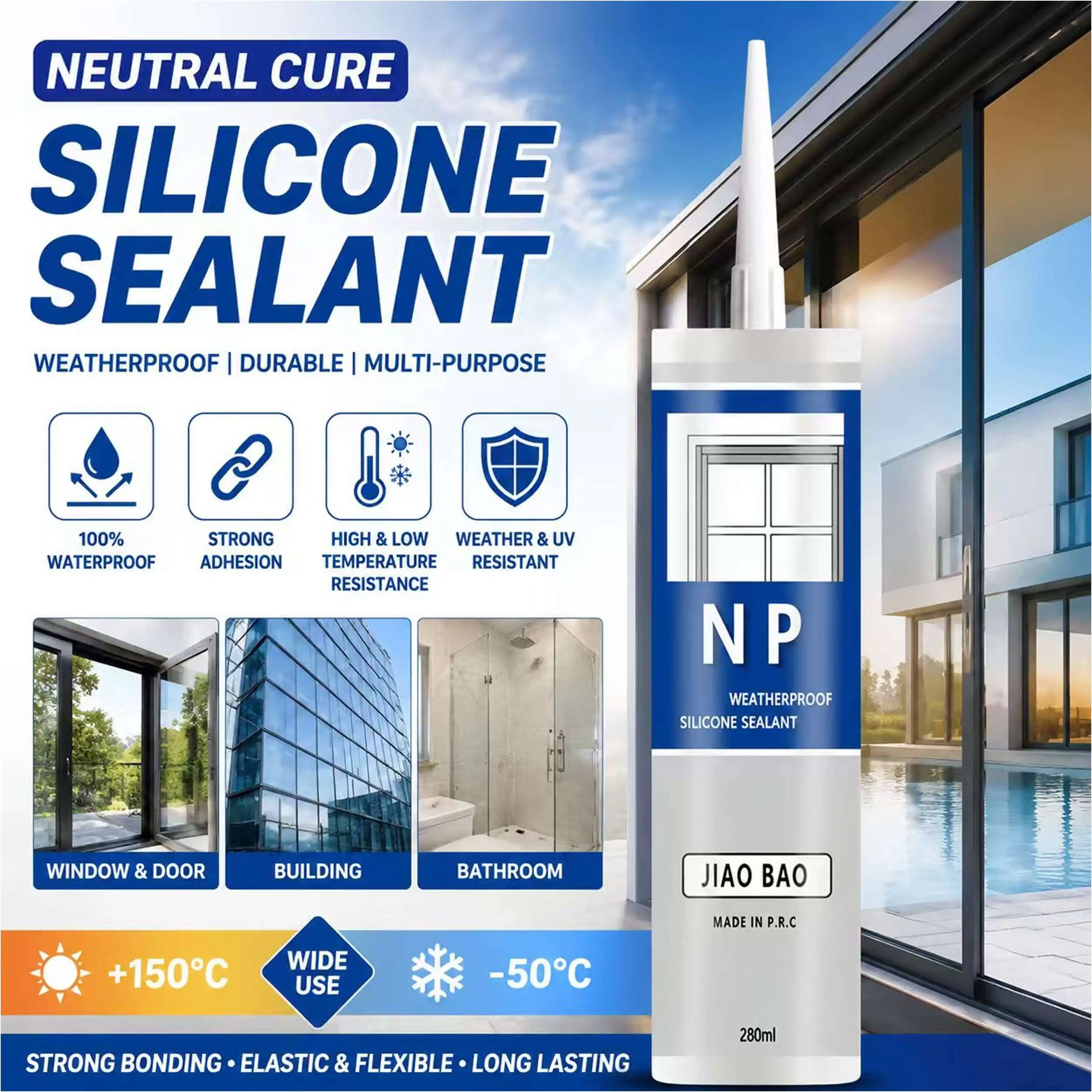
If you manage procurement for curtain wall systems, metal door and window manufacturing, or HVAC equipment, you already know that choosing the wrong sealant can trigger costly rework, warranty claims, or project delays. The short answer: a one-part, neutral-cure silicone sealant specifically engineered for non-porous metal substrates delivers the most reliable performance. Jiaobao's NP silicone sealant for aluminum & metal combines Shore A 30 hardness, 0.7 MPa tensile strength, and a temperature range of -50°C to +150°C—making it a technically sound choice for demanding metal sealing applications in construction and industrial environments.
Acetic acid is released when standard acetoxy silicones harden. That acid oxidizes and wears away the surface of metal or covered steel that hasn't been treated, which makes it look bad and makes it harder to grip. This reaction doesn't happen at all with a neutral-cure formula, so it can be used on mill-finish aluminum, anodized profiles, powder-coated steel, and stainless steel surfaces without generally needing a protective primer.
One-part RTV (Room Temperature Vulcanizing) paste is what Jiaobao makes. It cures by soaking up water from the air. When the temperature is 25°C and the humidity is 50%, the surface breaks down after 30 minutes. This stuff dries out in 7 to 14 days, but it dries faster in warmer, more humid places, which is good for building projects that happen outside. This cure profile makes NP silicone sealant for aluminum & metal a reliable choice for exterior metal fabrication and installation.
We know the following about how well this covering works:
These features take care of the things that procurement engineers usually talk about in technical reviews: how well it resists rust, how flexible the joints are, and how well it stands up to the weather. This means that the product paperwork can be used for compliance checks in the US, Europe, and the Middle East since it is ISO and CE approved.
Metal can be sealed in a lot of different ways, and each has its own pros and cons. Seals made of polyurethane stick well at first, but after being in UV light for a long time, they get hard and crack. Because of this, they are not as good for use on metal curtain walls outside. Over time, acrylic seals get hard, and they can't handle changes in temperature like metal parts can. Epoxy-based products don't bend easily, which is a big problem when aluminum profiles get bigger and smaller as the seasons change.
Because they are sensitive to chemicals, polysulfide sealants need to be handled carefully when they are being used on glass. Also, in places with low humidity, their cure profiles can be all over the place. As was already said, acetoxy silicone is still a cheap way to join two pieces of glass together. However, it can eat away at reactive metals.
In a unique situation, neutral-cure silicone has the same weather resistance and elasticity as silicone, but it doesn't react chemically with metal. Tests done by a third party using ASTM C719 Class 25 standards show that good neutral silicones keep their unified structure through many joint movement cycles. They last longer than most other sealant chemicals in metal parts that are used outside.
You need to know how to seal different kinds of metal in different ways. Metal curtain walls should not sag, stay stable in UV light, and be able to move around as shown. Metal door and window production lines need paint that dries quickly, stays the same color, and works with automated dispensing equipment. To properly seal HVAC ducts, you need materials that can handle temperatures above room temperature and that can bend over time at joints that move around while the system is going. This is exactly where NP silicone sealant for aluminum & metal proves its value across curtain wall, fenestration, and HVAC applications.
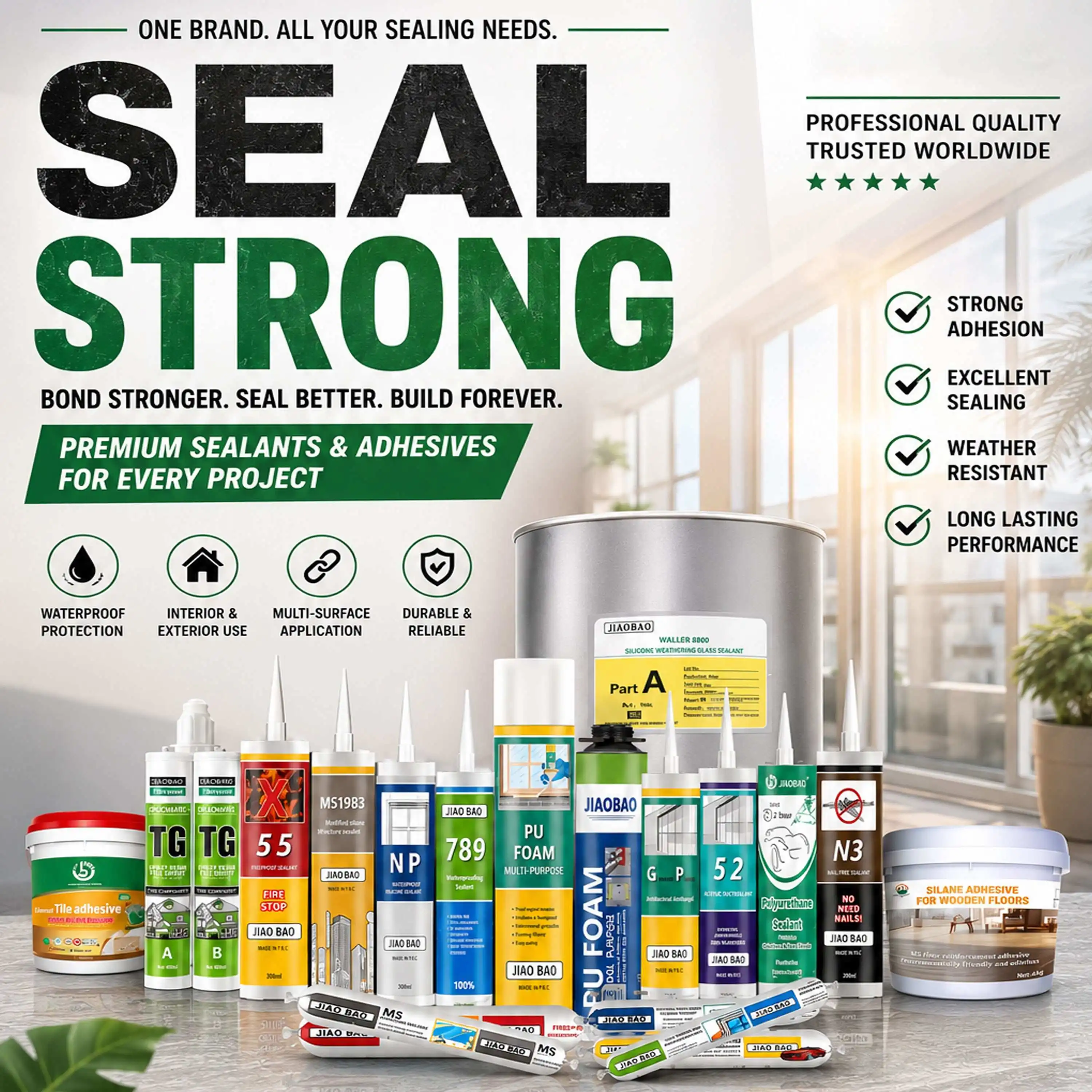
Jiaobao's phrase can be used in all three scenarios. The item comes in 300 ml cylinders and 600 ml sausage packs, so it can be used with caulking guns that are used by hand on the job site or with automatic dosing systems on production lines. You can choose from white, black, gray, or a color that is custom-matched. The color of the sealant lines that can be seen must match the color of the finished profile. This is a detail that manufacturers do not want to miss.
If a distributor or brand owner needs private-label packaging, Jiaobao can do full OEM/ODM customization. To do this, the formula needs to be changed to match local standards like ASTM C920 or building codes in the area. Part of this is also custom color development and packages that are ready to send with English technical data files. Since it takes one to two weeks to make something, procurement teams don't need to keep extra goods on hand in case a seller is late. They can instead plan deliveries to fit with the goals of the project.
Most sealant bonds on metal fail because the surface wasn't prepared well enough. Alum and steel surfaces need to be free of oils, rust waste, release agents, and dust before they can be used. Isopropyl alcohol (IPA) and two clean cloths are often recommended as a way to clean. First, wipe the surface with a cloth that has been wet with the solvent. Then, dry it right away with a second clean cloth before the solvent breaks down and leaves behind dirt.
It is usually possible to use neutral silicone on aluminum that has already been anodized or powder-coated without a binder. For mill-finish or manually polished aluminum, an adhesion promoter that works with the metal is helpful when the joints will be under constant dynamic stress. NP silicone sealant for aluminum & metal handles both scenarios, but specifying the right surface preparation is what ensures long-term bond reliability.
After cleaning the surface, fill the joint depth with a continuous bead of sealant, making sure there are no air pockets. Work on the bead during the skin-over time, which usually lasts 30 minutes. This will give it a smooth, weather-tight shape. If the metal is hot and in direct sunshine, don't put the product on it. The faster surface fix could trap material under the skin that isn't fully fixed.
ASTM C794 says that regular peel contact tests should be part of quality control on production lines. The sealer must tear inside itself if the failure mode is unified. The bead should easily peel off the metal if the failure mode is adhesive. This means that either the surface is dirty or the base doesn't work with the bead.
The items from Jiaobao can be bought through Alibaba International, direct plant requests, and distributors in your area. It is common for U.S. procurement teams to ship goods by sea from Shandong province to major ports on the East or West Coast. Logistics that are flexible on land and sea can handle both big and small tasks.
As more people order, the prices go up, and you can ask for samples before you place a big order. If there is a problem with the quality within 12 months, Jiaobao will either return or replace the item. When buying managers place their first order with a new provider, this is a good way for them to lower their risk.
You can ask for technical documents like TDS (Technical Data Sheets) in English, safety data sheets, ISO and CE certificates, and test results that use ASTM and GB standards as guides. These materials make it faster to review internal specifications, send work to clients, and make sure that import rules are followed.
How you protect metal and steel tasks is a technical choice that has real-world financial effects. Polyurethane, acrylic, and acetoxy choices don't hold up as well against weather, rust, and keeping joints flexible as a neutral-cure silicone made just for metal surfaces. People have tried Jiaobao's one-part RTV neutral silicone caulk and found it to work well. It also has certifications from around the world and can be customized by OEMs for markets all over the world. Whether you're putting up a curtain wall, making metal windows, or closing an HVAC system, if you use the right product specs, you can avoid problems that cost a lot of money in the future. NP silicone sealant for aluminum & metal is formulated precisely for these demanding metal protection scenarios.
It takes 7–14 days for the full cure to happen when the temperature is 25°C and the humidity is 50%. This process goes faster in places that are warmer and have more water. The surface stops being sticky in 30 minutes, so you can use tools and do light handling right away after applying it.
Of course not. When the neutral-cure chemistry hardens, it doesn't leave behind any acidic or basic residue. If something is anodized, powder-coated, galvanized, or made of stainless steel, it won't go bad.
Yes. No changes were made to the formula between -50°C and +150°C, which is the temperature range where most HVAC systems work. It doesn't get less sticky, soften, or crack at these temperatures.
Of course, Jiaobao has more than just black, white, and gray. Also, they can match colors to certain profile finishes, which is useful for people who need parts that look the same everyplace.
This item has been approved by both ISO and CE, and the test results are based on both GB 13477 and ASTM C 679 standards. In more than one market, this means it can be used to turn in projects and fill out forms for import compliance.
Jiaobao has been making professional-grade silicone seals since 2013. They have stable quality control, wait times of one to two weeks, and can do both OEM and ODM work. Our skilled team is ready to assist you if you need a large quantity of NP silicone caulk for aluminum metal or a custom-made item for your neighborhood store. You can get samples, look at our certifications, and talk about your project with us. Contact us at dorashen@cnjiaobao.com to know more about products.
1. ASTM International. ASTM C920: Standard Specification for Elastomeric Joint Sealants. ASTM International, 2022.
2. ASTM International. ASTM C719: Standard Test Method for Adhesion and Cohesion of Elastomeric Joint Sealants Under Cyclic Movement. ASTM International, 2021.
3. ASTM International. ASTM C794: Standard Test Method for Adhesion-in-Peel of Elastomeric Joint Sealants. ASTM International, 2018.
4. Wolf, A. T. Durability of Building Sealants. RILEM Publications, 1999.
5. Petrie, E. M. Handbook of Adhesives and Sealants. McGraw-Hill, 2007.
6. ISO. ISO 11600: Building Construction — Jointing Products — Classification and Requirements for Sealants. International Organization for Standardization, 2020.
November 16,2023
Enterprise Name
The sealant has very strong adhesion and performs well even on glass and aluminum. After curing, it remains flexible and shows no cracking. Perfect for our facade projects.
November 16,2023
Enterprise Name
Stable quality across batches. Our customers especially like the smooth application and consistent extrusion. It helps reduce installation time on site.
November 16,2023
Enterprise Name
I used it for bathroom sealing. Excellent waterproof performance and no mold issues so far. It's been holding up very well in humid conditions.
November 16,2023
Enterprise Name
The neutral silicone works well on sensitive materials without corrosion. Very suitable for industrial applications requiring stable performance.
_1779347426672.webp)