November 16,2023
Enterprise Name
The sealant has very strong adhesion and performs well even on glass and aluminum. After curing, it remains flexible and shows no cracking. Perfect for our facade projects.
Sep 29, 2026
If you're sourcing modified silane polymer sealant for OEM distribution in markets like Japan or Korea, understanding what separates premium-grade MS sealant from ordinary options is essential. This guide breaks down the core technical advantages, compares it against legacy sealant types, and walks through practical import strategies that protect your procurement investment. Whether you're evaluating suppliers for the first time or renegotiating a bulk contract, these insights help you make confident, cost-effective decisions—without compromising on the stringent quality standards your end market demands.
The third generation of elastomeric sealants is MS sealant, which is made from silane-terminated polyether (STPE) chemistry. It has the weather-resistant properties of silicone and the mechanical power of polyurethane, but none of the problems that come with either one. Since it doesn't have any isocyanates or silicone oil in it, it won't damage porous surfaces like granite, marble, or unfinished concrete over time.
When it comes to performance, Jiaobao's one-part RTV MS sealant has a tensile strength of about 2.2 MPa and an extension at break of about 400%. These numbers show how the joint really moves when temperatures change. With a solid content of almost 99%, the material doesn't shrink much after it cures, which is very important for precise construction assemblies.
These are the main technical features that make this recipe unique:
Together, these features make silyl modified polymer sealant MS sealant a strong contender for high-end OEM projects that need reliable batch performance.

Purchasing managers often wonder if the higher price compared to regular silicone or polyurethane goods is worth it on a large scale. The answer depends on the program, but in tough settings, the difference in long-term success can be seen.
One well-known problem with regular silicone sealants is that silicone oil can leak out. This leaves stains that won't go away on porous stone walls or unglazed ceramic tile that can't be fixed without replacing the whole joint. MS polymer sealant doesn't cause this kind of migration, which is why premium facade contractors and high-end interior finishing teams prefer it.
Even though polyurethane seals are strong, they are made with isocyanate-based chemicals that can break down in UV light and make them dangerous to handle. Chalking and surface cracks from being in the sun for a long time are common failure modes that shorten the useful life of an item. MS-based formulations, on the other hand, are more resistant to UV light and keep their elastomeric properties over long periods of weathering without chalking the surface.
Acrylic sealants are still the worst in this test; their elongation values rarely go above 50%, which is not good for joints that move with temperature changes. Acrylic just doesn't work on a large scale for OEM buyers who serve the building market with strict quality standards.
It's clear that silyl modified polymer MS sealant sealer is a good choice for OEM contracts when you look at how often repairs need to be done, how often customers complain, and how easy it is to paint directly over the dried bead without primer, which cuts finishing labor costs by a large amount.
A structured qualification process is needed to get modified silane sealant from outside of the United States. It's better to start with suppliers who are ISO 9001 certified and can provide batch test records that can be tracked than with suppliers who only offer price.
Before placing a large order, ask for production samples and send them to a third-party laboratory that has been approved by the company. SGS and TUV are commonly used for adhesion-in-peel testing (ASTM C794), staining evaluation (ASTM C1248), and sag resistance (ASTM D2202). The fact that the peel test showed no cohesive failure shows that the bonding is real and not just surface binding that breaks under stress.
If you want to buy something in Japan, your technical advisors will check to see if it meets JIS A 5758. Before you move on to the factory check, make sure that your supplier can give you test paperwork that references this standard and not just GB-equivalent data.
Important import compliance issues that should be checked right away:
Shipping sealant goods requires keeping an eye on the temperature while they're in transit. For example, if they are exposed to freezing temperatures for a long time, it can change the structure of the paste before it is used, so MS sealant containerized freight route is important.
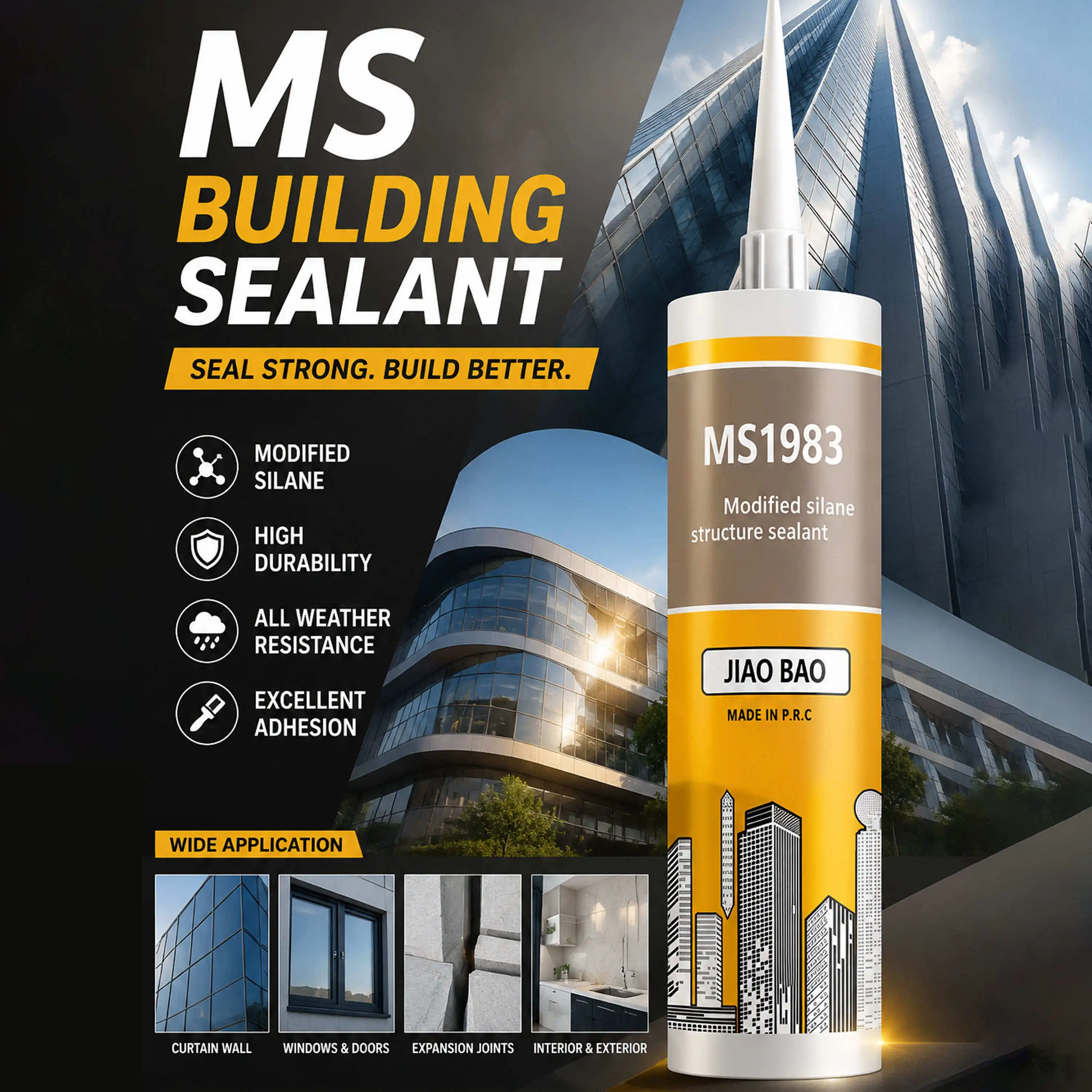
The improved silane sealant starts to work its best as a bond before the capsule is even opened. Surfaces of the substrate must be clean, dry, and free of oil, dust, or old sealer. No primer is needed for most surfaces, like glass, metal, PVC, concrete, ceramic tile, and wood. This cuts down on the cost and time of installation.
Use the sealant between 5°C and 40°C, and don't put it on surfaces that have too much moisture on the surface for the formula to handle. To get a clean, professional finish, work with the bead within the tack-free window, which in the summer lasts 25 to 40 minutes. Once it's dry, the surface can be painted directly with water-based paints—no adhesion promoter is needed. This gives architects and designers more design options for finishing projects.
In terms of safety, the mixture has a much lower risk of inhalation than polyurethane options when used in small areas because it doesn't contain isocyanates or solvents. Local trash rules say how to get rid of uncured material and empty cartridges. To keep the 12-month shelf life, store unwanted product below 25°C and out of direct sunlight.
It's easy to lower the cost per unit of buying sealant—committing to buy in bulk almost always leads to better prices. Getting rid of all buying risk is the more complex possibility. Diversifying your suppliers to two qualified sources and forecasting demand based on project pipelines can help you avoid expensive stockouts without putting too much money into inventory.
Instead of buying things on the spot for OEM programs, talk about yearly volume deals with delivery plans every three months. This method keeps your supplier's production plans stable and usually gets you special treatment during times of high demand. Not only should you look at a supplier's price, but also at their history of recorded defects. For the Japanese market, PPM-level consistency is the standard, and suppliers who keep track of and share this data show that they have mature quality management.
Innovation harmony is another thing that adds long-term value to buying. Suppliers who put money into developing low-VOC formulations and adding more color options are better able to keep up with changing government rules and strategies for market differentiation. That's exactly what Jiaobao's OEM/ODM program, which is based on over 13 years of manufacturing experience, can do for you.
The performance level of modified silane polymer MS sealant sealant is higher than that of regular silicone and polyurethane products. This is especially true for OEM buyers who supply high-end construction markets. Its non-staining chemistry, direct paintability, wide material binding, and almost-zero VOC content meet the exact needs of end markets that are very picky. Building a cost-effective, long-term relationship with an OEM supplier is possible with the right supplier qualification process, work on import compliance, and structured procurement planning.
Formulations based on silyl modified polymer chemistry can be tested and certified against JIS A 5758. Buyers should request batch test documentation referencing this specific standard from their supplier before finalizing any import agreement.
Standard options include 300ml and 600ml volumes in both cartridge and sausage packaging formats. Custom color options—beyond the standard white, black, and grey—are available through OEM programs with sufficient order volume.
Request ISO 9001 certification documentation, batch-level test records, and commission third-party adhesion and staining tests through SGS or TUV before committing to large orders. Factory audits remain the most reliable verification method.
No. This formulation bonds effectively to glass, metal, concrete, tile, wood, and plastic without a primer in most applications, reducing installation steps and overall project cost.
Shelf life is 12 months from production date when stored below 25°C, away from direct sunlight and moisture exposure.
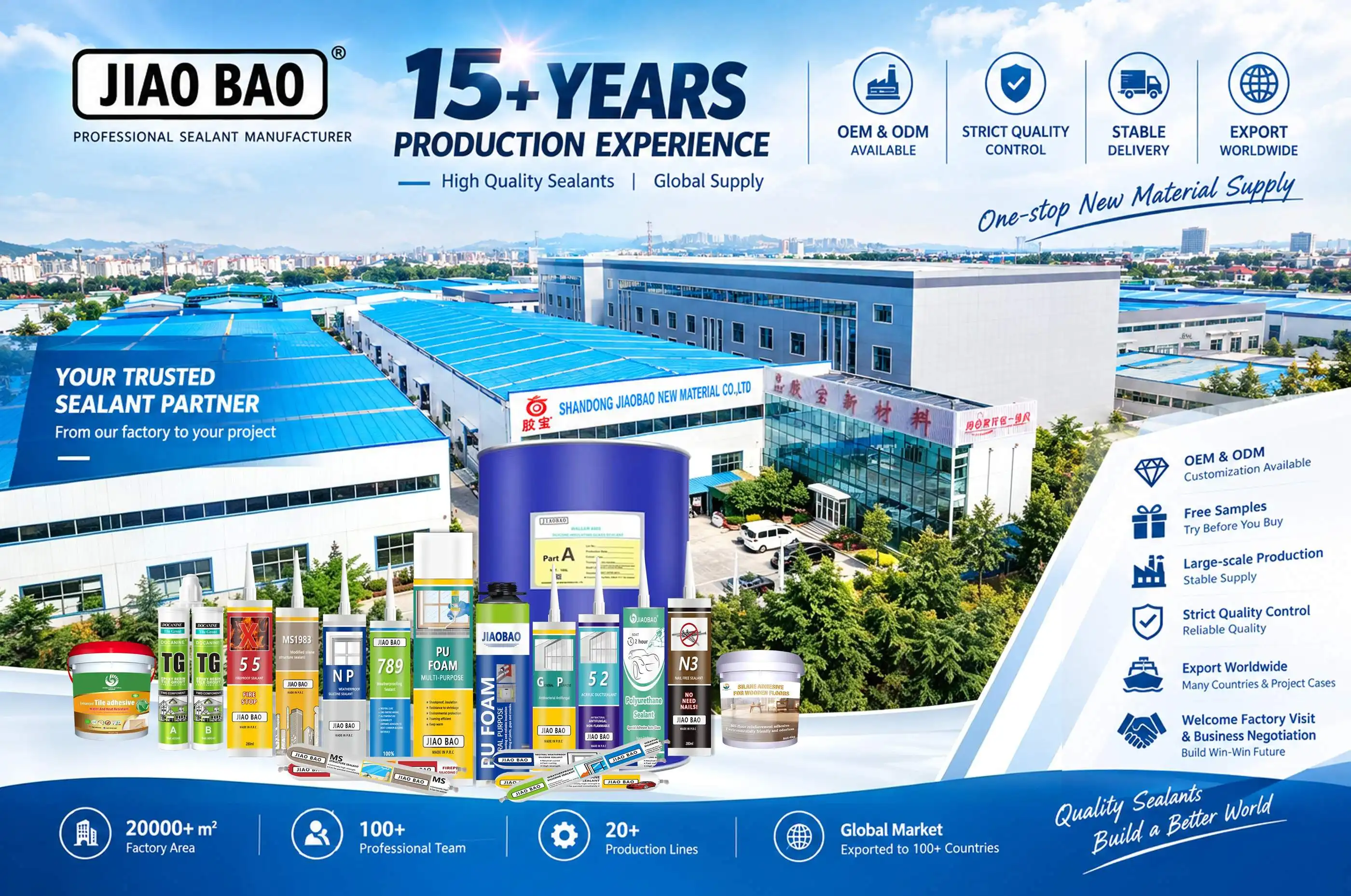
Since 2013, Jiaobao has sold certified sealant products around the world. We are an experienced producer of MS sealant that has ISO approval, can do full OEM/ODM, and has a production wait time of one to two weeks. We are ready to help you with your next import program. Get in touch to talk about formulations that meet JIS standards, unique packaging, and bulk discounts that are made to fit your market. To get samples right away, email us at doirashen@cnjiaobao.com or go to shandongjiaobao.com.
1. ASTM International. ASTM C920: Standard Specification for Elastomeric Joint Sealants. 2022.
2. Japanese Industrial Standards Committee. JIS A 5758: Sealing Compounds for Sealing Joints in Buildings. 2016.
3. ISO. ISO 11600: Building Construction — Jointing Products — Classification and Requirements for Sealants. 2002.
4. Petrie, E. M. Handbook of Adhesives and Sealants. McGraw-Hill. 2007.
5. European Sealant Industry Group. Guide to Sealant Technology in Construction. ESIG. 2019.
6. Wolf, A. T. Durability of Building Sealants. RILEM Publications. 1999.
November 16,2023
Enterprise Name
The sealant has very strong adhesion and performs well even on glass and aluminum. After curing, it remains flexible and shows no cracking. Perfect for our facade projects.
November 16,2023
Enterprise Name
Stable quality across batches. Our customers especially like the smooth application and consistent extrusion. It helps reduce installation time on site.
November 16,2023
Enterprise Name
I used it for bathroom sealing. Excellent waterproof performance and no mold issues so far. It's been holding up very well in humid conditions.
November 16,2023
Enterprise Name
The neutral silicone works well on sensitive materials without corrosion. Very suitable for industrial applications requiring stable performance.
_1779347426672.webp)