November 16,2023
Enterprise Name
The sealant has very strong adhesion and performs well even on glass and aluminum. After curing, it remains flexible and shows no cracking. Perfect for our facade projects.
Sep 29, 2026
GP Multi-Purpose Silicone Sealant is a reliable choice for maintaining good indoor air quality. Once fully cured, this one-part RTV silicone rubber releases negligible volatile organic compounds (VOCs), making it broadly compatible with occupied indoor spaces. Its acetoxy-cure chemistry does produce a brief acetic acid odor during application, but this dissipates rapidly after the tack-free window of approximately 15 minutes. Compared to polyurethane or solvent-based acrylic sealants, a quality general-purpose silicone sealant poses significantly lower long-term IAQ risks, provided users follow proper ventilation protocols during installation.
Indoor air quality has a direct effect on people's health, their ability to think and reason, and their ability to follow the rules. The U.S. Environmental Protection Agency says that Americans spend about 90% of their time indoors, where the amount of pollution can be two to five times higher than outside. Toluene, xylene, and formaldehyde are some of the VOCs that are released into the air by construction products, especially sealants and glue.
It is no longer a choice for procurement workers looking for sealants for business buildings, healthcare facilities, or home projects to choose low-emission goods. Standards for interior building materials, such as LEED v4, BREEAM, and the REACH regulation, all have strict VOC limits. One of the best ways to protect end users and project compliance scores is to use an approved, low-VOC silicone sealant.
A common misunderstanding is that all silicone seals give off a lot of gas over time. In fact, most of the emission activity in acetoxy-cure silicones happens during the first step of curing. Once it's fully cured, the cross-linked silicone rubber matrix doesn't react with chemicals and doesn't add much to air pollution inside.
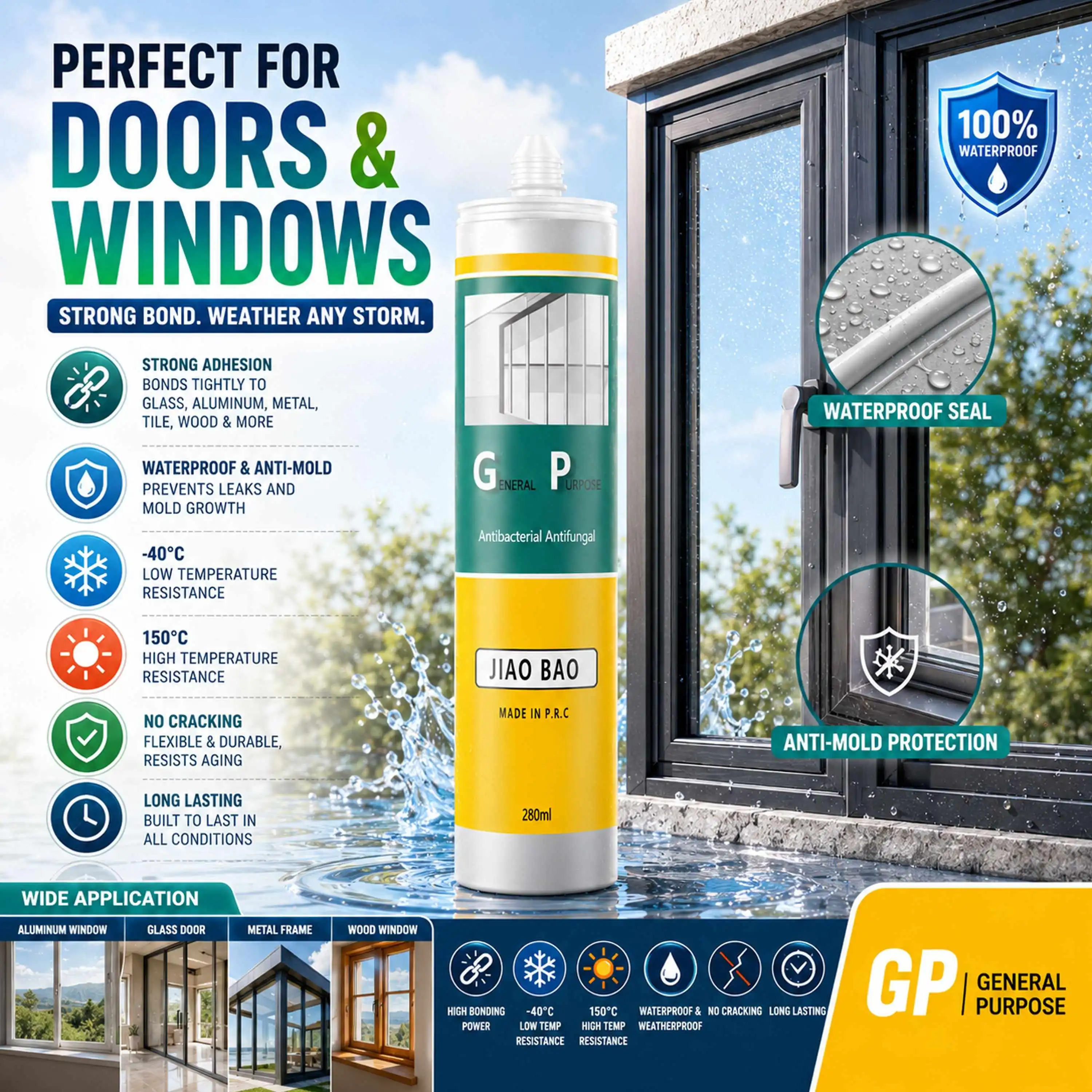
Jiaobao's GP silicone sealant is made as an acetoxy-cure RTV system with only one component. As it cures, acetic acid is released as a waste, which can be smelled as a weak vinegar. It only lasts a short time and is strongest in the first 30 to 60 minutes after treatment. Off-gassing stops when the sealant reaches full depth cure, which takes about 2–3 mm per 24 hours in normal conditions.
The product only needs 15 minutes to be tack-free, which is helpful in occupied or mostly occupied areas where limiting exposure windows is important. GP Multi-Purpose Silicone Sealant Its Shore A hardness of 18 and tensile strength of more than 300% show that the cured rubber material is steady and won't react.
Here are the main things about this coating that affect air quality:
This silicone sealant can be used for many things and is good for indoor joints, window edges, door frames, bathtub edges, and glass parts where long-term air safety is important.
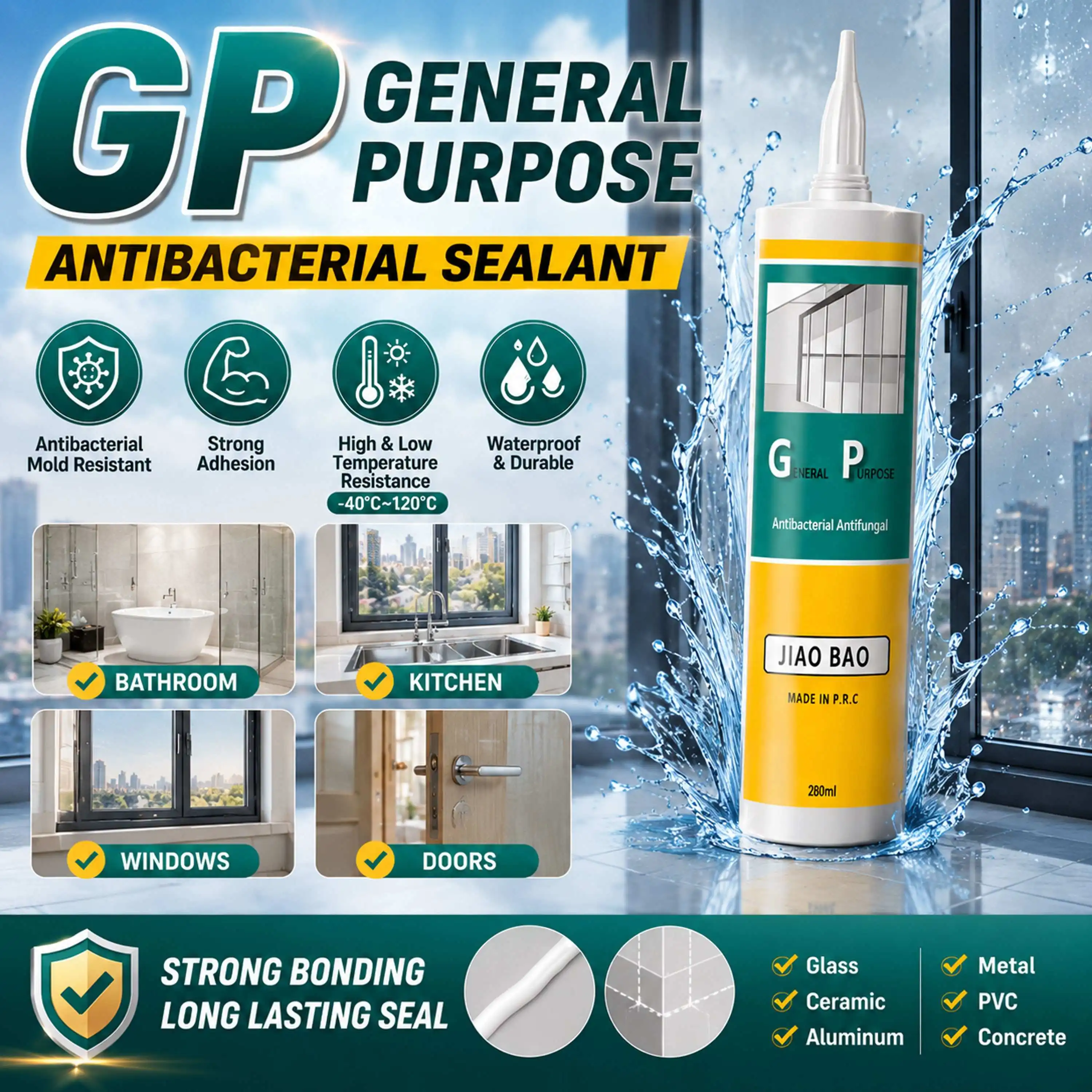
VOC content is only one of many factors that procurement teams look at when choosing sealants. The total cost of ownership is affected by how long something lasts, how well it works with other materials, and how well it moves with joints.
Acrylic adhesives are water-based and usually have low VOC levels when they are first applied. However, they lose their flexibility over time, crack when heated, and need to be replaced every so often, which means that each time they are used, they release new chemicals. Although polyurethane seals stick very well, they can release isocyanate compounds when they are being applied, and they tend to turn yellow or chalk when exposed to UV light, which can affect both their looks and their ability to do their job.
On the other hand, silicone-based sealants keep their stretchy properties for the whole service life. The GP Multi-Purpose Silicone Sealant from Jiaobao can handle joint movement of ±25%, temperatures ranging from -50°C to +150°C without breaking down, and UV and ozone damage without chalking. This durability directly means fewer times of reapplication and a lower overall VOC load on the indoor environment over time.
The product sticks to glass, aluminum, ceramic tile, stone, plastic steel, and concrete, and its strongest bond is 1.5 MPa. This means that you don't have to keep different types of sealant on hand for different projects.
It's just as important how a sealant is used as what it's made of. By following a strict installation protocol, you can avoid unnecessary chemical exposure and make sure the product works as it should.
Make sure surfaces are clean and dry before applying. Stickiness is harmed by leftover oils, dust, or water, and the healing process can take longer. This makes the active off-gassing period longer. Use a regular caulking gun to apply the sealer. It comes in 300 ml tubes or 600 ml sausage packs and is ready to use right away, without having to be heated or mixed.
Make sure there is enough air flow during and right after application. Opening windows and turning on air fans are good ways to lower the quantity of acetic acid vapor. In hospital or sensitive population settings, working with sealants outside of normal business hours lets the 24-hour initial cure cycle finish before people move back in.
Work on the joint in the first few minutes, before the top layer forms, and then leave it alone to cure. If the temperature outside is below 5°C or above 40°C, don't apply. These temperatures will make the cure take longer and may change the final mechanical properties of GP Multi-Purpose Silicone Sealant.
When indoor air quality standards are part of the project requirements, it's very important to find a genuine, consistent sealant product. Since 2013, Jiaobao has been making silicone sealants. These sealants meet the standards for ISO and CE certification, which gives the procurement and quality control teams the proof they need to pass regulatory audits.
The GP sealant comes in unique colors, White, Black, and Gray. It has a shelf life of 12 months and can be packed in either 300 ml packs or 600 ml sausages. Because OEM and ODM production is possible, wholesalers and online sellers can ask for branded packaging or custom color matches that fit with how they want to place themselves in the market. Production wait times of one to two weeks allow for flexible inventory management, and the company's stance on quality problems within the shelf life period allows for refunds or replacements. Before placing a large order, it is common to ask for product samples and detailed data sheets. Jiaobao directly supports this review process.
A good silicone sealant helps make indoor environments healthier by keeping out moisture, stopping biological growth, and staying chemically stable after it cures. For responsible indoor uses, Jiaobao's GP Multi-Purpose Silicone Sealant has the mechanical performance—1.5 MPa bond strength, >300% tensile rate, and ±25% joint displacement capacity—as well as the chemical stability that is needed. It has a short curing emission window, works well with many substrates, and has a durable elastomer matrix, which makes GP Multi-Purpose Silicone Sealant a good choice for procurement teams that want to prioritize both performance and user safety in business, residential, and industrial settings.
No. Once the silicone rubber reaches full cure, the cross-linked polymer matrix is chemically inert. Off-gassing is limited to the active curing phase, which completes within approximately 24 hours under standard temperature and humidity conditions.
With adequate ventilation during application and a standard 24-hour curing period before reoccupancy, it is considered safe for interior residential and commercial use. The acetic acid emission during curing dissipates quickly in ventilated spaces.
Its waterproof barrier prevents moisture accumulation at joints, which is the primary condition enabling mold colonization. Standard GP formulations provide baseline moisture resistance; for high-humidity sanitary areas, a fungicide-grade variant is advisable.
Standard silicone surfaces resist paint adhesion due to their hydrophobic character. Select a color-matched sealant from the available White, Black, Grey, or custom options, or paint the substrate prior to sealing.
The product carries a 12-month shelf life from the manufacturing date when stored in cool, dry conditions away from direct sunlight.
This is where you should start looking for a reliable GP Multi-Purpose Silicone Sealant supplier. Jiaobao has been making things for 13 years, is ISO and CE certified, has lead times of one to two weeks, and can do both OEM and ODM work. This means they can help buying teams of any size. Today, ask for free samples, detailed datasheets, or a unique quote. To start your review, go to shandongjiaobao.com or email dorashen@cnjiaobao.com.

1. U.S. Environmental Protection Agency. Indoor Air Quality: An Introduction for Health Professionals. EPA, 2023.
2. ASTM International. ASTM C920: Standard Specification for Elastomeric Joint Sealants. ASTM, 2022.
3. European Chemicals Agency. REACH Regulation: Guidance on VOC Restrictions for Construction Products. ECHA, 2022.
4. U.S. Green Building Council. LEED v4 Reference Guide for Building Design and Construction: Low-Emitting Materials Credit. USGBC, 2021.
5. Skeist, I. (Ed.). Handbook of Adhesives and Sealants. Van Nostrand Reinhold, 2018.
6. ISO. ISO 11600: Building Construction — Jointing Products — Classification and Requirements for Sealants. ISO, 2022.

November 16,2023
Enterprise Name
The sealant has very strong adhesion and performs well even on glass and aluminum. After curing, it remains flexible and shows no cracking. Perfect for our facade projects.
November 16,2023
Enterprise Name
Stable quality across batches. Our customers especially like the smooth application and consistent extrusion. It helps reduce installation time on site.
November 16,2023
Enterprise Name
I used it for bathroom sealing. Excellent waterproof performance and no mold issues so far. It's been holding up very well in humid conditions.
November 16,2023
Enterprise Name
The neutral silicone works well on sensitive materials without corrosion. Very suitable for industrial applications requiring stable performance.
_1779347426672.webp)