November 16,2023
Enterprise Name
The sealant has very strong adhesion and performs well even on glass and aluminum. After curing, it remains flexible and shows no cracking. Perfect for our facade projects.
Oct 29, 2026
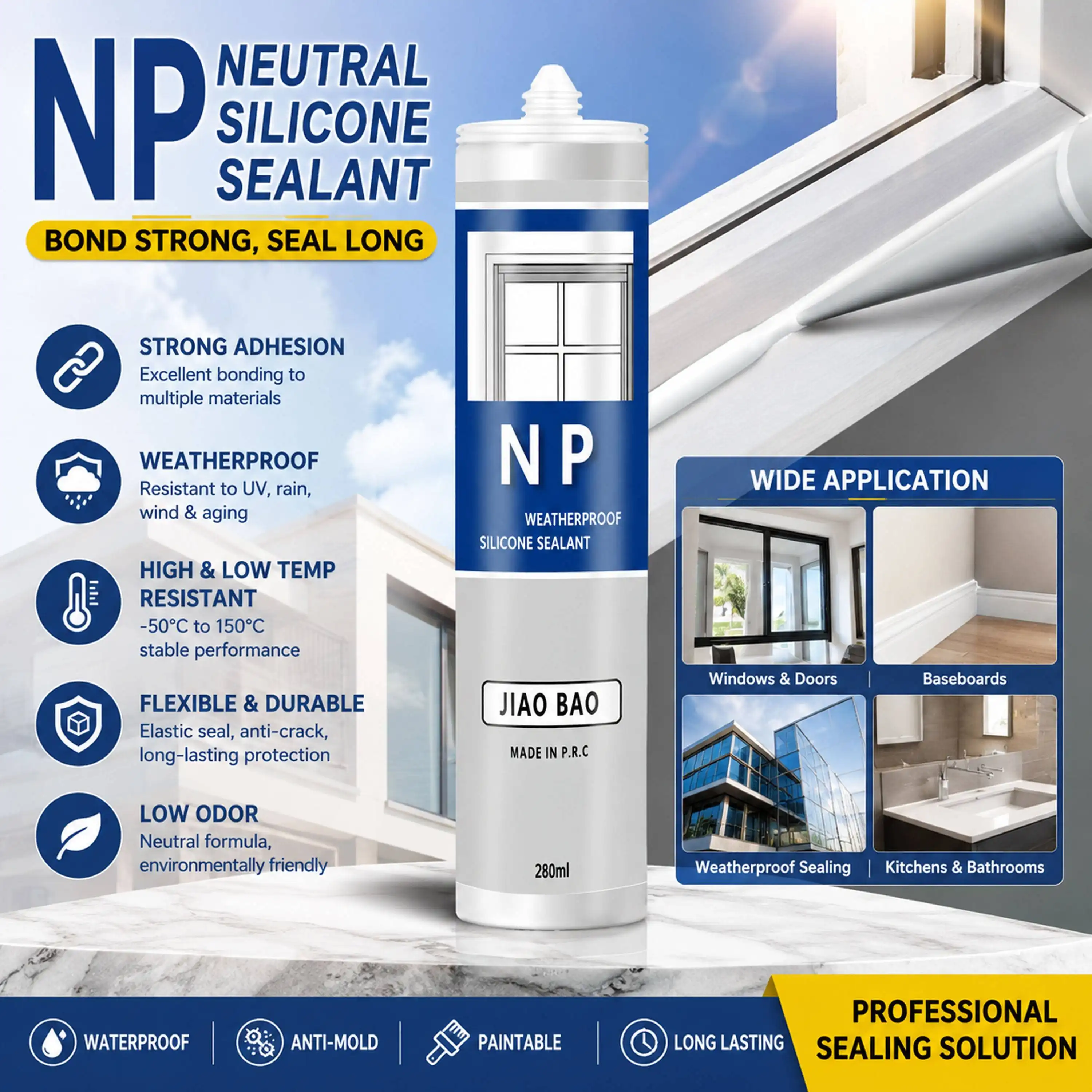
Yes — NP neutral cure silicone sealant is well-suited for both glass and metal substrates. Unlike acetoxy-cure silicones that release acetic acid during curing, this neutral-cure formula releases non-corrosive byproducts, making it chemically safe for sensitive materials such as coated glass, anodized aluminum, copper, and natural stone. It bonds reliably across a service temperature range of -50°C to +150°C, resists UV degradation, and maintains joint flexibility over time. For procurement managers sourcing sealants for stone facades, aluminum cladding, or glass curtain walls, this product type removes the risk of substrate damage from day one.
As standard acetoxy silicones harden, they give off acetic acid. You can tell because they smell like sharp vinegar. Instead, NP neutral fix silicone works through an oxime or alkoxy process, giving off alcohol or oxime byproducts that don't damage metal or stain stone. This difference is very important when working with marble, granite, polished metal panels, or mirror glass, because even small amounts of acid can permanently change the color of these materials.
This is a paste-like one-part NP neutral cure silicone sealant that can be vulcanized at room temperature (RTV). It comes in a 300ml or 600ml cartridge or sausage pack and is ready to use right away. It comes in white, black, gray, or custom colors, so most architectural and industrial color needs can be met without having to mix colors on-site. If you store it below 27°C and keep it dry, it will last for 12 months.
The information below shows how well the product worked when it was tried at 25°C and 50% relative humidity:
After curing, Shore A is 30 hardness, which means it is flexible but stiff enough for structure gaps.
Acetoxy silicone is the type of caulk that is most often bought at hardware stores. It hardens quickly and sticks well to glass inside where it is dry. The acetic acid that it gives off while drying is the trouble. On marble or granite, this acid scratches the surface and turns it yellow, a process called "blooming" that can't be undone. It speeds up oxidation on metal or copper fittings. Acetoxy silicone should not be used on any project that involves metal or natural stone.
Polyurethane seals can move around a lot and can be painted over after they've dried, which can be helpful in some building situations. But they break down when exposed to UV light for a long time and need more careful surface preparation. Also, they tend to harden over time, which makes expansion joints less flexible over time. Since neutral cure silicone stays flexible even after years of being outside, it is the best choice for glass facades and aluminum cladding in places where temperatures change a lot.
It is common to use MS polymer sealants in interior fit-out work because they are easy to paint and don't smell bad. They work pretty well on a lot of different surfaces, but they aren't as resistant to UV light and heat as silicone-based products. A NP neutral cure silicone sealant always does better than MS polymer in long-term weathering tests for curtain walls that are outside or in places that get direct sunlight.
Most of the time, adhesion problems are caused by a poorly prepared surface rather than a lack of product. Before putting silicone sealant on metal or glass, clean both sides with rubbing alcohol or a cleaner recommended by the maker. This will get rid of dust, oil, and water. At the place of application, surfaces must be completely dry. wetness at the substrate contact stops chemicals from bonding, even though wetness in the air is what causes curing.
For weak surfaces like concrete or old stonework, a silicone primer makes the surface stronger and increases the depth of bonding. Anodized aluminum and powder-coated panels usually stick together without a primer. However, it is a good idea to do a peel adhesive test according to ASTM C794 on project-specific samples before applying them to large areas. This is especially important if the joint will be loaded or if water will be standing on the sealant.
The sealant skins over in 30 minutes under normal conditions after being used. Try not to move the joint during this time. Within 7–14 days, full mechanical strength is reached. In places that are colder or have less humidity, it may take a little longer to fully cure. Not to be used below 5°C or above 40°C. A sharp plastic scraper and a silicone solvent are the best ways to remove glass and covered metal panels for repair without damaging the base.
It takes more than just comparing unit prices to find a neutral cure silicone sealant for a job that is already underway. Ask suppliers for proof of ISO certification, batch test reports, and ASTM C1248 stain test results that are specific to the types of substrates you need to work with. Before you place a full order, ask for samples and make sure the project materials you want to use are compatible. This is especially important if you are working with polished marble, Low-E glass, or anodized aluminum. It is common to have a 7–10 day test window, which you should include in your purchase plan.
Three quality checks keep you from getting tampered with goods. First, the ASTM C1183 extrusion rate test shows that the material has not already hardened inside the capsule. Second, ASTM C639 sag testing makes sure the sealant stays in place in vertical joints and doesn't sag. Third, real-world bond strength is confirmed by ASTM C794 peel adhesion tests on real project surfaces. If you ask, any NP neutral cure silicone sealant maker you can trust should give you information on all three.
When working with stone or metal and making things all the time, batch uniformity is just as important as raw performance. Mismatches can be seen on finished facades when gray or custom-colored sealants come in different batches with different colors. When looking at different providers, make sure you ask about how they control color batches and if they offer spectrophotometer data for each lot. A reliable freight choice by sea or land, along with a production lead time of one to two weeks, lets buying teams keep supplies going without having to keep too much overstock on hand.
When working with stone and metal, NP neutral cure silicone sealant fills a real need for a bonding solution that doesn't chemically attack the things it's meant to protect. It can be used for both finishing inside and outside walls because its healing chemistry is non-corrosive, it can handle a wide range of temperatures, and it works well with glass, metal, granite, and marble. It gives buying teams a product they can count on across projects without having to worry about compatibility issues over and over again if they buy it from a maker whose batch consistency has been checked and who has the right certifications.
No. Like all pure silicone formulas, paint cannot adhere to the cured surface due to its low surface energy. If the final appearance requires paint, an MS polymer hybrid sealant may be a better fit. Otherwise, choose the sealant color — white, black, grey, or custom — to match the project aesthetics from the start.
Yes. This is one of its primary applications. Acid-cure silicones attack the silver backing of mirrors, causing black spots known as desilvering. The neutral chemistry of this formula is inert to mirror coatings, making it the correct choice for mirror bonding in both residential and commercial settings.
Shelf life is 12 months. Store cartridges and sausage packs below 27°C in dry conditions. High humidity can trigger premature curing inside sealed packaging. Avoid stacking heavy loads on top of cartridges, which can deform the nozzle and affect extrusion consistency.
For clean, dense concrete surfaces, bonding typically occurs without a primer. For older, dusty, or highly porous concrete, applying a compatible silicone primer first is advisable to consolidate the surface and achieve the full ±25% movement capability the product is rated for.
The product comes in 300ml and 600ml volumes, packaged in either cartridge or sausage format to fit standard caulking guns used across construction and manufacturing environments.
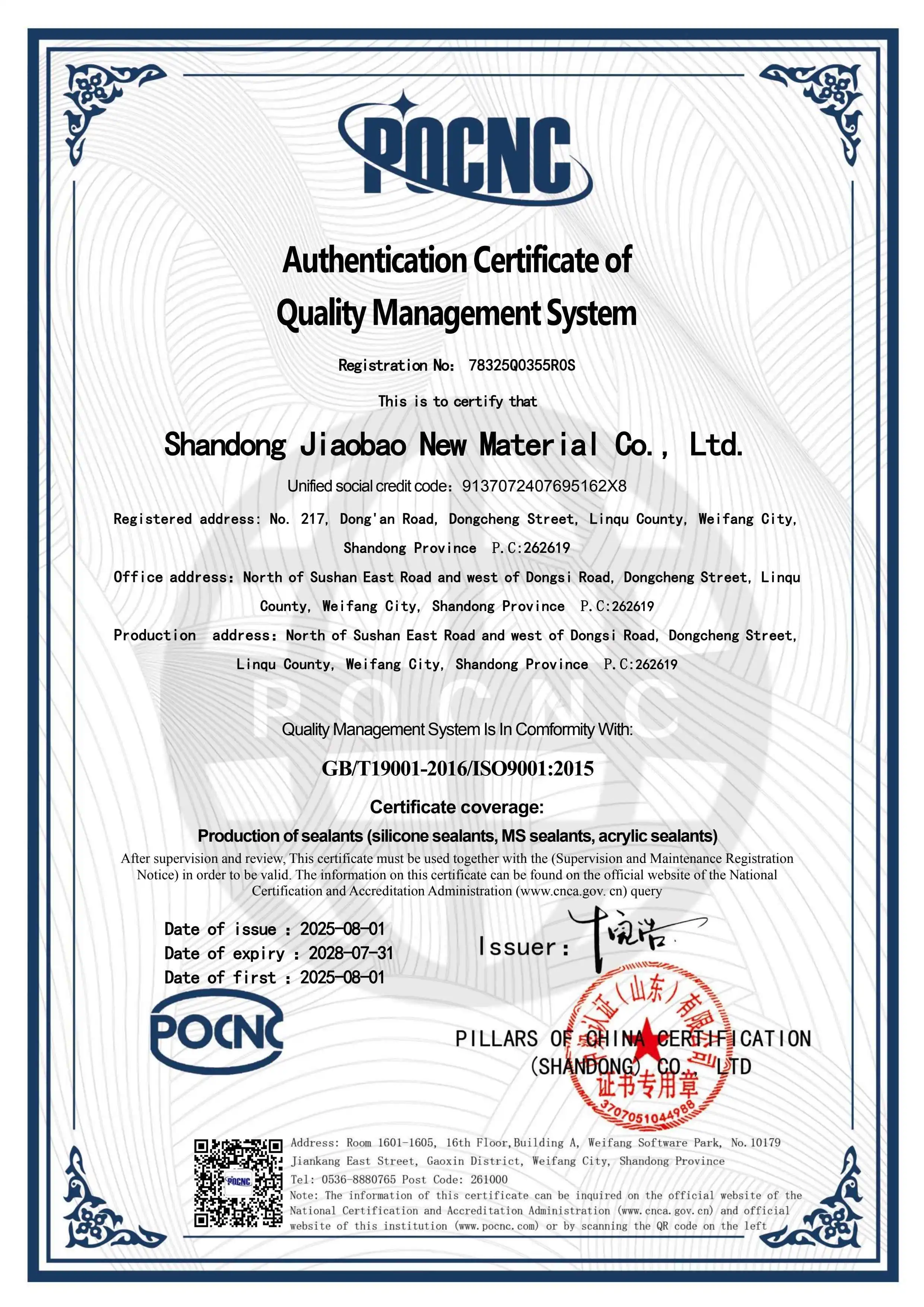
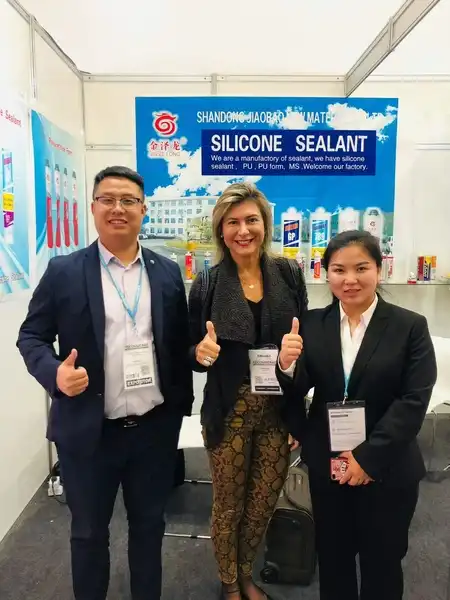
Since 2013, Shandong Jiaobao New Material Co., Ltd. has been making silicone sealants. They have ISO and CE certifications, strict rules on batch stability, and a production wait time of one to two weeks. Our team is ready to help you whether you need a trial sample or want to talk about bulk supply as a reliable NP neutral cure silicone sealant provider. To get a copy or free sample today, email dorashen@cnjiaobao.com with the information of your project and the substrates you need.
1. ASTM International. ASTM C920: Standard Specification for Elastomeric Joint Sealants. ASTM International, 2022.
2. ASTM International. ASTM C1248: Standard Test Method for Staining of Porous Substrate by Joint Sealants. ASTM International, 2018.
3. ISO. ISO 11600: Building Construction — Jointing Products — Classification and Requirements for Sealants. International Organization for Standardization, 2020.
4. Petrie, Edward M. Handbook of Adhesives and Sealants. McGraw-Hill, 2007.
5. Wolf, Andrew T. "Durability of Silicone Sealants." Construction and Building Materials, Vol. 23, Elsevier, 2009.
6. National Institute of Standards and Technology. Performance of Sealants in Building Facades: Field Studies and Laboratory Evaluations. NIST Technical Note 1960, 2017.
November 16,2023
Enterprise Name
The sealant has very strong adhesion and performs well even on glass and aluminum. After curing, it remains flexible and shows no cracking. Perfect for our facade projects.
November 16,2023
Enterprise Name
Stable quality across batches. Our customers especially like the smooth application and consistent extrusion. It helps reduce installation time on site.
November 16,2023
Enterprise Name
I used it for bathroom sealing. Excellent waterproof performance and no mold issues so far. It's been holding up very well in humid conditions.
November 16,2023
Enterprise Name
The neutral silicone works well on sensitive materials without corrosion. Very suitable for industrial applications requiring stable performance.