November 16,2023
Enterprise Name
The sealant has very strong adhesion and performs well even on glass and aluminum. After curing, it remains flexible and shows no cracking. Perfect for our facade projects.
Oct 29, 2026
Failure of a curtain wall junction causes more than a ceiling stain. Glass panels loosen, structural frames degrade, and building owners risk responsibility that no guarantee agreement protects. This reference covers substrate compatibility, joint design, curing, and long-term maintenance for procurement engineers and site managers choosing and installing NP silicone sealant for curtain wall systems. Neutral-cure silicone sealant matters when specifying materials for high-rise glass facades or aluminium composite panel (ACP) cladding.
Neutral cure that doesn't pollute is what NP stands for. It's not like acetoxy (acetic acid) silicones that give off acetic acid when they're crosslinked. In its place, it gives off oxime or alcohol. When the base is porous, this difference is very important. Silicones that are acidic can stain natural stone forever and eat away at anodized metal frames. There are no longer any of these risks with a neutral-cure product because it keeps its elastomeric flexibility.
One-part RTV neutral silicone from Jiaobao sticks to glass, metal that has been anodized or powder-coated, natural granite and marble, ceramic tile, and concrete. It usually doesn't need a base. The bond is strong not only because the two parts fit together mechanically, but also because they form a chemical link at the substrate contact. This is why peel bond values don't change even after being tested in the lab for 1,000 hours of fast aging.
At 25°C and 50% relative humidity, the glue hardens in about 30 minutes. In 7–14 days, it's completely better. Since fixing needs to be wet, the process goes faster when the humidity is high. On a normal curtain wall site, installers can work on the bead in the 5–10 minutes after it is put up. So, they can get a smooth, professional joint finish before the surface sets.
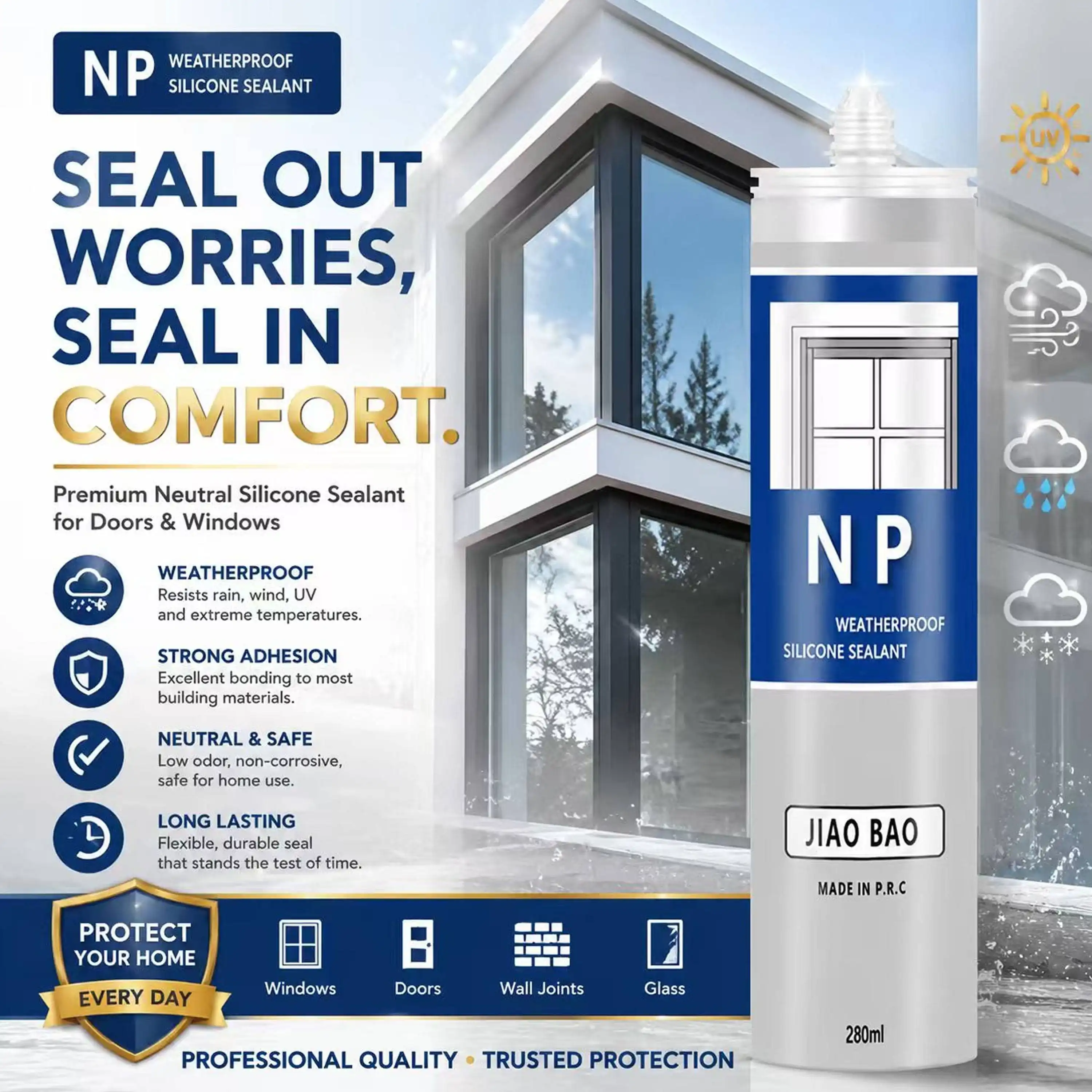
Choosing between sealant chemistries is not a minor technical footnote — it directly affects facade longevity and lifecycle maintenance costs.
Polyurethane sealants offer strong initial adhesion and paintability, but they degrade under prolonged UV exposure. In an exterior curtain wall application, chalking and cracking typically appear within 5–8 years. NP silicone sealant for curtain wall is a neutral-cure silicone and maintains its mechanical properties for decades because its Si–O backbone is inherently UV-resistant. For a building designed to last 50 years, the chemistry of the sealant must match that design life.
Acrylic sealants are water-based and affordable, but their movement capability rarely exceeds ±12.5%. Polysulfide sealants perform adequately in insulating glass unit edge sealing, yet they are poorly suited to dynamic facade joints exposed to wind-driven shear loads. A high-rise glass curtain wall in a coastal wind zone requires a sealant with at least ±25% movement capability — a threshold that only silicone reliably meets across the full service temperature range.
The non-staining property is decisive on natural stone facades. Standard silicone formulations contain non-reactive plasticizers that migrate into porous stone, producing permanent "wet ring" staining around every joint. Jiaobao's NP formula contains no such plasticizer migration, meeting ASTM C1248 with zero oil/pollution transfer. Paired with ISO and CE certification compliance, this makes it a specification-grade product for international projects.
To buy something, you need to make sure you get the right thing to the job site on time, in the right amount, and with batch paperwork that can be used to keep track of it.
Curtain wall sealer from Jiaobao comes in 300 ml tubes or 600 ml sausage packs. For small jobs, cartridges work well with regular sealant guns. When compared to cartridges, sausage packs cut down on waste by about 15%. Plus, teams that work on big curtain wall projects use a lot of them every day. You can use both kinds of files for a year after they were made.
Direct orders with Jiaobao for NP silicone sealant for curtain wall come with a production lead time of one to two weeks. Projects in the Middle East, Southeast Asia, and North America can choose sea or land logistics. OEM and ODM services are available if you need colors other than white, black, and gray, or custom branding on packaging.
Before taking a shipment, purchasing officers should ask for GB 13477 test results, ISO certification, a CE statement of conformity, and quality certificates that are unique to the batch. Follow ASTM C1183 and check the discharge rate on a sample cartridge from each run. This only takes five minutes. In this way, the product is kept from getting hard while it was being stored.
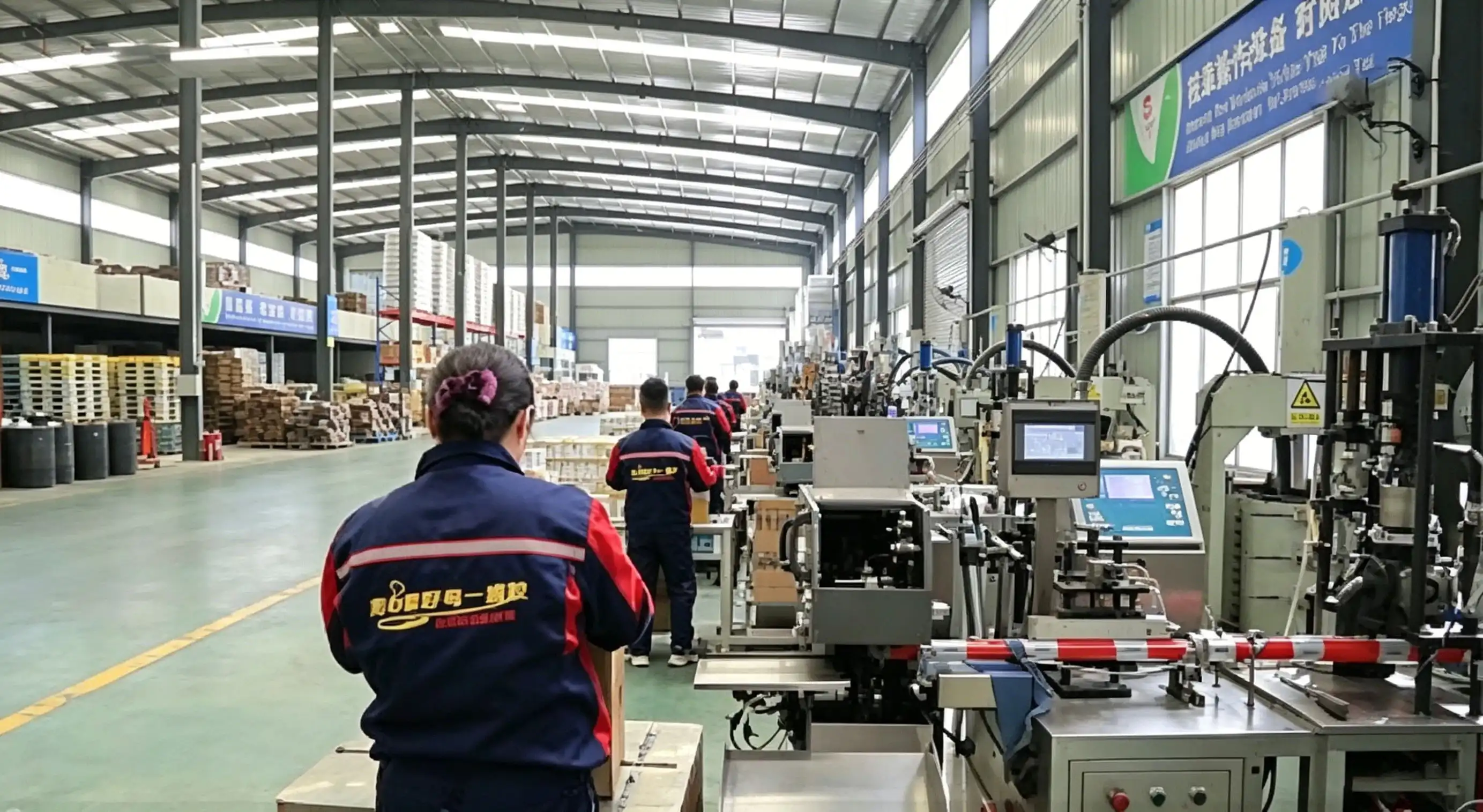
Even a well-specified sealant can fail if installation conditions fall outside acceptable parameters. Following these site protocols protects both the product performance and the installer's warranty claim.
All substrates must be dry, clean, and free of dust, oil, release agents, and old sealant residue. Wipe glass and aluminum surfaces with isopropyl alcohol on a clean lint-free cloth using the two-cloth method — one cloth to wet the surface, a second dry cloth to remove contaminants before the solvent evaporates. Concrete and natural stone surfaces may require a compatible primer when porosity is high; always conduct a peel adhesion test on a representative sample before full-scale application.
Apply between 5°C and 40°C. Avoid application in direct strong sunlight on dark aluminum surfaces where substrate temperature can exceed 60°C. Do not apply to wet or frost-covered surfaces. Wind speeds above 5 m/s at height can disrupt joint bead geometry on open facades; schedule application during calmer conditions where possible.
Maintain a width-to-depth ratio of 2:1 for weather-seal joints of NP silicone sealant for curtain wall, with a minimum joint width of 6 mm. Backer rod (closed-cell polyethylene foam) must be placed before sealant application to control depth and prevent three-sided adhesion, which restricts movement and causes cohesive failure. The most common on-site mistake is applying sealant over damp backer rod after overnight rain — this traps moisture and produces internal bubbles that compromise the joint.
A neutral-cure silicone sealant installed correctly on a modern curtain wall should require only periodic inspection, not replacement, within the first 20–25 years.
Jiaobao's sealant operates from -50°C to +150°C without embrittlement or flow. Its Si–O molecular backbone resists ozone and UV radiation — two of the primary degradation agents in exterior facade joints. In accelerated weathering tests, the product shows no chalking, cracking, or adhesion loss after 2,000 hours of UV exposure.
Inspect joints annually as part of facade maintenance. Look for cohesive cracks running through the center of the bead (typically a sign of joint under-sizing), adhesive debonding at the substrate interface (linked to surface preparation failure), and discoloration. Clean silicone surfaces with a mild detergent and water; avoid solvent-based cleaners that can swell or degrade the cured elastomer over repeated applications.
Each production batch from Jiaobao carries traceable quality documentation. If a product quality issue arises within the shelf life, Jiaobao offers refund or replacement. For international projects requiring GB 16776 structural sealant performance verification, the technical team can support sample submission and third-party testing coordination.
The long-term service performance of a curtain wall depends on many factors, among which the formulation and application of NP silicone sealant for curtain wall are the most critical. This neutral-cure silicone sealant is non-staining and eco-friendly. Verified test data confirms its movement capability, UV resistance and good compatibility with various substrates. Jiaobao’s curtain wall silicone sealant has been supplied to projects in China, the Middle East and Southeast Asia for over 13 years. It holds ISO and CE certifications, features short lead times and reliable technical support.
That's how long it takes for skin to form on the surface at 25°C and 50% relative humidity. For a normal joint level to fully cure, it takes between 7 and 14 days. It takes longer to cure when the temperature or humidity is low. It takes less time to cure when the humidity is high. The whole cure period, not just the time for skin-over, should help you decide when to check and load.
Before putting on the new sealer, remove the old one by hand. Finish silicone dust doesn't let silicone stick to it very well. The last steps to get to a clean substrate are to use a silicone remover tool and an isopropyl alcohol wipe. Clean the area before putting on new sealer. It will stick well.
Yes. The NP mix doesn't have any plasticizers that move around, so it meets ASTM C1248 and won't stain marble or granite. Builders of stone curtain walls choose a silicone that doesn't pollute over a regular one for this reason.
You can pick Black, White, or Gray. You can pick your own colors with Jiaobao's OEM production service, but you have to buy a certain number of items. Talk to the sales team about your color matching needs.
Jiaobao has helped with curtain wall projects in many areas since 2013. There are 300 ml and 600 ml sizes of our NP silicone sealant for curtain walls. You can choose between sending by land or sea, and it takes one to two weeks to make. As a direct seller of NP silicone sealant for curtain walls, we can give goods that are ISO and CE approved, OEM customization, and customer service that stands behind the quality of our products after the sale. You can get a taste or see how much it costs in bulk right now by emailing dorashen@cnjiaobao.com or visiting shandongjiaobao.com.

1. ASTM C920: Standard Specification for Elastomeric Joint Sealants — ASTM International, 2022.
2. ISO 11600: Building Construction — Jointing Products — Classification and Requirements for Sealants — International Organization for Standardization, 2022.
3. GB 16776: Silicone Structural Sealant for Architecture — Standardization Administration of China, 2005.
4. ASTM C1248: Standard Test Method for Staining of Porous Substrate by Joint Sealants — ASTM International, 2018.
5. Sealants: The Professionals' Guide — Sealant, Waterproofing & Restoration Institute (SWRI), 2019.
6. Curtain Wall Systems: Design, Performance, and Maintenance — Building Enclosure Technology & Environment Council (BETEC), National Institute of Building Sciences, 2020.
November 16,2023
Enterprise Name
The sealant has very strong adhesion and performs well even on glass and aluminum. After curing, it remains flexible and shows no cracking. Perfect for our facade projects.
November 16,2023
Enterprise Name
Stable quality across batches. Our customers especially like the smooth application and consistent extrusion. It helps reduce installation time on site.
November 16,2023
Enterprise Name
I used it for bathroom sealing. Excellent waterproof performance and no mold issues so far. It's been holding up very well in humid conditions.
November 16,2023
Enterprise Name
The neutral silicone works well on sensitive materials without corrosion. Very suitable for industrial applications requiring stable performance.