November 16,2023
Enterprise Name
The sealant has very strong adhesion and performs well even on glass and aluminum. After curing, it remains flexible and shows no cracking. Perfect for our facade projects.
Oct 27, 2026
GP silicone sealant for glass and aluminum should be applied appropriately on clean, dry surfaces and with a steady hand. This single-component, moisture-curing acidic sealant connects glass and aluminium profiles with a tensile strength of 1.5 MPa and a tack-free period of just 15 minutes. Cut the nozzle at a 45-degree angle, put the cartridge into the caulking gun, place a continuous bead into the junction, then tool the bead smooth within five minutes. Let it cure fully before exposing a joint to water as well as mechanical stress.
Before you use a caulking gun, it's helpful to know what you're working with and why the formula is important for glass-to-aluminum systems.
"GP silicone sealant is a Room Temperature Vulcanising (RTV) glue that may be used for numerous purposes. It hardens to an elastomeric cover that is constantly flexible when it contacts moisture in the air. Compared to urethane or acrylic, cured silicone remains flexible in the temperature range of -50°C to +150°C. That is why it is used all over the globe for the making of copper windows and glass walls.
The one-part acidic GP glue from Jiaobao is 18 Shore A hard and can stretch more than 300%. It can handle the different temperature changes between glass and metal because of this. This is something that generally breaks stronger seals over time. As it comes in 300 ml tubes or 600 ml sausage packs, it can be used by both workshop lines and on-site crews. It also lasts for 12 months.
When glass cures, acetic acid is released. This acid lightly cuts the surface of the glass, which makes mechanical keying better. Due to this, acetoxy-cure GP silicone sticks better to smooth glass than most other types that are neutral-cured. This paint sticks to metal that has been anodized or powder-coated, which are the most common finishes for doors and windows. That it doesn't need a primer cuts down on the steps needed to put it on and the cost of the work on the factory floor.
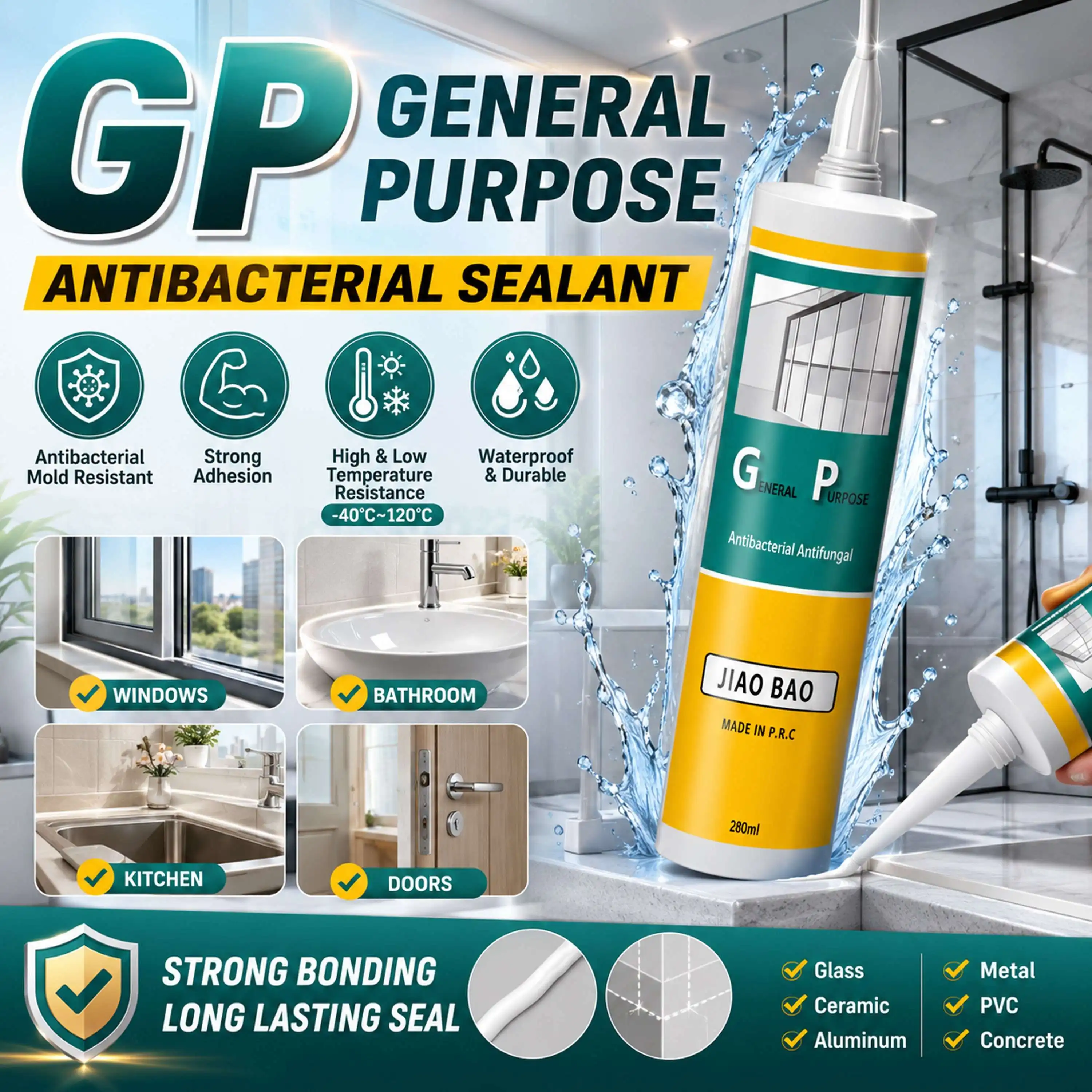
In the field, two problems that happen a lot when using GP silicone sealant for glass and aluminum are the glue coming off of the metal frame and bubbles getting stuck and making it impossible to see clearly. You can avoid these issues if you fill out the application correctly the first time.
Use the two-cloth method if you want to use Isopropyl Alcohol (IPA). Use one cloth that has been soaked in IPA to clean the spot where the metal and glass meet. After that, dry it right away with a second clean cloth before the solvent evaporates. In this order, contaminants can't be dumped again. The glue won't stick to the base if there is any oil, dust, or release agent left on it. If the base is dirty, the sealer can't get through it.
Cut the tip at a 45° angle to match the width of the joint. After that, put the cartridge in the gun and press it at a steady forward angle while keeping the gun pressure tight. Fill the joint in one long pass instead of several small ones to cut down on the chance of air spots. If the part is more than 12 mm wide, only use one layer instead of several passes. Multiple passes trap air between the beads and make holes in the material that aren't visible until the top layer is removed.
The bead won't stick if you smooth it with a wet finger or spoon within five minutes of putting it on, before the 15-minute time ends. The air needs to be damp for the cure to work; the best temperature is 23°C and the relative humidity needs to be 50%. If the area is very dry, lightly misting the joint after tooling it will help it cure faster. Don't move the joint for at least 24 hours. Full mechanical strength is reached after about 72 hours of normal use.
If manufacturers choose the wrong type of covering, it will cost them a lot of money. This is how GP silicone sealant for glass and aluminum stacks up against the other choices.
Neutral-cure silicone gives off methanol or oxime as waste when it cures. Iron and steel that haven't been treated can still work with it because of this. But it doesn't stick to smooth glass as well as acetoxy-cure GP grades. The acetoxy GP gives a better peel bond when used with float glass and normal anodized or powder-coated metal window shapes. It does this without the extra cost of a primer system.
You can paint over polyurethane sealants, and they stick well to surfaces that have holes in them. For this reason, they work better to seal cracks in wood or concrete. They do break down, though, after being in UV light for a long time. They lose their shape and turn yellow after three to five years. Since the silicone polymer backbone naturally doesn't break down in UV and ozone light, GP silicone sealant for glass and aluminum stays colored and flexible for a lot longer. There is no need for a package of additives.
You can paint on acrylic sealer, which is made from water and is easy to clean. It does shrink though as it dries. The edge of the glass breaks the seal when a glazed joint shrinks. Also, acrylic lets water through when it hardens, so it can't be used for aluminum window systems that keep out the weather. If GP silicone has been cured, it is hydrophobic, which means it physically pushes water away instead of sticking to it.
Not only does where you buy something affect the price, but it also changes how consistent each batch is. When making glazing, one batch that doesn't meet the standards can cost a lot to fix.
Before ordering, get a sample and test it with the metal finish (anodised vs. powder-coated) and glass type. ASTM C794 requires an adhesion-in-peel test. It must be cohesive (sealant splits within itself) and not sticky (sealant readily peels off aluminium). If the adhesive readily peels off the base, the bond is poor, regardless of the datasheet.
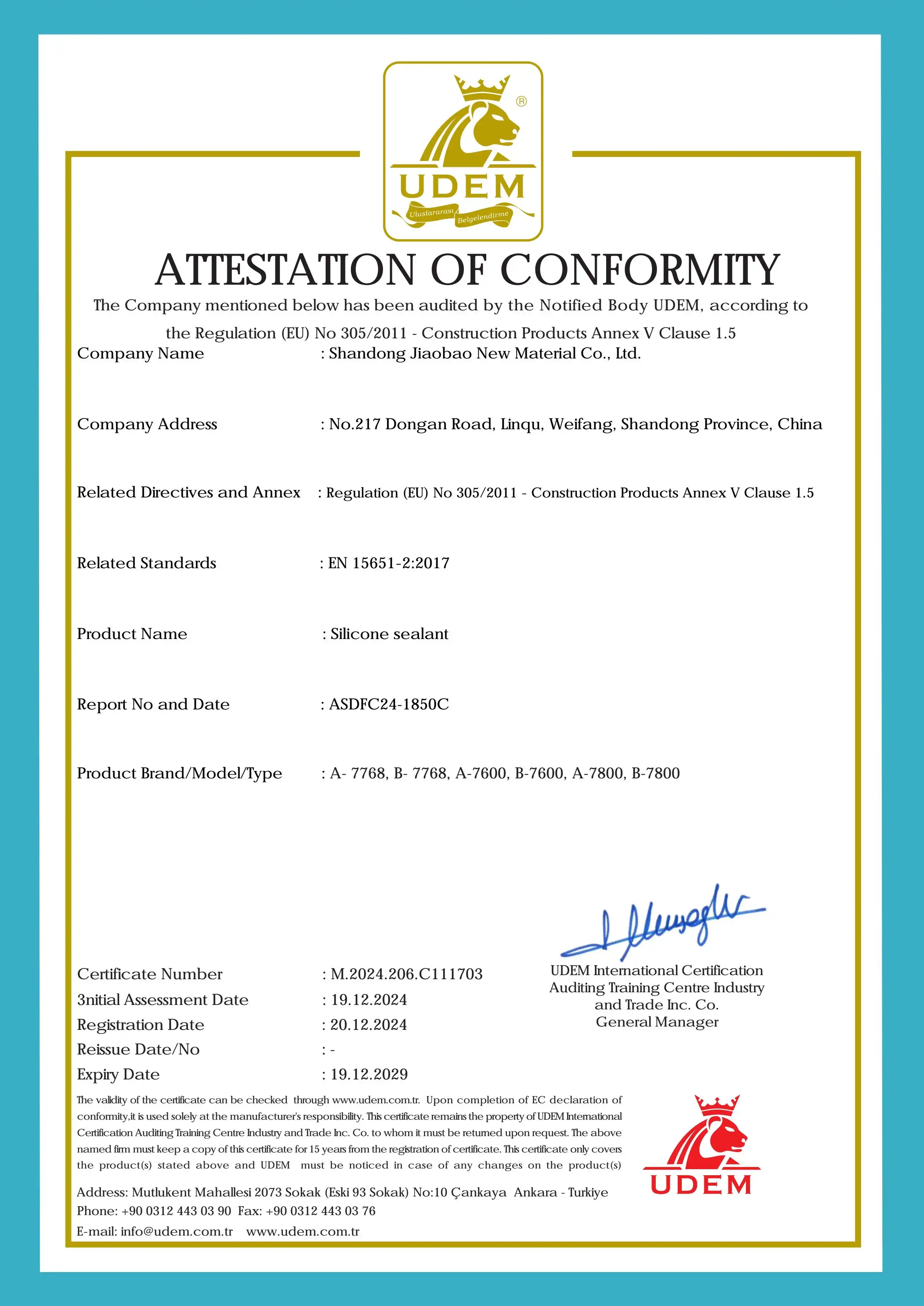
Check the company's ISO and CE certifications. These tests verify that the product was created to stated quality standards as well as that it satisfies quality requirements. Jiaobao makes silicone sealants since 2013. They can carry products by land or water to the US, Middle East, and Africa with consistent quality control. They take 1-2 weeks to create.
Check the provider's OEM capabilities. This is vital if your manufacturing line demands a specific thickness, quicker tack-free, or a colour other than white, black, and grey. Jiaobao makes accurate OEM/ODM items for GP silicone sealant for glass and aluminum customers. If you're unhappy with the quality, the manufacturer will refund your money or replace it for the duration of the warranty. Find reliable suppliers for this sealant. During the initial technical interaction, record a minimum number of orders and lead times.
A correctly applied silicone seal does not need frequent attention, but periodic inspection protects both the assembly and your warranty position.
Check sealed joints yearly for cohesive cracking, colour change or pull-away from a single substrate. A good bead of GP silicone will remain clear or maintain its original colour. Yellowing or chalking is a sign of either a poor quality oil extended product or UV deterioration due to an inadequate amount of silicone polymer in the initial version formulation.
To remove a cured beads, score along both sides with a sharp utility tool and pull the bulk away by hand. Residual remnants may be removed using a silicone remover solvent or mechanically by scrubbing with a plastic scraper. No metal scrapers on anodised aluminium. They will damage the finish and provide sites for corrosion beneath any new sealant.
Spot repair is permitted if <30% of the joint length has adhesive failure. Remove the failed piece and re-clean using the two-cloth procedure with IPA and apply new sealant. If the failure is common or the bead hardened and lost elasticity everywhere, removal and re-sealing is the most cost effective long term option.
Putting glass and aluminum together with GP silicone sealant for glass and aluminum might sound easy, but the strength of the bond depends on a lot of things, like how clean the surface is, the angle of the nozzle, the shape of the joint, and the conditions in which it cures. A good one-part GP sealant has a bond strength of at least 1.5 MPa and an extension of over 300%. This means that your manufacturing team can move the parts around during the heat cycle without the seal breaking. If you use the right stuff and do things the right way, the joint won't need to be fixed for years.
Not on all finishes. Acetoxy silicone works well on anodized and powder-coated aluminum. On untreated mill-finish aluminum, the acetic acid released during cure can cause surface staining. Test on a small area first or switch to a neutral-cure grade for bare metal.
Cracking usually points to a low-grade, solvent-extended product. As the solvent evaporates post-cure, the bead shrinks and generates internal stress. Specify a sealant with less than 5% volatile content and verify the tack-free time matches the manufacturer datasheet on receipt.
No. GP silicone is a weather seal, not a structural adhesive. Structural glazing requires high-modulus structural silicones engineered to carry the dead load of the glass panel. Using GP silicone in a structural position is unsafe and does not meet building code requirements.
At 23°C and 50% relative humidity, the joint is tack-free in 15 minutes and reaches handling strength within 24 hours. Full mechanical cure — including maximum tensile strength — develops in approximately 72 hours.
Since 2013, Jiaobao has sold sealants for glass and aluminum. You can get in touch with them through ISO and CE certifications. The wait time is one to two weeks, and they promise to either refund or repair any defective products. Our team can make whatever you need, whether it's standard cartridges or a special recipe for viscosity. You can get a sample of our GP silicone sealant for glass and aluminum maker by emailing dorashen@cnjiaobao.com or visiting shandongjiaobao.com. You will see how much better it is on your next job where you glaze something.
1. ASTM International. ASTM C920: Standard Specification for Elastomeric Joint Sealants. ASTM International, 2022.
2. ASTM International. ASTM C794: Standard Test Method for Adhesion-in-Peel of Elastomeric Joint Sealants. ASTM International, 2018.
3. ISO. ISO 11600: Building Construction — Jointing Products — Classification and Requirements for Sealants. International Organization for Standardization, 2018.
4. Brydson, J. A. Rubbery Materials and Their Compounds. Elsevier Applied Science, 1988.
5. Donaldson, K. Y., & Bhattacharya, S. K. "Thermal and mechanical performance of silicone-based sealants in curtain wall glazing systems." Construction and Building Materials, 2019.
6. Wolf, A. T. "Durability of silicone sealants in the construction industry: Field performance versus laboratory prediction." International Journal of Adhesion and Adhesives, 2020.
November 16,2023
Enterprise Name
The sealant has very strong adhesion and performs well even on glass and aluminum. After curing, it remains flexible and shows no cracking. Perfect for our facade projects.
November 16,2023
Enterprise Name
Stable quality across batches. Our customers especially like the smooth application and consistent extrusion. It helps reduce installation time on site.
November 16,2023
Enterprise Name
I used it for bathroom sealing. Excellent waterproof performance and no mold issues so far. It's been holding up very well in humid conditions.
November 16,2023
Enterprise Name
The neutral silicone works well on sensitive materials without corrosion. Very suitable for industrial applications requiring stable performance.