November 16,2023
Enterprise Name
The sealant has very strong adhesion and performs well even on glass and aluminum. After curing, it remains flexible and shows no cracking. Perfect for our facade projects.
Oct 21, 2026
Yes — GP door and window silicone sealant effectively stops both air infiltration and water ingress when applied correctly. Formulated as a one-component, acetic RTV silicone, it cures through ambient moisture to form a flexible rubber seal between glass and frame substrates. With a maximum bond strength of 1.5 MPa, elongation exceeding 300%, and a service temperature range of -50°C to +150°C, this sealant from Jiaobao New Materials delivers measurable performance. For window and door manufacturers running high-volume assembly lines, it provides the sealing reliability needed to prevent costly product returns and customer complaints.
Air and water intrusion through door and window joints is one of the most common building performance failures. Before specifying any sealant, it helps to understand exactly why these leaks occur.
Aged or low-grade sealants lose elasticity and begin to shrink. Research published in Construction and Building Materials found that sealants containing excess plasticizers can shrink by up to 15% within 18 months, creating gaps along the bond line that allow both air and water to pass through.
Aluminum frames and glass panels expand and contract at different rates. A typical aluminum window frame in a climate with a 50°C seasonal temperature swing can move 1.5–3mm at the joint. Sealants with low elongation ratings crack under this stress, breaking the seal entirely.
Even a quality product fails if the substrate is wet, dusty, or contaminated with oil during application. The bond never forms at the chemical level, so adhesive failure — where the sealant peels away from the surface — happens within weeks rather than years.
Understanding these three root causes helps factory production managers and procurement teams select sealants that solve the actual problem rather than just fill a gap temporarily.
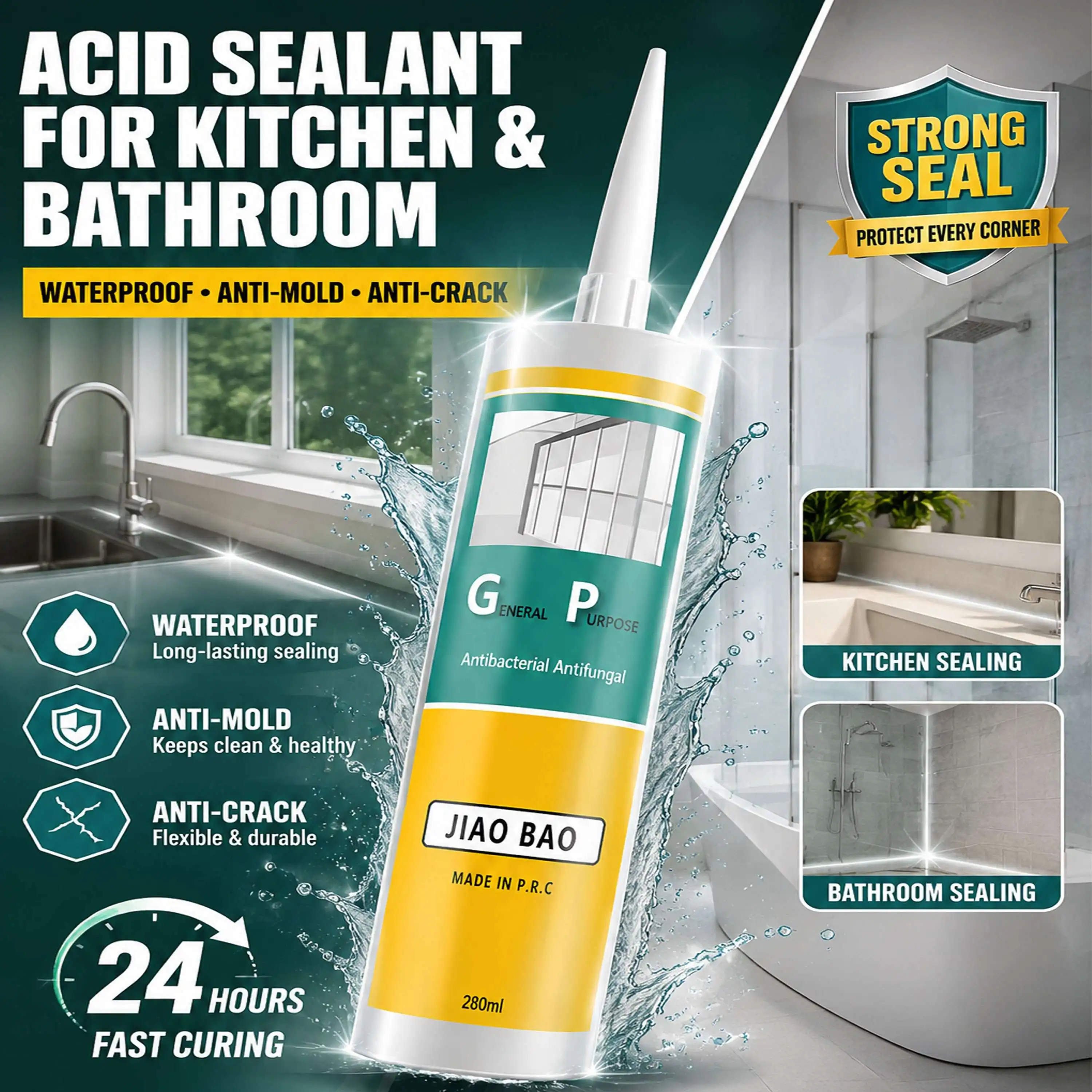
Jiaobao's GP door and window silicone sealant is made of a single-part acetoxy-cure formula. Cross-linking starts right away when the paste comes in contact with moisture in the air. This makes a stable elastomeric seal that doesn't need to be heated or mixed.
The formula sticks strongly to float glass, anodized aluminum, and PVC profiles, which are the three most common types of substrates used to make windows for homes and businesses. With a Shore A hardness of 18, the cured bead is still soft enough to bend without breaking.
Silicone polymer backbones are much better at resisting UV damage than acrylic or polyurethane alternatives. The glue also doesn't react with water, weak acids, oils, or common solvents. This is important in industrial settings where cleaning chemicals may come into contact with window units while they are being put together or shipped.
The sealant comes in white, black, gray, and custom colors, and it fits the most popular metal profile finishes used in the door and window business. Consistent color matching hides joint lines and meets the quality standards that customers expect from the final product.
Getting a leak-free result depends as much on preparation as it does on product quality. Here is the process that factory production teams follow for consistent results.
Clean all contact surfaces with isopropyl alcohol or an approved cleaner to remove dust, oil, and moisture. Contaminated surfaces are the leading cause of adhesive failure in glazing applications. The substrate must be dry and at ambient temperature before any sealant is applied.
Load the 300ml or 600ml cartridge of GP door and window silicone sealant into a standard caulk gun and apply a continuous bead into the joint. For window assembly lines, the 600ml sausage pack format reduces cartridge change frequency and improves throughput. Tool the bead within 15 minutes — that is the tack-free window — to achieve a smooth, compressed seal that contacts both sides of the joint fully.
Full cure typically takes 24 to 48 hours depending on temperature and humidity. After cure, a simple pull-peel test confirms whether the bond failed cohesively (within the sealant body) or adhesively (at the substrate interface). Cohesive failure means the bond is stronger than the sealant itself — the correct result.
There are big differences between sealants in how they work, and these differences affect both the quality of the factory production and the warranty coverage over time.
Here's how the main types of sealants stack up on the criteria that window makers care about the most:
These differences have a direct effect on how well things are made and how good the finished product is. For window factories that have to meet strict delivery dates and quality standards, the process consistency of a silicone-based product cuts down on the number of repairs that need to be done and the complaints from customers that the seal didn't work.
When purchasing a lot of GP door and window silicone sealant, supply reliability and product consistency are just as important to production managers as the technical data sheet.
Jiaobao sells GP silicone sealant in both 300ml cartridge and 600ml sausage forms. It can be used with normal pneumatic and hand application tools that are used on assembly lines for windows. Minimum order amounts are set up to support monthly supply plans without needing big inventory pledges up front.
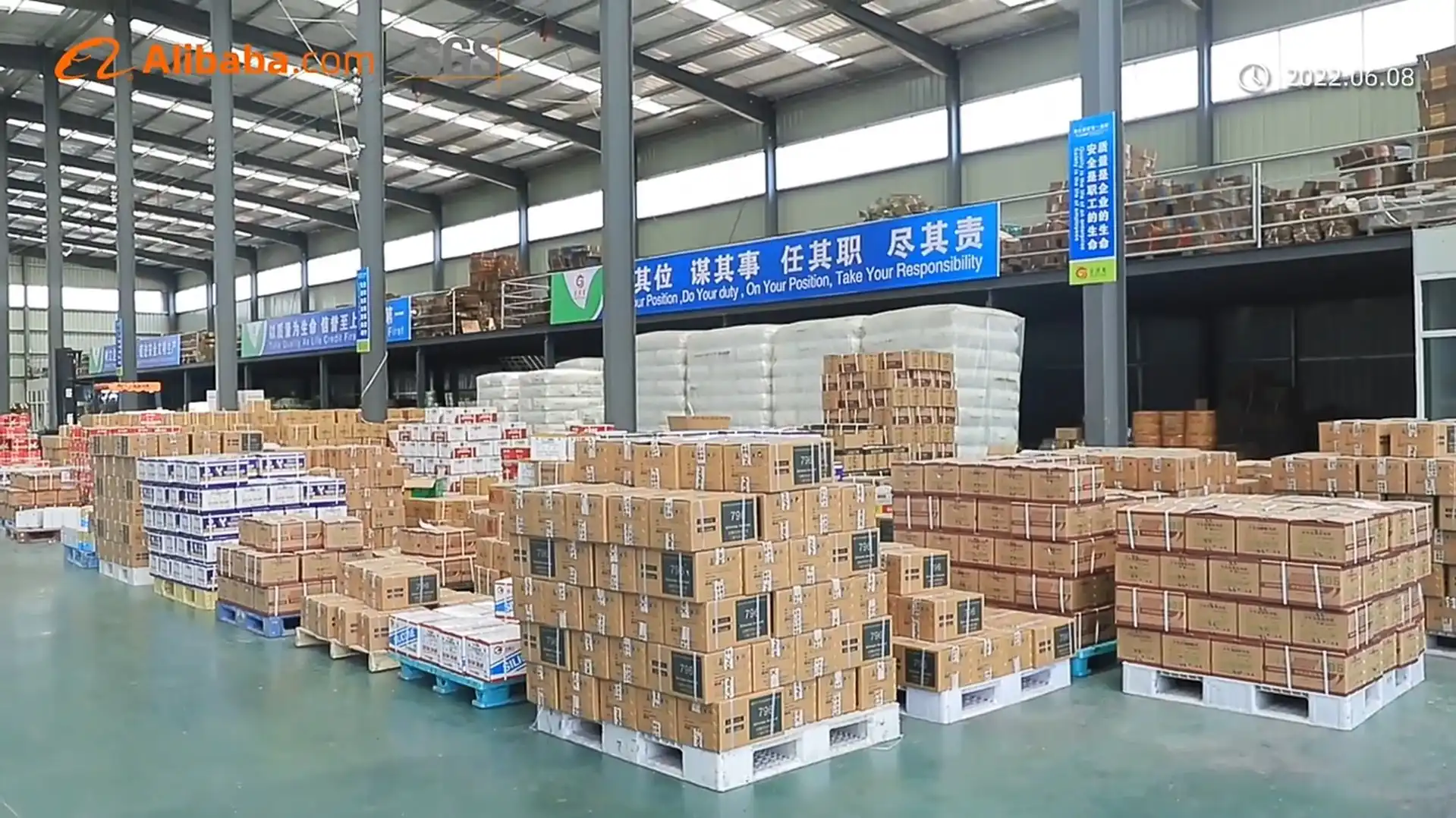
With a production lead time of one to two weeks, Jiaobao can support quick buying cycles. Shipping can be done by land or sea, and it can go to production hubs in China like Shandong Linqiu and Guangdong Foshan, as well as to Central Asia and Africa for export.
Products have ISO and CE approvals, which show they meet the rules and regulations for foreign markets. Jiaobao provides samples for pre-order production line testing, which is a normal step in the two to three week decision cycle for buying windows from a factory. This way, teams can make sure that the samples will stick to their specific frame designs before making a full order.
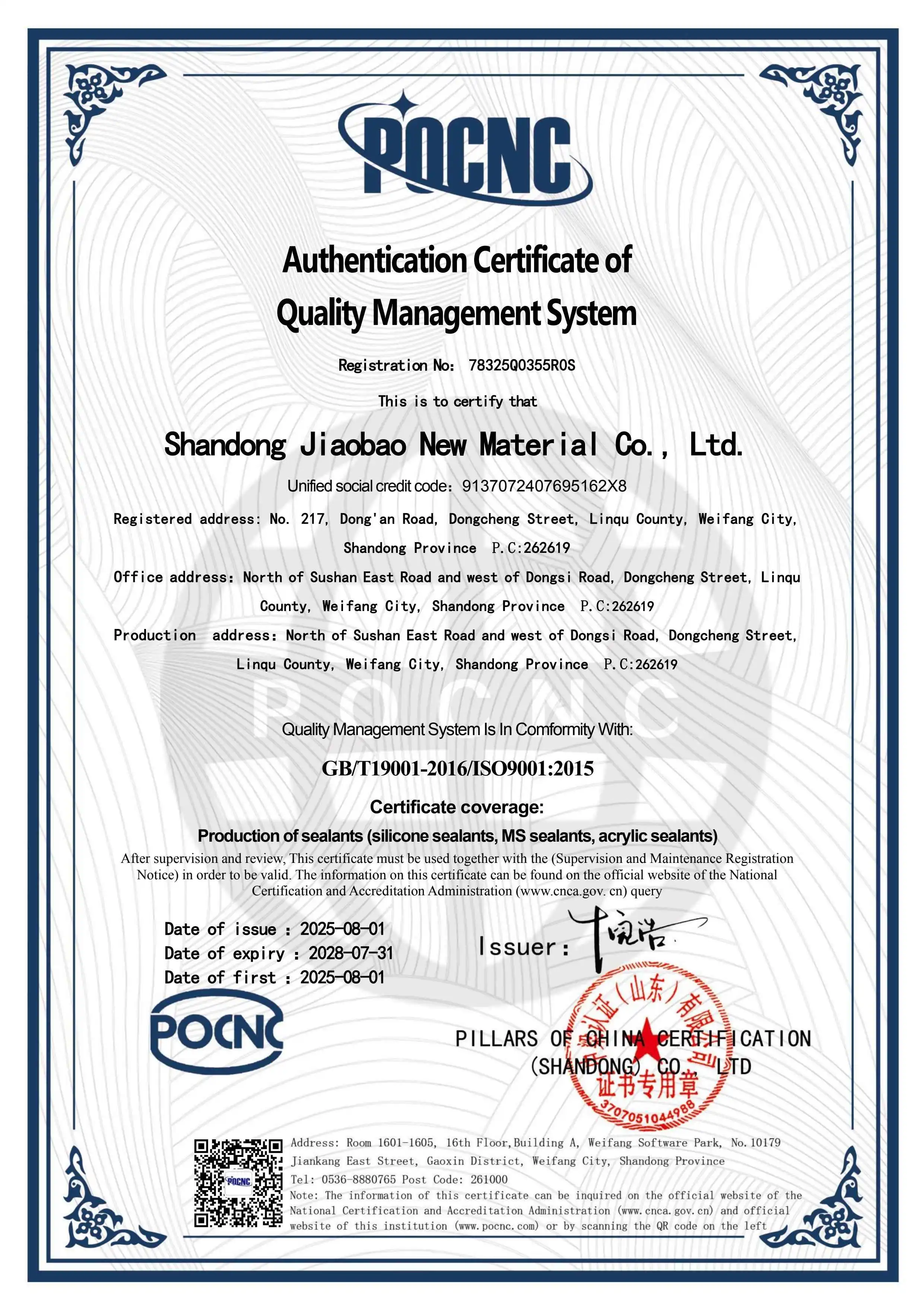
Three things can lead to air and water leaks in windows and doors: failed materials, shifting temperatures, and bad installation. All three are taken care of by properly specified GP door and window silicone sealant. The product from Jiaobao has a 1.5 MPa bond strength, more than 300% elongation, and a 15-minute tack-free time, so it can be used in factory production lines and for long-term use in the field. ISO/CE certification, flexible packaging, and a shelf life of 12 months make it a reliable supply chain option for procurement teams. The company has been making it for 13 years.
Yes. The acetoxy-cure mixture sticks well to anodized aluminum, float glass, and PVC shapes, which is what most home and business window systems use as their base materials. For raw aluminum or copper-containing metals, a neutral-cure type is suggested to keep them from rusting from the release of acetic acid.
At 23°C and 50% relative humidity, the time until there is no more tack is about 15 minutes. It takes 24 to 48 hours for a full cure to happen. Curing time is longer when temperatures and humidity are lower. Handling strength builds up in the first few hours after application and should be taken into account in production lines.
The GP silicone sealant from Jiaobao has ISO and CE approvals. It works the way that ASTM C920 Class 25 and ISO 11600 standards say it should for elastomeric joint sealants used in building construction.
No, silicone surfaces don't like water and won't take regular oil- or latex-based paints. The frame should be painted before the sealer is put on it. If you need a finish that can be painted over the joint, you should choose a blend sealer.
For more than 13 years, Jiaobao has sold GP door and window silicone sealant to window manufacturers in both China and other countries. As a direct manufacturer and supplier of silicone sealant, we offer sample kits for testing on the production line, competitive wholesale prices, and OEM/ODM options that can be made to fit your frame profiles and color needs. To get started, email our team at dorashen@cnjiaobao.com or go to shandongjiaobao.com and ask for a technical datasheet.
1. Construction and Building Materials — Plasticizer Migration and Sealant Shrinkage in Building Joint Applications, Elsevier, 2020.
2. ASTM C920-22 — Standard Specification for Elastomeric Joint Sealants, ASTM International, 2022.
3. ISO 11600:2002 — Building Construction: Jointing Products — Classification and Requirements for Sealants, International Organization for Standardization, 2002.
4. Journal of Building Engineering — Thermal Movement and Sealant Performance in Aluminum Curtain Wall Systems, Elsevier, 2021.
5. ASTM C794-18 — Standard Test Method for Adhesion-in-Peel of Elastomeric Joint Sealants, ASTM International, 2018.
6. Building and Environment — Energy Performance of Window Sealing Systems: A Review of Air Infiltration and Thermal Bridging, Elsevier, 2019.
November 16,2023
Enterprise Name
The sealant has very strong adhesion and performs well even on glass and aluminum. After curing, it remains flexible and shows no cracking. Perfect for our facade projects.
November 16,2023
Enterprise Name
Stable quality across batches. Our customers especially like the smooth application and consistent extrusion. It helps reduce installation time on site.
November 16,2023
Enterprise Name
I used it for bathroom sealing. Excellent waterproof performance and no mold issues so far. It's been holding up very well in humid conditions.
November 16,2023
Enterprise Name
The neutral silicone works well on sensitive materials without corrosion. Very suitable for industrial applications requiring stable performance.