November 16,2023
Enterprise Name
The sealant has very strong adhesion and performs well even on glass and aluminum. After curing, it remains flexible and shows no cracking. Perfect for our facade projects.
Oct 21, 2026
Yes — GP general purpose silicone sealant bonds to glass surfaces safely and effectively. As a one-part, moisture-curing acetic RTV silicone sealant, it forms a permanently flexible, waterproof rubber seal directly on glass without requiring primers in most standard glazing applications. With a maximum bond strength of 1.5 MPa, a tensile rate exceeding 300%, and a tack-free time of just 15 minutes, this sealant delivers fast, dependable adhesion. It performs stably from -50°C to +150°C, making it suitable for both interior and exterior glass joints in residential and commercial construction.
This is acetoxy-cure silicone rubber that is made up of just one part. When it's at room temperature, it heals by reacting with the water in the air to make acetic acid. When it cures, a continuous layer of 18 Shore A rubber is formed. This layer is soft enough to let the joint move but firm enough to keep the seal in place.
This product comes in 300 ml cartridges or 600 ml sausage packs as a paste. It has a stability score of 0.88 and a specific gravity score of 0.87. It can be kept for a year and comes in white, black, gray, and other colors. With these details, wholesalers can match products to the color needs of a project without having to keep extras on hand.
There are no pores in glass, so bonding is only based on the chemistry of the surface and not on how it fits together mechanically. When you put the acetic cure method on smooth glass, it forms strong covalent links. The over300% elongation at break makes it possible for the cured seal to bend with the temperature changes that cause aluminum-framed windows to expand. This is something that neither normal polyurethane sealants nor acrylic sealants can consistently match over time.
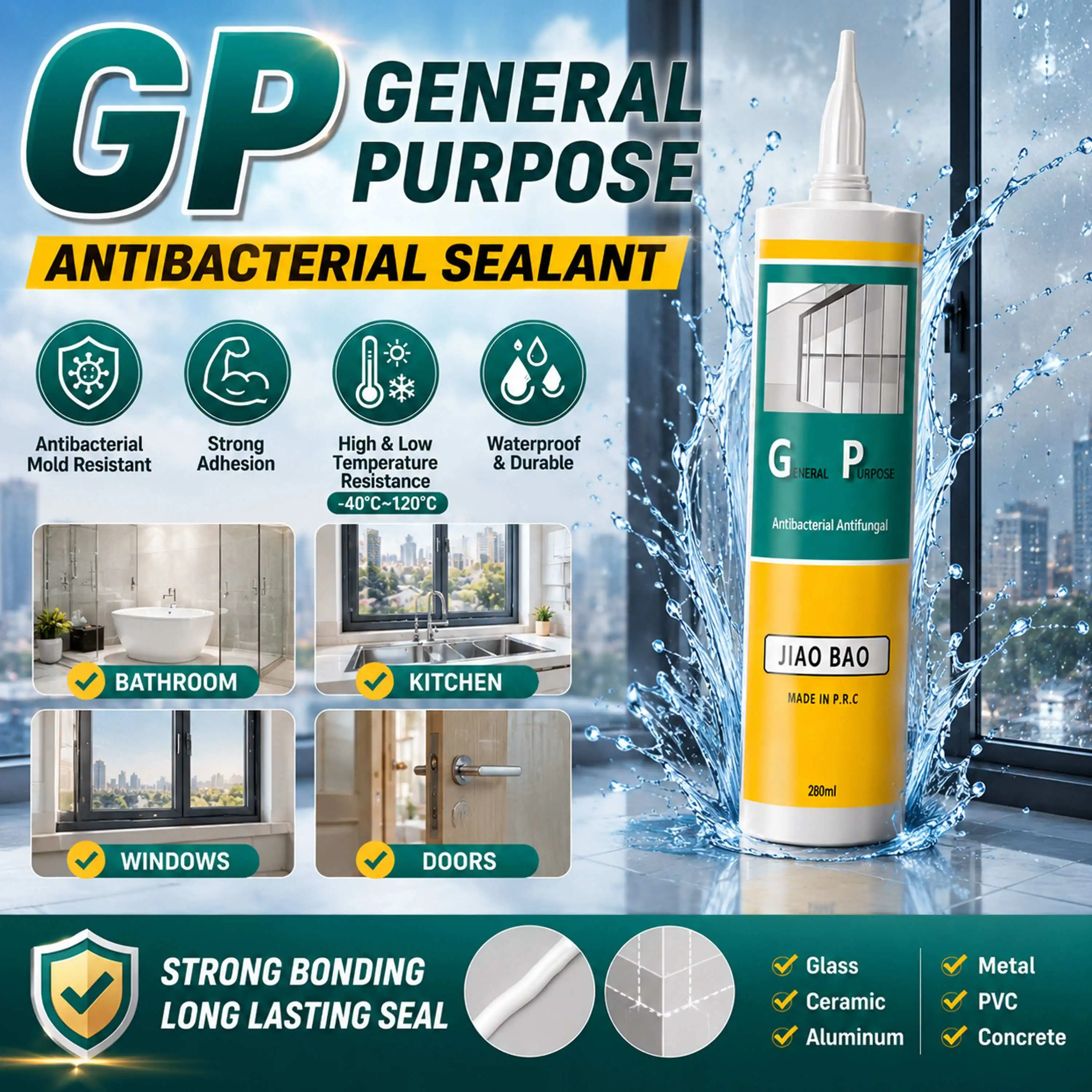
How well you prepare the surface affects how strong the bond of GP general purpose silicone sealant is. Because it is alcohol, you can use it to clean the glass and get rid of oil, dust, and other gunk. Let the whole surface dry. If you rub old or worn glass lightly with fine-grit paper and then wipe it clean with liquid, the bonding will be even stronger. Standard float or toughened glass doesn't need to be prepped most of the time.
When it's between 5°C and 40°C outside and the relative humidity is more than 40%, use the sealant. The product stops being sticky in 15 minutes, and depending on how deep the joint is and how humid the air is, it cures completely in 24 to 48 hours. There should be a 2:1 ratio between the joint width and joint depth for deep joints (more than 12 mm). This is because joints heal from the outside in.
It takes a lot longer to dry when the humidity is low. When the sealant is put on in places where there isn't any air flow, the reaction that is caused by moisture stops. The sealant gets thicker and harder to work with when the temperature drops below 5°C. This makes the joint finish less good. The technical details that procurement teams give to partners further down the line should include details about the application environment.
Acrylic seals are less expensive per unit, but they break down after being in UV light for a long time. Outside glass joints become less flexible and break after three to five years. That being said, silicone rubber stays flexible and weatherproof for a much longer time. This is because the backbone of the silicone polymer is naturally stable in UV light. When distributors sell to contractors who work on building facades, this difference in lifespan has a direct effect on the number of calls they get.
Even though polyurethane seals are stronger at first, they break down over time when they come into contact with water, like in bathrooms and outside windows. GP general purpose silicone sealant blocks water penetration at the molecular level. Because of this, silicone is clearly more durable in places with a lot of dampness, which is very important for customers in Southeast Asia and the Middle East. This means that the price is fair.
When GP acetoxy-cure sealant cures, it gives off acetic acid. It can't be used on new concrete or metals that are easy to damage, like copper and zinc, because it is alkaline. You should ask for a neutral-cure silicone lubricant in that case. If distributors keep both acetoxy and neutral-cure types in stock, they can help more contractors and make it less likely that mistakes will happen when more than one type is used on a project.
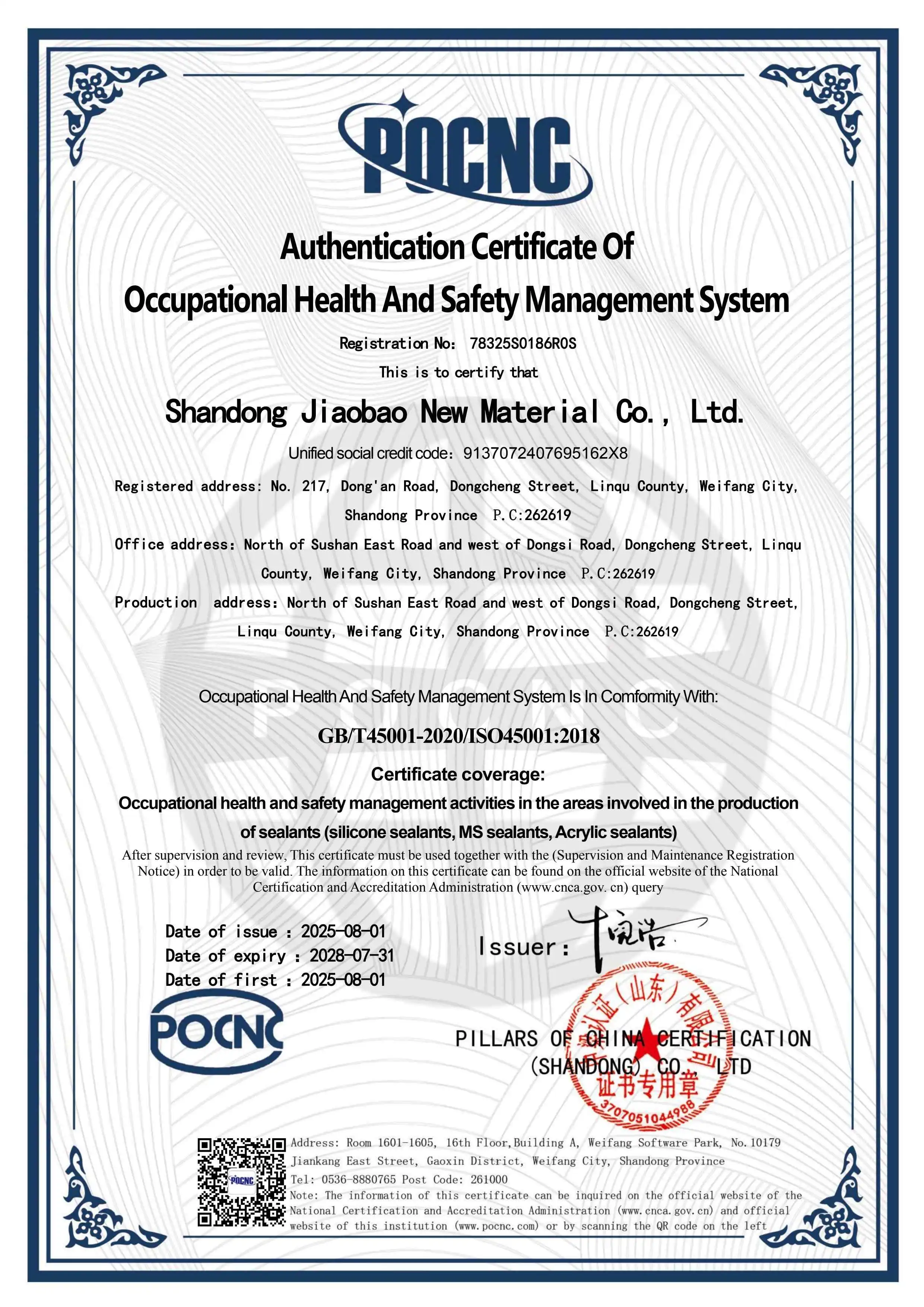
If you want to buy silicone sealant from a company, make sure they have ISO certification and batch test reports that show the tensile strength, elongation, tack-free time, and Shore hardness. Lot data that stays the same from one production run to the next is a better way to show quality control than a single sample test. Make sure you get at least three batch reports from a new supplier before you place a big order with them.
When you have too many things on hand, you use up your working capital. It should take one to two weeks for a reliable company that sells GP silicone sealant to make an order, and the minimum order quantity for test orders should be between 100 and 200 cartons. This plan works with how contractors usually restock further downstream, and it makes sure that stock doesn't run out without having to buy a lot of extra.
For wholesalers who make their own brand of goods, being able to OEM and ODM GP general purpose silicone sealant is very important. It's more valuable to use custom colors, name your packages, and change the recipe to fit the building codes in your area. It's just as important to have help after the sale. One way to protect the profit and lower the risk in the future is to have a policy for replacement or refund if there are quality problems during the shelf life.
A Vietnamese window company moved from using a local acrylic product to a silicone sealant that cures in acetoxy for glass windows with metal frames. After 18 months in the field, the number of calls from contractors dropped by more than 60%. This was because the glue stuck to polished metal better and didn't react badly when the temperature changed. The 15 minutes without tacks also helped their assembly line work go more quickly.
Builders in the Philippines were given acetoxy silicone sealant by a company that sells building materials so that people who work on homes could put glass panels in showers and bathtubs. The mold-proof and waterproof rubber seal on the product kept the joints clean even after being wet every day. During a 12-month production period, there were no quality concerns about batches. This made the distributor look better in the eyes of end users.
An industrial maintenance contractor in Saudi Arabia stuck glass inspection panels on HVAC air handling units using a GP-grade silicone sealant. When the temperature range in the facility went from -10°C to +130°C, the sealant worked well and didn't break like the polyurethane product did often. It took less time to do upkeep rounds with the one-component, no-mix treatment.
GP general purpose silicone sealant can safely stick to glass if it is used on clean, dry surfaces and in the right setting. The bond strength is 1.5 MPa, it can stretch more than 300%, it doesn't react with UV light, and it stays stable in temperatures from -50°C to +150°C. These properties make it a good choice for industrial repairs, window glazing, and hospital seals..
It lasts longer than acrylic and polyurethane alternatives when used on glass. Some of the things that help B2B distributors run their supply chains well are the product's consistent batch performance, flexible packaging, and short wait times. The type of cure is the most important thing to think about when you buy something. For glass and aluminum, you need acetoxy, and for things that are alkaline, you need neutral.
Acetoxy-cure silicone bonds well to standard float glass, tempered glass, and laminated glass. It is not recommended for mirror-backed glass, as the acetic acid released during cure can damage the silver backing layer. For mirror sealing, specify a neutral-cure silicone sealant.
The sealant becomes tack-free within 15 minutes under standard conditions (23°C, 50% RH). Full mechanical cure takes 24 to 48 hours. Deep joints or low-humidity environments extend this period.
Yes. The cured rubber resists UV radiation, ozone, and wind-driven rain. It does not yellow, pulverize, or crack under prolonged outdoor exposure — a known weakness of acrylic-based sealants used on exterior glazing.
The most common cause is surface contamination — oils, dust, or moisture at the time of application. A second cause is using an expired product past its 12-month shelf life, which reduces crosslink density and final bond strength.
No. Cured silicone surfaces repel paint. Apply all paint or coatings before sealing, or select a paintable hybrid polymer sealant if post-application painting is required.
Silicone sealants have been made in Jiaobao since 2013 and sent to distributors in Asia, the Middle East, and other places. We have 300 ml and 600 ml sizes of GP general purpose silicone sealant for sale. You can pick the color and the way it's packed, and the quality is guarantyd by ISO. It takes between one and two weeks. At any point during the shelf life, you can get a replacement or your money back. We can be reached right away at dorashen@cnjiaobao.com or shandongjiaobao.com if you want to get samples or a price quote for buying in bulk.

1. ASTM International. ASTM C920: Standard Specification for Elastomeric Joint Sealants. ASTM International, 2022.
2. ASTM International. ASTM C1193: Standard Guide for Use of Joint Sealants. ASTM International, 2020.
3. ISO. ISO 11600: Building Construction — Jointing Products — Classification and Requirements for Sealants. International Organization for Standardization, 2018.
4. Wolf, A. T. Durability of Building Sealants. RILEM Publications, 1999.
5. Petrie, E. M. Handbook of Adhesives and Sealants. McGraw-Hill, 2007.
6. Cognard, P. Handbook of Adhesives and Sealants, Volume 2: General Knowledge, Application of Adhesives, New Curing Techniques. Elsevier Science, 2006.
November 16,2023
Enterprise Name
The sealant has very strong adhesion and performs well even on glass and aluminum. After curing, it remains flexible and shows no cracking. Perfect for our facade projects.
November 16,2023
Enterprise Name
Stable quality across batches. Our customers especially like the smooth application and consistent extrusion. It helps reduce installation time on site.
November 16,2023
Enterprise Name
I used it for bathroom sealing. Excellent waterproof performance and no mold issues so far. It's been holding up very well in humid conditions.
November 16,2023
Enterprise Name
The neutral silicone works well on sensitive materials without corrosion. Very suitable for industrial applications requiring stable performance.