November 16,2023
Enterprise Name
The sealant has very strong adhesion and performs well even on glass and aluminum. After curing, it remains flexible and shows no cracking. Perfect for our facade projects.
Oct 19, 2026
One of the most important considerations a firestopping contractor can make when selecting passive fire protection materials is picking the correct fire rated silicone sealant for joints. When exposed to direct flame, fire-rated silicone compounds preserve structural and chemical integrity, preventing smoke and harmful gases from wall expansion joints. ASTM E1966 states that firestop joint systems may sustain integrity ratings of 1 to 4 hours, which generic sealants cannot match. Silicone is recommended, thus this article explains what to look for when purchasing and how to apply it.
During a fire, fire-rated silicone seals are meant to keep the different parts of a building safe. The silicone backbone doesn't break down at temperatures above 1,000°C, but organic acrylic sealants start to soften around 200°C. This is because their polymer chemistry is different from that of regular sealants.
It is important for approved fire-rated sealants to keep the joint's adhesion and physical presence during a fire. If not, they add an intumescent additive that makes the joint grow and fill any holes. Because of this, there is a wall that stays up against flames, smoke, and hot gasses for the time that was given.
These sealants are used at expansion joints in fire-rated floors and walls, at head-of-wall perimeter joints in curtain wall faces, around the edges of door and window frames, and through-penetrations in rated systems. If you choose the right caulk mixture, you can treat both internal and outdoor spaces.
To make sure that fire-rated sealant systems work, ASTM E1966 tests them, and in the US, UL 2079 rates them. All over the world, joint fire tests are governed by EN 1366-4 and BS 476 Part 20. Before the buy can go through, it must be checked that these standards are met.
Not all sealant chemistries perform equally in fire-rated joints. Silicone consistently outperforms acrylic and polyurethane alternatives across three critical dimensions.
Expansion joints move. Thermal cycling, seismic activity, and structural settlement create continuous joint width variation. Fire rated silicone sealant for joints accommodates ±25% to ±50% joint movement (ISO 11600 Class 25LM or 50LM) without cracking or debonding. Rigid intumescent acrylics fail in these dynamic conditions because they lose elasticity after curing.
Silicone's inorganic backbone resists UV radiation, ozone, moisture, and temperature extremes from -50°C to +150°C in continuous service. This makes it the correct choice for exterior facade joints where acrylic sealants would degrade within a few years, compromising the fire barrier long before the building's design life ends.
Silicone bonds directly to concrete, masonry, glass, anodized aluminum, and galvanized steel—the substrates most commonly found at expansion joint interfaces in commercial and industrial construction. This broad adhesion compatibility reduces primer use and simplifies installation.
These three properties together explain why silicone is specified by fire protection engineers for high-rise curtain walls, industrial facilities, and data centers where joint movement and environmental exposure are significant concerns.
There are lots of goods available, so buying teams need a planned way to check them out. Data about how well something works is just as important as price.
Check with a third party to make sure that the fire grade (EI 60, EI 120, or EI 180) is correct for the joint width and substrate design that you need for your project. Something that has been tried and is on the list is not the same as a general product certificate. China's rules are based on reports from the National Center for Quality Supervision and Testing of Fixed Firefighting Systems and Fire-Resistant Components.
Make sure that more than 80% of the stretchy parts have healed after the cure. Since low-modulus fire rated silicone sealant for joints formulas don't put as much stress on the edges of the joint base, they don't crack over time. This makes expansion joints work better.
How well a fire-rated joint filler works depends on the material that it is backed with. You should use ceramic fiber backing or high-density mineral wool (at least 100 kg/m³) to get the insulation (I) rating in the fire test. Do not use regular polyethylene backer rod. This requirement for backing is always written on the product's test license.
Checking out the seller is the first step in getting something efficiently. Making sure the delivery is of good quality is the last step.
Businesses that make or sell goods should only be able to show full test records, ISO certifications, and quality records that can be traced back to the batch. When a supplier can do OEM/ODM, they can also change the formulas to fit the needs of a project or the building rules in a certain area.
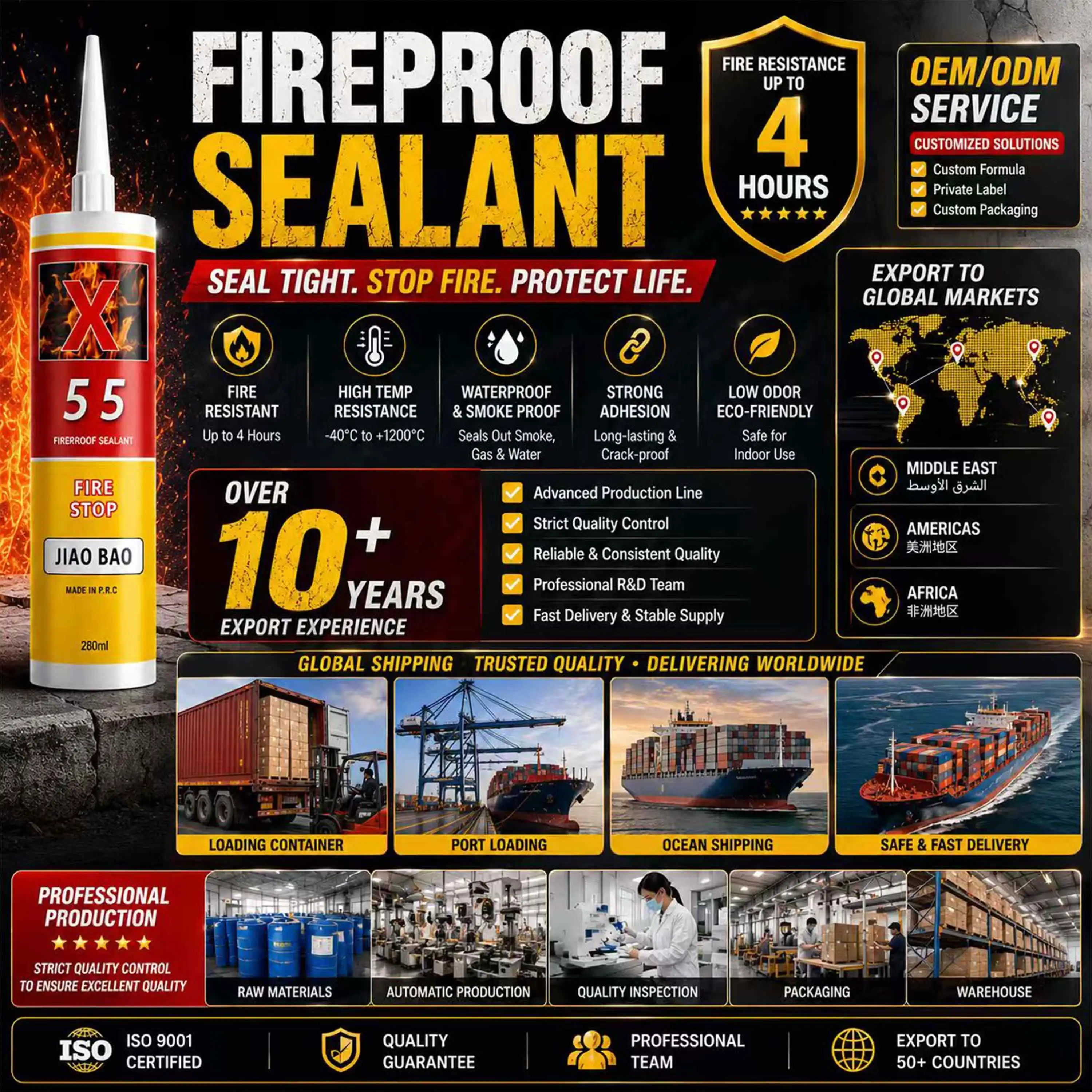
Fire-safe silicone sealant from Jiaobao comes in 300ml cartridges and 600ml sausage packs, so it can be used for both small fixes and large industrial projects. It's easy to plan the schedule for your project when you order in bulk and know that it will be made in one to two weeks.
If the product fails inspection or needs to be fixed, it doesn't matter how much less it costs per tube. When you compare providers, think about how much it will cost to reapply fire rated silicone sealant for joints, how long the project will take, and how dangerous it is to break the rules. Goods that have been checked and come with all the test records will keep your project on track and save you time on audits.
To make things easier for you, here is a list of Jiaobao's product details:
Correct installation is what converts a quality product into a passing fire inspection result.
Clean all joint faces thoroughly. Remove dust, oil, curing compounds, and old sealant residue. Dry substrates are essential—moisture trapped at the bond line will cause adhesion failure within months. Test adhesion on a sample substrate before full application when working with unusual or coated surfaces.
Maintain a width-to-depth ratio of 2:1 for the sealant bead. For a 20mm wide joint, apply 10mm of sealant depth over the mineral wool backing. Tool the surface within the sealant's open time to achieve firm contact with both joint edges. Avoid feathering the edges too thin; minimum edge thickness should not fall below 6mm.
Allow full cure before the joint is exposed to water or mechanical stress. At standard conditions (25°C, 50% relative humidity), skin-over occurs within 45–60 minutes, but full depth cure at 3mm per 24 hours means a 10mm joint requires approximately 3–4 days. Protect fresh sealant from rain and freezing temperatures during this window.
Fire-rated silicone seals can withstand extreme temperatures, move, and cling to numerous surfaces, unlike other sealing chemicals. Builders and procurement engineers responsible for fire safety in commercial and industrial buildings should use fire rated silicone sealant for joints with proof of test results. A proper positioning, surface prep, backing material, and set time will show grade performance in real life and on paper.
Paint does not adhere reliably to cured silicone and will crack when the joint moves. Order the sealant in the project-specified color—white, grey, or black—or request a custom color from the manufacturer. Do not use paint to change the appearance of a fire-rated silicone joint after installation.
At 25°C and 50% relative humidity, Jiaobao's sealant cures at approximately 3mm per 24 hours. A standard 10mm joint depth reaches full cure in roughly 3–4 days. Lower temperatures or humidity slow this process.
Intumescent acrylics expand when heated, making them effective for sealing around combustible materials like plastic pipes. Silicone-based fire-rated sealants, by contrast, excel in dynamic expansion joints because they tolerate significant movement without cracking. For exterior or high-movement joints, silicone is the correct specification.
Always use high-density mineral wool (minimum 100 kg/m³) as backing for fire-rated silicone joints. Standard PE backer rod is not permissible in fire-rated assemblies. The backing material type and density must match what was used in the system's test certificate.
Use this formula: Volume (ml/m) = Joint Width (mm) × Joint Depth (mm). A 20mm × 10mm joint requires 200ml per linear meter. Add 10–15% for tooling waste. Use this calculation to determine total sausage or cartridge quantities before ordering.
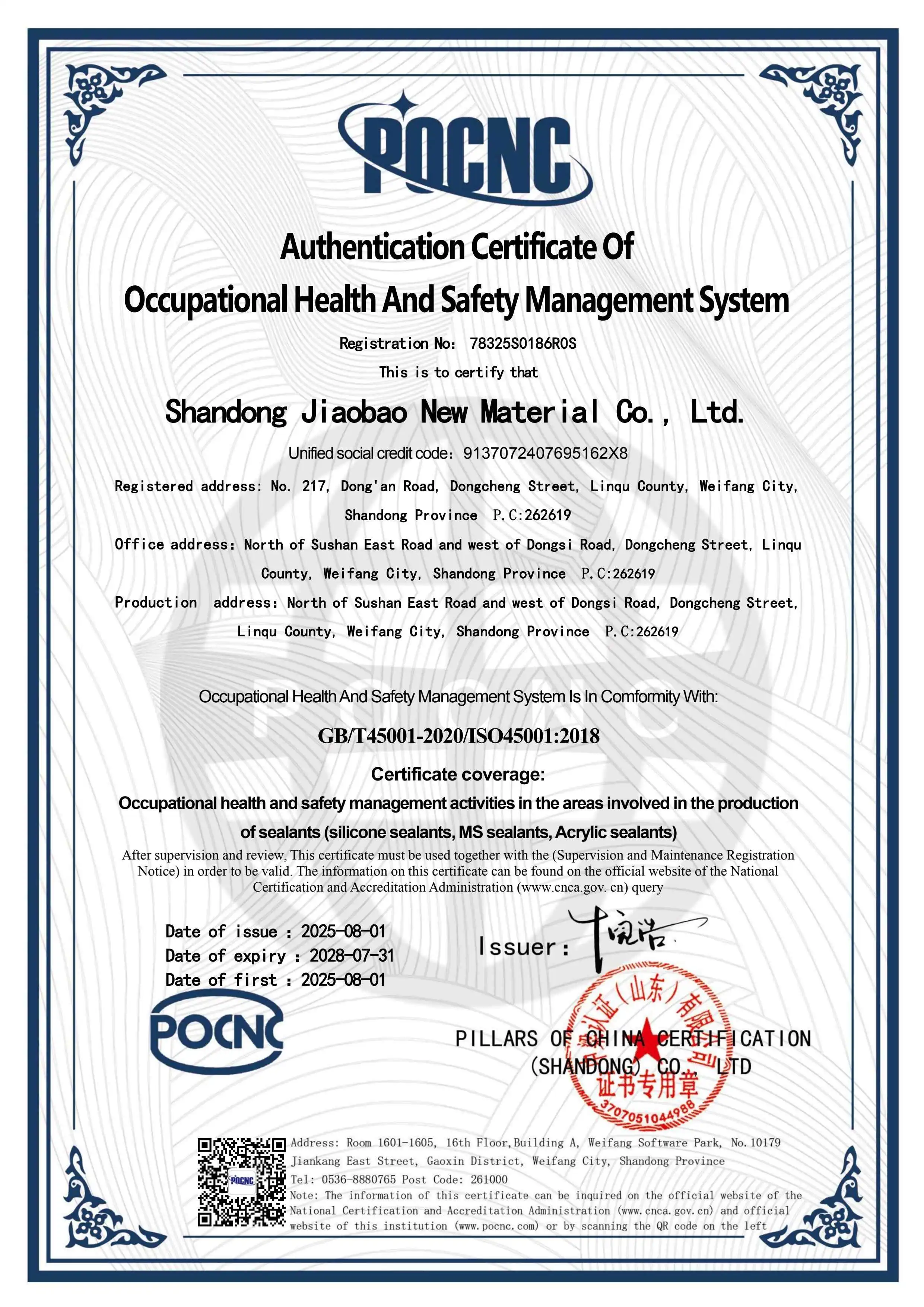
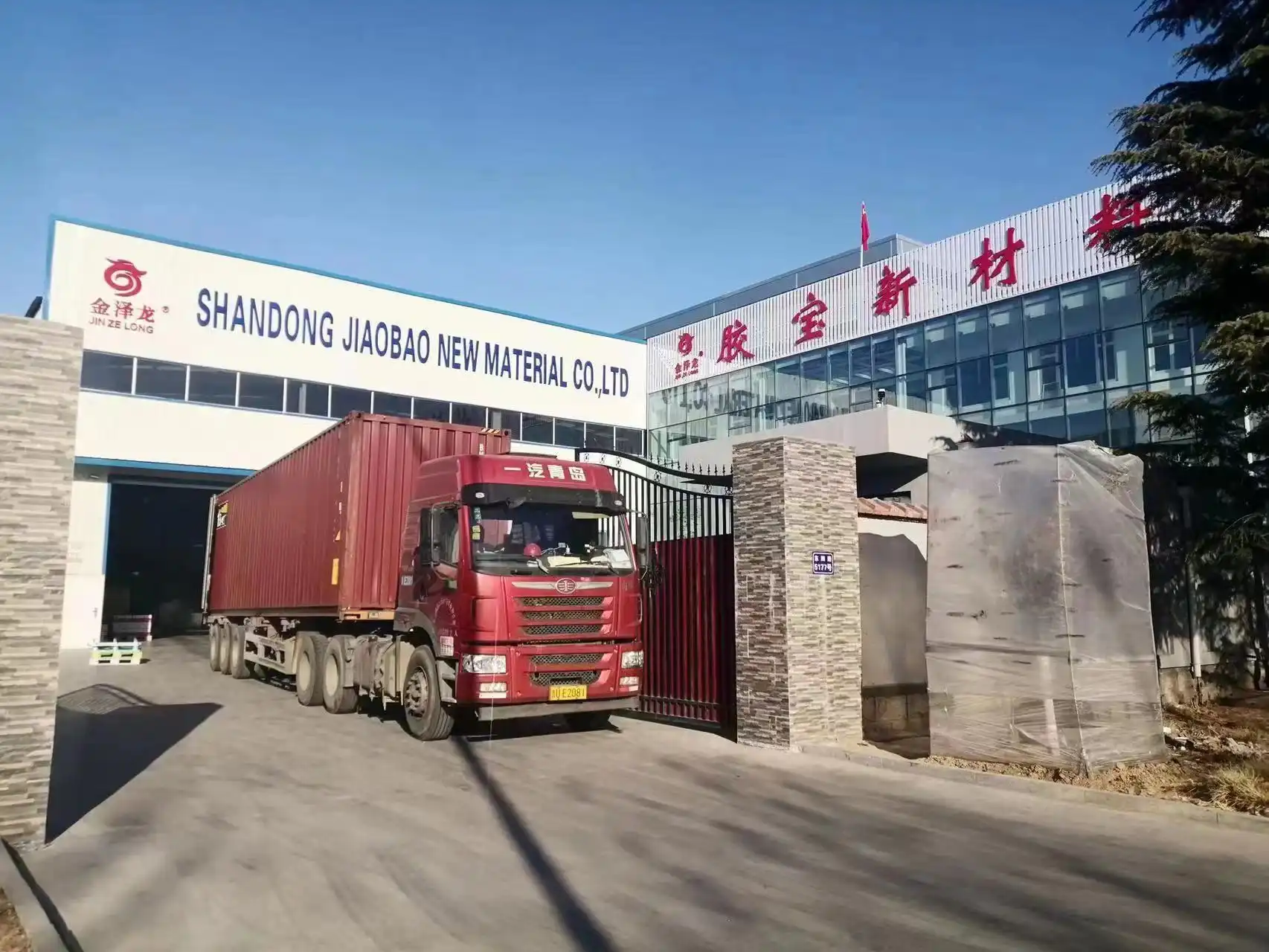
Jiaobao has been making silicone seals for over 13 years and has been doing so since 2013. They have an ISO certificate. If you are a manufacturer looking for fire rated silicone sealant for joints or need a reliable supplier for your upcoming firestopping project, we offer certified products, 1–2 week lead times, OEM/ODM capabilities, and a 300ml/600ml packaging range to fit your project scale. Send us an email at dorashen@cnjiaobao.com or visit shandongjiaobao.com to get a sample or talk about bulk prices.
1. ASTM International. ASTM E1966: Fire-Resistive Joint System Standard Test Method. International ASTM, 2022.
2. UL. UL 2079: Building Joint System Fire Resistance Tests. UL Standards & Engagement, 2019.
3. British Standards. BS 476 Part 20: Fire Tests on Buildings and Structures—Fire Resistance of Construction Elements. BSI, 1987.
4. European Standardisation Committee. EN 1366-4: Linear Joint Seal Fire Resistance Tests for Service Installations. CEN, 2021.
5. ISO. ISO 11600: Jointing Products—Sealant Classification and Requirements. ISO, 2002.
6. Guo, S., & Zhang, L. High-Rise Building Passive Fire Protection: Materials Effectiveness and Compliance Standards. Fire Science Journal, 2020.

November 16,2023
Enterprise Name
The sealant has very strong adhesion and performs well even on glass and aluminum. After curing, it remains flexible and shows no cracking. Perfect for our facade projects.
November 16,2023
Enterprise Name
Stable quality across batches. Our customers especially like the smooth application and consistent extrusion. It helps reduce installation time on site.
November 16,2023
Enterprise Name
I used it for bathroom sealing. Excellent waterproof performance and no mold issues so far. It's been holding up very well in humid conditions.
November 16,2023
Enterprise Name
The neutral silicone works well on sensitive materials without corrosion. Very suitable for industrial applications requiring stable performance.

