November 16,2023
Enterprise Name
The sealant has very strong adhesion and performs well even on glass and aluminum. After curing, it remains flexible and shows no cracking. Perfect for our facade projects.
Oct 20, 2026
A quality NP weatherproof silicone sealant for facade can last 10 to 20 years when properly applied and maintained. Jiaobao's one-part neutral-cure RTV silicone sealant is engineered to endure prolonged UV exposure, thermal cycling from -50℃ to +150℃, and dynamic joint movement up to ±25%. With a Shore A 30 hardness and 0.7 MPa tensile strength, it forms a flexible, watertight seal that resists cracking, yellowing, and adhesion loss on glass curtain walls, aluminum cladding, and stone facades. ISO and CE certified production backs every cartridge with verifiable quality assurance.
Before specifying any exterior joint sealant, it helps to understand what separates a neutral-cure silicone from generic options. The chemistry matters more than most buyers expect.
Unlike acetoxy silicones that release acetic acid during curing, a neutral-cure system releases non-corrosive byproducts — typically oxime or alcohol. This makes it chemically compatible with sensitive substrates: coated glass, galvanized steel, anodized aluminum, and masonry. Acid-releasing sealants can stain natural stone or corrode metal frames within months. Neutral cure eliminates that risk entirely.
Buildings expand and contract with temperature changes every day. A rigid sealant cracks under that stress. Jiaobao's facade sealant carries a 25% movement capability per GB 13477, meaning it stretches and compresses with the joint without tearing or losing adhesion. This elasticity is the primary reason quality silicone outlasts polyurethane and acrylic sealants in exterior applications.
| Property | Value |
|---|---|
| Cure System | Neutral Cure |
| Full Cure Time | 7–14 days |
| Shore A Hardness | 30 |
| Tensile Strength | 0.7 MPa |
| Temperature Range | -50℃ to +150℃ |
| Movement Capability | 25% |
| VOC Content | <80 g/L |
| Surface Dry Time | 30 minutes |
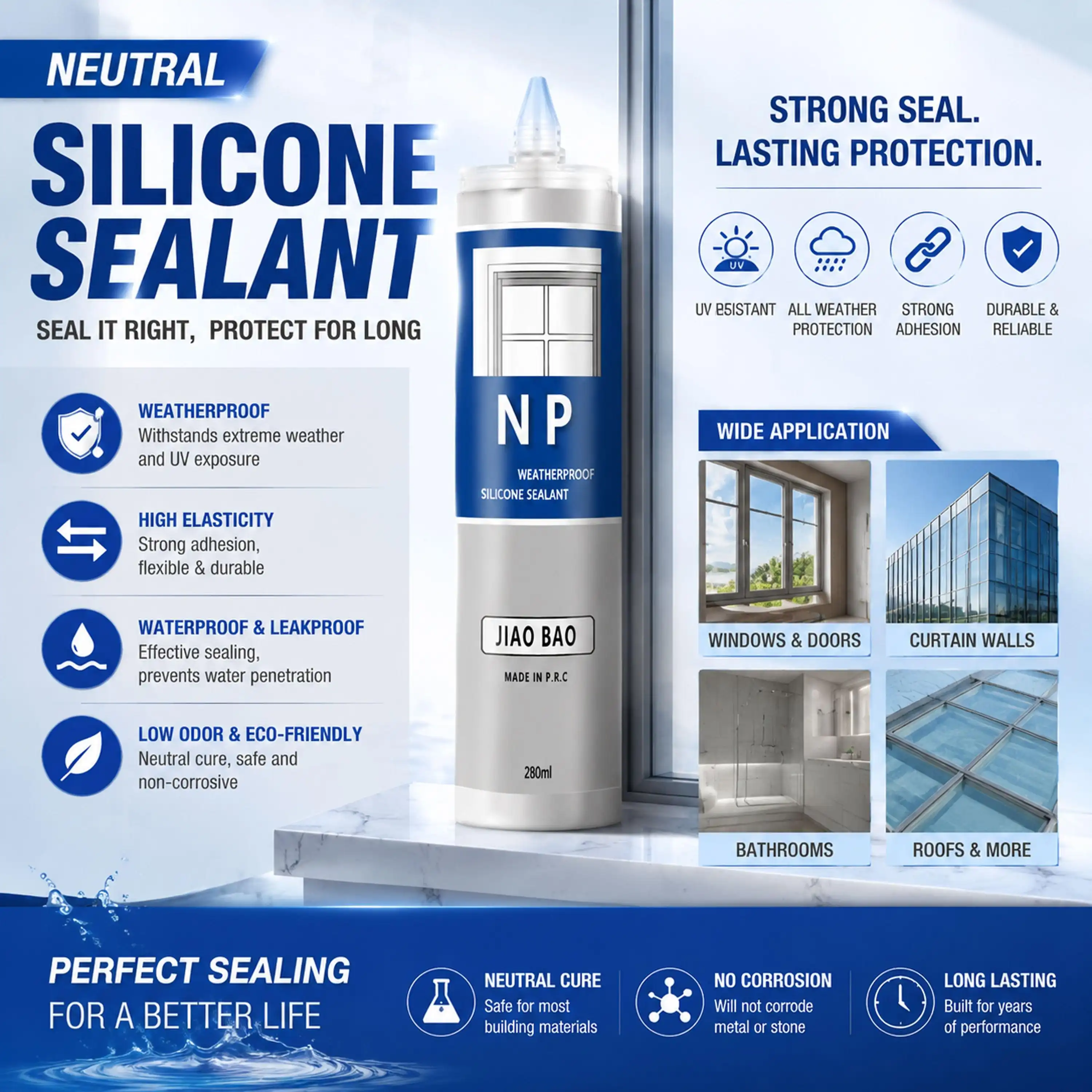
How long something lasts depends on how good the product is, how well the base is made, and the weather where the building is located. NP weatherproof silicone sealant for facade is one such product, and tests and reports from the field back this up.
Many places in the world are hot and dry, like the Middle East and the Southwest US. These places have strong UV rays and daily temperature changes of more than 40℃. Standard polyurethane sealants often start to chalk on the surface after 3 to 5 years in these conditions. Tests using ASTM C 1248 showed that neutral silicone formulas did not move oil or get dirty on the surface, even after being exposed to fast aging. In other words, they can be used in real life for more than 15 years in the same way.
The main reason why bonding fails early on is not the product itself, but how badly the surface is prepared. If dust, oil, or water get into the sealant while it's being put on, it won't stick. It's also possible for the cure to be slowed down or not completed if you use sealant below 5°C or above 40°C. Jiaobao says that the product should be used between 5°C and 40°C and when the relative humidity is above 40%.
Jiaobao's sealant passes both the ISO 11600 (F&G 25LM classification) and ASTM C920 tests. These are the two rules that purchasing managers all over the world follow. A test by ASTM C920 Class 25 has shown that the sealant can withstand ±25% cyclic joint movement for a long time. These rules are in place because facades need to perform as promised over and over again in the real world, not just as marketers say they will.
But even the best sealant will not last long if you skip steps in the process. The following shows what is normal in the industry.
To clean every part of the joints, use two cloths soaked in isopropyl alcohol or a MEK wipe. Use one cloth to put it on and another clean, dry cloth to wipe it off before the solvent goes away. It's important that the surfaces are dry and free of any dust, grease, or sealant that was there before. Before you use aluminum panels that have been coated with fluorocarbon (Kynar/PVDF), you should do an adhesion pull test. You might need to use a starter that works with it.
You should use NP weatherproof silicone sealant for facade when the temperature is between 5 and 40 degrees Celsius and the humidity is more than 40%. Cut the cartridge opening at a 45° angle so that it fits the width of the joint. Make sure there are no air spaces and that the joint is completely full. To get a good touch with the base, you should work on the surface right away, within five minutes. In places that are deeper than 12 mm, backing rods should be used to control the depth of the glue and stop three-sided adhesion, which makes it hard to move.
When things are normal (25°C, 50% RH), the skin forms on top in 30 minutes. The full cure is done in 7–14 days. Protect the new varnish from rain and noise while it's being put in place. Try pulling on some test joints once the glue is dry to make sure they stay together before you hand over the whole project. After this step, which only takes ten minutes per wall, warranty calls will not come back for months.
Procurement teams regularly weigh three sealant types for exterior facade work. Here is how they compare honestly.
Polyurethane sealants offer strong initial adhesion and are paintable — an advantage in some retrofit projects. However, they degrade under prolonged UV exposure, losing elasticity and surface integrity within 5–8 years on exposed facades. Neutral silicone retains flexibility and adhesion well beyond that window without requiring paint cover for UV protection.
Acetoxy silicone costs less upfront but is unsuitable for metal-framed facades or natural stone. The acetic acid it releases during cure corrodes galvanized and aluminum substrates and stains porous stone permanently. Neutral cure chemistry prevents both issues, making it the correct specification for curtain walls and stone cladding regardless of budget pressure.
A sealant that costs 30% more but lasts twice as long delivers clear value in reduced labor for joint re-sealing, fewer warranty claims, and lower client complaint frequency. For facade contractors carrying 5–10 year performance guarantees, specifying a tested neutral silicone is risk management, not just material selection.
Find a trustworthy source of neutral, weatherproof silicone that is approved is just as important as the product standard.
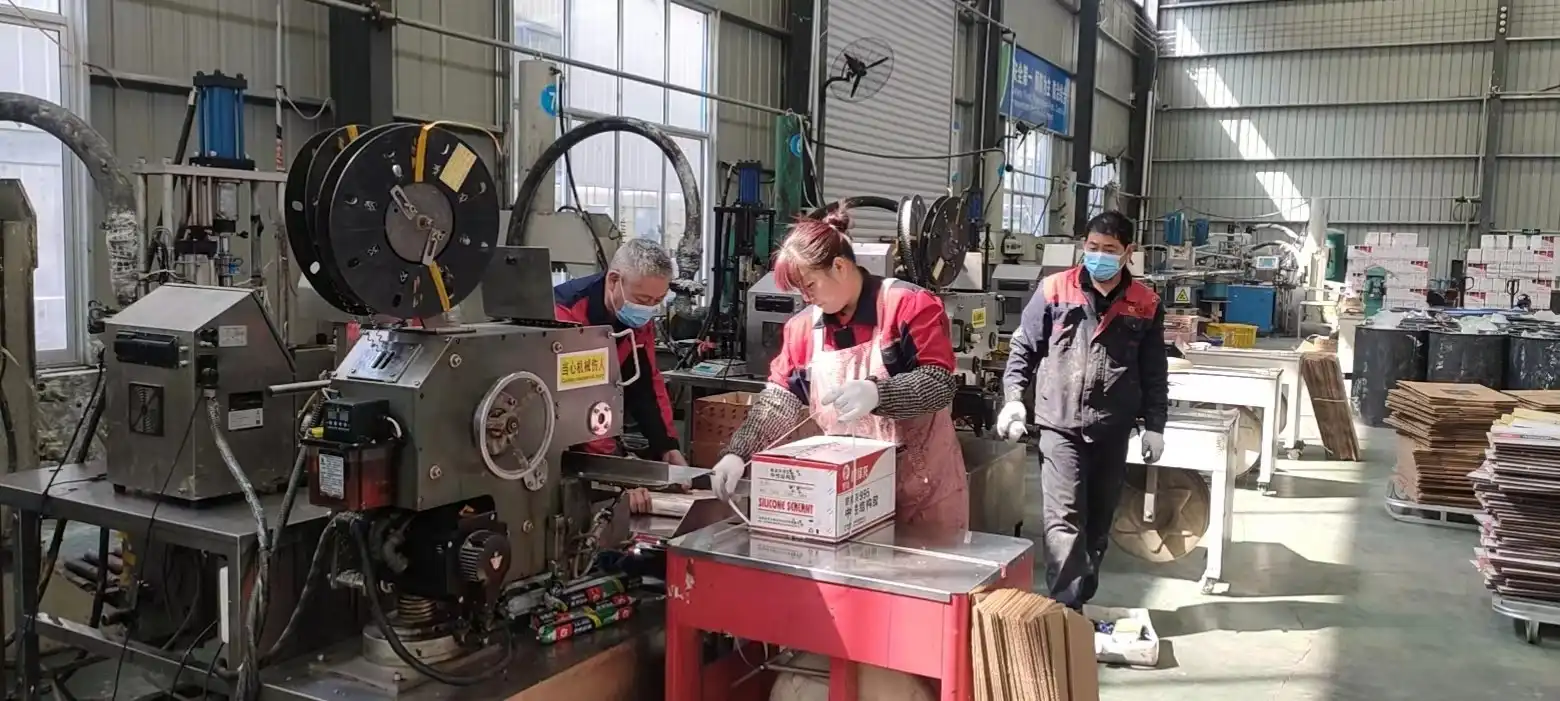
Jiaobao ships NP weatherproof silicone sealant for facade in 300 ml cartridges and 600 ml sausage packs. Standard production wait time is one to two weeks, and the team can handle OEM/ODM orders with private label packing and color matching that is made just for you. You can quickly get samples to test how well they stick to your own substrates before deciding to buy a lot of them.
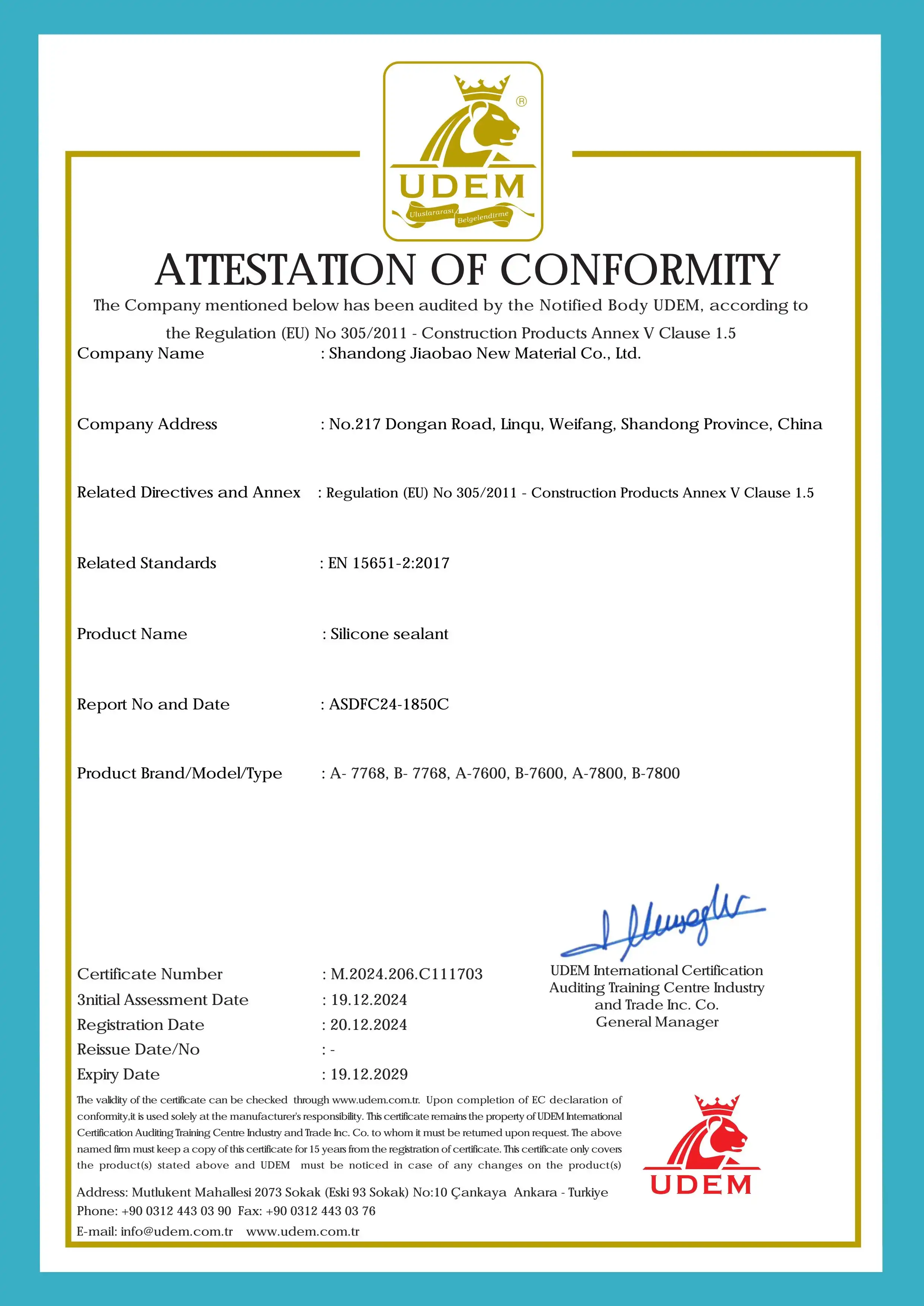
Each batch of goods is checked and approved by both ISO and CE. If you ask for them, you can get full test results, material safety data sheets (MSDS), and technical data files. It is usual for both government and business requirements to need compliance documentation, which Jiaobao gives during the procurement stage for projects that need it.
Within 12 months, if there is a confirmed quality problem, Jiaobao will either take the item back or send a new one. The team also provides technical support 24 hours a day, seven days a week for questions about uses, to make sure substrates work with each other, and to plan for uses in cold weather. This helps make sure mistakes don't happen in the field before they turn into warranty claims.
A well-specified neutral-cure silicone sealant, correctly applied to a clean substrate, routinely protects facade joints for 10–20 years. The key factors are neutral chemistry for substrate compatibility, tested movement capability for joint flexibility, and UV resistance for color and surface stability. Jiaobao's NP weatherproof silicone sealant for facade meets ASTM C920 and ISO 11600 benchmarks, making it a sound specification for contractors who carry multi-year performance guarantees. When material quality and application practice align, long-term facade integrity is achievable without overpaying for imported alternatives.
The most important things for making a joint flexible are neutral chemistry to make sure it works with any material, movement testing to make sure it can move, and UV protection to keep the color and surface stable. The NP weatherproof silicone sealant for facade from Jiaobao meets ASTM C920 and ISO 11600 standards. This makes it a good choice for builders who want to offer guaranties that last longer than a year. If the materials are good and they are put up correctly, the wall will last for a long time without having to spend a lot of money on ones from other countries.
For the job, temperatures above 5 °C are needed. After it has fully hardened, the glue stays flexible and can work at temperatures as low as -50℃. This means it can go through freeze-thaw cycles without break.
The color will stay the same longer with neutral-cure silicone than with acetoxy or polyurethane. There is no oil movement in Jiaobao's recipe, and it passes the ASTM C 1248 pollution test. It also stays the same color after being exposed to UV light for a long time in normal weathering tests.
It needs to be tested for bond before the job to make sure it works with Kynar/PVDF-coated surfaces. It may need a primer that works with it. The tech staff at Jiaobao can help you pick the best starter for your material.
You can get it in White, Black, Gray, or any other color you want. It comes in 300 ml cartridges and 600 ml sausage packs. OEM packaging can be used for big orders.
Jiaobao has been making certified silicone sealants since 2013. Front door builders in Asia, the Middle East, and other places use them. We make NP weatherproof silicone sealant for facades and are a reputable company that is ISO/CE-certified. Our production times are one to two weeks, and we can do OEM work and quick customer service after the sale. You can get a free sample right now and use it to see how well it sticks to real stuff before you buy it. Send us an email at dorashen@cnjiaobao.com or visit shandongjiaobao.com to start.
1. ASTM International. ASTM C920: Standard Specification for Elastomeric Joint Sealants. ASTM International, 2022.
2. ISO. ISO 11600: Building Construction — Jointing Products — Classification and Requirements for Sealants. International Organization for Standardization, 2022.
3. Panek, J. R., & Cook, J. P. Construction Sealants and Adhesives (3rd ed.). Wiley-Interscience, 1991.
4. Beech, J. C. "Durability of Silicone Sealants in Facade Applications." Construction and Building Materials, Vol. 12, 1998.
5. Wolf, A. T. "Durability of Silicone Sealants." Science and Technology of Building Seals, Sealants, Glazing, and Waterproofing, ASTM STP 1350, 1998.
6. Ennis, M. J., & Lew, H. S. "Performance Criteria for Sealants in Exterior Wall Joints." Journal of Building Technology, National Institute of Standards and Technology, 1989.
November 16,2023
Enterprise Name
The sealant has very strong adhesion and performs well even on glass and aluminum. After curing, it remains flexible and shows no cracking. Perfect for our facade projects.
November 16,2023
Enterprise Name
Stable quality across batches. Our customers especially like the smooth application and consistent extrusion. It helps reduce installation time on site.
November 16,2023
Enterprise Name
I used it for bathroom sealing. Excellent waterproof performance and no mold issues so far. It's been holding up very well in humid conditions.
November 16,2023
Enterprise Name
The neutral silicone works well on sensitive materials without corrosion. Very suitable for industrial applications requiring stable performance.