November 16,2023
Enterprise Name
The sealant has very strong adhesion and performs well even on glass and aluminum. After curing, it remains flexible and shows no cracking. Perfect for our facade projects.
Oct 22, 2026
When your project requires sealed penetrations through fire-rated walls or floors, choosing the right sealant is not optional — it determines whether your installation passes inspection. Fire resistant silicone sealant blocks flame, smoke, and toxic gases through construction joints and service penetrations for a tested duration, typically 1 to 4 hours.
Standard silicone sealants offer weatherproofing and flexibility, but they provide zero fire compartmentation. This article walks through the core technical differences, real application scenarios, and procurement factors every project engineer or purchasing manager should know before specifying either product.
There is only one part to a firestop silicone sealant, and it can be vulcanized at room temperature. Fillers that don't catch fire and high-temperature-stable silicone plastics make it stronger. As it gets hot, it turns into a stable layer of char that keeps the joint warm like ceramic while physically blocking the flow of flame. It's not like any other sealant on the market because it has passive fire protection (PFP) already built in.
The product can be used in temperatures from -50°C to +150°C, and some types can handle being in temps above 200°C for a short time. In ASTM E814 or EN 1366-4 tests, the fire grade can last for 2, 3, or 4 hours, depending on the type of joint and backing material used. Most of the time, the range of movement that is allowed is between ±25% and ±50%. This lets the temperature change without the seal breaking.
People who work in procurement should compare listings to UL 2079, ASTM E1966, and BS 476 Part 20. There is a special system number for each certification that tells you the exact depth of installation and the kind of backing material you need. No matter how good the sealing is, the whole unit has to match the tested system that is on file for the fire rating to be valid.
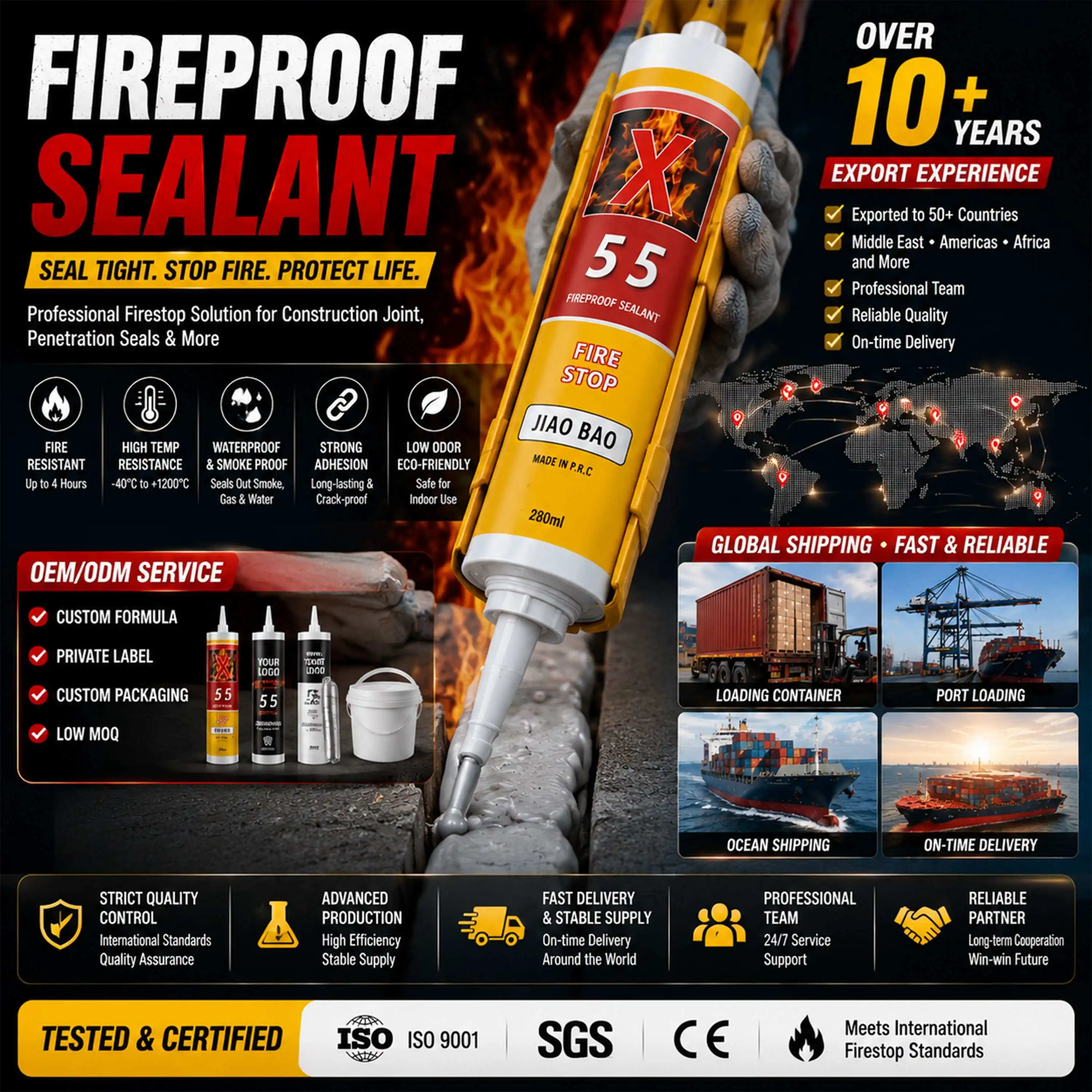
Normal silicone seals tend to get soft and loose their stickiness when heated above 200°C. Fire resistant silicone sealant is fire-rated and does not catch fire for the amount of time that is written in its test report and its joints stay together over a standard time-temperature curve. This is a big difference in how well it works; it's the difference between a fire-safe penetration seal and one that doesn't.
The rules for joint sealants are set by ISO 11600, and the rules for bendable seals are set by ASTM C920. Products that are fire-rated also have to follow passive fire protection rules, such as NFPA 101, IBC Chapter 7, and any other rules set by the local government. For fire-rated grades, Safety Data Sheets (SDS) also show low-smoke, zero-halogen (LSZH) formulas that stop the release of corrosive gasses. This is something that regular silicones don't cover.
Standard silicone is a good way to seal the sides of doors and windows, as well as curtain wall weather joints and other building gaps. Silicone that has been tested for fire safety can be used outside in the same places that need it. In this group are curtain wall spandrel joints, expansion joints in fire-rated systems, and service penetrations for HVAC pipes, metal pipes, and cable trays.
When used in controlled environments, fire-rated silicone has three advantages over regular products that they can't match. This product is the best choice for tough projects because of the following:
To keep the "chimney effect" pathways in tall buildings sealed, this stops fires from quickly moving up and down through cracks and holes in the walls.
There are only a few big names in the world that make firestop sealant. The CP 606 from Hilti and the Fire Barrier 2000+ from 3M are used in many tall buildings in North America. The rules set by EN 1366-4 for Europe are met by Sika and Nullifire. When sourcing fire resistant silicone sealant from overseas suppliers, procurement teams need to make sure that each item has the right listing for that place. Having a UL rating doesn't mean that a product meets the needs for a CE-marked project.
Sometimes, to get a fire-rated sealer, you need to get third-party test certificates, test each batch to see if it adheres to ASTM D2202 and ASTM C794, and make sure it sticks to materials like anodized metal or fire-rated glass that are specific to the project. It is important to have manufacturers with a lot of experience when project deadlines are short. They can finish production runs in one to two weeks.
Cost changes are less noticeable for projects that need a steady supply over a number of stages when prices are locked in based on expected output instead of individual purchase orders. When you place your bulk order, ask for color-matched options (white, black, gray, or custom). This will keep you from having to deal with substitutions during finishing. When a product comes in both 300 ml cartridge and 600 ml sausage forms, it gives installation teams more gun choices for different jobs.
To get rid of dirt, oil, and other loose things, clean all joints before applying fire resistant silicone sealant. On metal surfaces, bonding works better after light abrasion and solvent wiping. Since silicone doesn't stick well to silicone that isn't fully hardened, you need to get rid of any sealant that was there before. The test certificate will tell you if porous surfaces like masonry need to be primed.
Put the sausage or cartridge in the right gun and hold the pressure steady and even. Cut the tip to the width of the joint. Tool it during the open time window to make sure the bead touches all of the joint faces. It is important that the sealant level for fire-rated joints meets the needs of the system license. Many times, this is at least 6 mm to 10 mm on top of mineral wool backing. It takes about 3 mm of cure time every 24 hours for the whole surface to dry.
Before you paint or cover the joint, make sure that the depth that was used meets the system's requirements. To make sure you get the right color, it's very important to choose the right color when you place your order. Check joints that have been left to dry for cracks, holes, or edges that don't stick together. Make a record of the installation with photos and system numbers that can be given to the authority having jurisdiction (AHJ) when they come to inspect.
There is no price difference between a normal sealer and fire resistant silicone sealant. That is why they are widely used. This fire-rated silicone sealer has been tested and verified for performance. It must be used in penetration seals, rated wall joints, and curtain wall spandrel gaps in order to meet law and inspection requirements.
Standard silicone is good at keeping out water and weather, but it can't stand up to fire. Most compliance mistakes that happen on the job site can be avoided if procurement teams compare product specs to system certificate requirements, look at third-party listings, and make sure they know the depth of installation before they buy.
Not always. Fire-rated silicone costs more and the installation depth requirements can differ from standard sealing applications. Use it where a fire rating is specified or required by code. For standard weather joints with no fire rating requirement, a general-purpose silicone sealant is sufficient and more cost-effective.
Our one-part RTV silicone sealant operates from -50°C to +150°C in continuous service, with specialty formulations handling higher intermittent temperatures. During an actual fire event, the certified assembly resists flame passage for the rated duration under the standard time-temperature curve defined in ASTM E814 or EN 1366-4.
Yes. For non-combustible metal conduits and cable trays passing through rated walls, fire-rated silicone provides the flexibility needed to absorb mechanical vibration while maintaining a smoke-tight seal. Intumescent products are more appropriate for plastic pipe penetrations, where the pipe itself must be compressed during fire exposure.
No. Silicone surfaces do not hold paint adhesion. Order the sealant in the color that matches the substrate — white, black, grey, or a custom color — to achieve the finished appearance required on site.
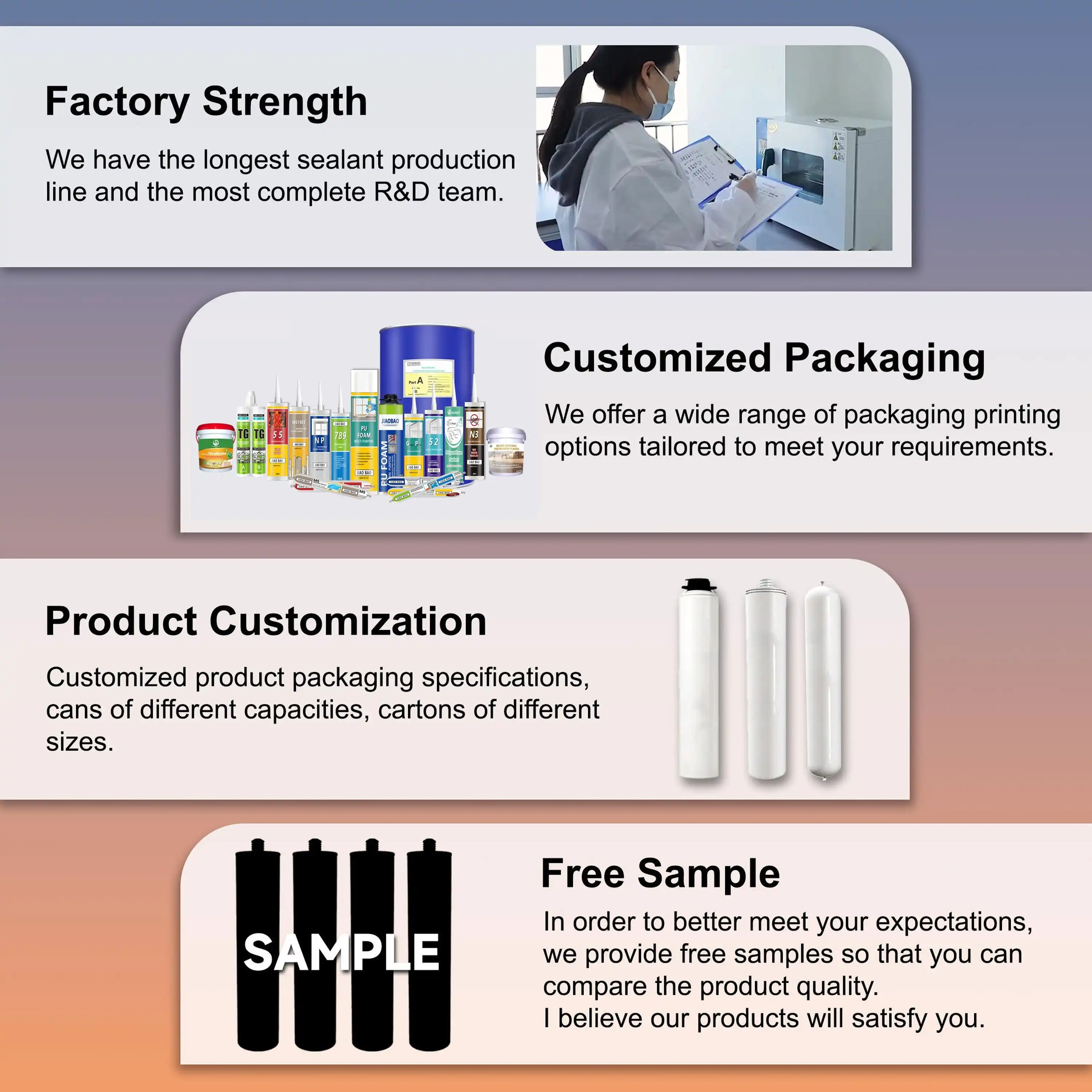
Jiaobao has been making epoxy coatings since 2013. Our whole range of goods is approved by ISO and CE. There are times when we have to wait to make silicone caulk that is immune to fire. We have 300 ml cartridges and 600 ml sausages in white, black, gray, or any color you want. Every batch comes with all the science data that needs to be sent in for review. You can email our team at dorashen@cnjiaobao.com or visit shandongjiaobao.com to get samples and technical data sheets.

1. ASTM International. ASTM E814: Standard Test Method for Fire Tests of Penetration Firestop Systems. ASTM International, 2023.
2. Underwriters Laboratories. UL 2079: Tests for Fire Resistance of Building Joint Systems. UL Standards, 2019.
3. National Fire Protection Association. NFPA 101: Life Safety Code. NFPA, 2021.
4. International Code Council. International Building Code, Chapter 7: Fire and Smoke Protection Features. ICC, 2021.
5. British Standards Institution. BS 476 Part 20: Fire Tests on Building Materials and Structures. BSI, 1987 (confirmed 2019).
6. European Committee for Standardization. EN 1366-4: Fire Resistance Tests for Service Installations — Linear Joint Seals. CEN, 2021.

November 16,2023
Enterprise Name
The sealant has very strong adhesion and performs well even on glass and aluminum. After curing, it remains flexible and shows no cracking. Perfect for our facade projects.
November 16,2023
Enterprise Name
Stable quality across batches. Our customers especially like the smooth application and consistent extrusion. It helps reduce installation time on site.
November 16,2023
Enterprise Name
I used it for bathroom sealing. Excellent waterproof performance and no mold issues so far. It's been holding up very well in humid conditions.
November 16,2023
Enterprise Name
The neutral silicone works well on sensitive materials without corrosion. Very suitable for industrial applications requiring stable performance.

