November 16,2023
Enterprise Name
The sealant has very strong adhesion and performs well even on glass and aluminum. After curing, it remains flexible and shows no cracking. Perfect for our facade projects.
Oct 22, 2026
Yes — fireproof building silicone sealant is specifically engineered to withstand extreme heat and block the spread of flames and smoke through construction joints, door frames, and wall penetrations. Unlike standard silicone, this material maintains structural integrity at temperatures from -50°C to +150°C, with specialized variants exceeding 200°C. It forms a flexible, heat-resistant barrier that keeps fire compartments intact during emergencies. For fire protection engineers and compliance-focused contractors, choosing a certified fire-rated sealant is not optional — it is a code requirement that directly affects project approval and occupant safety.
Heat over 150°C makes most silicone sealants less sticky and flexible. Fire-rated silicone contains additives that prevent self-ignition. These are usually halogen-free mineral compounds. They assist the completed product form a stable char coating when heated. This char blocks hot gases and toxic smoke. An authorised fire integrity grade operates this way. Despite being a polydimethylsiloxane (PDMS) polymer, the additive package alters its most significant fire reaction.
ASTM E814 (UL 1479 in the US) tests fire-rated sealants for US project entrance seals. Joint systems are tested by ASTM E1966 (UL 2079). The material's F-Ratings indicate flame resistance, while the T-Ratings indicate how much the unexposed side heated up. European markets need EN 1366-3 and EN 1366-4-compliant products. When buying items in many places, teams must verify test findings from third-party laboratories, not self-declared ones.
It is possible for a regular construction sealant to not have any fire rating at all, which means it can make a fire worse. But fire-rated silicone has been tested and found to stop flames for 1, 2, or 3 hours, depending on the type of silicone used and how the joint is set up. For a 2-hour rate, the joint must be at least 6 to 12 mm deep, but this can change based on the joint's width. The fire permit is not valid if you use less than the tested depth.
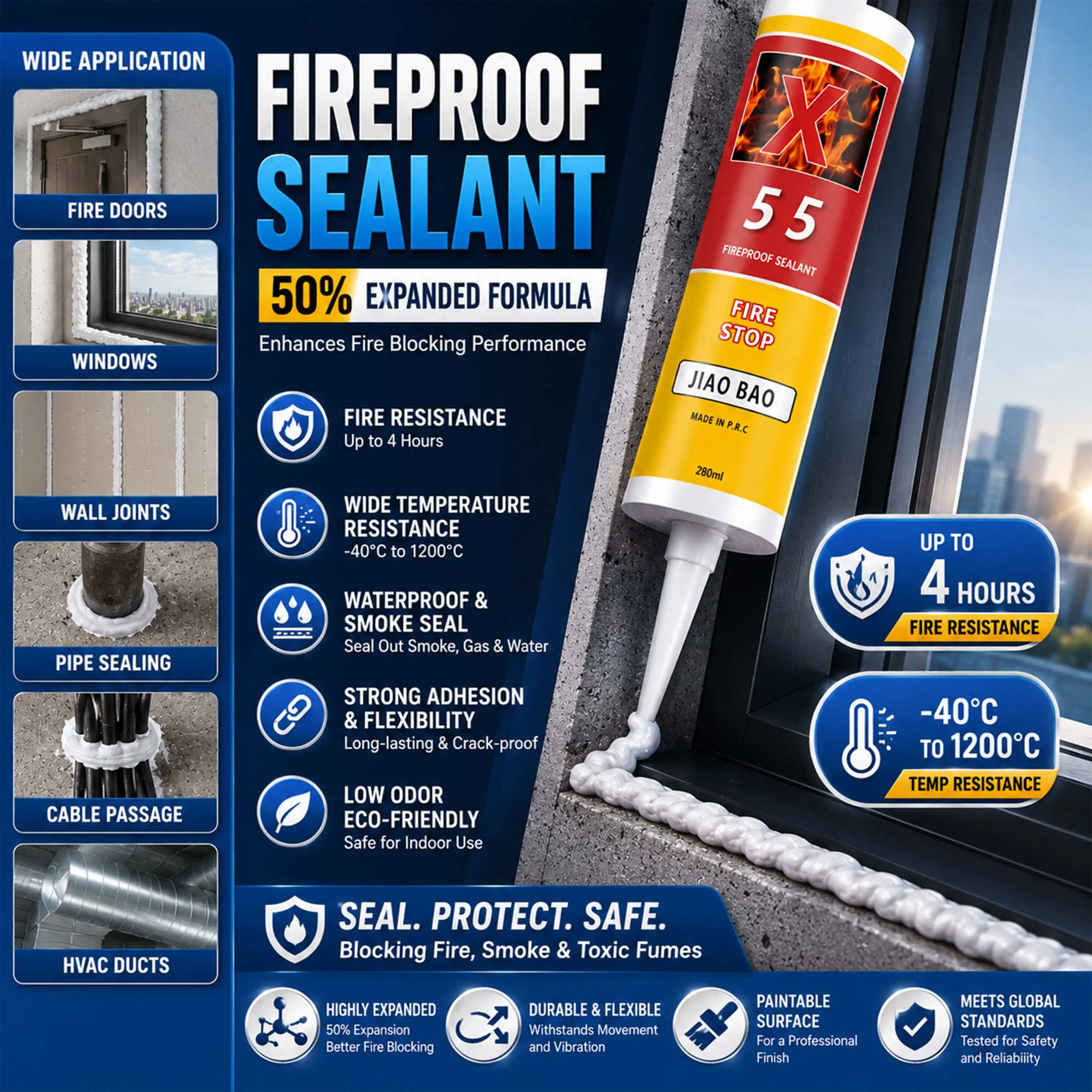
The "chimney effect" is a known risk in tall buildings: unfinished gaps between floor slabs and outside panels let fire move quickly up and down. According to the IBC and NFPA rules, a passive fire protection barrier must use fireproof building silicone sealant on the border joints and the top of the wall. It gets in the way of fires and dangerous gasses.
Fire-safe silicone doesn't break down like acrylic or polyurethane seals do. When UV light, ozone, or water hit it, it doesn't break or shrink. Jiaobao's one-part RTV fire-rated silicone can shift between 20% and 50%. It has a Class 1 W water resistance grade. This means it won't fall apart when the temperature changes or the building settles. The surface dries in 45 to 60 minutes, and at 25°C and 50% RH, it takes 24 hours for the whole thing to cure, which is 3 mm per hour.
Material certifications are looked over by fire inspectors and building officials before they give out occupancy permits. It's less likely that a sealant will be turned down at the last minute during inspection if it comes with full type-test reports and fire certification papers. For contractors who are working on several projects at once, a supplier with written test records and consistent batch quality cuts down on administrative risk by a lot.
Heat makes intumescent seals grow to fill in the holes that plastic lines leave behind when they melt. We can't use silicone for this. For parts made of non-flammable materials like brick, concrete, glass, and steel, fire-rated silicone is better because it can move around better and last longer when it rains or snows. Although the temperature has changed over the years, it has not cracked or dried out. This is something that intumescent acrylics often do when used outside.
You can paint plastic fire seals, and they cost less than silicone. However, when they break, they don't stretch as much. Many times, acrylic sealants don't stick to joints that move more than ±12.5% before a fire starts. For expansion joints, curtain wall edges, and seismic joints, fireproof building silicone sealant is still the best material.
Products from Dow Corning, Tremco, and Hilti are luxury imports that usually cost 40–80% more than approved options made in the United States. GB/T 14683 has been proven to be met by Jiaobao's fire-rated silicone, which can be made in OEM formulations that aim for either EN or ASTM test setups. This is a cheap way for procurement managers to get qualified that doesn't sacrifice quality.
The surface must be clean, dry, and not cold before it can be coated. During the application, the substrate needs to stay between 5°C and 40°C. Always put on the sealer to the right amount, never just a top bead. If your joint is rated for 2 hours, look at the test report for your joint width and substrate type to find out what the minimum depth needs to be.
Always get the type-test report, the fire certification certificate, the Safety Data Sheet (SDS), and records of how regularly the batches have been made before you buy a lot of fire sealant. The type-test report should include information about the joint size and material. Get a real-life example and have a third party do a fire test if your project prompts you to. When procurement is based on compliance, decision cycles last between 4 and 8 weeks, so make sure you have enough time to plan ahead.
Jiaobao's fireproof building silicone sealant is a one-part RTV acidic-cure product that comes in 300 ml and 600 ml sizes in balloon or sausage-shaped containers. You can make it white, black, gray, or any other color you want. It stays fresh for a year. -1.40 ± 0.05 g/m³ is the density, 99.5% of it is not volatile, and it can be used from -50°C to +150°C. They were found with the GB 13477 and GB 2793 test methods.
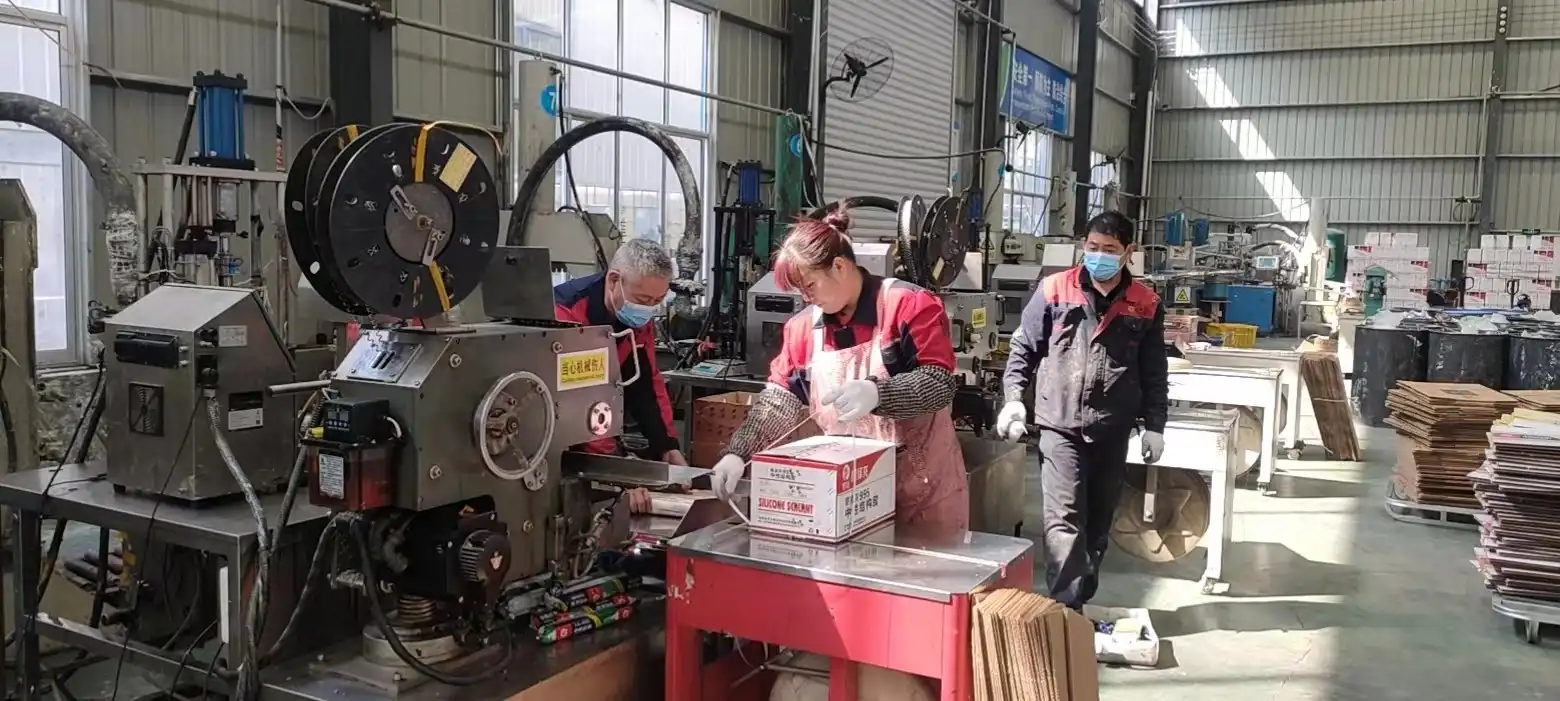
Fire sealants made from silicone usually work better than organic ones in places where the heat stays for a long time. It is natural for the Si-O backbone to be more stable at high temperatures than carbon-chain polymers. If it's put in correctly, fire-rated silicone stays sticky and bendable even after being heated and cooled many times. When polyurethane sealants are left in full sunlight on building surfaces, they often crack. This one doesn't.
Jiaobao's recipe doesn't have a lot of VOC, so it can be used on LEED v4 projects. Workers on-site should put the sealant on in areas with good air flow and read and follow the safety instructions on the SDS to keep their eyes and skin safe. When it comes to fire-rated uses, you should never use old stuff because it might not heal all the way. The skin that forms inside the cartridge or the fact that it has a high extrusion resistance will let you know it's old.
Green building rules are getting stricter in the US and Europe. More and more project papers are calling for fire seals with low emissions. It is better for builders to use products that have been shown to meet VOC standards for public bids and LEED-certified projects.
Fireproof building silicone sealant is one of the most technically demanding products in passive fire protection. It must simultaneously accommodate building movement, resist heat and smoke, and satisfy strict certification requirements — all while remaining practical to apply on a job site. For contractors and procurement engineers who face inspection-day accountability, material certification is not a formality. It is the difference between a project that passes and one that does not. Selecting a supplier with verified test documentation, consistent production quality, and responsive technical support is the most risk-managed decision you can make.
Generally, no. Silicone chars under heat but does not expand enough to close the annular space left by a melting plastic pipe. Intumescent acrylic sealants are the correct choice for combustible pipe penetrations. Use silicone for joints involving non-combustible substrates such as concrete, steel, and glass.
Minimum depth ranges from 6 mm to 12 mm depending on joint width. Applying a shallow surface bead does not meet tested configurations and voids the fire certificate. Always reference the specific test report for your joint geometry.
No. Silicone surfaces do not accept paint adhesion. Order the correct pre-pigmented color — white, black, grey, or custom — at the time of purchase.
Adhesion failure is highly likely on cold or frosted substrates. Even if the material does not freeze, curing will be incomplete, compromising the fire seal. Application between 5°C and 40°C is required.
Expired material forms a skin inside the cartridge, requires excessive force to extrude, or fails to cure properly. Shelf life is 12 months from manufacture date. Never use expired sealant on fire-rated joints.
No, most of the time. Silicone burns when it gets hot, and it doesn't expand enough to fill the hole left by a plastic pipe melting. Intumescent plastic plugs are the best way to fix holes in pipes that can catch fire. For more technical details, you can email at dorashen@cnjiaobao.com. Silicone should be used to join things that can't catch fire, like steel, glass, and concrete.

1. ASTM International. ASTM E814: Standard Test Method for Fire Tests of Penetration Firestop Systems. ASTM International, 2023.
2. UL Standards & Engagement. UL 2079: Tests for Fire Resistance of Building Joint Systems. Underwriters Laboratories, 2019.
3. European Committee for Standardization. EN 1366-3: Fire Resistance Tests for Service Installations — Penetration Seals. CEN, 2021.
4. National Fire Protection Association. NFPA 101: Life Safety Code. NFPA, 2021.
5. International Code Council. International Building Code (IBC) — Chapter 7: Fire and Smoke Protection Features. ICC, 2021.
6. Sika AG. Technical Guide: Fire Protection Sealants in Construction Joints and Penetrations. Sika Construction, 2020.

November 16,2023
Enterprise Name
The sealant has very strong adhesion and performs well even on glass and aluminum. After curing, it remains flexible and shows no cracking. Perfect for our facade projects.
November 16,2023
Enterprise Name
Stable quality across batches. Our customers especially like the smooth application and consistent extrusion. It helps reduce installation time on site.
November 16,2023
Enterprise Name
I used it for bathroom sealing. Excellent waterproof performance and no mold issues so far. It's been holding up very well in humid conditions.
November 16,2023
Enterprise Name
The neutral silicone works well on sensitive materials without corrosion. Very suitable for industrial applications requiring stable performance.

