November 16,2023
Zita reBhizinesi
Chivharo ichi chine kunamatira kwakasimba uye chinoshanda zvakanaka kunyangwe pagirazi nearuminiyamu. Mushure mekugadziriswa, chinoramba chakachinjika uye hachina kutsemuka. Chakanakira mapurojekiti edu epamberi.
Sep 28, 2026
Chisimbiso chesilicone chechivako chisingatsvi improves fire safety by creating a durable, heat-resistant barrier that blocks flames, smoke, and toxic gases from spreading through construction joints, gaps around windows, and structural penetrations. Unlike standard sealants, fire-rated silicone compounds are engineered with flame-retardant additives that maintain integrity under extreme thermal stress. Certified products meeting standards such as ASTM E814 or EN 1366-3 deliver verified fire resistance of one hour or more, giving building owners, engineers, and fire protection contractors measurable, defensible protection backed by third-party test data.
A fire-rated silicone caulk isn't just any silicone product that says it's safe on the label. There are non-halogenated flame-retardant ingredients in its recipe that make it solid enough to form a char layer at temperatures above 1,000°C. This char doesn't fall apart easily, which keeps the separation that passive fire protection systems need. Standard architectural silicone, on the other hand, melts and loses its stickiness above 300°C. This lets smoke and fire move freely between rooms, speeding up what fire engineers call the "chimney effect" in tall buildings.
Jiaobao's one-part RTV silicone sealant has an acidic drying system and dries at a rate of 3 mm per 24 hours at 25°C and 50% RH. It takes 45–60 minutes for the surface to dry. With a shift capacity of ±20% to ±50%, the seal can handle real structure movement without breaking. These are not advertising claims; they are measurable parameters that can be checked by a third-party lab.
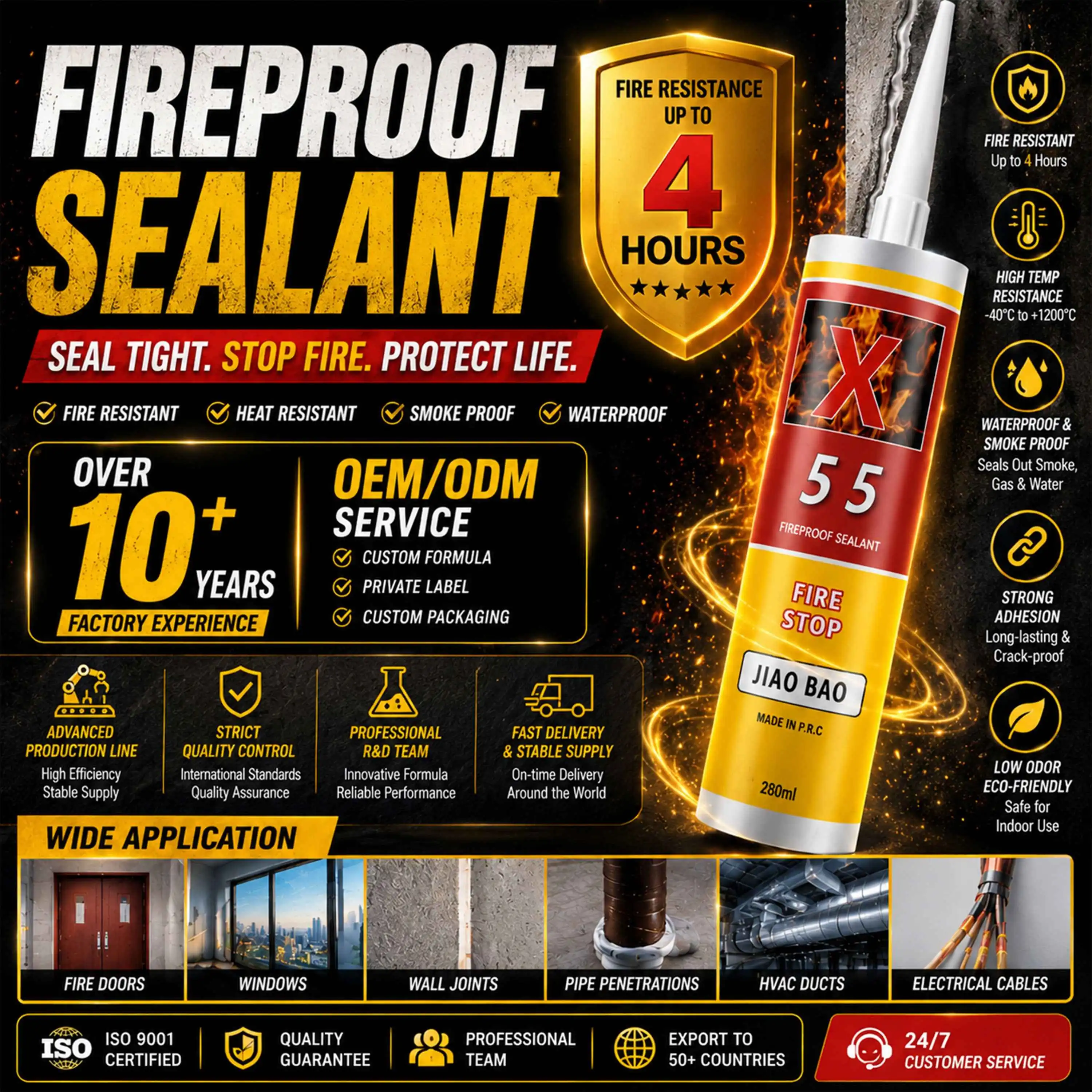
When purchasing firestop materials, procurement teams often come across a number of different product categories, such as intumescent acrylic sealants, fire-resistant polyurethane caulks, mineral-fiber boards, and silicone-based fire seals. Each one does something different, and mixing them up creates a compliance risk.
Intumescent acrylics get bigger when they get hot, which makes them perfect for sealing around plastic pipes that can catch fire because the growth fills in the gaps left by the pipes melting. Silicone-based fire sealants don't grow much; instead, they slowly flatten and burn. This is why they are the best choice for metal penetrations, curtain wall perimeter joints, and dynamic expansion joints that must allow for movement.
Polyurethane options break down when exposed to UV light for a long time and lose their elasticity over time, which makes them less reliable for long-term use on outdoor walls. Chivako Chisingapise Moto Silicone Chisimbiso keeps its mechanical properties from -50°C to +150°C, so you can count on it to work the same way in the winter in Minnesota and the summer in Texas.
For procurement professionals who care about following the rules, the most important thing to remember is that matching the sealant chemistry to the joint type and penetrant material is just as important as the fire rating itself. A silicone sealant with a 2-hour rating that is put on a flammable pipe entry is not a firestop system that meets the requirements.
How well a fire seal works in a real situation depends on how well it was applied. Before applying, the surface must be clean, dry, and free of any dust, oil, or leftover sealer. If you try to use the sealer below 5°C or on surfaces that are covered in frost, it might not stick, and an approved fire rating won't be able to fix that. Different types of substrates, like concrete, metal, glass, or gypsum board, need to be tested to make sure they work with the sealant.
Sealant depth is one of the most often forgotten factors in firestop compliance. A lot of fire rating papers say that the minimum installation depth must be between 6 mm and 12 mm, based on the width of the joint. No matter what product is used, putting on a shallow cosmetic bead voids the system's certification. Engineers and installation crews must look at the manufacturer's fire test report to find the exact system configuration that was tested.
Putting in fire seals isn't something you can just forget about. Visual checks should be done on a regular basis, especially after earthquakes, major changes in temperature, or building changes, to make sure that the sealant stays intact and that any gaps that come loose are quickly sealed again. Jiaobao's product has a Class 1 W water resistance grade, which gives you extra peace of mind in places where water might get on it by accident.
Buying materials that can withstand fire has legal and life-safety effects. Before you approve a product, you should ask for all of the test results, including the type inspection report, the fire certification certificate, and proof that the lab that issued the certificate is accredited.
Reports from nationally recognized testing labs (NRTLs) that are recognized by OSHA or by ISO/IEC 17025-accredited bodies have the weight to stand up to regulatory review. When specifying a Chivako Chisingapise Moto Silicone Chisimbiso, these documentation requirements apply just as strictly as they do to any other fire-rated material.
When fire safety workers look for a certified sealant seller, these are the main things they look at:
All of these factors lower the risk of purchasing something and create a clear audit trail that can be used when fire inspectors ask for important paperwork during the acceptance review. Suppliers who can't provide all the necessary paperwork during the pre-order stage are a compliance risk, not a chance to save money. This is especially true when sourcing a Chivako Chisingapise Moto Silicone Chisimbiso, where missing or incomplete certification can delay acceptance and expose the project to liability.
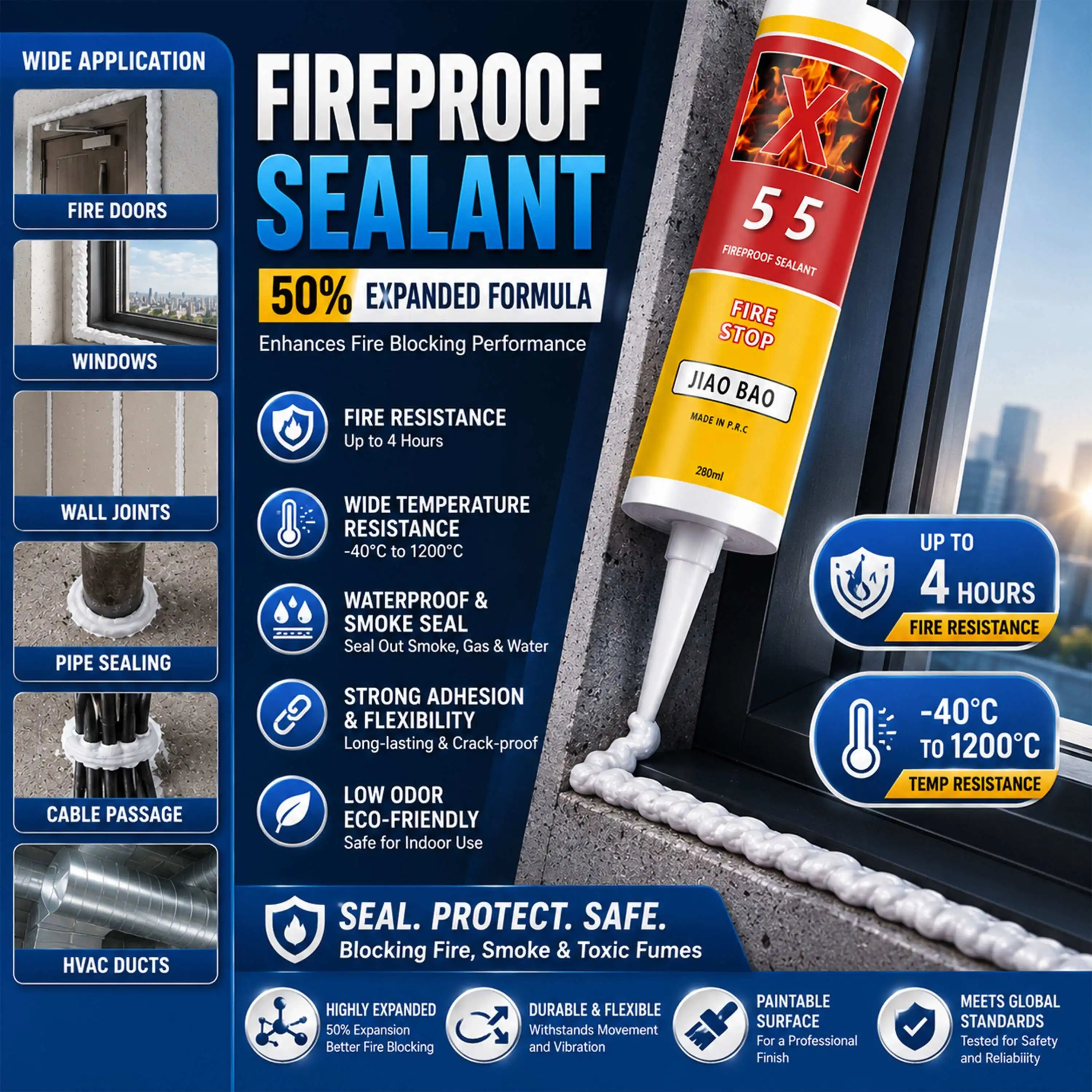
Tougher building codes and sustainability rules are putting real pressure on the passive fire protection sector to come up with new ideas. More and more LEED v4 projects call for low-VOC formulations, which are goods with volatile organic compound levels below 50 g/L. This shows that the building industry cares about occupant health without sacrificing fire performance. Halogen-free flame retardant chemistry is becoming the norm in European markets, and green building standards in the U.S. are starting to accept it as well.
Another new area of research is the integration of smart building systems. Fire seals around sensor lines and cable penetrations need to be able to handle MEP (mechanical, electrical, and plumbing) bundles that are getting denser without weakening the fire compartment border. There is a gap that older products couldn't fill that is now filled by sealants designed for high-density cable tray penetrations that keep both movement and fire integrity at the same time.
In order for inactive fire protection systems to be functional, they must include Chivako Chisingapise Moto Silicone Chisimbiso. Because they can keep their shape in high temperatures, allow for structural movement, and provide approved fire resistance, they can't be replaced in curtain wall joints, MEP penetrations, and expansion joints in commercial and industrial buildings. It is not a choice; it is a professional duty to choose a supplier with verifiable certifications, stable supply capabilities, and clear technical documentation. Each of these needs is met by Jiaobao's product line, which uses numbers instead of marketing speak.
No, fireproof silicone sealant slowly burns and ablates to form a shield, while intumescent sealant increases in size when heated. For metal penetrations and dynamic joints, silicone types work best. Around plastic pipes that can catch fire, intumescent acrylics are needed. The fire system approval is null and void if the wrong chemistry is used for the job.
Ask for the full type inspection report along with the accreditation number of the lab that issued it and the test standard reference. Check the lab's accreditation status in the right national database, like the OSHA NRTL program in the U.S. or UKAS in the U.K. A certificate that doesn't have a report number or lab badge that can be tracked isn't valid for compliance.
A normal shelf life is 12 months from the date of making if stored the way the manufacturer suggests. When sealant is too old, it often needs too much force to be extruded, forms a skin inside the cartridge, or doesn't dry all the way. All of these problems make the fire seal less reliable. Before installing, you should always check the packaging to see when it was made.
Sealants made of silicone don't let paint stick to them. During the order process, you can choose the color you want (white, black, gray, or a custom option). This will make sure that the installed seal meets the requirements for the architectural finish.
Since 2013, Jiaobao has been making certified silicone sealant products. They have ISO-compliant quality control, a production lead time of one to two weeks, and they can do both OEM and ODM work. We ship our Fireproof Building Silicone Sealant all over the world by sea or land, and we guaranty the quality of every product for as long as it's on the shelf. To get examples or scientific information right away, email our team at doirashen@cnjiaobao.com kana enda kune shandongjiaobao.com.
1. ASTM International. ASTM E814: Nzira Yakajairwa Yekuyedza Moto Yekupinzwa Kwemasystem Ekudzivirira Moto. ASTM International, 2023.
2. European Committee for Standardization. EN 1366-3: Fire Resistance Tests for Service Installations – Linear Joint Seals. CEN, 2021.
3. Sangano reNational Fire Protection Association. NFPA 101: Kodhi yeHupenyu. NFPA, 2024.
4. Underwriters Laboratories. UL 2079: Kuyedzwa kweKuramba Moto kweMagadzirirwo eMajoini ekuvaka. UL Standards & Engagement, 2022.
5. Society of Fire Protection Engineers. Bhuku reSFPE reFire Protection Engineering, chinyorwa chechishanu. Springer, 2016.
6. International Code Council. International Building Code (IBC) – Chapter 7: Fire and Smoke Protection Features. ICC, 2021.
November 16,2023
Zita reBhizinesi
Chivharo ichi chine kunamatira kwakasimba uye chinoshanda zvakanaka kunyangwe pagirazi nearuminiyamu. Mushure mekugadziriswa, chinoramba chakachinjika uye hachina kutsemuka. Chakanakira mapurojekiti edu epamberi.
November 16,2023
Zita reBhizinesi
Hunhu hwakagadzikana pakati pemabheti. Vatengi vedu vanonyanya kufarira kushandiswa kwakanaka uye kubuda kwacho nguva dzose. Zvinobatsira kuderedza nguva yekuisa panzvimbo.
November 16,2023
Zita reBhizinesi
Ndakaishandisa sechivharo chechimbuzi. Haipindi mvura zvakanaka uye hapana dambudziko remafungu kusvika pari zvino. Yagara zvakanaka mumamiriro ekunze ane hunyoro.
November 16,2023
Zita reBhizinesi
Iyo silicone isina kusimba inoshanda zvakanaka pazvinhu zvinokurumidza kubatwa zvisina ngura. Yakakodzera kushandiswa mumaindasitiri inoda kushanda kwakasimba.
_1779347426672.webp)