November 16,2023
Enterprise Name
The sealant has very strong adhesion and performs well even on glass and aluminum. After curing, it remains flexible and shows no cracking. Perfect for our facade projects.
Oct 30, 2026
Nail free glue for wall mounting usually fails because of the installation, not the product. Dust, grease, loose paint, damp masonry, heavy loads, long leverage arms, thin beads, and early loading break bonds before the adhesive reaches full strength. Moisture, temperature swings, and incompatible surfaces add more stress. I wrote this guide for installers, contractors, and distributors who want fewer callbacks. Below, I explain how the glue works, how to read a failed bond, how to repair it, and how to choose a supplier you can trust.
This kind of joint has three links. This shows how well each surface sticks to the glue. What makes the glue strong on the inside after it dries? The base, which is the wall itself, has to stay together when weight is put on it. ASTM D907 also uses these ideas to explain what it means for something to fail to adhere or adhere well. Glue spreads the weight over the joined area, while a screw holds something in place.
Spreading it out is good, but glue doesn't stick well when you peel it off or press on it. Straight pulling makes it worse. Even if the paint or plaster is very weak or falling apart, the glue can still fail. People who want to buy something should take a look at more than just the glue.
A lot of failures start on the first day. Do not hang big things right after they stick. This will stress the link that isn't fully set yet. Glues that cure in water make a skin first, and then they harden from the inside out. At 23°C and 50% relative humidity, the top of our paste dries in about 20 minutes.
When things are the same, it cures at a rate of 2.5 mm every 24 hours. It would take about two days to go 5 mm at that speed. When the air is cold and dry, the process takes longer to finish. That the surface has set is only shown by a dry skin. The joint can't hold its own weight. Help them out temporarily while they get better.
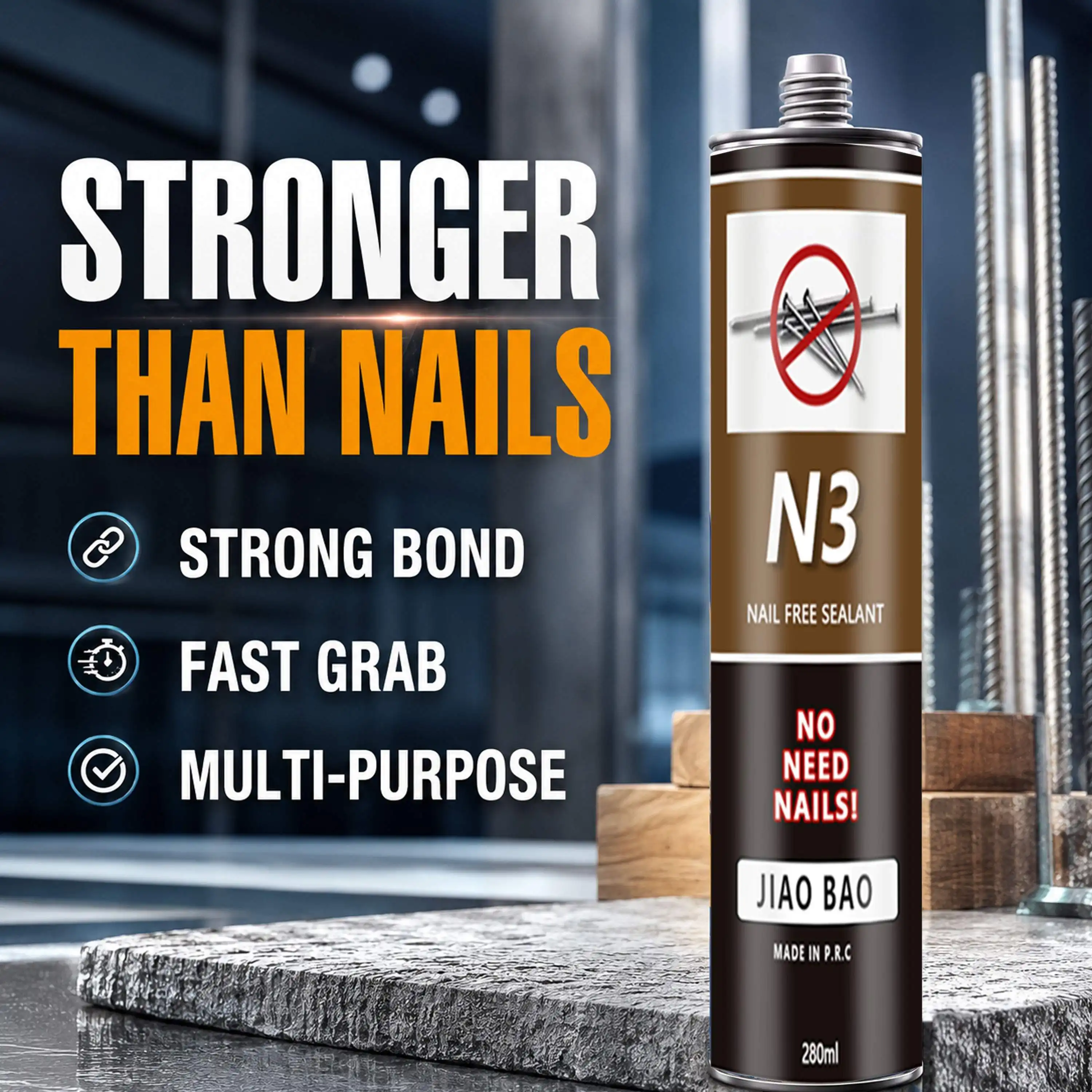
For wall mounting, use Jiaobao nail free glue for wall mounting. It is a neutral, modified silane polymer paste that only comes in one part. It does not need to be mixed because it cures in the air. After being cured, the hardness is 50 ± 5 Shore A under ISO 37, and the stretch at break is 300%.
A stretchy link is good for walls because it can handle small changes between materials that grow at different rates. A weak glue line breaks when the same thing moves. It's still important to plan the load, but high extension lets the joint move without breaking.
Most calls back are due to issues that can be seen. There is dust, soap film, food grease, and old wax on the surface that keeps the glue from sticking. When paint is chalky or loose, it's hard for glue to stick, and the paint comes off with the thing. Paper and plaster that has holes can shed fine powder, and wet concrete may hold water.
This is why ASTM C1193, a guide for using joint sealer, says to clean the joints and prepare the surface. When applying nail free glue for wall mounting, before you glue, clean the area, tap the paint to hear for open spots, and scrape off anything that is sticking out. Focus on both sides the same amount of time.
It's not enough to know how heavy something is to tell if it will fail. A shelf with a deep arm can break the bond at its top edge with a force that is stronger than the weight's pull. Moving loads, like a rack on a door or a mirror next to a slamming door, cause stress over and over again.
Thin glue lines on rough walls leave gaps, so it's not really joined as well as it looks. Our tensile strength can go as high as 2.5 N/mm², which is about 363 psi, in ISO 37 tests. That number is just a lab number; it's not a hang weight. You should check the load direction and bond area on every job.
The last two things on the list are now up: technique and environment. This is because bathrooms are damp and soap builds up. Garages that are cold take longer to dry, and the sun can stress a joint by making it grow bigger. It can be anywhere from 5°C to 35°C (41°F to 95°F) in our buildings.
For a cured joint, it can be anywhere from -40°C to 80°C (-40°F to 176°F). If you use the wrong method, like a bead that is too small, don't apply enough firm pressure, don't hold the item while it cures, or move it after the skin has formed, it could fail. Crews sometimes skip these steps when they don't have enough time. A short list inside the work van stops most of them.
Look at the glue that stayed put. A clean wall that sits on something dirty means the wall wasn't wet enough. Something might not stick to the wall if it's just sitting there. The material or finish of it might not allow it. Something went wrong when the glue tore and left stuff on both sides. This means that the glue wasn't fully dry or there was too much stress.
If the glue took off paint or plaster, the wall fell down first. According to ASTM D907, these kinds of failure have official names. Write down the batch number, weight, temperature, humidity, and time it took to fix along with a picture of the joint. Your seller can quickly look over the case with these notes.
First, take it off, especially if it's big, fragile, or in the way. If the first glue didn't work, don't use more of it. Get rid of the old stuff, scrape off any paint that's showing, and clean up the grease and dust. Cover up any holes in the wall or plaster and wait for the whole fix to dry. After that, use fresh glue to make the pattern of beads you chose. Use tape, props, or braces to hold the thing in place until the glue is dry. Press down hard. Get rid of the extra before it turns into skin. First, test a small area on glass or polished tile. Keep a sample board for pull tests when the same job is done more than once.
For some jobs, you need both screws and glue. Heavy cabinets, deep shelves, things that people pull on, and anything else that could hurt someone if it fell should all have bolts, rails, clips, or anchors on them. The hardware is under the safety load, and the glue fills in the gaps and makes the contact wider.
There is also no way to check a hidden glue line like you can with screws and anchors. If the client doesn't want you to drill, like in a rental unit, nail free glue for wall mounting is an option for smaller things and you need to write down how much weight they can hold. Setting clear rules is the best way to keep your crew safe.
Painting walls is the most common job, and how well it's done determines how the room turns out. Glue can be put on paint that is sound and has dried completely. Walls that are chalky, flaky, or still painted don't. Duct tape and dough can soak up dust, so clean the area and seal it if it powders. Drywall paper can tear if you put weight on it. In other words, the wall could come down before the glue does. First, test the glue in a place that won't be seen. Then, force the item into the glue. Before you start removing old paint, make sure the client knows about this risk.
Our paste can be used to join wood, metal, clay tiles, glass, and concrete. Clay and bricks need to be dry, hard, and free of powder. Glazed tile and glass are smooth, so make sure they are clean and put the glue on them in strips that go up and down. This will let air reach the bead and dry it.
When you glue mirrors together, check that the glue has a neutral cure and test it on the back first. Some acidic or solvent-based glues can damage the coatings on mirrors. PP and PE don't join well, so do a test piece or use a filler before you start the whole job.
Each method has its place. They make less dust and noise, and the glue makes the weight spread out over a larger area. Screws and anchors are a safer way to hold up big or dangerous things, and they're also easy to check. Tape on both sides works great for quick, simple shows. To do both jobs, you only need one of our pastes. It fills in cracks and gaps around doors and windows.
When elastomeric glue dries, it sticks very well, so you may need to cut it off and clean up the mess. Nail free glue for wall mounting falls into this category; paint that isn't strong enough may also peel. Pick the method based on how heavy the thing is, what kind of wall it needs to stay on, and how long it needs to stay there.
Write down the weight, size, center of gravity, type of wall, bond area, exposure, and length of time you think it will last. Next, look at the brand, color, box size, shelf life, and amount of time you need to keep it. Ask for the safety data sheet if you have to work in a house where people live. Don't guess about the VOCs and smells. Try it out on some sample walls and pull it to see how it works before you buy a whole box. Most installation teams check out new products this way, and it finds problems quickly.
Here are the specifications for our one-part RTV paste, taken from our product data.
| Property | Value |
|---|---|
| Chemistry | Modified silane polymer |
| Appearance | Stabilized paste |
| Curing | Moisture cure |
| Surface dry (23°C/50% R.H.) | About 20 minutes |
| Cure speed | 2.5 mm / 24 hours |
| Hardness | 50 ± 5 Shore A |
| Density | 1.55 g/ml |
| Tensile strength (ISO 37) | 2.5 N/mm² |
| Elongation at break (ISO 37) | 300% |
| Service temperature | -40°C to 80°C |
| Construction temperature | 5°C to 35°C |
| Colors | White, black, grey, or custom |
| Volume / packaging | 300ml, 600ml / sausage or cartridge |
| Shelf life | 12 months |
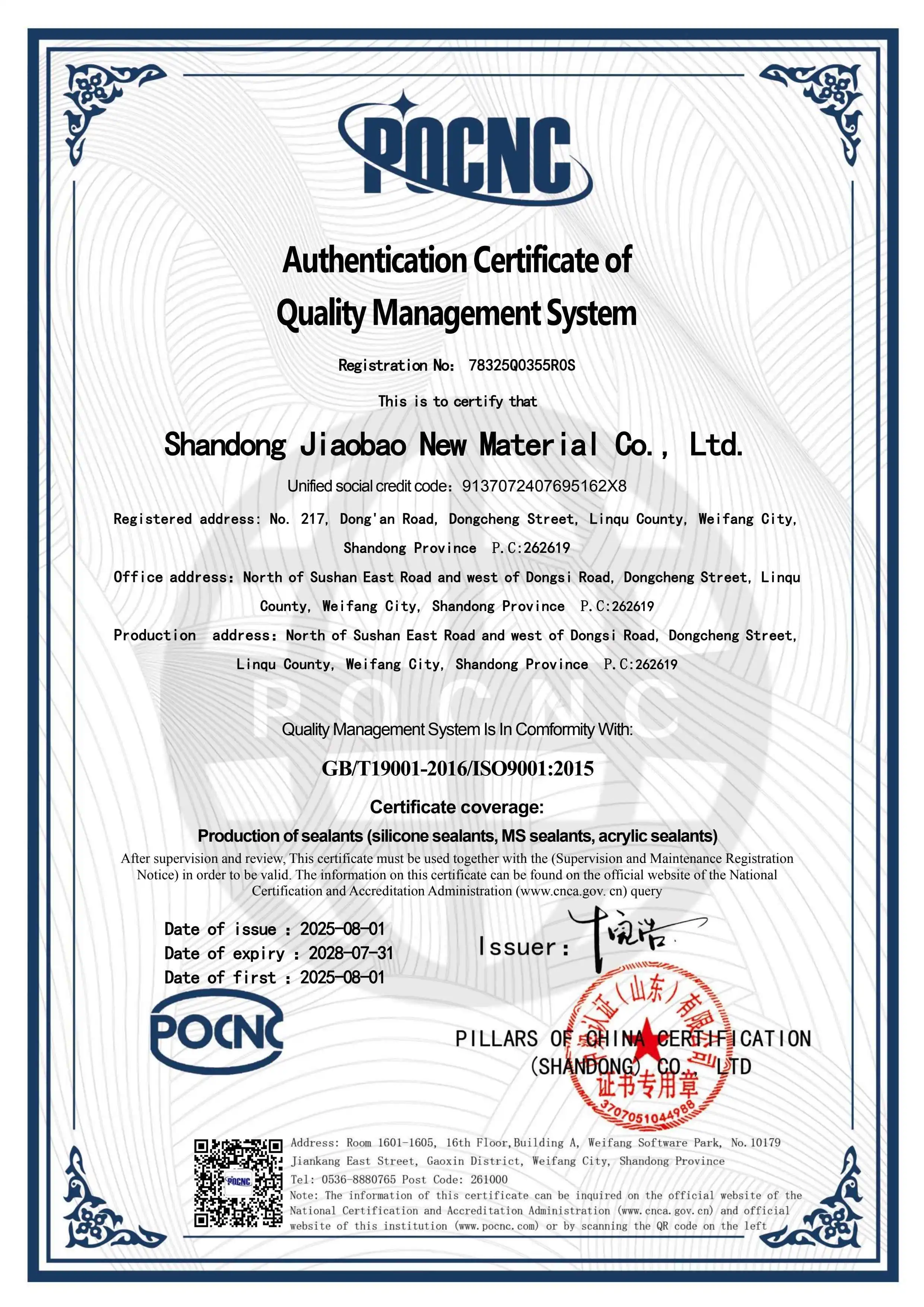
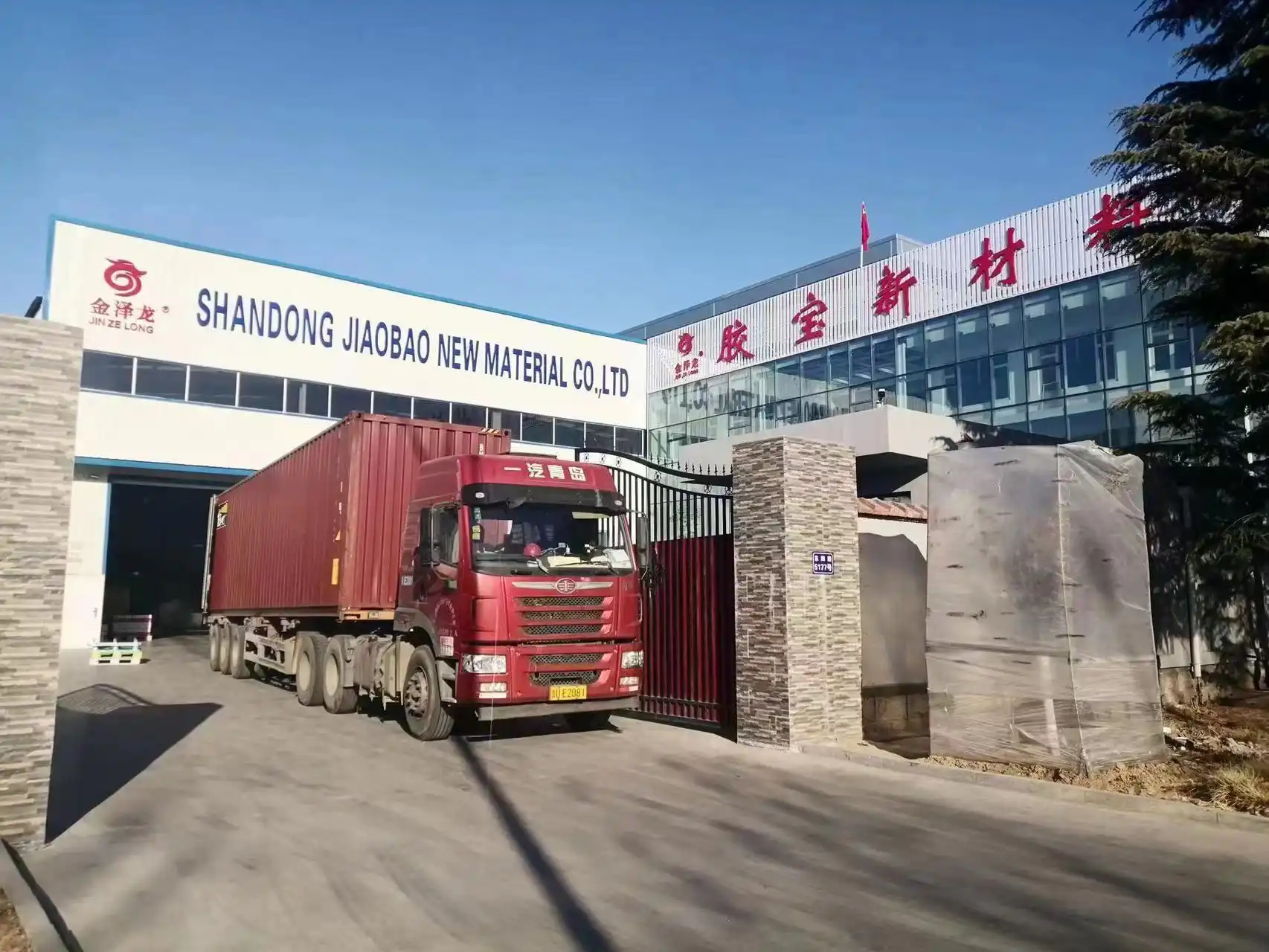
If the provider is good, they give you more than just a brochure. For the safety data sheet, the application guide, the technical data sheet, and help with the substrate, ask for them. Make sure the test results come from real walls or just lab screens. See how it feels, ask how the batches are tracked, and ask about cure tests. Since it began in 2013, Shandong Jiaobao New Material Co., Ltd. has been making things for over 13 years.
Our goods have been approved by ISO, CE, and other groups. We can ship by land or sea, and it takes one to two weeks to make something. We also do OEM/ODM work for private labels and different color needs. If the quality goes down during the shelf life, we will either give you a refund or send you a new one.
When the surface is dirty or weak, when there are loads that cause leverage, when there are changes in moisture and temperature, or when there are short-cuts like thin beads and early loading, nail free glue for wall mounting doesn't stick to walls very well. The wall needs to be strong and not fall apart. Reading the failure pattern makes it easy to figure out which link broke. The repair won't work until the old stuff is taken off, the wall is fixed, and the item is held up while it cures.
Supports or posts are needed for things that are heavy or need to be kept safe. You should be able to use data sheets and example tests to pick a product that works with the wall type, the weight, and the exposure. People can compare different types of modified silane paste that have been tried for their strength, stretch, and finish rate.
Allow enough time for the glue to dry completely. About 2.5 mm of paste needs to dry every 24 hours at 23°C and 50% humidity. Bigger beads will need more time because of this. Keep it up until then.
Use metal rods to hold up big or dangerous shelves. The tensile strength can go up to 2.5 N/mm² in ISO 37 tests, but that is not a good shelf weight. Most of the weight should be supported by sticks or frames. Any holes can be filled with glue.
Between 5°C and 35°C is the right range for it. After it has been dried, it works from -40°C to 80°C.
It can be white, black, gray, or a special color, and it comes in 300ml and 600ml sausage or cartridge packs. It can be kept for a year.
For 13 years, Shandong Jiaobao New Material Co., Ltd. has produced nail free glue for wall mounting. They offer OEM/ODM service, have lead times of one to two weeks, and will refund or replace items that have passed their shelf life. If you email dorashen@cnjiaobao.com with your wall type, load, and order volume, Jiaobao will send you samples and technical paper. To learn more, go to shandongjiaobao.com.
1. ASTM International, ASTM D907 Standard Terminology of Adhesives, 2015
2. ISO, ISO 37 Rubber, Vulcanized or Thermoplastic: Determination of Tensile Stress-Strain Properties, 2017
3. ASTM International, ASTM C920 Standard Specification for Elastomeric Joint Sealants, 2018
4. ASTM International, ASTM C1193 Standard Guide for Use of Joint Sealants, 2016
5. D. E. Packham (ed.), Handbook of Adhesion, 2nd Edition, Wiley, 2005
6. R. D. Adams (ed.), Adhesive Bonding: Science, Technology and Applications, Woodhead Publishing, 2005
November 16,2023
Enterprise Name
The sealant has very strong adhesion and performs well even on glass and aluminum. After curing, it remains flexible and shows no cracking. Perfect for our facade projects.
November 16,2023
Enterprise Name
Stable quality across batches. Our customers especially like the smooth application and consistent extrusion. It helps reduce installation time on site.
November 16,2023
Enterprise Name
I used it for bathroom sealing. Excellent waterproof performance and no mold issues so far. It's been holding up very well in humid conditions.
November 16,2023
Enterprise Name
The neutral silicone works well on sensitive materials without corrosion. Very suitable for industrial applications requiring stable performance.