November 16,2023
Enterprise Name
The sealant has very strong adhesion and performs well even on glass and aluminum. After curing, it remains flexible and shows no cracking. Perfect for our facade projects.
Oct 20, 2026
When HVAC systems run at full capacity, joint seals face constant thermal stress, flame exposure, and pressure changes. A standard sealant simply cannot hold up. That is why specifying a fireproof silicone sealant high temperature grade product matters so much. These materials maintain adhesion and structural integrity across extreme temperature cycles, block flame and smoke migration, and meet fire-rated building codes—making them the practical choice for industrial furnaces, boilers, duct systems, and any HVAC application where heat management and life safety overlap.
This kind of acetoxy-cure silicone starts to break down around 150°C. In high-temperature versions, the polymer chain stays stable well past that point thanks to inorganic filler structures or chemicals that put out fires. This makes a material that doesn't break down when it gets hot, which is important for HVAC parts that are always getting bigger and smaller.
Since it is made of silicone polymer, the base will stay stable at high temperatures better than plastic or organic rubber. Chemicals that set fire to things or ceramic microparticles are put in to make this. When these things are put near an open flame, they make a safe char layer. This layer of char slows the flow of heat and stops smoke from going through the joint. This fixes two types of weakness at the same time.
Jiaobao's acidic one-part RTV silicone caulk can be used from -50°C to +150°C, and some versions can even heat up to 200°C. There are 1.40 ± 0.05 g/m³ of non-volatile matter in it, and it cures at 3 mm per 24 hours to make a flexible seal that won't let water in. The surface needs 45 to 60 minutes to dry, and if it doesn't sag, it stays in place on vertical joints without any help from tools.
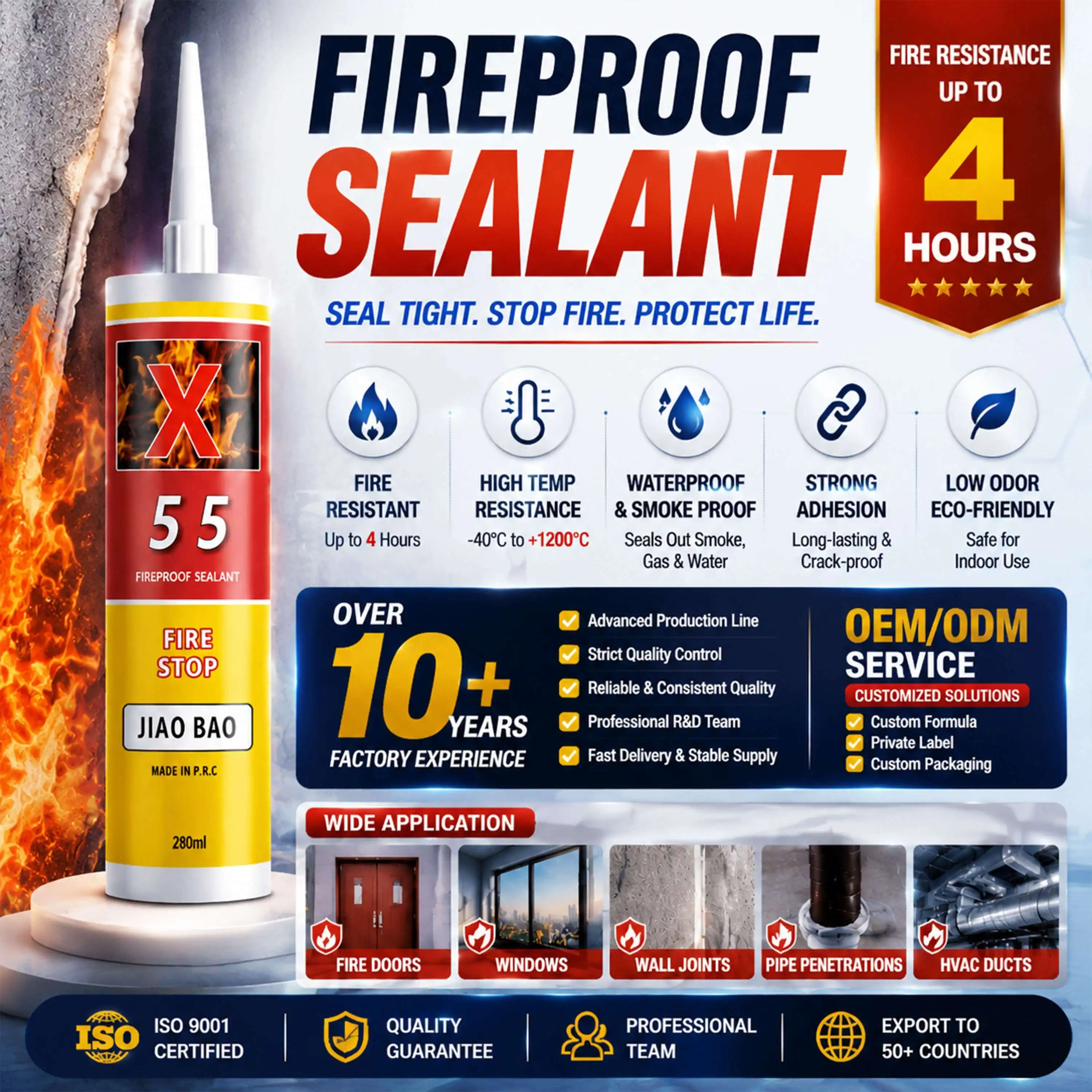
Standard silicone works well for bathroom tiles and window glass, but it's not fire-safe and stops sticking quickly above 150°C. It's not just an idea that HVAC systems fail when there are waste gasses or thermal heat close by. It's a known maintenance issue that costs more and puts people at risk.
When incandescent goods are burned, they get bigger, which fills in the gaps. Fireproof silicone sealant high temperature performs well in seals for cables and pipes. But after growing, they tend to get stiff and only allow about ±12% of joint movement, while a silicone-based product can handle ±20% to ±50% shift. For HVAC pipes that move and change temperature, that gap is important.
Some ceramic seals can withstand temperatures of more than 1,000°C, but they are usually made of hard, paste-like materials that don't stretch much. If you need to line kilns or make furnace doors, these are good materials. But because they are hard, they are not as good for HVAC parts that move around a lot. The gap between how well refractories work and how mechanically free HVAC systems need to be is filled by a product made of silicone.
Before you use a heat-resistant sealant, make sure the surface is clean, dry, and free of grease, rust, or old sealant. Al and galvanized steel can lose up to 40% of their peel strength when they are tested for contamination. It only takes five minutes to wipe the seal with isopropyl alcohol and let it dry completely. This makes it last a lot longer.
Fireproof silicone sealant high temperature from Jiaobao comes in 300 ml cartridges and another in 600 ml sausage packs. Either one can be used with a regular caulking gun. Fill up the cartridge, make a steady bead, and get to work before the surface dries in 45 to 60 minutes. Let it cure at room temperature with the air's humidity. If you don't want the joint to bubble or come apart, don't use service heat on it until the sealant is fully hardened. Depending on the width of the joint, this can take anywhere from 24 to 72 hours.
These are the main things that need to be done to keep HVAC sealants in good shape:
Following the steps below will help you apply the sealant again: first, clean the failed joint well and remove any extra material. Next, prepare the surface again and follow the same steps you used the first time.
At 200°C, not all HVAC parts will work. An air handler seal on the roof is not the same as a flue gas duct seal on a boiler. Before you place a large order, make a list of the product grades that are available at the highest temperature for service. You should ask the provider for test results from a third party. The reports should talk about how well the product can move according to ASTM C719 and how well it can stay stuck after being heated according to ASTM C794.
When you're looking for a provider of safe silicone sealant high temperature, unit cost is not the only thing that matters. Also very important are the samples that are available and the reliability of the delivery. Jiaobao has been making things for 13 years and has an ISO license. They can make OEM/ODM colors in any color, including white, black, gray, and more. After getting the order, they ship it within one to two weeks. Being late on big HVAC projects can cost a lot of money, so these things make it safer to buy things for those projects.
This cheaper sealant will cost more over five years than fireproof silicone sealant high temperature, a product that is used correctly just once. This is because it needs to be used again and again every 18 months. If the seal fails, you'll need to reapply it, the system will be down for repairs, and there may be warranty issues. Add up all of these costs to get the total cost. This frame changes the question from "cheapest per cartridge" to "best value per sealed joint-year."
In the US and EU, rules require sealer makers to use less volatile organic compound (VOC) in their products. The thermal resistance of newer silicone chemicals is the same, but they give off less gas when they cure. This is really important for people who put in HVAC systems in buildings that are already occupied or in small machinery rooms.
There are thermochromic signs on some new goods that change color as the maximum service temperature gets close. This passively alerts building managers to a problem with the seal before it becomes less strong. The merging of this kind fits with bigger trends in predictive building care, even though it's still the early stages.
The rules for fire and smoke damper sealants in business HVAC systems got tighter in the 2024 version of NFPA 90A. If a procurement team sticks to approved, fire-rated silicone goods now, they won't have to pay for pricey retrofits when the code changes for all of their projects.
There is no extra high-temperature silicone that won't catch fire that you can buy. Fireproof silicone sealant high temperature is a functional requirement for any HVAC system that is exposed to high heat, flame risk, or fire ratings that are required by code. Whatever you choose will stay in place even if the temperature changes.
It will also stop smoke from moving and not droop on vertical joints. Getting the sealant from a qualified source, making sure the right grade of sealant is used for the job, and following the right steps for installation and inspection are the three things that set a reliable installation apart from one that fails during the first heat event.
Their standard grade works from -50°C to +150°C, and their special blends can reach 200°C or higher.
Many high-end silicone items that can withstand heat start to stick to clean metal, glass, and aluminum on their own. Galvanized steel with chemical coats or concrete surfaces with lots of holes, on the other hand, might need a primer to make sure the paint sticks well. It is suggested that an adhesive test be done on a sample base before the whole thing is put down.
It dries in 45 to 60 minutes. It takes about 3 mm of cure time every 24 hours for a full cure to happen. Before it can be used again, a 6 mm joint needs to be left at room temperature for about 48 hours.
Paints made from rubber or oil won't stick well to silicone because it doesn't like water. Order the finish in the RAL color you want or use a paintable firestop hybrid product if you need to match the color.
According to ASTM C794, you should ask for ISO certification, records of third-party fire rating tests, ASTM C719 moving capability data, and binding test results that have been heated up.
It shouldn't take months of searching to find a flameproof silicone sealant high temperature company you can trust. It's been more than 13 years since Jiaobao has worked with the HVAC and industrial markets. Their lead time is one to two weeks, they can do OEM/ODM customization, and they guaranty quality during the shelf life. On shandongjiaobao.com or by email at dorashen@cnjiaobao.com, you can get samples or talk about your project right now.

1. ASTM International. ASTM C719: Standard Test Method for Adhesion and Cohesion of Elastomeric Joint Sealants. ASTM International, 2023.
2. ASTM International. ASTM C794: Standard Test Method for Adhesion-in-Peel of Elastomeric Joint Sealants. ASTM International, 2018.
3. National Fire Protection Association. NFPA 90A: Standard for the Installation of Air-Conditioning and Ventilating Systems. NFPA, 2024.
4. Underwriters Laboratories. UL 1479: Standard for Fire Tests of Through-Penetration Firestops. UL, 2015.
5. Brydson, J. A. Rubber Materials and Their Compounds. Elsevier Applied Science, 1988.
6. Mark, J. E., Erman, B., & Roland, C. M. The Science and Technology of Rubber, 4th ed. Academic Press, 2013.

November 16,2023
Enterprise Name
The sealant has very strong adhesion and performs well even on glass and aluminum. After curing, it remains flexible and shows no cracking. Perfect for our facade projects.
November 16,2023
Enterprise Name
Stable quality across batches. Our customers especially like the smooth application and consistent extrusion. It helps reduce installation time on site.
November 16,2023
Enterprise Name
I used it for bathroom sealing. Excellent waterproof performance and no mold issues so far. It's been holding up very well in humid conditions.
November 16,2023
Enterprise Name
The neutral silicone works well on sensitive materials without corrosion. Very suitable for industrial applications requiring stable performance.

