November 16,2023
Enterprise Name
The sealant has very strong adhesion and performs well even on glass and aluminum. After curing, it remains flexible and shows no cracking. Perfect for our facade projects.
Nov 2, 2026
Choose GP door and window silicone sealant for façade sealing when you need a flexible, weather-resistant seal for window perimeters, door frames, and small exterior joints at a practical cost. Its one-component formula cures with air moisture, needs no mixing, and forms a rubber-like seal that moves with thermal expansion. It bonds well to glass, aluminum, and many other building materials, but success depends on joint design, clean surfaces, and correct cure chemistry. I wrote this guide at Jiaobao to help US buyers compare options, test samples, and judge suppliers with facts instead of guesses.
GP stands for "general purpose." These GP door and window silicone sealants are one-component, room-temperature-vulcanizing (RTV) silicones that come as a paste and turn into flexible rubber when they come in contact with airborne water. Before the sealant dries from the outside in, it skins over, which takes time. This is why thin beads aren't thick right away.
There are gaps around glass, frames, and common building materials that GP grades are meant to fill in. Because they are tried and approved in different ways, they are not the same as the structural glass silicones that are used in curtain walls. People who know that line won't ask a product that can be used for many things to do a structural job.
There are two types of RTV silicones. When these types dry out, they give off acetic acid, which is what makes vinegar smell so familiar. They stick well to skin, glass, and metal that has been oxidized. Neutral-cure types don't give off acid, so they can be used on more surfaces, like metals and concrete that are easy to damage.
As a result, skinning usually takes longer. Because it works with the acetic system, our GP door and window silicone sealant can be used to quickly put things together that don't have pores. To start, you should test the item on a neutral surface or one made of copper, brass, raw metals, or cement.
Our sealant is made up of just one part: acetic RTV paste. The strongest bond strength is 1.5 MPa, it is tack-free in 15 minutes, it is 18 Shore hard, and it can stretch more than 300%. -50°C to +150°C is the temperature range for use. As cartridges or sausages, they come in 300 ml or 600 ml packs and can be white, black, gray, or a custom color. There are 12 months of shelf life left on the goods. With low stiffness and high elongation, the hardened bead can stretch as the frame moves. This is important to know because fast skinning works well for production lines.
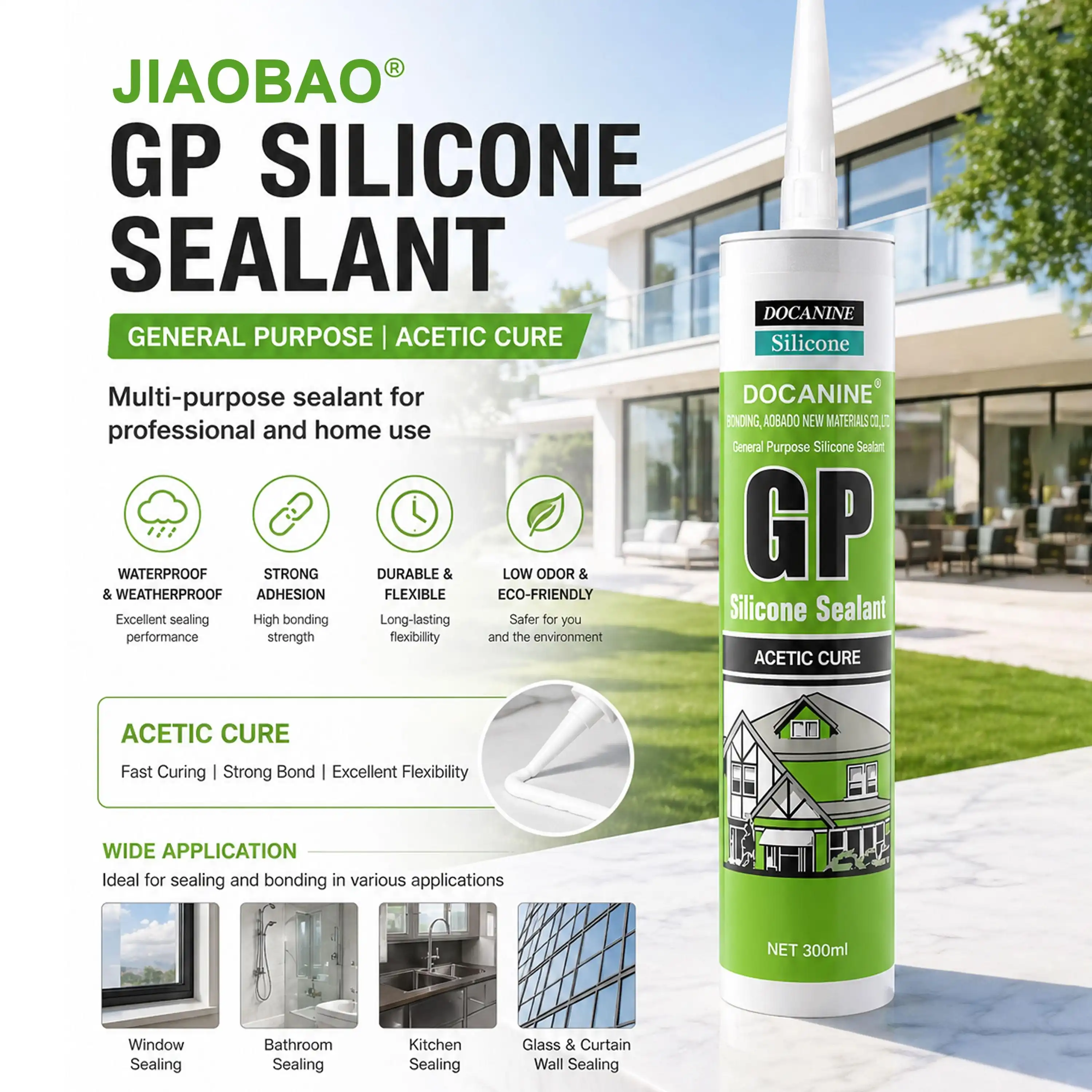
Most front door and window spaces are made where two different types of material touch, like where a door frame meets the floor or where a window frame meets the wall. GP door and window silicone sealant sticks to glass, aluminum, PVC, and other non-porous materials and stays flexible, so it can be used in these joints. It seals glass in frames and is used by builders and remodelers. A single bead that is the right size for the joint is better at blocking wind-driven rain and drafts than a thin line with breaks in it. It is good for small to moderate joints, but not for large movement joints in tall buildings.
GP door and window silicone sealants are often used outside because they stop UV light and ozone better than most organic coatings. Temperatures range from -50°C to +150°C, which is cold in the north in the winter and hot on dark frames in the summer. It is soft to the touch and can stretch more than 300% when it is dry.
So, it can adapt to changes in temperature without getting torn. Elastomeric sealants are put into groups based on how much they can move, as shown by standards like ASTM C920. In this case, Class 25 means they can move about 25%. What class does the seller say their item is in? Ask to see the test record to back that up.
GP door and window silicone sealant can only do so much. You need goods that have been approved for use in structural glazing, fire-rated systems, systems that are submerged in water all the time, and high-movement expansion joints. Acetic cure can also hurt some metals and make it hard for things to stick to surfaces that are too alkaline, like fresh concrete.
Silicone won't let most paint stick to the joint if you need to paint over it for a project. You should write down the joint width, the amount of movement you expect, the surfaces, and the contact before you buy something. It stops most of the mistakes with this short list, and it gives your source all the information they need to make a good suggestion.
The acrylic latex caulk is easy to work with, can be painted on, and is water-based. It works well for bits that don't move around much and interior trim. It usually doesn't move as much and doesn't last as long as silicone outside because it hardens and shrinks over time. GP door and window silicone sealant doesn't break when the temperature changes or when exposed to UV light, but you cannot paint it. If you want to paint it and the joint doesn't move around much, acrylic is usually the best choice. If the joint will be in the sun, rain, metal, or glass that will expand, silicone should be used.
You can paint polyurethane sealants, and they stick well to many building materials. This makes them good for filling gaps in concrete and stonework. Many polyurethanes will chalk or break down in full sunlight if they aren't painted or covered. UV light is bad for them. Also, they need to be fully ready for the joint and be moisture-cured. If you don't prime the surface first, silicone won't stick well to porous ones and won't last long in the sun. Find out how UV-resistant it is, the movement class, and how long it takes to cure on the data sheets. Then, before you buy a lot of it, see how well it sticks to real things.
Check out this short guide. When it comes to normal door and window openings that are exposed to normal weather on non-porous materials that are compatible, GP door and window silicone sealant works best. For parts inside that don't move and can be painted, choose acrylic. Polyurethane or a unique product is what you need if you need something that can be painted, has more power, or sticks to concrete.
When you put up glass, make sure the structure has been approved and can hold weight. Before you buy, look at the substrate, how the joints move, the exposure, the cure time, the color, the packaging, and the delivery lead time. Color alone doesn't change how waterproof something is; white, gray, black, or some other color doesn't do that either.
First, check the joints, their width, and their depth. Remove the dust, oil, old paint, paint that has peeled off, and moisture. Use a clean cloth and an approved cleaner, like rubbing alcohol, to clean flat surfaces. After that, let them dry. Do not damage the window films, coats, or aluminum layers when you clean. ASTM C1193 says to control the joint geometry so the bead can stretch instead of tear. To do this, you need to use a backer rod to set the sealant depth. Tape along both edges of the lines will keep them neat. Work somewhere dry and free of frost.
Put the cartridge or sausage pack into the right gun and run a steady bead of pressure over it. Then cut the nozzle to fit the joint. There is no need to heat, mix, or add anything else to our GP door and window silicone sealant. When you push the bead in, make sure it hits both sides of the joint. After that, smooth it out with a tool before it skins. Our 15-minute tack-free time is up, so work in short bursts and take off the masking tape as soon as you're done. Cartridges are better for field repair while sausage packs are used for guns on production lines.
Skin development is not a full cure yet. How fast the air flows, how hot it is, and how deep the bead is all affect how long it takes for the GP door and window silicone sealant to fully cure. While the joint is drying, don't move it or spray it with water. Follow the directions on the technical data sheet.
Most of the time, sealants don't work right because the surface is dirty or wet, the beads are too thin or broken, the backer rod is missing, or the acetic silicone is put on metal that is easy to damage. First, put it on a small area to see how well it sticks. For this reason, many labs use an ASTM C794 peel adhesive test.
Don't use words to compare things; get the technical data sheet for GP door and window silicone sealant instead. You should check the tack-free time, Shore hardness, stretch, bond strength, service temperature, shelf life, and color options. Each value was tested in a different way, so make sure you look at that.
For our product, that's 15 minutes, Shore 18, over 300%, 1.5 MPa, -50°C to +150°C, and 12 months. You should also find out what kind of movement it can handle, how much it will shrink after it cures, and how likely it is that vertical joints will not slump. A seller who sends paperwork knows how to do things their own way.
You should test it on real things like float glass, aluminum that has been anodized or powder-coated, PVC profiles, and any film or coating. Let the samples dry all the way through, and then try to peel the bead off the top. If the GP door and window silicone sealant tears inside itself, it means that it sticks very well.
The adhesion failed if the bead comes off the surface clean. This test from ASTM C719 checks for stickiness and cohesion while going back and forth. It is useful for tough exteriors. There should also be tests done on the line to see how long it takes for the skin to dry, how the extrusion feels, and how quickly they clean up.
Our product is good for a year from the date it was made. Cartridges and sausage packs should be kept in covered cases away from heat and water. Older stock should be used first. Things that are old may take a long time to cure or not cure at all. The color of the frames should match when you put them next to each other.
Ask the supplier how they keep track of the batches and pigments, and then compare the lots that were sent to you with a sample that was approved. You should be extra careful around coastal, high-UV, and freeze-thaw sites, so ask for a field background or test results from places that are like these.
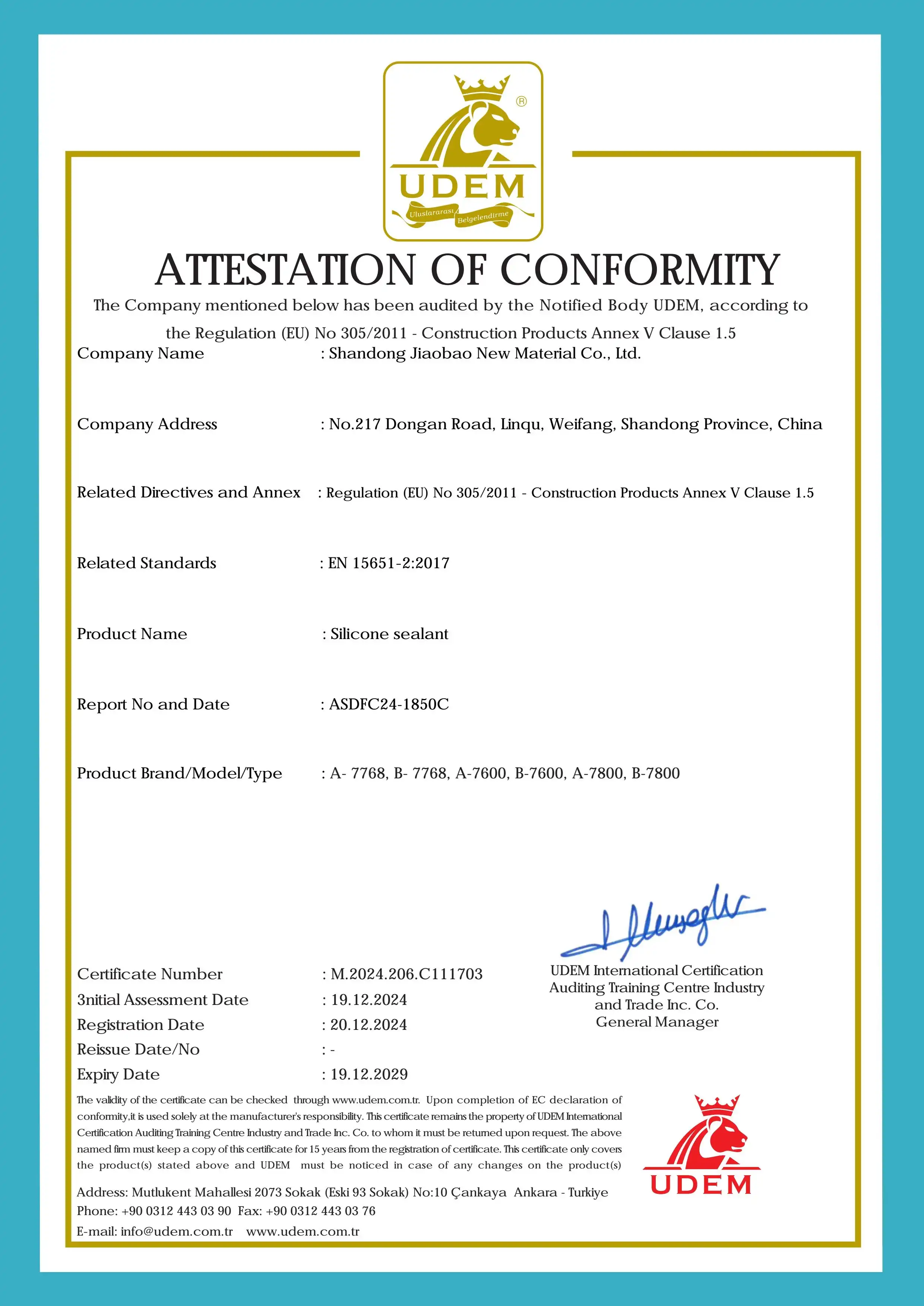
Start with the papers. A good company that makes GP door and window silicone sealant should give you test reports, application instructions, a technical data sheet, and a safety data sheet. They should also tell you the shelf life. Our things have ISO and CE certification, which helps with rules and customs checks in places all over the world.
People in the US who want to buy something should also look at the labels, the style of the SDS, and any state-level VOC rules that apply to their sales channel. Get records of each batch and the quality control steps. Customers will be more likely to buy your goods if the papers are easy to understand.
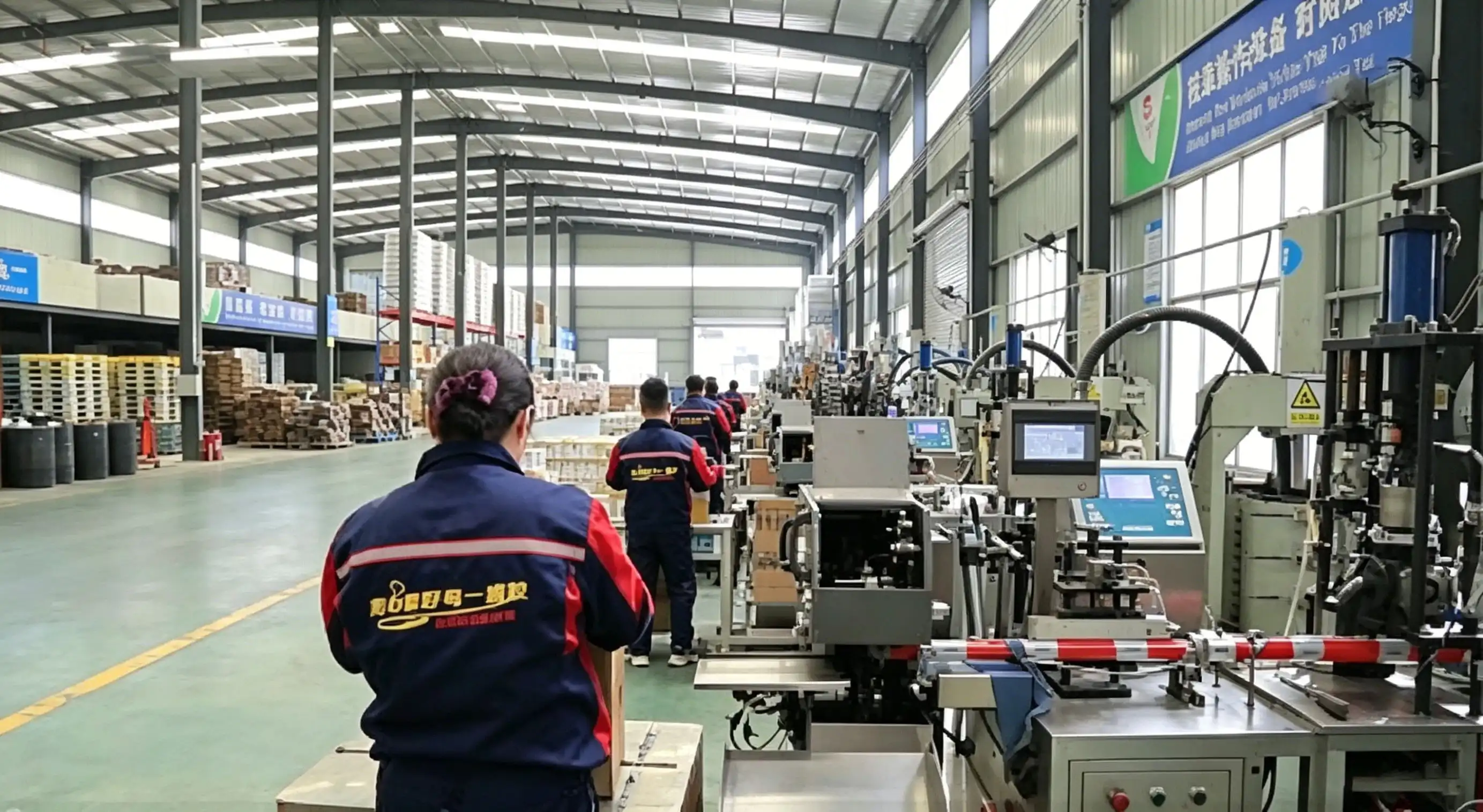
Check out the capacity, wait time, minimum order number, and equipment for filling. Jiaobao has been making things for more than 13 years, since it began in 2013. We need one to two weeks for production lead time. OEM/ODM service lets you choose your own colors and get your products in 300 ml or 600 ml containers with your own name.
We ship by land or sea. You should look at the total price, not just the unit price, because freight, duties, the chance of a defect, and downtime all add up. GP door and window silicone sealant is very important for makers because a line can't work without it.
Learn what will happen in case something goes wrong. If there are quality issues during the shelf life, we offer a refund or replacement. The first order is now less dangerous. After getting samples, you can test the line and stickiness. After that, you can place a test order and then move on to monthly amounts. You should keep a sample from each accepted lot so that you can compare them when you ship them again. You can protect your customers, the quality of your windows, and your warranty claims by taking this simple step.
GP door and window silicone sealant can be used to seal around window edges, door frames, and small joints on the outside of a building if the substrates, movement, and exposure are right. It is a one-component silicone that cures when it comes in contact with moisture. It stays flexible in a range of temperatures, doesn't crack in bad weather, and can be used without being mixed. It is better at blocking UV light and being flexible than acrylic and polyurethane, but it is not paintable.
Acetic cure works well on materials that don't have pores, but it needs to be tried first on metals that are sensitive and surfaces that are alkaline. Make sure the joints are clean, the beads are the right size, the glue cures for enough time, and you use real materials to test the glue. Buyers shouldn't just look at the price per unit; they should also look at data sheets, certifications, storage rules, and supplier capacity.
A GP door and window silicone sealant bead that is put on correctly blocks liquid water at the joint when it is dry. Still, the outcome relies on the joint design, how clean the surfaces are, and how well both sides are touched. Even though the surface is skinned, the bead is not ready for heavy rain.
Our GP door and window silicone sealant is no longer sticky after 15 minutes, but it will take longer to cure completely. Follow the technical data sheet because the time changes depending on the temperature, humidity, ventilation, and depth of the beads.
If the PVC and metal are clean, the answer is yes most of the time. Acetic cure can damage copper and brass, so test any rough, coated, or sensitive metal surfaces first.
Most of the time, no. Silicone repels most paint, so you should paint the area around the sealant before putting it on, or choose a product that can be painted on.
Yes. We supply white, black, gray, and custom colors in 300 ml or 600 ml cartridges or sausage packs. We also offer OEM or ODM service for your own labels.
Want to find a company that sells the right amount and color of GP door and window silicone sealant? For 13 years, Jiaobao has been making things. They are ISO and CE approved, have a one to two week wait time, offer OEM/ODM service, and will repair or refund if there are quality issues within the shelf life. Send an email to dorashen@cnjiaobao.com to get samples, data sheets, and a price quote. You can find out more at shandongjiaobao.com as well.
1. ASTM C920-18: Standard Specification for Elastomeric Joint Sealants, ASTM International, 2018
2. ASTM C1193-16: Standard Guide for Use of Joint Sealants, ASTM International, 2016
3. AAMA 800-16: Voluntary Specifications and Test Methods for Sealants, American Architectural Manufacturers Association, 2016
4. ASTM C794-18: Standard Test Method for Adhesion-in-Peel of Elastomeric Joint Sealants, ASTM International, 2018
5. ASTM C719-14: Standard Test Method for Adhesion and Cohesion of Elastomeric Joint Sealants Under Cyclic Movement, ASTM International, 2014
6. ISO 11600: Building Construction – Jointing Products – Classification and Requirements for Sealants, International Organization for Standardization, 2002

November 16,2023
Enterprise Name
The sealant has very strong adhesion and performs well even on glass and aluminum. After curing, it remains flexible and shows no cracking. Perfect for our facade projects.
November 16,2023
Enterprise Name
Stable quality across batches. Our customers especially like the smooth application and consistent extrusion. It helps reduce installation time on site.
November 16,2023
Enterprise Name
I used it for bathroom sealing. Excellent waterproof performance and no mold issues so far. It's been holding up very well in humid conditions.
November 16,2023
Enterprise Name
The neutral silicone works well on sensitive materials without corrosion. Very suitable for industrial applications requiring stable performance.