November 16,2023
Enterprise Name
The sealant has very strong adhesion and performs well even on glass and aluminum. After curing, it remains flexible and shows no cracking. Perfect for our facade projects.
Oct 26, 2026
When facade joints fail, the damage goes far beyond aesthetics — water intrusion, structural decay, and costly rework follow. NP weatherproof silicone sealant for facade applications addresses these risks directly. Engineered as a one-part, neutral-cure RTV silicone elastomer, it maintains adhesion across substrates like glass curtain walls, aluminum cladding, and stone panels. With a working temperature range of -50℃ to +150℃ and 25% movement capability, it delivers the long-term seal performance that procurement professionals and facade engineers genuinely need on demanding exterior projects.
NP silicone cures in a neutral way, unlike acetoxy silicones that release acetic acid when they harden. This acid eats away at metal substrates and stains natural stone. Because it doesn't produce any corrosive byproducts, it can be used with coated aluminum, galvanized steel, granite, and glass. When you're choosing sealants for mixed-material curtain wall systems, where one wrong product can cause damage that can be seen, compatibility is important.
The NP wall sealer from Jiaobao has a Shore A hardness of 30, a tensile strength of 0.7 MPa, and only 30 minutes of tack-free time. Under normal settings (25°C, 50% R.H.), the full repair takes 7–14 days. The VOC level stays below 80 g/L according to GB 13477, and sagging tests according to ASTM C 679 show that there is no flow on vertical joints. You can get it in White, Black, Gray, or custom colors in 300ml cartridges and 600ml sausage packs.
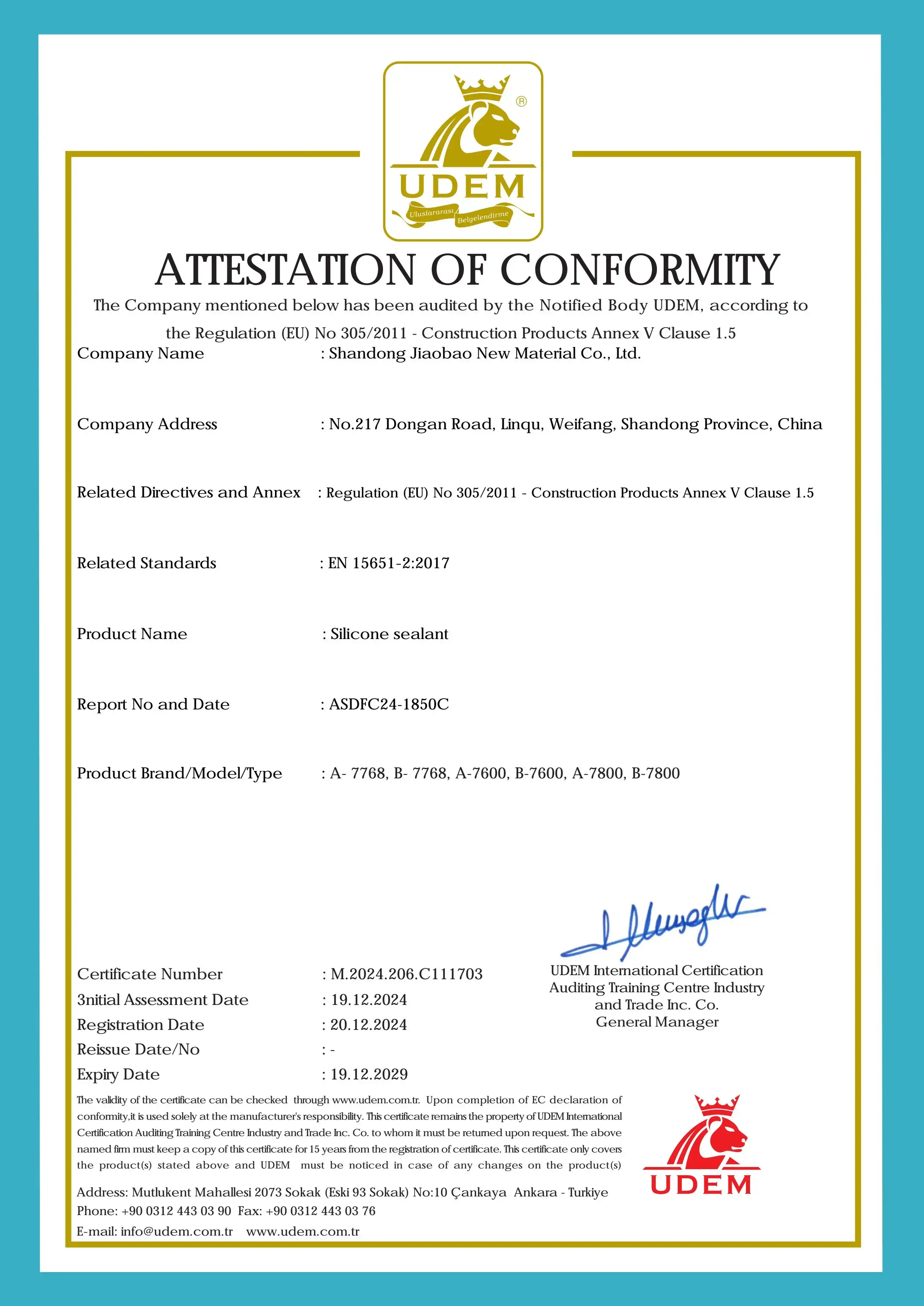
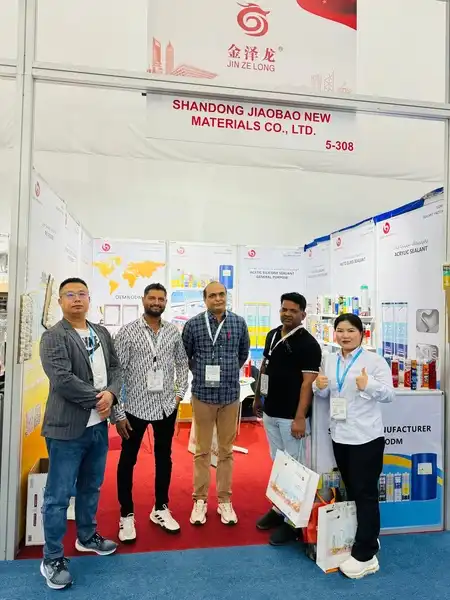
Shandong Jiaobao New Material Co., Ltd. ensures every batch of NP weatherproof silicone sealant for facade complies with ISO and CE approved standards. The factory has over 13 years of manufacturing experience and adopts a stable quality control system to guarantee consistency for large B2B supply orders. This production consistency directly lowers project risk for bulk procurement managers, who usually place orders ranging from 40,000 USD to over 150,000 USD in value each year.
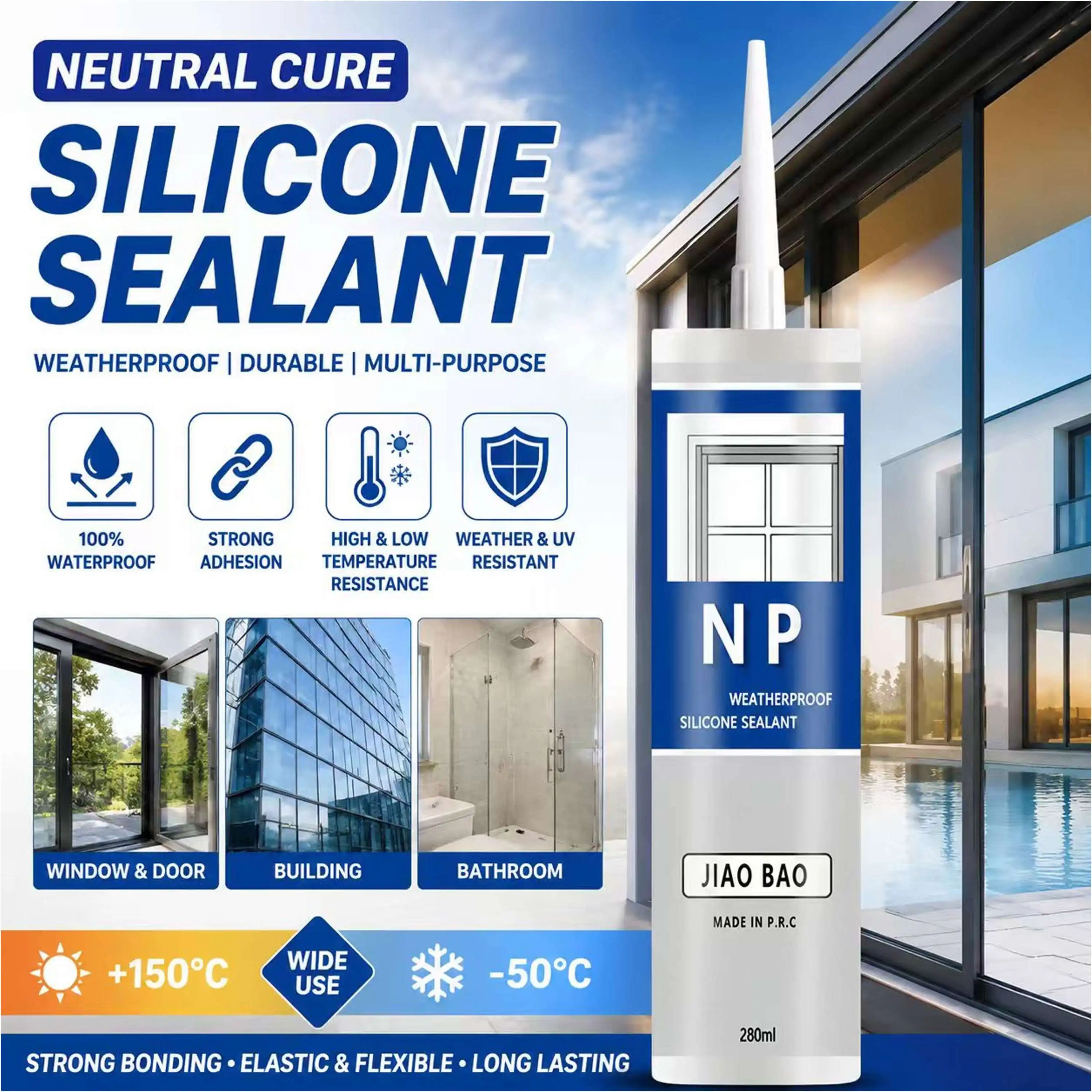
When projects aren't planned well, facade sealant usually fails within two to three years. This can cause cracks in the joints, water to get in, and the color to turn yellow, which makes customers unhappy. These five core efficiency benefits keep those things from happening:
Polyurethane sealants stick well at first, but they break down more quickly when exposed to UV light for a long time. Studies published in the journal Construction and Building Materials show that silicone seals keep more than 80% of their original elongation after being exposed to fast weathering cycles. Polyurethane samples, on the other hand, show a large increase in modulus and surface cracks. When it comes to outdoor parts that need to last ten years, silicone is the best material to use.
Acetoxy silicones are less expensive per unit, but they eat away at metal surfaces and give off acetic acid when they cure, which can damage aluminum composite panel joints and mirror-backed glass. That risk is completely eliminated by neutral cure exterior silicone. Neutral cure chemistry is required for all wall uses where substrate compatibility must be guarantyd across different materials. It's not a choice.
As you might expect, imported European or American brands of facade sealant cost more, but that doesn't always mean they work better on the specs that matter most to facade builders. Jiaobao's NP silicone meets the same performance standards as ASTM C920 and ISO 11600, but it costs less, which helps projects make more money. It cuts out the middlemen that add cost without adding technical value. It has a production wait time of one to two weeks, OEM/ODM color customization, and direct maker support.
Buyers from other businesses can use shandongjiaobao.com to find items directly. Large wall projects can benefit from 600ml sausage packs because they cut down on the number of cartridge changes and material waste during high-volume joint runs. For fine minor work or smaller parts of renovations, 300ml cartridges give you more freedom. Both formats can be used with standard pneumatic and manual caulking guns that are sold in the US and other countries.
Isopropyl alcohol (IPA) or MEK solvent can be used with the two-cloth cleaning method to prepare joint surfaces for NP weatherproof silicone sealant for facade. Remove all dust, grease, excess sealant residue and old sealant. The surface must be completely dry before application. If the substrate is porous natural stone such as limestone or sandstone, a compatible primer may help enhance adhesion. Before tooling the sealant bead, install backer rod to maintain the joint depth-to-width ratio at around 1:2.
At 25°C and 50% relative humidity, the skin forms on the surface in 30 minutes. Depending on the depth of the joint and the weather, the full mechanical cure takes 7–14 days to complete. Curing will take longer in places with less than 30% relative humidity, so plan your inspection times accordingly. Do adhesion pull tests at key joint locations after the glue has fully cured to make sure the bond is still strong before signing off on the project.
According to study released in Building and Environment, a facade joint that is properly sealed with a good silicone system can last for 15–20 years before it needs to be replaced. Compared to polyurethane or acrylic systems, which usually need work every 5–7 years, that makes the number of times that work needs to be done a lot less. The total cost difference is big for building owners and facade workers who are in charge of long-term upkeep contracts.
The product meets the indoor air quality standards set by LEED and BREEAM because it has a low VOC content of less than 80 g/L. Choosing low-emission sealants earns you points in a number of areas under both approval schemes. As green building rules get stricter in the US and other countries, using goods that show they are VOC-compliant makes the process of getting certified easier.
Ventilated rainscreen systems, photovoltaic-integrated cladding, and prefabricated modular panels are some of the new types of facades that need sealants that can work with wider joint tolerances and more complex substrate combinations. The NP neutral cure formulation can handle these uses without having to be reformulated, and Jiaobao's OEM/ODM capabilities let them make custom hardness, elongation, or color specifications for each project.
The choice of facade joint sealant has a direct effect on both how well outdoor siding projects work and how much money they make. It is possible for contractors to keep their 5- to 10-year warranty promises if they use an NP weatherproof silicone sealant for facade applications that has a neutral cure chemistry, high UV resistance, thermal flexibility, and broad substrate adhesion. Jiaobao's product meets those requirements and comes with 13 years of production experience, affordable pricing, and ISO and CE certifications for consistent manufacturing. This makes it a good choice for procurement professionals who are in charge of big outdoor projects in harsh conditions.
It stays stable and sticks well up to a surface temperature of +150℃, which is about the right temperature for aluminum facades in the Gulf region in the summer. The neutral cure chemistry also doesn't break down easily when exposed to high UV light outside. Before applying the whole project, it is suggested to test the adhesion on certain substrate finishes before the job starts.
High-modulus structural silicone moves wind and pressure stress from the glass to the frame. NP weatherproof silicone has a lower modulus and is made to keep air and water out while allowing for more heat movement. They are both needed for curtain wall systems, but they do different things and shouldn't be switched out for each other.
Not at all. Paint won't stick to silicone that has hardened, and it will peel off as the joint moves. The right thing to do is to order the sealant in the same color as the finish on the outside. As part of its OEM/ODM service, Jiaobao can match colors exactly to your needs.
Use the two-cloth method to clean with IPA or MEK. Based on adhesion pull tests done before the job, a compatible primer is suggested for Kynar-coated (PVDF) aluminum surfaces. For low-surface-energy fluoropolymer coatings, priming makes the peel strength better, and it's normal practice for high-specification curtain wall jobs.
Jiaobao gives you direct access to NP weatherproof silicone sealant for facade provider options. The quality is ISO and CE approved, and the lead time is 1–2 weeks. You can also change the color and packing through OEM/ODM. Before placing a full project order, ask for free samples and technical data sheets to see how well the product works on the material you need it to work on. Visit shandongjiaobao.com or email our technical team at dorashen@cnjiaobao.com to talk about your project details and volume needs right away.
1. Carbary, L. D., & Wolf, A. T. (2013). Durability of Silicone Sealants in Facade Applications. ASTM International.
2. Klosowski, J. M., & Wolf, A. T. (2016). Sealants in Construction (2nd ed.). CRC Press.
3. Shi, C., & Garces, P. (2019). Weathering performance of silicone versus polyurethane sealants under accelerated UV exposure. Construction and Building Materials, 201, 452–461.
4. Lacasse, M. A., & Vanier, D. J. (Eds.). (2010). Durability of Building Materials and Components. NRC Research Press.
5. Wolf, A. T. (2005). Long-term performance of building joint sealants. Building and Environment, 40(8), 1088–1094.
6. American Society for Testing and Materials. (2019). ASTM C920: Standard Specification for Elastomeric Joint Sealants. ASTM International.
November 16,2023
Enterprise Name
The sealant has very strong adhesion and performs well even on glass and aluminum. After curing, it remains flexible and shows no cracking. Perfect for our facade projects.
November 16,2023
Enterprise Name
Stable quality across batches. Our customers especially like the smooth application and consistent extrusion. It helps reduce installation time on site.
November 16,2023
Enterprise Name
I used it for bathroom sealing. Excellent waterproof performance and no mold issues so far. It's been holding up very well in humid conditions.
November 16,2023
Enterprise Name
The neutral silicone works well on sensitive materials without corrosion. Very suitable for industrial applications requiring stable performance.