November 16,2023
Enterprise Name
The sealant has very strong adhesion and performs well even on glass and aluminum. After curing, it remains flexible and shows no cracking. Perfect for our facade projects.
Nov 3, 2026
One-component, moisture-cured neutral cure clear silicone sealant creates a flexible, translucent sealing on glass, aluminium coated metallic surfaces, and ceramics. Glazing, doors, windows, securing, display case putting together, bathroom connections and metal sheet seams where a bead would be unattractive are common uses. Mixed-material assemblies may use it since it cures without acetic acid, unlike standard acetoxy products. I wrote this guide for buyers, engineers, and OEM teams to match and test sealants before buying.
Neutral cure translucent silicone sealant paste is ready to use. It forms stretchy silicone rubber with airborne water. When colour matching is impossible, the transparent , translucent finish keeps glass, frames, and fixtures consistent. Customers use it for construction, glazing, refurbishing, industrial assembly, and glass product manufacturing. Every buyer wants something different.
Procurement teams consider pricing, delivery, and packaging. Engineers evaluate adherence, mobility, and cure. Distributors check gun size and shelf life. OEM clients like unique packaging and batch uniformity. Performance relies on specs sheet, surface setup, joint size, and application day weather.
Moisture from the atmosphere combines with the reactive substances to the paste and creates a crossed-linked silicone network. At first the surface forms a skin, but the interior of the bead takes considerably longer to cure. The speed depends on temperature, humidity, ventilation and the thickness of the bead.
A thin joint in warm, moderately humid air cures faster than a thick bead in a cold, dry, closed space. Our one-part RTV sealant data shows a surface drying time of 30 minutes and a full curing time of 7 to 14 days under GB 13477 conditions. Keep the joint free from load, washing, and movement until the full cure period ends.
Acetoxy silicone discharges acetic acid upon curing. You smell vinegar and the acid may corrode certain metals, or discolour porous materials and electronics. Neutral cure methods emit oxime or alcohol-based by-products and may thus be used on a larger variety of substrates including aluminium, coated surfaces and stone.
Neutral methods are also used by mirror installers since acid-cure treatments may harm silver backing. That stated, neutral cure is not universal adhesion. However, key duties are still relevant for primers, compatibility checks and manufacturer data. A neutral chemistry eliminates one frequent corrosion concern if you operate a glass cabinet with chrome or aluminium fittings.
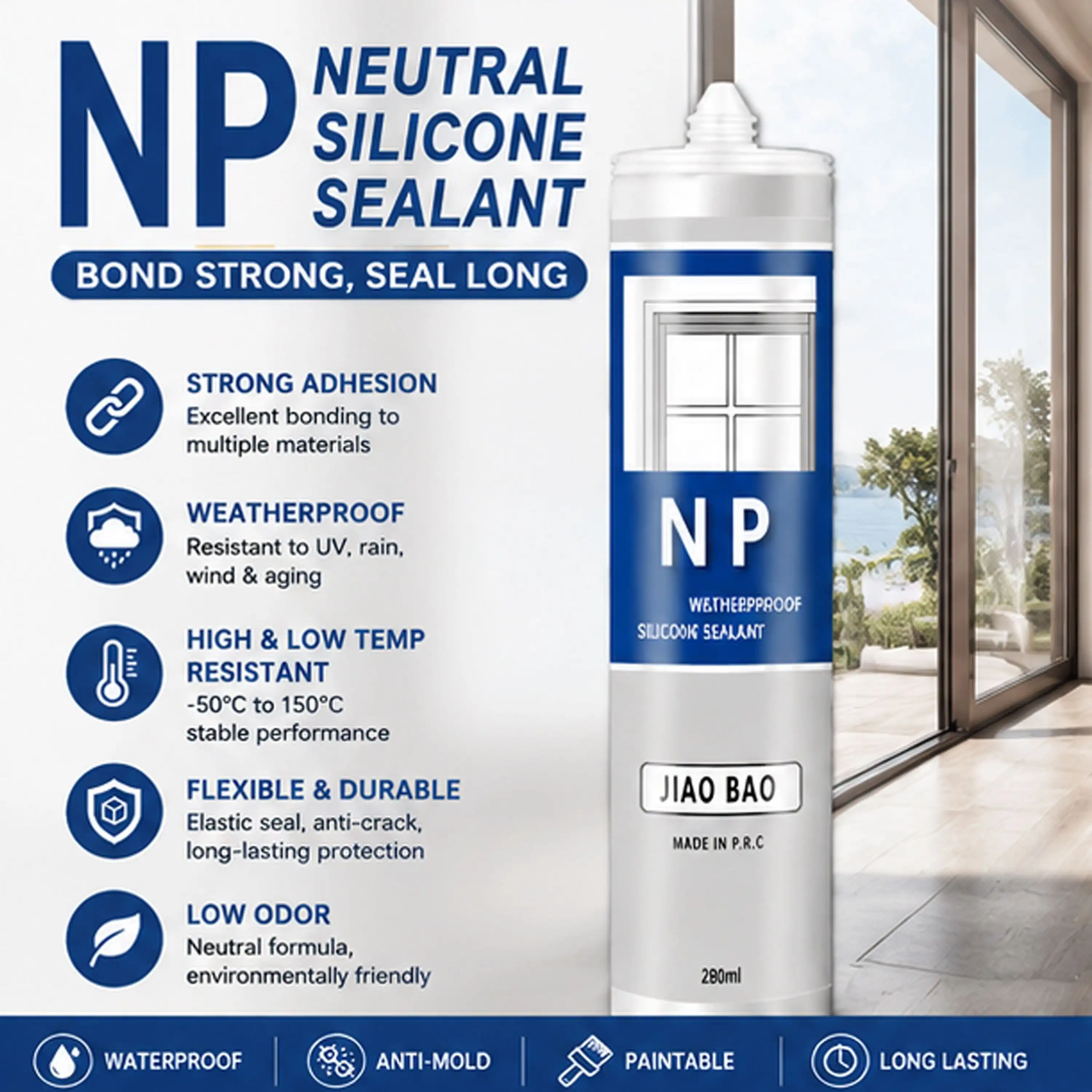
Glass, aluminum, and coated metal expand at different rates, and a sealant has to absorb that difference. Silicone stretches and compresses without cracking when the joint is designed correctly. Our one-part RTV silicone sealant offers Shore A 30 hardness, 25% movement capability, and a temperature stability range from -50℃ to +150℃. Those figures matter for exterior joints that face hot summers and cold winters.
Movement still relies on joint breadth, depth and adhesion quality for neutral cure clear silicone sealant. Instead of phrases such as "flexible" look for the specified movement class. Cured silicone also resists precipitation, humidity and sunshine. But outdoor life depends on formulation and exposure, so ask for weathering statistics beforehand.
Often used for glazing and building windows. The bead around panels of glass, pictures and doors is transparent so the seal is not evident and keeps air as well as water out. This also holds true for glass exhibit compartments, shelves, ornamental plates. There may be a line of apparent colour marring the surface. For optimal binding glass is required to be free of dust, oil as well as releasing agents. Adhesion test may be required for painted or anodised frames.
Keep in mind that "clear" does not always mean optically invisible. Joint thickness, substrate color, and contamination change how the cured bead looks. Test a sample on your actual glass before you approve a production run. Structural glazing needs products tested and approved for that purpose.
Neutral cure chemistry is used by designers for aluminium, galvanised steel, stainless steel and chrome fittings since it contains no strong acid. Typical applications include panel joints, exterior sealing, lighting parts and basic maintenance. Seals sinks, splashbacks, shower enclosures and worktops in bathrooms and kitchens.
Moisture resistance alone does not qualify a sealant for constant immersion or mold-prone areas, so confirm fungicide content and sanitary approvals when the job requires them. Metal surfaces often carry oils or oxide films that weaken adhesion, so run peel tests on your real parts. If you build aquariums, ask the supplier for written confirmation that a specific grade suits water immersion before you buy.
excellent preparation typically leads to excellent bonding on glass, glazed ceramics, aluminium and many coated metals. Plastics like polyethylene or Polypropylene and PTFE have low energy and difficult to bind. Oily polymers, bituminous supplies, dusty concrete and various powder coatings are also issue makers.
Before you apply a seal near granite or marble, do a staining test (e.g., ASTM C1248), since natural stone as well as other porous materials may display staining or edge darkening. Our product is classified as "no stain" under ASTM C1248. The usual and appropriate are not the same as the universal and compatible. Performance will vary across grades and brands therefore try each new substrate combination.
It takes some minutes to prepare well and this will stop most failures. Remove dust, oil, releasing agents, loose particles and old sealant. Use an acceptable cleaning, let the surface dry completely and use a base coat only if the maker advises it. Overuse of solvent or vigorous scrubbing may harm finishes.
Simple test: Apply a sample bead of neutral cure clear silicone sealant, let it fully cure and rip or peel under project circumstances. ASTM C794. Standard Test Method for Adhesion-in-Peel of Elastomeric Sealants. Record results with numbers for each batch so your team can duplicate the procedure on every manufacturing run. Do not put sealant on damp surfaces since the water at the contact will prevent bonding.
Data sheet performance is preserved with correct installation. Check the substrate, mask off surrounding surfaces, set the nozzle to bead size and extrude the sealant constantly. Tool the bead prior to skin formation to achieve total contact with no air. A closed cell backer rod or bond breaker tape may be used to avoid three-sided adhesion in deeper joints, which restricts movement and increases stress. Stop letting a thick bead cure without adjusting sealant depth. Remove masking tape on time to minimise bead edge tearing. Rework is minimised by manufacturing line instructions that keep bead size consistent.
Our one-part RTV silicone sealant comes as a paste in 300ml or 600ml cartridges or sausages, with custom volumes on request. Standard colors are White, Black, and Grey, and we also offer customized colors. If you need a clear grade for transparent joints, tell us your requirements and we will confirm the options.
Flow or sagging at 25℃ and a relative humidity of 50% before curing, ASTM C 679 0 mm VOC content < 80 g/L Surface dry 30 minutes After 21 days curing, the hardness is Shore A 30, the tensile strength is 0.7 MPa and the movement capacity is 25%. Shelf life: 12 months cool, dry storage. Data sheet values are from controlled lab testing, thus shop circumstances may vary.
Acetoxy silicone cures fast and sticks well to glass, however its acid products may irritate metals, stones and electronics with smell and compatibility. Neutral cure is optimal for mixed-material applications, albeit product adhesion and cure duration vary. Paints need tough, abrasion-resistant polyurethane sealants.
Silicone’s flexibility and UV and climate resistance are useful for glazing, sanitary connections and exposed seams. Polyurethane is used in flooring, automotive assembly and coated joints. Bead colour as well in the design as dried silicone can not be painted. Select based on substrate, exposure, appearance and project specifications.
Silane-modified polymer sealants combine the properties of silicone and polyurethane. They also provide good adherence, low odour and paintability which may be an asset on challenging building substrates or joint surfaces that need to accept a coating. Neutral cure silicone is suitable for heavy the sun's glass work, moist regions and long term elasticity. There are many different formulas for hybrid items, so don’t lump them all together.
Compare movement capacity, weathering data, surface adherence, cure conditions and paintability using published test data. If the job requires paint over the junction, a hybrid typically wins. If the joint has to be clean and sturdy in the sun, silicone is often a better choice.
Most failures of neutral cure clear silicone sealant trace back to contamination, movement beyond the sealant's capability, wrong joint geometry, trapped moisture, short cure time, or incompatible substrates. Adhesive failure shows up at the interface, while cohesive failure splits the cured sealant itself. You may also see bubbling, discoloration, shrinkage, dirt pickup, or cracking.
So the bottom line for prevention is clean the surfaces, primer validation, right bead size, regulated storage and realistic testing. Incoming inspections provide protection: a standard extrusion rate (ASTM C1183) and sag (ASTM C639), peeling adhesion (ASTM C794) and staining (ASTM C1248) ) on your own substrates.
Keep cartridges and sausages cool, dry, and out of direct sunlight. Package curing may begin early in high humidity. Old or improperly kept material may have increased extrusion force, unusual skin development, weak cure, or lower adherence. Our shelf life is 12 months when kept correctly; verify production dates and lot numbers upon delivery. Consider maritime freight travel duration, summer container temperatures, pallet assembly, and first-in-first-out stock rotation. Sealant quality and manufacturing schedule are protected by these behaviours.
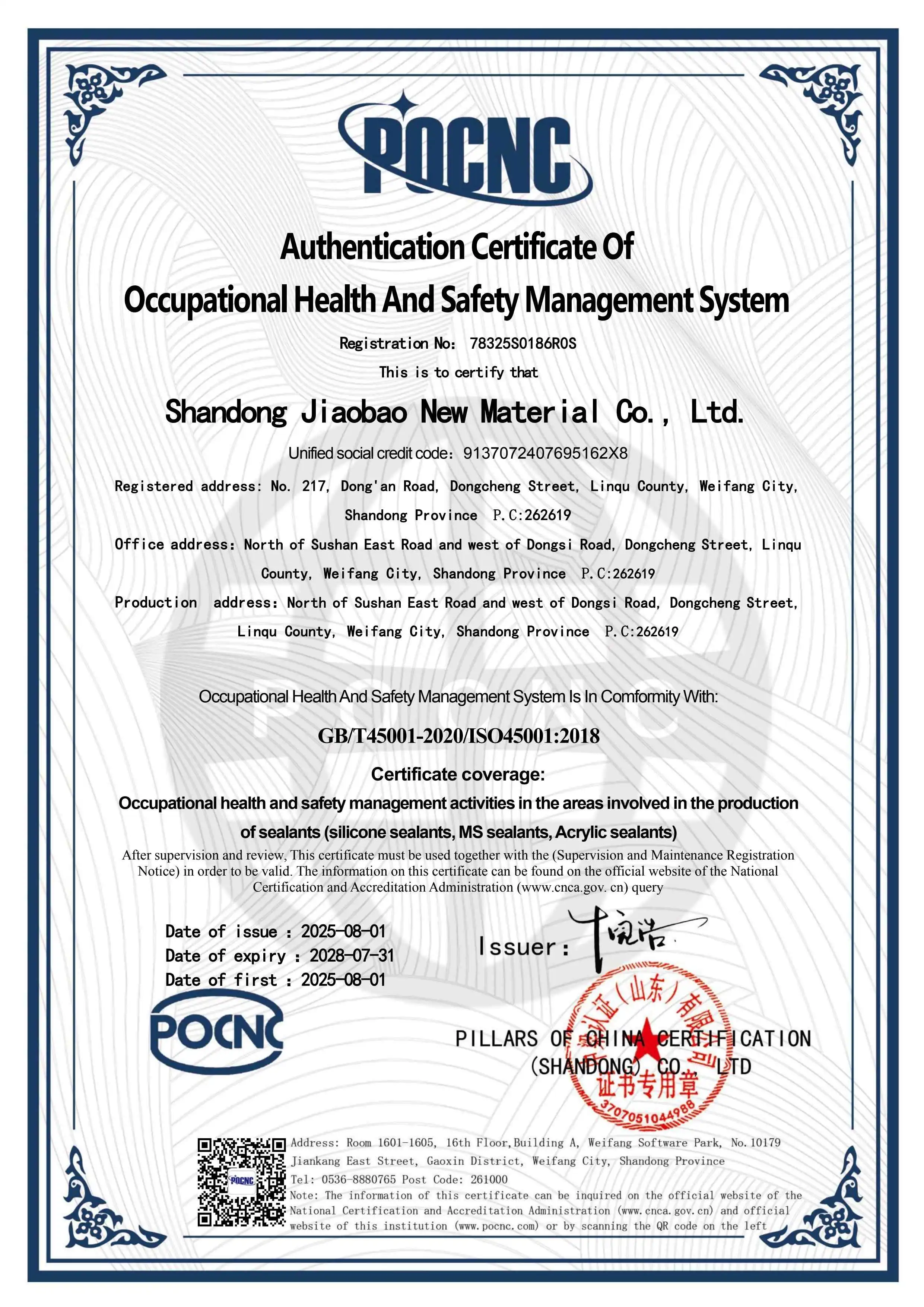
Jiaobao began in 2013 and makes neutral and acetic silicone sealants plus weather-resistant and structural sealants. Buyers get these supply advantages:
These advantages shorten qualification time for glass product makers and distributors.
Clear silicone sealant provides a flexible, low profile seal for glass, display cupboards, door and window frames, aluminium and metal assemblies and wet area connections. Neutral chemistry prevents the release of acetic acid from acetoxy systems that may reduce the danger of corrosion and discolouration of mixed materials. Movement capability, resistance to weather and a service range of -50℃ to +150℃ achieve extended joint life but outcomes are dependent on clean substrates, good joint design and complete cure.
Clear, UV exposed glass is more compatible with neutral cure clear silicone sealant than acetoxy, polyurethane coating and hybrid sealants. Paintable seams have different chemistries. Failures are avoided via testing on real-part attachment, staining, sag and extrusion together with checks on storage and comprehensive documentation. So real-world selection is a matter of matching informative sheet values to the job, not just cost.
Many products suit exterior sealing because cured silicone resists rain, UV light, and temperature swings. Check the weathering data, movement capability, and adhesion on your own substrate before you commit. Structural glazing and other safety-critical assemblies need grades with specific approval.
Yes, when the surfaces are clean, dry, and compatible with the formula. Anodized or powder-coated aluminum can behave differently from bare metal, so run an adhesion test and confirm any primer requirement before production.
Our one-part RTV sealant dries on the surface in 30 minutes and cures fully in 7 to 14 days at 25℃ and 50% relative humidity. Thick beads, cold air, and dry air slow the process, so allow extra time.
No. Paint does not stick to pure silicone. Choose a hybrid sealant when the joint needs a coating, or match the bead color to the design from the start.
Looking for a neutral cure clear silicone sealant manufacturer for glass, window, or cabinet projects? Jiaobao offers 13 years of production experience, ISO and CE certifications, a 1 to 2 week lead time, and OEM/ODM service. Our refund or replacement policy covers quality issues within the shelf life. Email dorashen@cnjiaobao.com with your substrate, volume, and color needs, or visit shandongjiaobao.com to request samples and a quote.
1. 2018 ASTM C920 Elastomeric Joint Sealant Standard Specification
2. ASTM C1248 Joint Sealant Staining of Porous Substrate, 2018.
3. 2018 ASTM C794 Elastomeric Joint Sealant Adhesion-in-Peel Test Method
4. 2014 ASTM C1184 Structural Silicone Sealant Standard.
5. Edward M. Petrie, 2007 Handbook of Glues and Sealants
6. Sealant Technology Handbook, Karl L. Patel and A. Pizzi, 2009.
November 16,2023
Enterprise Name
The sealant has very strong adhesion and performs well even on glass and aluminum. After curing, it remains flexible and shows no cracking. Perfect for our facade projects.
November 16,2023
Enterprise Name
Stable quality across batches. Our customers especially like the smooth application and consistent extrusion. It helps reduce installation time on site.
November 16,2023
Enterprise Name
I used it for bathroom sealing. Excellent waterproof performance and no mold issues so far. It's been holding up very well in humid conditions.
November 16,2023
Enterprise Name
The neutral silicone works well on sensitive materials without corrosion. Very suitable for industrial applications requiring stable performance.