November 16,2023
Enterprise Name
The sealant has very strong adhesion and performs well even on glass and aluminum. After curing, it remains flexible and shows no cracking. Perfect for our facade projects.
Oct 16, 2026
Choosing the right GP silicone sealant for glass and aluminum projects starts with understanding what your application actually demands. A general-purpose RTV silicone sealant must bond strongly to both non-porous glass and metal surfaces simultaneously, resist UV degradation, and stay flexible through years of thermal cycling.
For fabricators producing aluminum window frames, curtain wall panels, or insulating glass units, getting this choice wrong means seal failures, condensation between panes, and costly rework. This guide walks through every factor that matters — from adhesion mechanics to batch consistency — so you can specify with confidence.
There is water in the air that makes the GP silicone sealant harden. It's a Resin To Vinyl (RTV) glue that only needs one part. Building silicones are made to carry loads, but GP silicones aren't. They are instead made to protect the edges of fenestration parts from the weather, fill in gaps, and hold joints together. The Jiaobao GP silicone sealant comes in 300ml pills or 600ml sausage packs. Once it's been opened, it's good for 12 months. It is a silicone paste that cures with acetoxy. You can choose any color you want, from white to black to gray.
When it gets warmer or cooler, glass and aluminum change sizes in different ways. Metal is about twice as big as glass when it comes to warmth. To keep them together, the sealer between them needs to be able to handle the way they move all the time. GP from Jiaobao can go up or down by more than 300% when it is stretched. In other words, the healed bead can bend enough to allow for this movement over many years of use.
According to ASTM C920 and ISO 11600 Class 20LM, a good glass-aluminum silicone sealer should have a Shore A hardness of 15 to 25, be able to work at temperatures between -40°C and +150°C, and have a bond strength of at least 1.0 MPa. Following Jiaobao's recipe, it is 18 Shore A hard and can bond up to 1.5 MPa. This makes it the best in its class for everyday use that doesn't involve building.
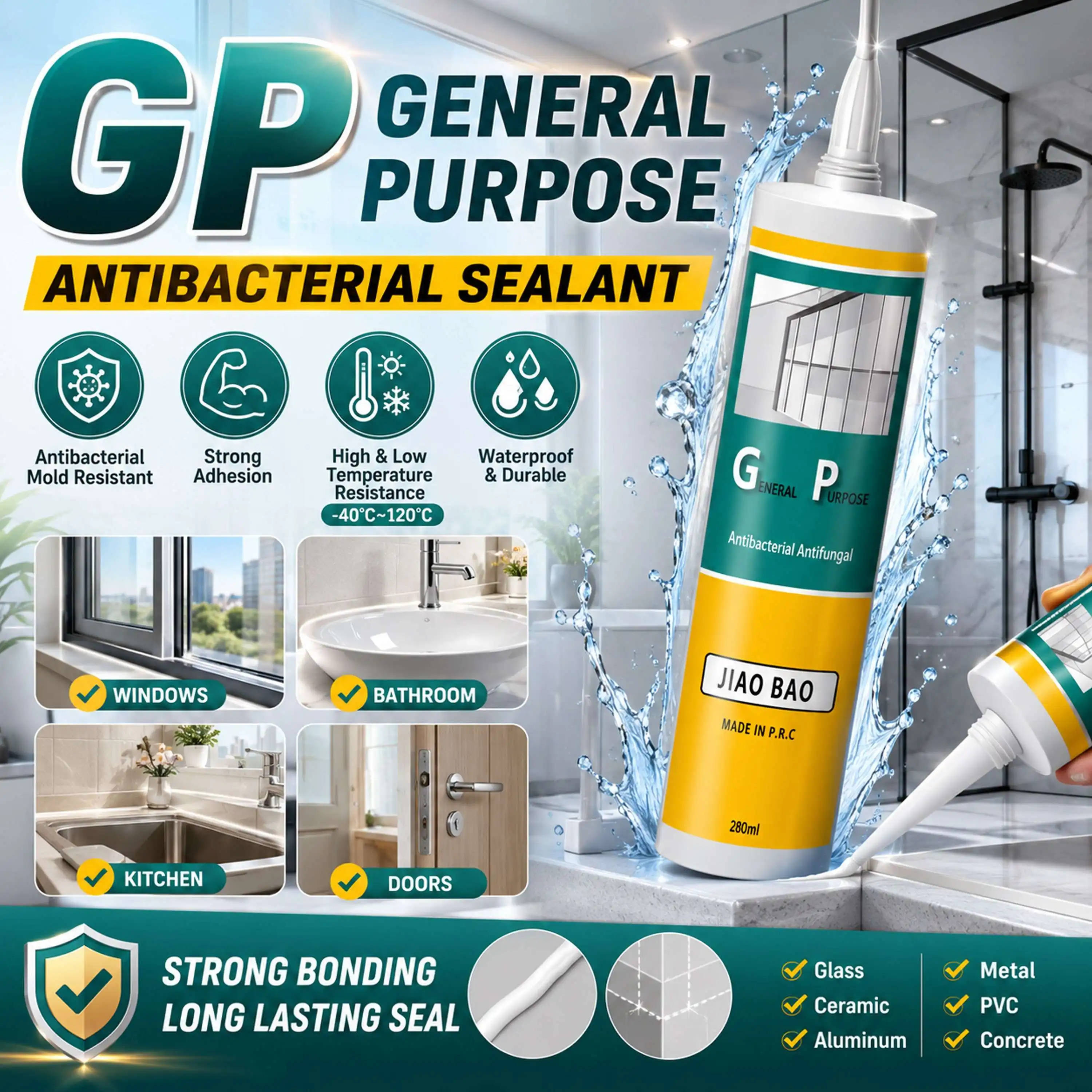
When bonding glass to metal with GP silicone sealant for glass and aluminum, the most important thing to check is whether the cured sealer fails cohesively (the bead tears) or adhesively (it pulls off the base easily). A test called adhesion-in-peel should show that metal pieces that have been anodized or powder-coated don't stick together at all, according to ASTM C794. Before you agree to make a run, you should be wary of suppliers who can't give you this test data.
It is an acidic cure for silicones that give off acetic acid when they harden. Float glass and most metals that have been anodized or powder-coated are safe to use with this. In any case, a neutral-cure formula is better for aluminum or copper-based alloys that have not been treated (mill-finish) because it keeps the bond from rusting. A type of silicone made by Jiaobao is acetoxy, which means it works well with finished metal profiles. These profiles are often used to make curtain walls and windows.
A sealant is no longer useful if it turns yellow or forms bubbles on the surface within 12 months. This is because looks are important in glass making. PDMS chains that are cross-linked in good silicone seals don't break when they are exposed to UV light. Some of the ingredients in the Jiaobao recipe can stand up to ozone and UV light. Even after being in the sun for a long time, this helps the cured bead keep its natural color, whether it's clear, white, or gray.
Polyurethane seals dry out and crack after being in the sun for a long time. That's because they stick well to concrete and wood, which are both porous. They also soak up water over time, which makes places that are wet where they are break down faster.
Silicone lasts longer than aluminum when used outside to join metal and glass because it doesn't soak up water and doesn't change color when it hits UV light. GP silicone sealant for glass and aluminum is one such product. Tests that were done outside for more than five years and published in the journal Construction and Building Materials always show that silicone sealants work better than polyurethane.
You can paint acrylic seals and they are cheap, but they can only stretch about 150% before they break. This is not nearly enough to cover the change in temperature between metal and glass. They also lose their shape after two or three years of being outside because they dry out and shrink. Silicone is better than acrylic when it comes to skilled window or glass fitting.
When you use finished aluminum profiles for most glass-aluminum curtain wall and window jobs, you should use acetoxy GP silicone. It's the best option and the most affordable one.
When quality changes from batch to batch, sources are no longer a part of the glazing business. When a sealant works well in the first sample but has a different viscosity or tack-free time on the third order, the application settings have to be changed over and over again.
You should ask to see Certificates of Analysis for at least three production batches from a company before you buy silicone sealant from them. There is a small error window or a large standard range for the tack-free time, extrusion rate, and extension numbers given. You should check them.
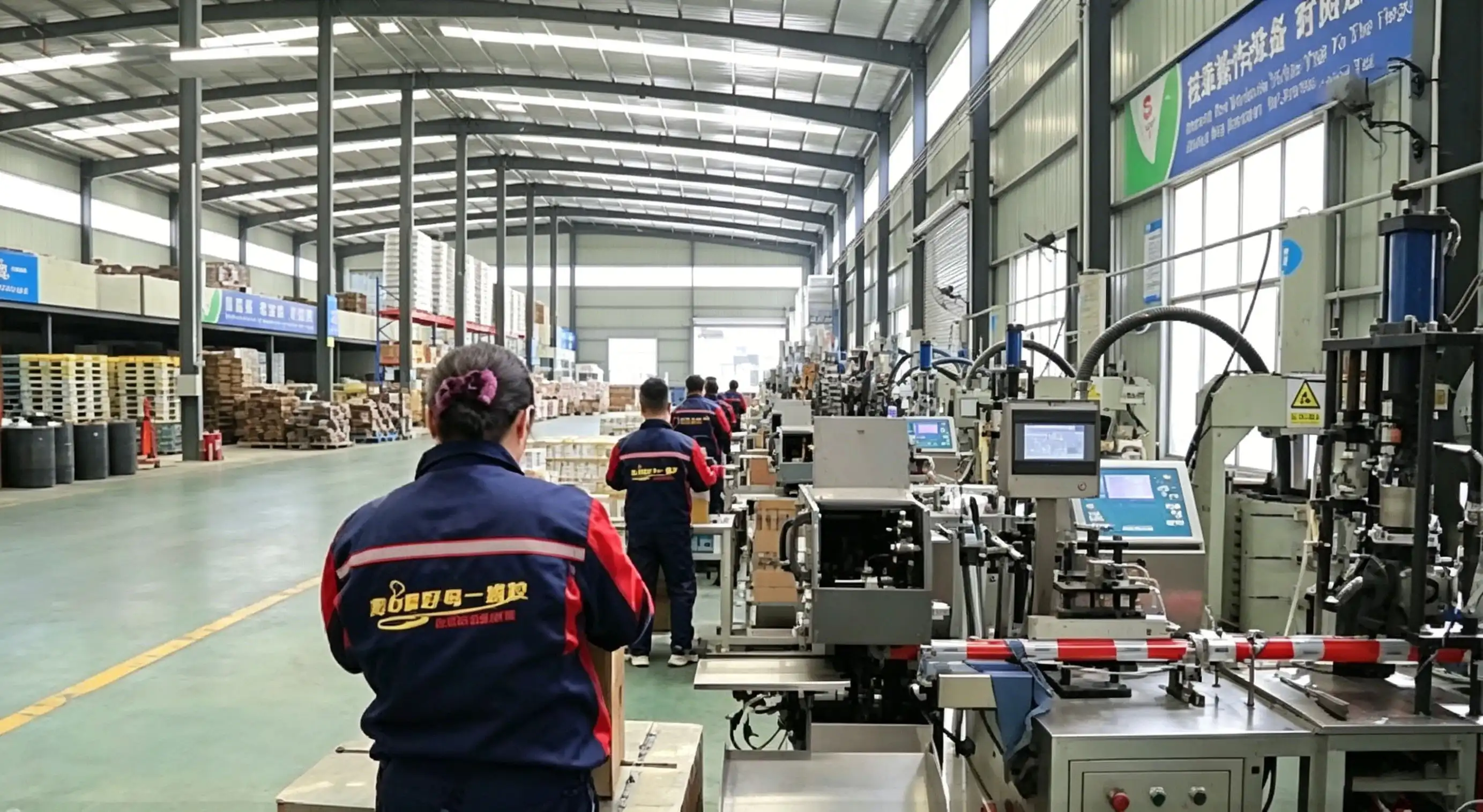
Some production lines need to change the thickness so that automatic dispensers can work or so that the time it takes to skin over can be cut down in places where it's very humid. This is something that a company that knows how to do OEM/ODM can change without having to change the whole product. Since 2013, Jiaobao has had programs to help people get ready. They check with the people who make the goods to make sure that the fix's speed, color, and flow behavior meet the needs of the output.
Since GP silicone sealant for glass and aluminum only lasts a year, it needs to be moved around the stock with care. Some of the product you buy may already be out of date if you buy more than three to four months' worth. This means it will cure more slowly and stick less well. You can ship from Jiaobao by land or sea, and it takes one to two weeks to get your package. During the shelf life, if there are any quality issues, Jiaobao will either replace the item or refund your money. It's safer to buy something from China now.
Use two different cloths that have been wet with isopropyl alcohol (IPA) to clean metal. The second cloth wipes the surface clean before the solvent dries. The first cloth cleans. It might leave behind broken-down oils if you let the IPA dry all the way before wiping. This makes it harder for things to stick.
It should be dry and clean when the surface is 5°C to 40°C. So that the sealant can move around easily, the joint depth should be at least half of the joint width. Most of the time, it takes five to eight minutes. When you tool the bead at this point, the surface rubs against it better, and there are no holes that water could get through and make the material break early.
The air should be 23°C and 50% wet for a regular repair. When the humidity is below 30%, this process takes a lot longer. In a dry environment, the top might cure quickly, but the middle might not cure for a long time. Make sure that closed off areas, like where insulated glass units are put together, have enough air flow during the phase of acetic acid off-gassing.
The technical choice of GP silicone sealant for glass and aluminum for glass and aluminum work affects both the speed and quality of the end result. To be good, it should stick to both sides, dry without bubbles or spots, and stay flexible even after years of being heated and cold.
All of these things can be done with Jiaobao's GP silicone sealant. It can stretch more than 300%, has a bond strength of 1.5 MPa, and doesn't stick for 15 minutes. It has been made the same way for 13 years. Before you place large orders, make sure that each batch is made at the right time and that the surfaces are always ready. Also, check that the chemical used to fix the metal is right for the finish you want.
Acetoxy silicone releases acetic acid during cure, which is compatible with anodized and powder-coated aluminum. For untreated mill-finish aluminum, neutral-cure silicone is the safer option to avoid surface corrosion at the bond line.
This usually indicates an oil-extended, low-grade product. As hydrocarbon solvents evaporate from the cured bead, the material shrinks and either tears internally or pulls off the substrate. Always verify that a supplier's product shows less than 5% volume shrinkage after cure.
Tack-free time is approximately 15 minutes under standard conditions (23°C, 50% RH). Full through-cure typically takes 24 to 48 hours depending on joint depth, temperature, and ambient humidity.
GP silicone can serve as a secondary sealant in IGU edge-sealing when verified to be compatible with primary butyl sealants and molecular sieve desiccants used in the spacer system. Always confirm material compatibility through a controlled trial before full production.
No. GP silicone is engineered for weathertight sealing, not load-bearing structural applications. Structural glazing requires high-modulus silicones certified to ASTM C1184, capable of supporting glass dead weight and wind loads.
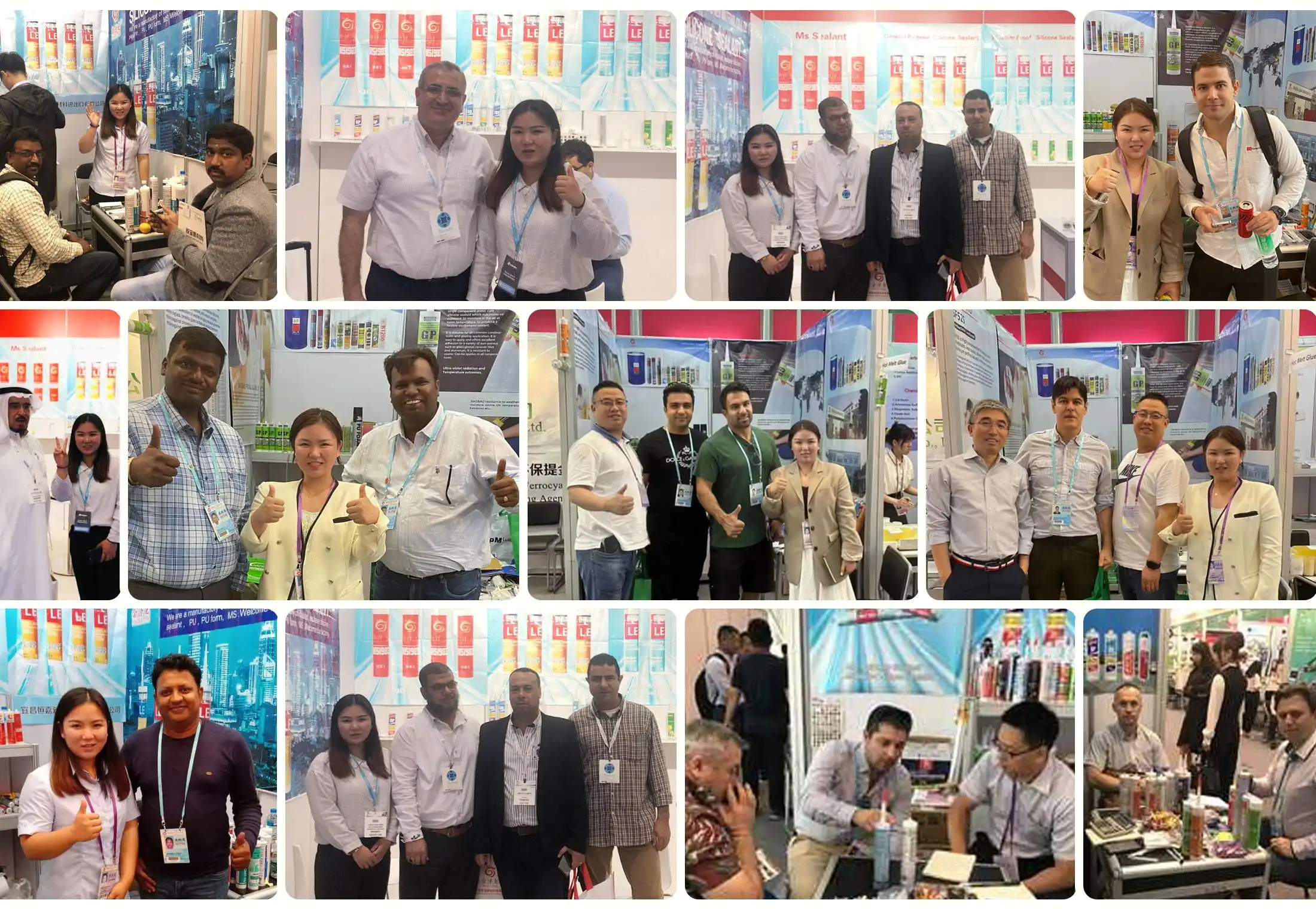
Since 2013, Jiaobao has sold GP silicone sealant to manufacturers in China, the Middle East, and Africa. Each package has both the ISO and CE marks to show this. If you need a standard recipe or an OEM product with a certain thickness that works with your line, we can do it. Our team can send you samples in just a few days, and we'll confirm your trial order in one to two weeks. You can email us at dorashen@cnjiaobao.com or go to shandongjiaobao.com to get a trial or talk to our tech team about your project.
1. ASTM International. ASTM C920: Standard Specification for Elastomeric Joint Sealants. ASTM International, 2022.
2. ISO. ISO 11600: Building Construction — Jointing Products — Classification and Requirements for Sealants. International Organization for Standardization, 2020.
3. Dillard, D.A., & Pocius, A.V. The Mechanics of Adhesion. Elsevier Science, 2002.
4. Klosowski, J.M., & Wolf, A.T. Sealants in Construction (2nd ed.). CRC Press, 2016.
5. Wolf, A.T. "Durability of Silicone Sealants." Construction and Building Materials, Vol. 14, No. 8, Elsevier, 2000.
6. Lacasse, M.A., & Vanier, D.J. "Durability of Building Sealants." RILEM Report 21, RILEM Publications, 1996.

November 16,2023
Enterprise Name
The sealant has very strong adhesion and performs well even on glass and aluminum. After curing, it remains flexible and shows no cracking. Perfect for our facade projects.
November 16,2023
Enterprise Name
Stable quality across batches. Our customers especially like the smooth application and consistent extrusion. It helps reduce installation time on site.
November 16,2023
Enterprise Name
I used it for bathroom sealing. Excellent waterproof performance and no mold issues so far. It's been holding up very well in humid conditions.
November 16,2023
Enterprise Name
The neutral silicone works well on sensitive materials without corrosion. Very suitable for industrial applications requiring stable performance.

