November 16,2023
Enterprise Name
The sealant has very strong adhesion and performs well even on glass and aluminum. After curing, it remains flexible and shows no cracking. Perfect for our facade projects.
Oct 28, 2026
When comparing nail free adhesive strong bond products with traditional glues, the differences go beyond simple sticking power. A modified silane-based construction adhesive distributes stress evenly across a bonded surface, reaching tensile strengths of 2.5 N/mm² or higher, while eliminating the need for drilling. Traditional glues like PVA or cyanoacrylate cure quickly but often concentrate stress at single points, making them prone to failure under vibration or shifting loads. For contractors handling mirrors, skirting boards, or bathroom fixtures, the practical gap between these two bonding methods is significant.
Before you buy something, it's helpful to know what each product is chemically and where it works best.
A high-viscosity construction bonding paste made of modified silane polymers is known as nail free adhesive (MS Polymer). It hardens when it comes in contact with water, creating a strong but flexible link between different materials. At 23°C/50% R.H., Jiaobao's one-part RTV Nail Free Glue dries on the surface in about 20 minutes and cures at 2.5 mm per 24 hours, giving it a Shore A hardness of 50 ± 5. With no artificial connections, it sticks wood, metal, ceramic tile, glass, and gypsum board together.
Polyvinyl acetate (PVA), solvent-based contact adhesives, and normal epoxies are some of the most common types of building glues. PVA works well on light furniture, but it gets soft when it gets wet. There isn't much movement with contact glue, and they give off solvents when they dry. Epoxies are very stiff, but they break easily when they get vibrations, and you have to mix the two parts together before using them. Each group has its own problems that show up in places with a lot of humidity or changing temperatures.
Both types of glue are different in three important ways that you should look at:
Contractors can choose between these different bonding methods on real job sites because of these differences.
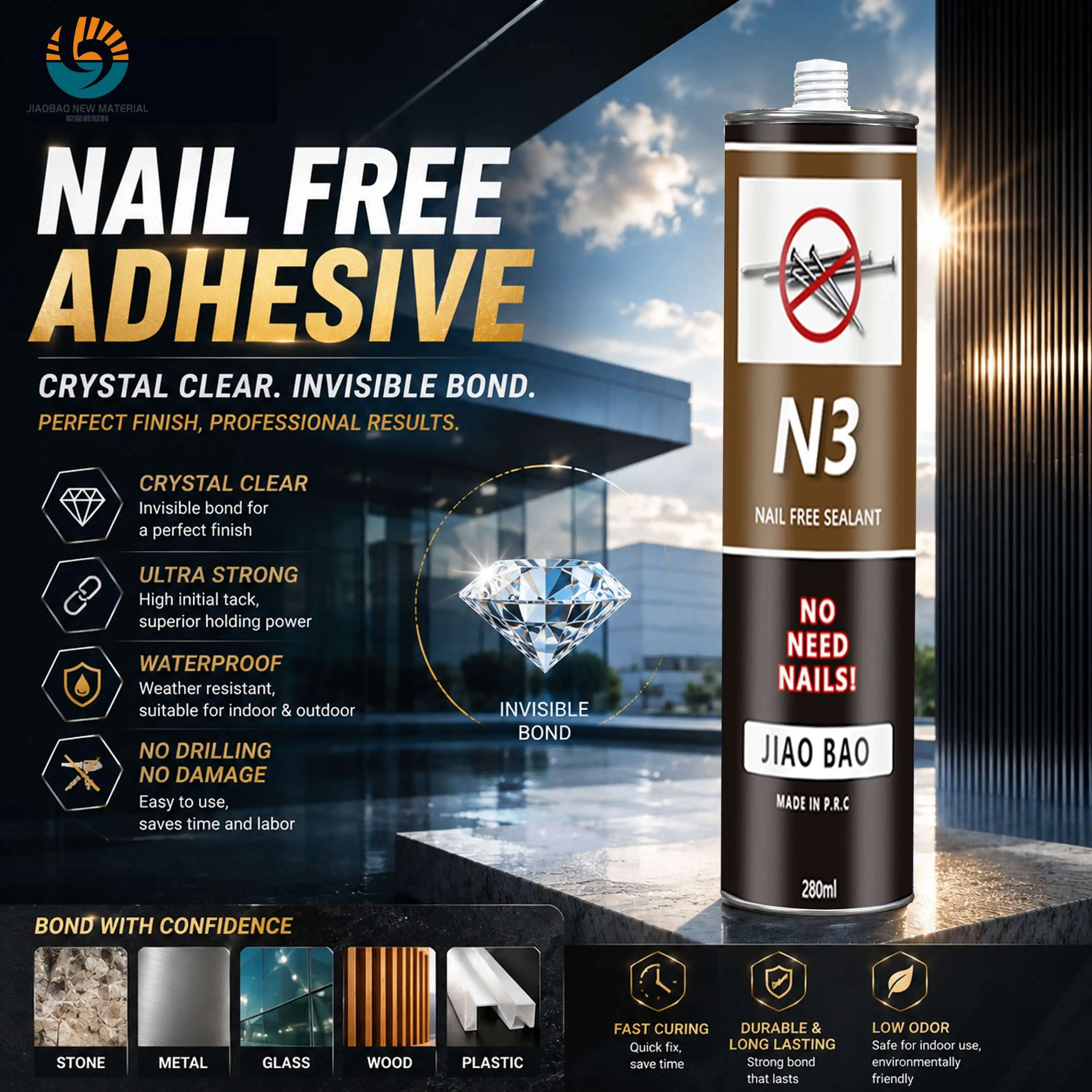
On busy job sites, contractors care most about two things: how strong the bond is with nail free adhesive strong bond and how quickly they can move on to the next task. In real life, these are how well both methods work.
Jiaobao's nail-free glue has a maximum tensile strength of 2.5 N/mm² (ISO 37) and an elastic value of 1,400 N/mm² when stretched to its full length. In real life, this means that it can hold big bathroom mirrors, PVC skirting boards, and artistic molding without the need for wall plugs or pneumatic tools. In some cases, traditional building adhesives can match or beat these raw tensile values. However, because they are rigid, they concentrate loads more, which makes it more likely that the base will crack over time.
It takes about 20 minutes for MS Polymer adhesive to harden, which means that workers can quickly remove pressure from parts that are bonded together. Every 24 hours, 2.5 mm of full depth cure is added. Most plans for finishing the inside can work with this speed. Cyanoacrylate sticks things together almost right away, but it only works on small, tight parts. Two-part epoxies need to be mixed in the right way; if you mess up, the bonds will be weak or not cure at all, which is a real risk on busy job sites.
Traditional mechanical fastening methods like drilling, plugging, and fitting take more time, make more dust, and can damage lines or ducts that are hidden. All of those steps are eliminated by nail free glue. It comes in both 300ml cartridge and 600ml sausage pack sizes and fits standard dispensing guns that most finishing crews already have. The cost of materials per joint is a little higher than with screws, but the time saved on a full internal fit-out job usually makes up for it in just a few uses.
Nail free building solutions have proven to be useful in a number of situations where conventional methods either don't work or make things more difficult than they need to be.
Using nail free adhesive strong bond nail-free glue to install PVC skirting boards, polyurethane trims, and wall panels stops nail heads from leaving marks that can be seen. The bond spreads the load along the whole glue line instead of just at a few fastener points. This method also lowers complaints from residents and speeds up approval from property owners for projects that happen in buildings that are already occupied, where drilling noise and dust are not wanted.
One of the most likely things to go wrong in repair work is mounting heavy mirrors, stainless steel towel bars, or ceramic accessories on top of glazed tiles. If you drill into tiles, the surface might crack, especially if they are expensive imported finishes. Jiaobao's nail-free adhesive doesn't let water or mold grow, so the bond stays strong even in places with a lot of humidity over time. Because it is waterproof, it is a good choice for backsplashes in bathrooms and kitchens.
For outside signs and facade coverings made of aluminum composite panels or stone veneer, you need an adhesive that can stand up to UV light and changes in temperature. Different materials can expand and contract at different rates, but modified silane adhesives can handle this. They take on the stress that would normally break a hard epoxy bond. When used outside, regular glues usually lose their stickiness after two to three seasons of strong sunshine and changes in temperature.
It's not enough to just pick the most common adhesive; you need to match the product's properties to the needs of each project.
It's easy for MS polymer adhesives to stick to metal, glass, ceramic tile, gypsum board, and wood. For lack of a specific primer, they don't stick well to low-surface-energy plastics like polyethylene or polypropylene. Check the types of substrates before choosing a glue. Jiaobao's product data sheet lists substrate combinations that have been tested and shown to stick well.
A regular PVA or contact glue might be enough for steady, light-load jobs on smooth, non-porous surfaces. A flexible glue with high tensile strength and elongation tolerance is best for joints that will move or vibrate, as well as for fixtures that hold weight, vertical installs, and joints that will be exposed to vibration or temperature change. In Jiaobao's recipe, the 300% elongation at break really helps protect against joint failure in changing situations.
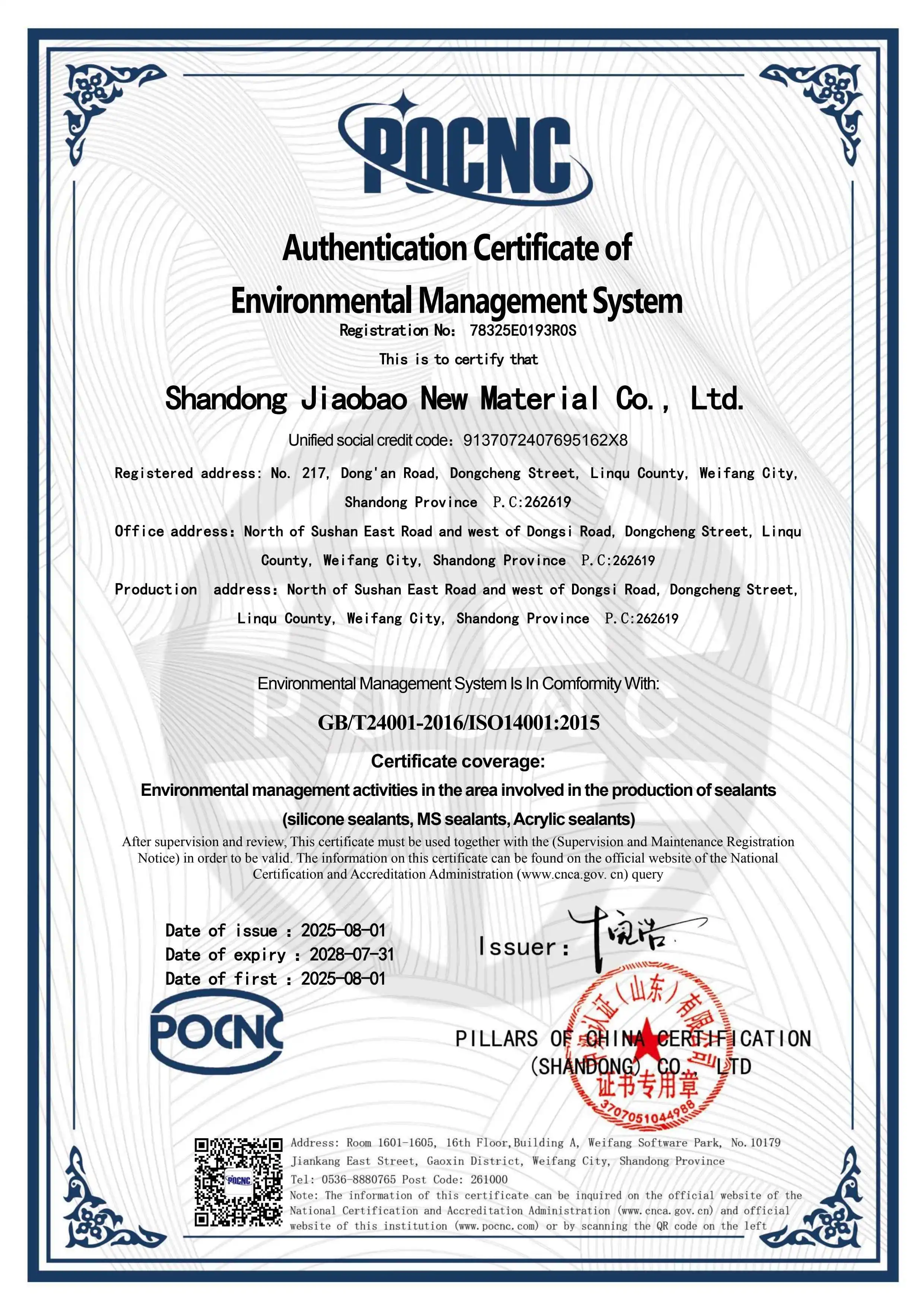
Before placing bulk orders for the nail free adhesive strong bond, construction procurement managers should ask for proof of ISO certification, technical data sheets (TDS), and material safety data sheets (MSDS). According to ISO and CE standards, Jiaobao has a production wait time of one to two weeks and offers OEM/ODM choices for contractors who need colors other than white, black, and gray. Shipping by sea and land is flexible, so goods can get to most places within an acceptable amount of time.
The adhesive bonding industry is slowly moving toward formulations that produce less pollution and work better. North American and European markets are under more and more regulatory pressure to limit goods that contain solvents. This is pushing makers toward water-based and MS Polymer chemistries. Hybrid adhesive-sealant products that fill gaps and link structures together in one cartridge are becoming more popular in both the home and business remodeling markets.
As rules get stricter, procurement teams that stick to certified adhesives that don't use solvents will have fewer problems staying in compliance. Suppliers that have already spent a lot of money on research and development (R&D), like Jiaobao, which has been in this business since 2013, are better able to offer new formulations without stopping supply.
Nail free adhesive strong bond goods and regular glues are used for different things, and there is no clear winner. For finishing the inside, installing things in wet areas, and working on the outside of buildings where drilling isn't possible or would be dangerous, MS Polymer-based adhesives are better in terms of bond flexibility, worker safety, and surface quality.
In small-area, static, or quick-setting jobs, traditional glues are still useful. When contractors and procurement managers know about the technical differences of the nail free adhesive strong bond, like tensile strength, elongation, cure time, and substrate compatibility, they can make decisions based on what the project needs instead of what they usually do.
Yes. Modified silane polymer adhesives resist water penetration after full cure, making them suitable for bathrooms, kitchens, and exterior applications. Jiaobao's formulation maintains adhesion in high-humidity environments and resists mold growth along the bond line.
Surface skin forms in approximately 20 minutes at 23°C and 50% relative humidity. Full depth cure proceeds at 2.5 mm per 24 hours. Cold temperatures below 5°C slow this process; construction temperature should stay between 5°C and 35°C for best results.
For non-structural interior finishing—skirting boards, moldings, mirrors, panels—yes. For load-bearing structural connections governed by building codes, mechanical fasteners remain the standard. Always review the project specification and local building requirements before substituting adhesive for fasteners.
Polyethylene (PE) and polypropylene (PP) plastics resist most adhesives due to low surface energy. Oily or heavily contaminated surfaces also reduce bond quality. Surface cleaning and priming improve results on difficult substrates.
Below 5°C, viscosity increases and cure time slows considerably. This can affect both extrusion ease and initial grab. Store cartridges at room temperature before use in cold-weather job site conditions.
Since 2013, Jiaobao has sold professional-grade building glue. All of its products are ISO and CE certified. We can make nail free adhesive strong bonds in standard and custom colors, in 300ml and 600ml sizes, and for OEM production runs with lead times of one to two weeks. Visit shandongjiaobao.com or email our team at dorashen@cnjiaobao.com to get a sample, a detailed data sheet, or bulk prices. If there are any quality problems during the shelf life, you can get your money back or a new product.
1. Cognard, P. (2006). Handbook of Adhesives and Sealants: General Knowledge, Application of Adhesives, New Curing Techniques. Elsevier.
2. Petrie, E. M. (2007). Handbook of Adhesives and Sealants (2nd ed.). McGraw-Hill.
3. Adams, R. D. (Ed.). (2005). Adhesive Bonding: Science, Technology and Applications. Woodhead Publishing.
4. Dillard, D. A., & Pocius, A. V. (Eds.). (2002). The Mechanics of Adhesion. Elsevier Science.
5. ASTM International. (2014). ASTM D1002: Standard Test Method for Apparent Shear Strength of Single-Lap-Joint Adhesively Bonded Metal Specimens by Tension Loading. ASTM International.
6. ISO. (2005). ISO 37: Rubber, Vulcanized or Thermoplastic — Determination of Tensile Stress-Strain Properties. International Organization for Standardization.

November 16,2023
Enterprise Name
The sealant has very strong adhesion and performs well even on glass and aluminum. After curing, it remains flexible and shows no cracking. Perfect for our facade projects.
November 16,2023
Enterprise Name
Stable quality across batches. Our customers especially like the smooth application and consistent extrusion. It helps reduce installation time on site.
November 16,2023
Enterprise Name
I used it for bathroom sealing. Excellent waterproof performance and no mold issues so far. It's been holding up very well in humid conditions.
November 16,2023
Enterprise Name
The neutral silicone works well on sensitive materials without corrosion. Very suitable for industrial applications requiring stable performance.

