November 16,2023
Enterprise Name
The sealant has very strong adhesion and performs well even on glass and aluminum. After curing, it remains flexible and shows no cracking. Perfect for our facade projects.
Oct 23, 2026
Getting a clean, professional seal on doors and windows is harder than it looks. I've seen production lines lose hours to rework simply because the sealant bead was uneven, the surface wasn't prepped correctly, or the wrong product was chosen. GP door and window silicone sealant addresses these problems directly.
It's a one-component, moisture-curing acetic RTV formula engineered for glass-to-aluminum and glass-to-PVC joints. With a tack-free time of just 15 minutes, tensile elongation exceeding 300%, and a maximum bond strength of 1.5 MPa, it delivers the performance that window and door assembly lines actually need.
A lot of general silicone goods are made to be used in different kinds of building projects. On the other hand, GP window sealant is made to work best with float glass and aluminum profiles that have been anodized or powder-coated. When you're putting together a lot of glass, it's very important that the thixotropic paste doesn't slide around on vertical joints. It keeps its bead shape.
Jiaobao's GP sealant cures with acetic acid, which comes out when it dries. This makes it stick well to smooth surfaces like glass and glazed aluminum. It leaves no sticky residue after 15 minutes. Neutral-cure types don't smell bad and won't hurt metals that are easily damaged, but they work best on stone, mirrors, or copper-framed pieces. To start, you need to make sure that the fix chemistry works well with the base.
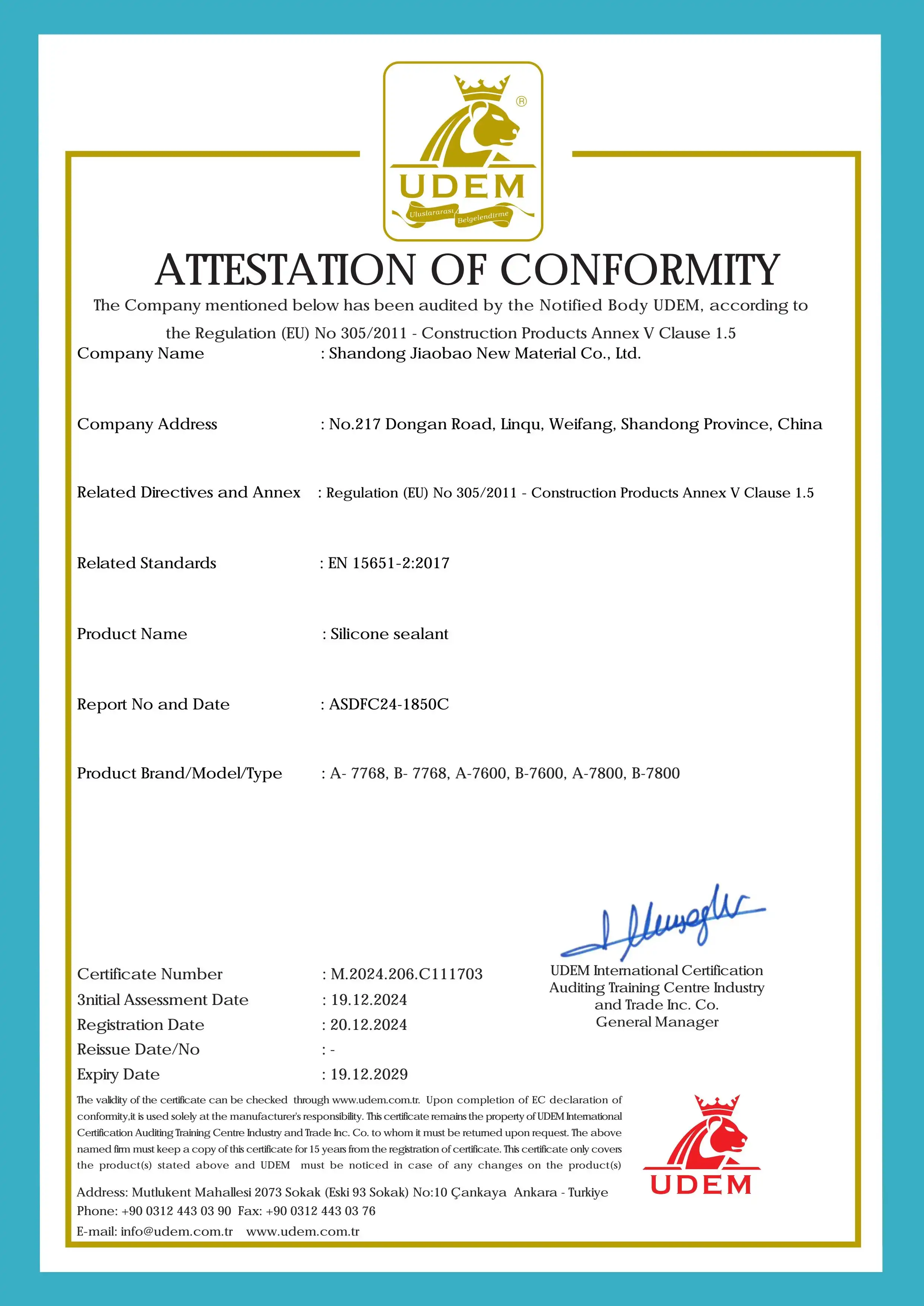
The fact that this item has been approved by both ISO and CE means that it meets the safety standards of countries like the US, Central Asia, and Africa. In line with what ASTM C920 says should happen, the formula works in temperatures from -50°C to +150°C. Verified certification papers make it easier for buying managers to work with more than one market. They also lower the risk of problems with imports and quality checks.
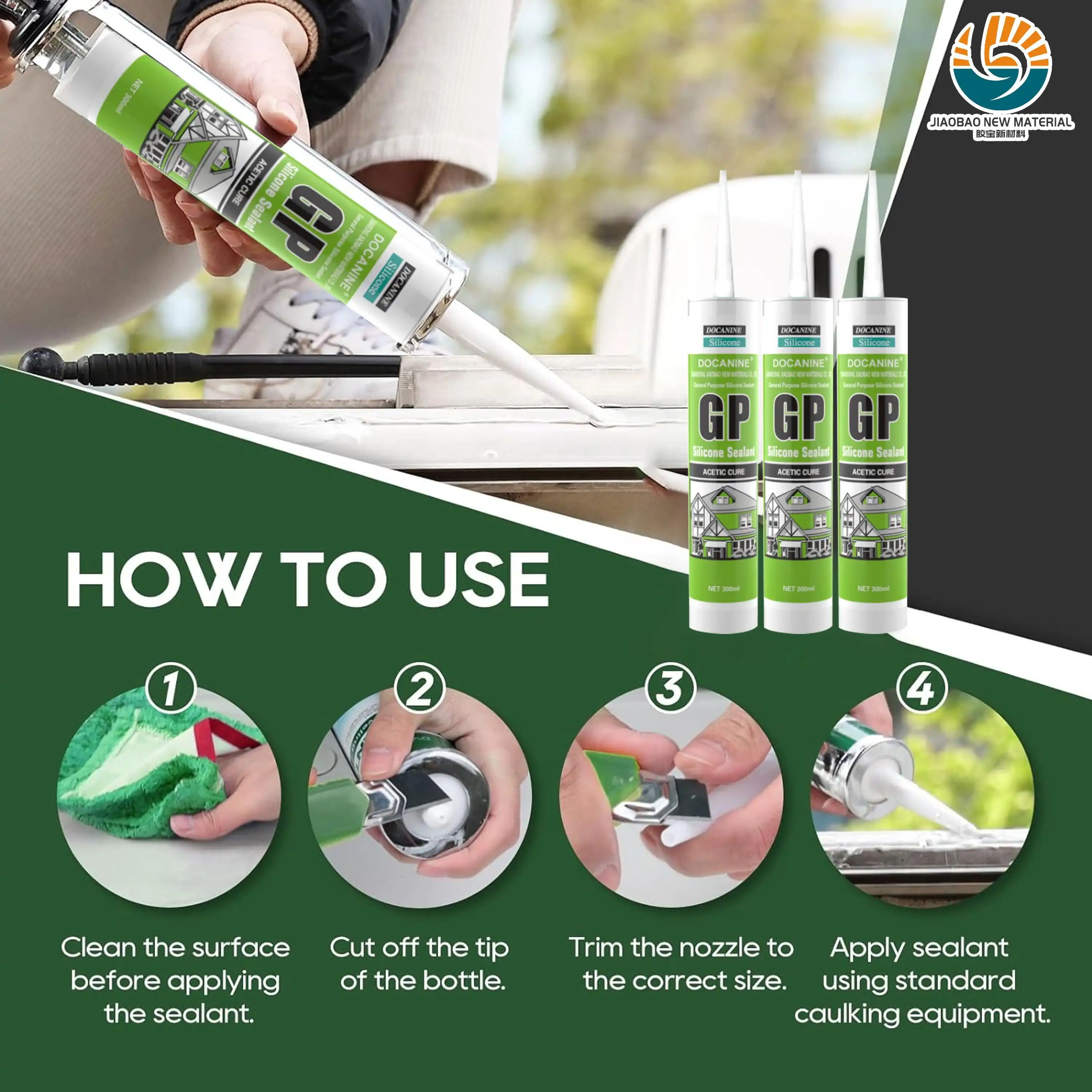
Surface prep is almost always the reason why something doesn't stick. Before you put the sealant on, clean any surface that will touch it with rubbing alcohol or a cleaner that the manufacturer suggests. This will get rid of any oils, dust, or processing leftovers. Let surfaces dry all the way through. If the base is still wet, the bond will break. Wipe and wait for five minutes is enough for aluminum profiles that are fresh from being put together.
Put the 300ml or 600ml cartridge of GP door and window silicone sealant in a regular caulking gun. Make a 45-degree cut in the tip to get the right joint width. Keep the angle of the gun steady and use one smooth stroke at a steady speed to put on the sealant. An even, smooth bead keeps air from getting stuck. Just two minutes after putting on the sealant, you should use a damp finger or a special sealant finishing tool to smooth out the bead and make the profile concave and flush.
There is a skin-over time of about 15 minutes at 23°C and 50% relative humidity. It takes 24 hours for the full cure depth to reach 2–3 mm. Silicone that cures with moisture needs water vapor in the air to do its job, so cooler temperatures or lower humidity slow the rate of cure. It takes longer for things to fix when you put them together in the winter when it's below 10°C. When the area is cold or wet, the product won't stick, no matter how well you try to use it.
Two things go wrong on factory lines all the time. If you see small bubbles in the bead, it means that air got stuck in the cartridge while it was being loaded. Before you start, let out some air. Second, joints that get smaller after drying are usually a sign of a bad or old product. This is because the plasticizer evaporates, leaving the joint smaller. Because Jiaobao's GP glue shrinks by less than 5%, the form of the joint doesn't change over time.
Polyurethane sealants offer good paintability and flexibility, but they degrade under prolonged UV exposure and require careful moisture management during application. Silicone-based window and door sealants maintain their elastic properties across temperature extremes without chalking or cracking. For exterior glazing joints that face direct sunlight, silicone is the more durable long-term choice.
On a door and window assembly line, acid-cure silicone is preferred for its faster skinning time, which keeps the production rhythm moving. The 15-minute tack-free window allows assembled units to be handled, stacked, or moved to the next station without disturbing the seal. Neutral-cure products take longer to skin and cost more, so they are best reserved for specialty substrate requirements rather than standard aluminum-glass glazing.
Growing regulatory pressure in the US and European markets is pushing manufacturers toward low-VOC sealant formulations. Jiaobao's product line includes formulations developed to meet evolving environmental standards. When sourcing GP door and window silicone sealant, requesting the material safety data sheet (MSDS) and VOC content documentation helps align procurement choices with corporate environmental policies.
In the business-to-business market, fake seals that aren't thick enough are a real risk. If you want to find a company that makes GP door and window silicone sealant, make sure they have ISO certification papers, information on how much they can make, and test results from a third party that show the product's Shore hardness, tensile strength, and elongation. Jiaobao was founded in 2013 and has been making things for over 13 years. Quality control is stable, and they keep records of certifications that can be looked at.
You can get Jiaobao's GP sealant in either 300ml cartridges or 600ml sausage packs. This way, procurement teams can pick the best packing style for the guns they already have. The production lead time is one to two weeks, so purchases can be planned just in time without having to keep too much on hand as a safety net. You can get deals if you buy a lot, and you can ask for samples to make sure the quality is good before you buy the whole thing.
It can be shipped by land or water, and GP door and window silicone sealant is supplied to most door and window manufacturing sites. The cartridges will stay in good shape while they're in transit thanks to the packing. Within a year, if there is a problem with the quality, Jiaobao will either refund or replace the item. This makes it safer for factory buyers. There is technical support available to help with questions about the application, the compatibility of the materials, and issues with the production line.
People who work on a production floor should wear rubber gloves and safety glasses when spreading acetic silicone sealant so that the uncured material doesn't touch their skin. When something is healing, acetic acid vapor is released. This vapor smells like vinegar and can be irritating to the eyes and lungs in large amounts. You should be careful when using this in small places because it's not dangerous at normal amounts.
It is necessary for the treatment station to have enough wind, not just nice to have. In places where things need to be put together, automatic ventilation should keep the flow of fresh air going during shifts when there is a lot of work to be done. Things that haven't been used should be kept in a cool, dry place that is below 27°C and away from heat sources and direct sunlight. By breaking down cross-linkers faster, high temperatures shorten the shelf life of goods. This can cause curing to stop before it's fully done in the field.
After it has dried, silicone is chemically inert and is generally thought of as non-hazardous trash. As long as the rules in your area say so, you should throw away uncured sealer and empty cartridges. The EPA normally has rules about this kind of thing in the US because it has poisons in it. Companies can follow OSHA rules and avoid being sued during environmental audits by keeping an up-to-date MSDS on file and teaching workers the right way to get rid of waste.
Putting window glass sealer on right is a skill, not just a matter of picking the right material. To get clean results, you need to make sure the surface is ready, always apply the product in the same way, and use a product that always does its job. GP door and window silicone sealant from Jiaobao can fully elongate up to 300% and deliver bond strength up to 1.5 MPa. It also has a tack-free time of 15 minutes. These specs have been tested in the real world. The materials that plant buying managers purchase will be of good quality because it has ISO and CE certifications, a shelf life of 12 months, and a responsive supply chain.
When the temperature is 23°C and the humidity is 50%, the concrete needs to grow about 2–3 mm every 24 hours in order to fully cure. A 6mm joint gets all the way to the bottom in 48 to 72 hours. If it gets cooler or less humid, this time frame will be longer. These things are important to remember when making your output schedule, especially in the winter.
It can still dry even if it's cold outside, as long as the base is above 5°C, clean, and dry. Since the area doesn't have to be wet, the process works better when it's humid. You shouldn't put it on surfaces that are frost-covered, condensation-covered, or wet from snow or rain, because the glue won't stick properly.
Cut the hardened bead along both edges with a tool knife that is very sharp. After that, peel off the big part. Use a plastic scraper instead of a metal one to keep aluminum profiles from getting scuffed. To get rid of any thin films that are still there, you can use isopropyl alcohol or a silicone cleaner. Do not use rough abrasives on surfaces that have been polished or anodized.
If you powder coat or anodize aluminum, it sticks well to the acid-cure mix. The extra acetic acid can damage or remove silver from copper, brass, raw aluminum, or mirrors, so these things shouldn't be used. This kind of surface should be filled with a neutral-cure silicone.
If you make windows in China or any other country, Jiaobao has offered GP door and window silicone sealant since 2013. You can get normal cartridges, big sausage packs, or goods with your brand's name on them from us. There aren't many wait times, and the quality is always great. To get examples, prices, or scientific data sheets, email us at dorashen@cnjiaobao.com or visit shandongjiaobao.com.

1. Petrie, E. M. Handbook of Adhesives and Sealants. McGraw-Hill, 2007.
2. Wolf, A. T. "Durability of Silicone Sealants in the Building Envelope." Construction and Building Materials, 2010.
3. American Society for Testing and Materials. ASTM C920: Standard Specification for Elastomeric Joint Sealants. ASTM International, 2022.
4. International Organization for Standardization. ISO 11600: Building Construction — Jointing Products — Classification and Requirements for Sealants. ISO, 2018.
5. Skeist, I. Handbook of Adhesives, 3rd Edition. Van Nostrand Reinhold, 1990.
6. Fay, R. M., and Wolosky, J. "Field Performance of Silicone Sealants in Commercial Glazing Applications." Journal of ASTM International, 2006.
November 16,2023
Enterprise Name
The sealant has very strong adhesion and performs well even on glass and aluminum. After curing, it remains flexible and shows no cracking. Perfect for our facade projects.
November 16,2023
Enterprise Name
Stable quality across batches. Our customers especially like the smooth application and consistent extrusion. It helps reduce installation time on site.
November 16,2023
Enterprise Name
I used it for bathroom sealing. Excellent waterproof performance and no mold issues so far. It's been holding up very well in humid conditions.
November 16,2023
Enterprise Name
The neutral silicone works well on sensitive materials without corrosion. Very suitable for industrial applications requiring stable performance.