November 16,2023
Enterprise Name
The sealant has very strong adhesion and performs well even on glass and aluminum. After curing, it remains flexible and shows no cracking. Perfect for our facade projects.
Oct 16, 2026
Indeed, the evidence is apparent. Air infiltration and thermal bridging at joint interfaces are the greatest energy loss locations in glass facade systems. NP silicone sealant for curtain walls handles both. Neutral-cure silicone seals dynamic joints with a flexible, airtight elastomeric seal, preventing conditioned air from leaving and outside heat or cold from entering. Joint sealing reliably reduces HVAC load in high-rise facade projects. Curtain wall engineers and procurement directors assessing façade performance should pay close attention to this sealant type.
Before choosing a sealant for a curtain wall project, it's helpful to know what makes neutral-cure silicone different from other choices.
NP silicone cures neutrally and doesn't contaminate. As they dry, neutral-cure silicones release oxime or alcohol, whereas acetoxy-cure silicones release acetic acid. They are safe for natural stone, anodised metal, and coated glass. This distinction is crucial for high-end facades with irreversible stains.
Curtain wall joints leak energy. These gaps might be between glass, metal, or stone. A facade joint sealant that is appropriately specified and can move at least 25% will fill and cover the gaps even if the frames expand and contract with temperature. ASHRAE research show that air leaks in building shells waste 25–40% of HVAC energy in corporate buildings.
Extended UV exposure destroys polysulphide sealants. After 10–15 a while, polyurethane mixtures harden and break moving parts. Neutral-cure silicone is pliable from -5°C to +150°C and doesn't chalk in UV or ozone. Technically, silicone weatherseal is best for 50-year walls.
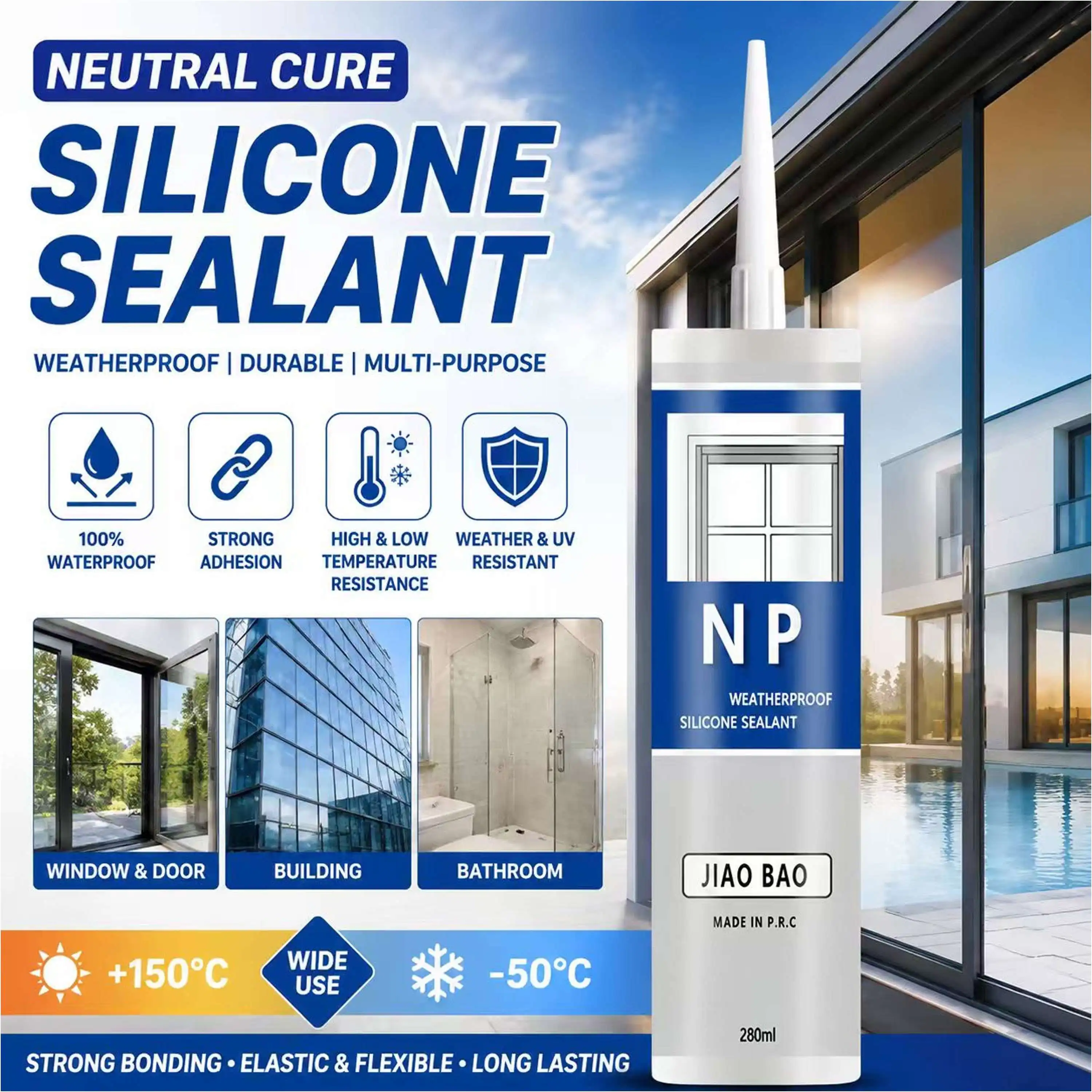
Performance claims must be backed by verifiable data. Here is how a qualified neutral-cure silicone stands up to scrutiny.
Quality silicone sealants such as NP silicone sealant for curtain wall maintain about 90% of their initial elongation after break after 500 hours of UV exposure in ASTM C793 accelerated weathering testing. Jiaobao's NP silicone solution keeps flexible and Shore A 30 hard after complete cure, safeguarding the outer shell seal integrity throughout seasonal temperature cycling.
This product fulfils Chinese environmental requirements and LEED v4 low-emitting materials credit levels with a VOC concentration below 80 g/L (GB 13477 testing). The formulation meets import and regulatory criteria of key worldwide markets including the region known as the Middle East and SE Asia thanks to CE and ISO certification.
Standard silicones leak plasticiser oils into permeable stone surfaces on marble or granite curtain walls, permanently colouring seams. ASTM C1248 neutral-cure formulations demonstrate minimal oil migration, a key pollution resistance standard difference. Primer-less adherence to non-porous surfaces speeds up glass and aluminium high-rise facade installations and reduces delamination risk.
Choosing the right product is only part of the equation. Correct installation determines whether the energy performance benefit is actually realized on the building.
Here are the core parameters engineering teams should verify before specifying any curtain wall joint sealant:
These parameters together define whether a sealant will perform over the design life of the facade, not just during initial installation.
Before application of NP silicone sealant for curtain wall, the substrate must be dry, clean, and free of dust, oil, and previous sealant. Cleaning glass and aluminium with isopropyl alcohol is normal. The engineering standard joint width - depth ratio is 2:1, therefore sealant bead shape should be constant. Construction schedules should allow 7–14 days for full cure at 25°C and 50% humidity before exposing connections to water or mechanical strain.
Procurement managers looking for a neutral-cure silicone sealant provider can use quality control paperwork such extrusion rate tests ( ASTM 1183) and sag testing (ASTM a C639) for horizontal joint applications to ensure batch consistency. Jiaobao's 300ml cartridge and six hundred millilitre sausage pack provide versatility for small speciality applications and massive facade jobs. Standard building purchase cycles are supported by 1–2 week lead times and OEM/ODM manufacturing for specific labelling or formulation tweaks.
European or American sealant names have traditionally been used on high-end curtain wall projects in China and foreign markets, even though they cost 30–50% more than alternatives made in China. Jiaobao's neutral-cure silicone works just as well and costs less than other brands. It is ISO and CE certified and meets GB 13477 standards. This difference in price is big for engineering firms that have to budget between 100 and 400 RMB a year for sealants.
LEED and BREEAM assessors check the building envelope for material emissions and how well it lets air in and out. When installed correctly, a low-VOC neutral-cure silicone weatherseal gives you points in the categories for Materials and Indoor Environmental Quality. When you specify a CE-marked and ISO-certified product, you also meet the paperwork needs that auditors ask for during certification checks.
Curtain wall projects are done in stages, and NP silicone sealant for curtain wall is put on during more than one installation cycle. Changes from batch to batch in color, texture, or fix rate show up as differences and could lead to performance gaps. Jiaobao's 13-year production history and well-established quality control system ensure consistent results in white, black, gray, and custom color choices. This is an important practical detail for building workers who are in charge of signing off on the look and performance of the facade.
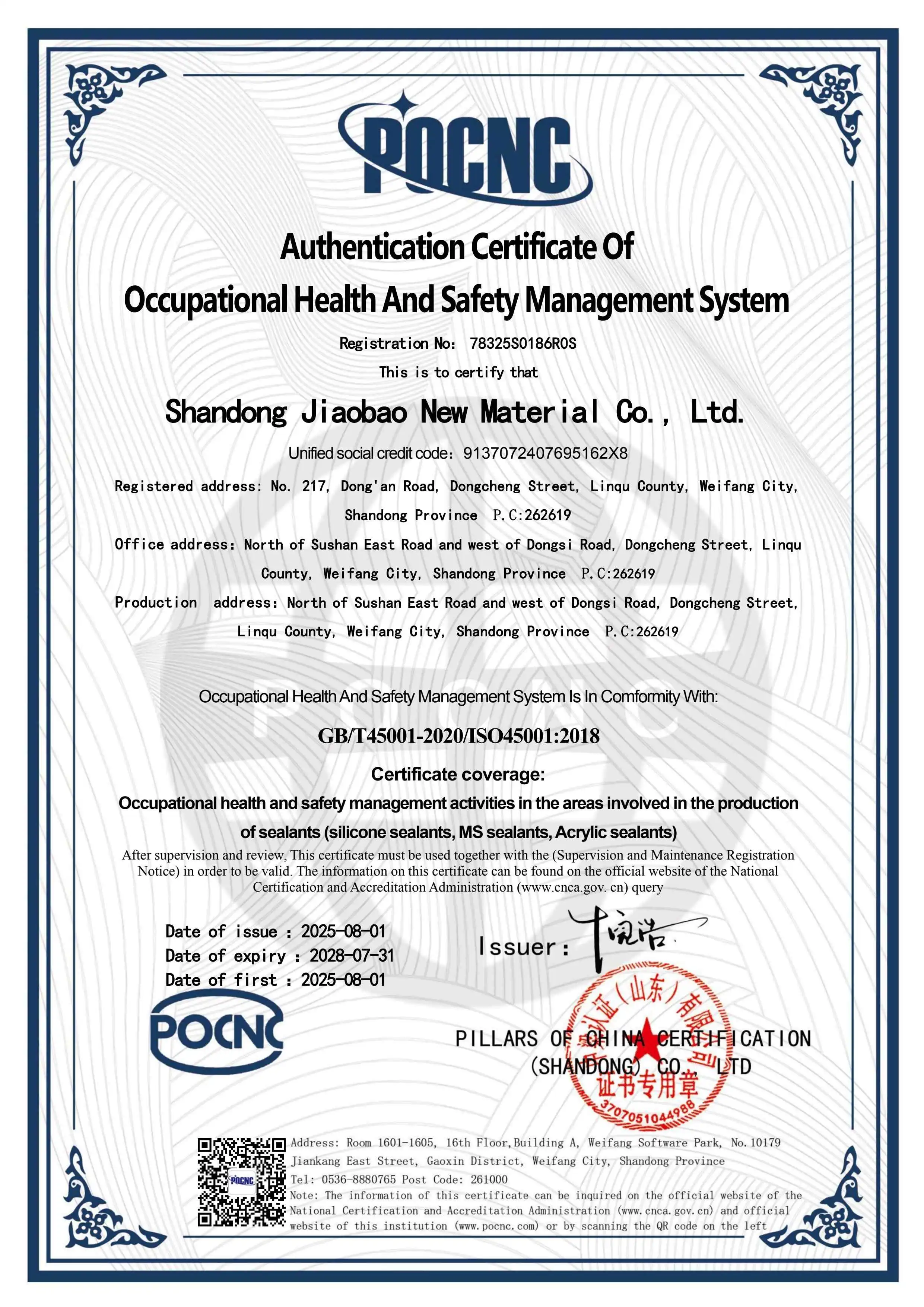
In China (GB 50189), the US (ASHRAE 90.1), and Europe (EN 16798), building energy codes are continuing to make envelope performance requirements stricter. Five years ago, air loss levels that were fine no longer meet today's standards for compliance. It's no longer an option to add sealants that can move more easily and last longer; these are now required by specifications.
In the next version of curtain wall sealants, heat insulation and weatherproofing will be built into a single layer of the product. In the industry, people are working on hybrid formulations of silicone and aerogel and the integration of phase-change materials. If procurement teams build ties with suppliers now, they will be able to get these next-cycle goods sooner.
A partner is not the same as a commodity supplier if the sealant vendor can offer technical documentation, application training, GB 16776 test reports on request, and quality guaranties after the sale. When engineering companies put money into skilled source qualification methods early on, they lower project risk and make it easier to buy things for all of their projects.
NP silicone sealant for curtain wall feeds curtain wall systems, prevents air and moisture infiltration and makes buildings more power efficient than common sealants over time. This product meets the technical criteria for high-rise and specialist exterior projects. Shore A 30 rigidity, 25% movement capability, UV and ozone protection from -50°C to +150°C, VOC level less than 80 g/L. The issue about licensing that held up the purchase approval has been resolved with verified conformity with GB 13477, ISO and CE standards. For the engineering and procurement specialists involved in developing the next the facade sealant standard, the technical rationale is clear.
Yes. Neutral-cure silicone is specifically formulated without non-reactive plasticizers, which means it produces zero oil migration into porous stone surfaces. This is confirmed through ASTM C1248 pollution resistance testing, which shows no staining on granite or marble substrates — a performance attribute that standard acetoxy-cure silicones cannot match.
ASHRAE research indicates that air leakage through the building envelope accounts for 25–40% of commercial HVAC energy consumption. Sealing curtain wall perimeter and panel joints with a properly specified elastomeric sealant directly reduces that infiltration. Exact savings depend on climate zone, facade area, and prior sealing condition.
Jiaobao's NP silicone maintains elasticity and adhesion across a -50°C to +150°C temperature range and resists UV, ozone, and moisture degradation. With a Shore A 30 hardness maintained post-cure and no chalking under accelerated weathering tests, the product is formulated to support facade service lives consistent with 25–50 year design standards.
The product is available in 300ml cartridges and 600ml sausage packs, in white, black, grey, or custom colors. Both formats are suitable for standard caulking guns used on curtain wall installation sites.
Yes. With VOC content below 80 g/L and CE and ISO certifications, the product aligns with the low-emitting materials requirements evaluated under LEED v4 Indoor Environmental Quality credits.
Since 2013, Jiaobao has been sending NP silicone sealant for curtain wall projects in both domestic and international markets. Each batch is backed by ISO and CE certification. Our team gets back to you quickly whether you need technical information, a sample of the material for GB 13477 testing, or a bulk quote as a qualified supplier of curtain wall silicone sealant. You can start evaluating your materials right away by emailing us at dorashen@cnjiaobao.com or going to shandongjiaobao.com.
1. ASHRAE. ASHRAE Handbook — Fundamentals: Air Leakage in Building Envelopes. American Society of Heating, Refrigerating and Air-Conditioning Engineers, 2021.
2. ASTM International. ASTM C920: Standard Specification for Elastomeric Joint Sealants. ASTM International, 2022.
3. Wolf, A. T. Durability of Building Sealants. RILEM Publications, 1999.
4. U.S. Department of Energy. Building Envelope Research: Thermal Performance and Air Leakage. Office of Scientific and Technical Information, 2020.
5. European Committee for Standardization. EN ISO 11600: Building Construction — Jointing Products — Classification and Requirements for Sealants. CEN, 2011.
6. China Academy of Building Research. GB 13477: Test Methods for Building Sealants. Standards Press of China, 2017.
November 16,2023
Enterprise Name
The sealant has very strong adhesion and performs well even on glass and aluminum. After curing, it remains flexible and shows no cracking. Perfect for our facade projects.
November 16,2023
Enterprise Name
Stable quality across batches. Our customers especially like the smooth application and consistent extrusion. It helps reduce installation time on site.
November 16,2023
Enterprise Name
I used it for bathroom sealing. Excellent waterproof performance and no mold issues so far. It's been holding up very well in humid conditions.
November 16,2023
Enterprise Name
The neutral silicone works well on sensitive materials without corrosion. Very suitable for industrial applications requiring stable performance.