November 16,2023
Enterprise Name
The sealant has very strong adhesion and performs well even on glass and aluminum. After curing, it remains flexible and shows no cracking. Perfect for our facade projects.
Oct 26, 2026
When it comes to sealing fire-rated assemblies in curtain wall construction, not every sealant performs equally. A fireproof neutral silicone sealant is the professional-grade choice for engineers who need reliable fire containment, smoke blocking, and structural protection in a single product. Unlike acetic-cure alternatives, neutral silicone sealants release non-corrosive byproducts during curing, making them safe for aluminum frames, galvanized steel, and coated glass. In this guide, I'll walk you through what separates high-performance fire-resistant sealants from standard options and how to choose the right one for your project.
Before you choose one for a curtain wall job, it helps to know what these seals do scientifically and why the way they're made is important.
The flame-retardant ingredients in these sealants are usually aluminum trihydrate or zinc borate. When they come in contact with very high temperatures, these ingredients carbonize in a controlled way. It doesn't melt or drip when the glue is dry. It makes a layer of char that looks like clay and holds the joint together instead. Free tests in an oven that follow ASTM E814 confirm that the ratings for fire resistance from 1 to 4 hours at temperatures over 1,000°C are accurate.
Acetoxy silicones give off acetic acid when they cure. This acid eats away at metals and changes the color of objects that have been covered. If you use oxime or alkoxy chemistry for a neutral cure, you will get chemicals that are not corrosive. This is why they are the only safe option for curtain wall systems that use aluminum extrusions, coated glass, and copper pipes, where acid residue can damage the building over time.
It is possible to measure the same set of qualities in all approved fire-resistant silicone sealants. Service temperatures are usually between -50°C and +150°C. It can stretch more than 400% before it breaks, and the joint can move by ±25% to ±50%. As per the ASTM C920 Class 25/50 standards, these numbers directly mean seals that don't come apart when exposed to changes in temperature, wind loads, or earthquakes.
People who work in procurement have to pick between a number of different chemicals that hold things together. When you know the trade-offs, you don't make mistakes that cost a lot of money.
Silicone that is acetic is easy to find and doesn't cost much. However, the acid it makes over time breaks down metal, which is a big problem for curtain walls made of steel. Fireproof neutral silicone sealant belongs to neutral-cure types, and this corrosion issue doesn't happen at all. When tried on anodized metal, neutral-cure sealants hold their bond 30–40% better over time than acetic sealants that go through the same weathering processes.
Intumescent acrylic sealants get very big when heated. This makes them good for sealing around pipes that could catch fire. However, they get wet, break down in UV light, and don't stretch back to their original shape like rubber does. If you have parts of your curtain wall outside that get hot and cold every day, neutral silicone fire protectors will last longer and keep the seal better in all kinds of weather.
If you leave polyurethane seals out in the sun or heat for a long time, they will break down a lot. This is especially true if the surface is porous. In a factory setting, metal covering that is exposed to temperatures above 100°C on warm days stops being flexible, and the ties start to break. No matter what temperature it is used at, neutral silicone will still be stretchy. This makes it a better choice for walls that need a lot of work.
Once you know a lot about the chemistry, you can decide what to buy based on performance data, certifications that can be checked, and how reliable the supply is.
Any fire sealant used on a business curtain wall needs to have test reports from a third party that can be shown to be true. You should check that the sealant meets the ASTM C920 standards for sealants and the EN 1366-4 standards for projects in Europe. GB/T 24267-2009 tells builders how to make sure that safety sealants work well in China. Products that only show test results from their own lab and not from another lab should be thrown away.
So, here are the most important performance factors you should look at when judging a product:
Based on these measures, a sealer will either pass a fire test or lose its strength over time. It is important to always get the full technical data sheet from the maker before you decide on a standard.
Putting in the right product is just as important as putting it in the right way. When it comes to fire safety, the right sealant won't work as well if you use it in the wrong way.
Everything that will be used as a base must be clean, dry, and free of any oils, dust, or sealant. This includes glass, metal, stainless steel, and concrete. If the surface is clean, isopropyl alcohol is a good solvent wipe. Let it dry completely before putting on the sealant. When putting something down on a porous surface like concrete, you should use a primer that works with that surface and test how well it sticks by pulling on it.
If you don't want air holes, use a continuous bead of sealer and make sure the joint is at least 1:2 in width to depth. For joints that can withstand fire, make sure that the depth of the sealant matches the manufacturer's tried and true design. This should be between 12 and 25 mm for a 2-hour grade. Work the surface while the sealant is still open to make the bead stronger and make sure it gets all the way to the substrate. Do not put it on in full sunlight when the temperature outside is more than 40°C.
Before you touch the item on the job site, read the Safety Data Sheet. Oxime-cure seals give off small amounts of volatile organic substances while they cure, so make sure there is enough air flow. It usually takes 7 days for the sealant to fully dry, after which it is no longer working and doesn't pose any health risks. Keep records of applications that include the batch numbers, times of applications, and the conditions of the surroundings. Fire inspectors often ask for this information when they give their approval to a building.
For industrial facility builders and steel-structure contractors procuring at scale, supply chain reliability is as important as product specification.
Purchasing directly from manufacturers rather than multi-tier distributors reduces cost per unit and gives access to technical documentation faster for fireproof neutral silicone sealant. For curtain wall projects covering 10,000 m² or more, bulk orders in 300 ml cartridges or 600 ml sausage packs can reduce per-unit costs by 15–25% compared to spot purchases. Always request a formal quotation against a documented bill of materials to lock in pricing before tender submission.
Standard production lead times from reputable manufacturers run 1–2 weeks for in-stock formulations. For custom colors or specific compliance documentation, allow 3–4 weeks. Sea freight from China to Southeast Asian industrial zones typically adds 7–14 days. Building this into project schedules prevents the common problem of sealant arriving after structural steel is already in place, forcing application in suboptimal weather conditions.
Request batch-level quality certificates with every shipment and retain samples for independent verification if disputes arise. Confirm shelf life on delivery — a 12-month shelf life means product received more than 10 months before planned use requires careful scheduling. For first-time suppliers, a trial order covering one building section before full project commitment is standard procurement practice in the steel-structure industry.
To find the best fire-resistant sealant for steel-structure and curtain wall projects, you need to weigh the approved fire performance, the compatibility of the base, and the dependability of the supply chain. Acetic, polyurethane, and intumescent silicone formulas are never better than neutral-cure silicone formulas when it comes to long-term adhesion, resistance to corrosion, and temperature stability.
They pass tests from a third-party lab that show fireproof neutral silicone sealant meets ASTM, UL, EN, and GB standards. This gives project owners and engineers the trust they need to pass fire checks and keep people safe in the building. To be a good buying manager, you need to take the time to assess providers on both technical and business grounds.
Not at all. It's meant to keep fire and smoke out for a certain amount of time, usually one to four hours, so people can get out and get help. No, it doesn't put out the fire permanently. Instead, it keeps the building's joints strong even when they are very hot.
That's how long it takes for the area to dry at 25°C and 50% relative humidity. Every 24 hours, the full cure depth goes forward by about 3 mm. Sealant doesn't do its job well in a fire until it has fully dried across the whole joint. Do not believe that a new bead will keep you safe from fire.
Most of the time, good neutral silicone sealants don't need to be primed before they stick to clean, non-porous metals like aluminum or galvanized steel. If the surface has been chemically treated or powder-coated, a suitability test and primer coating should be done to make sure the bond can stand up to both fire and mechanical stress.
Paint doesn't stick well to hardened silicone rubber, and it will crack when the joint moves. If you need to match the color, you can buy the sealer from the maker in a specific color, such as white, black, gray, or a certain shade.
Fillers that haven't been used yet should be kept dry and below 27°C. If you keep it right, it will last for 12 months. It could cross-link too soon if you put something above this temperature. This could make it cure slowly or not at all, which lowers the fire rating.
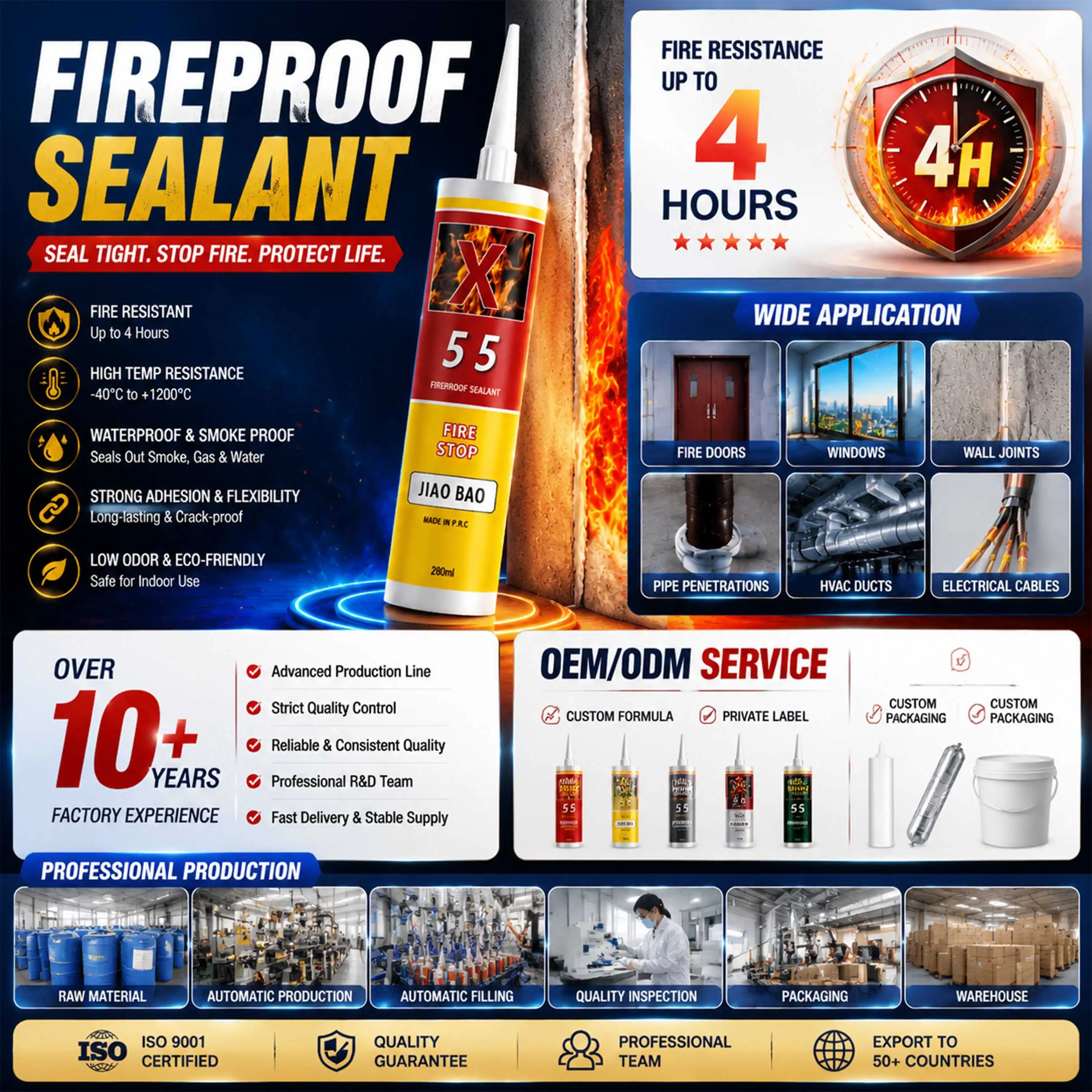
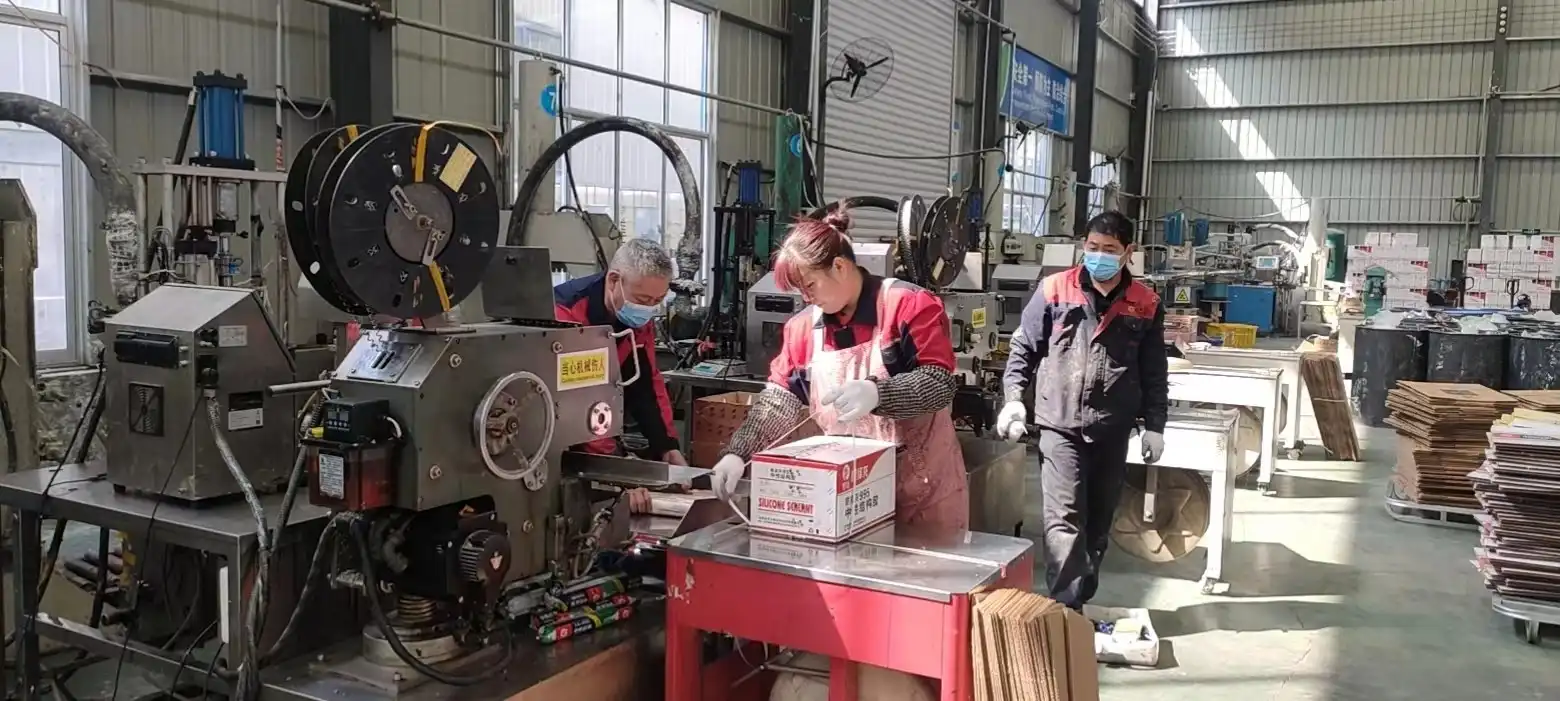
Since more than 13 years ago, Jiaobao has offered fire-resistant silicone seals to builders of steel structures and factories. Our one-part RTV neutral silicone fire caulk is approved by ISO and works with GB/T 24267-2009 rules. It comes in 300 ml cylinders and 600 ml sausage packs that can be white, black, gray, or any color you want. Since we make our own fireproof neutral silicone sealant, we can offer lead times of one to two weeks, OEM services, and sample orders so you can try us out before you buy in bulk. To find out more about the project and get a quote, email our tech team at dorashen@cnjiaobao.com or visit shandongjiaobao.com.

1. ASTM International. ASTM E814: Standard Test Method for Fire Tests of Penetration Firestop Systems. ASTM International, 2022.
2. ASTM International. ASTM C920: Standard Specification for Elastomeric Joint Sealants. ASTM International, 2022.
3. Underwriters Laboratories. UL 1479: Fire Tests of Through-Penetration Firestops. UL Standards, 2020.
4. European Committee for Standardization. EN 1366-4: Fire Resistance Tests for Service Installations — Linear Joint Seals. CEN, 2021.
5. National Institute of Standards and Technology. Fire Resistance of Building Assemblies and Materials. NIST Technical Note 1681, 2010.
6. Sika AG. Silicone Sealant Technology and Application in Fire-Rated Curtain Wall Systems. Sika Technical Publication, 2019.
November 16,2023
Enterprise Name
The sealant has very strong adhesion and performs well even on glass and aluminum. After curing, it remains flexible and shows no cracking. Perfect for our facade projects.
November 16,2023
Enterprise Name
Stable quality across batches. Our customers especially like the smooth application and consistent extrusion. It helps reduce installation time on site.
November 16,2023
Enterprise Name
I used it for bathroom sealing. Excellent waterproof performance and no mold issues so far. It's been holding up very well in humid conditions.
November 16,2023
Enterprise Name
The neutral silicone works well on sensitive materials without corrosion. Very suitable for industrial applications requiring stable performance.