November 16,2023
Enterprise Name
The sealant has very strong adhesion and performs well even on glass and aluminum. After curing, it remains flexible and shows no cracking. Perfect for our facade projects.
Oct 21, 2026
When procurement teams face the choice between acrylic sealant construction grade and silicone sealant, the right answer depends on where and how you plan to use it. Acrylic construction sealants, like those produced by Shandong Jiaobao New Material Co., Ltd., excel in interior joint sealing, door and window perimeter applications, and paintable surfaces — delivering fast skin-dry times of just 0.5 hours and zero sag on vertical joints. Silicone sealants, by contrast, lead in exterior weatherproofing and high-movement joints. Knowing this distinction saves time, budget, and rework on large-scale projects.
Building acrylic sealants are made from a plasto-elastic, water-based material that is made up of artificial fillers and high-solids acrylic resin (usually 80–85% resin solids). This mix keeps the sealant from shrinking too much when it dries, and it doesn't need a primer to stick to concrete, plasterboard, or brick that are porous. Building-grade acrylics are made to meet standards like ASTM C834, which means they can be used for internal joints in structures. This isn't the same as acrylics that can be used for many things for do-it-yourself projects.
When silicone seals get wet, they start a cross-linking process that fixes them and makes a rubbery, very stretchy bead. When they break, they usually stretch more than 400%. This makes them perfect for exterior wall joints, curtain walls, and glazing where temperature changes cause a lot of sliding. But silicone surfaces can't be painted over, so they can't be used to finish the inside of a house that needs a smooth coat finish.
This is because the chemistry behind each item makes it work better or worse. There are no solvents in acrylic seals, and they don't give off many volatile organic compounds (VOCs) when they dry. This makes them good for use inside and for green building standards like LEED. Even though the air is damp, silicone seals dry. However, some types may give off acetic acid while they dry, which can be embarrassing in small spaces. Purchasing managers can find the right goods for the job faster if they know the basics of these subjects.
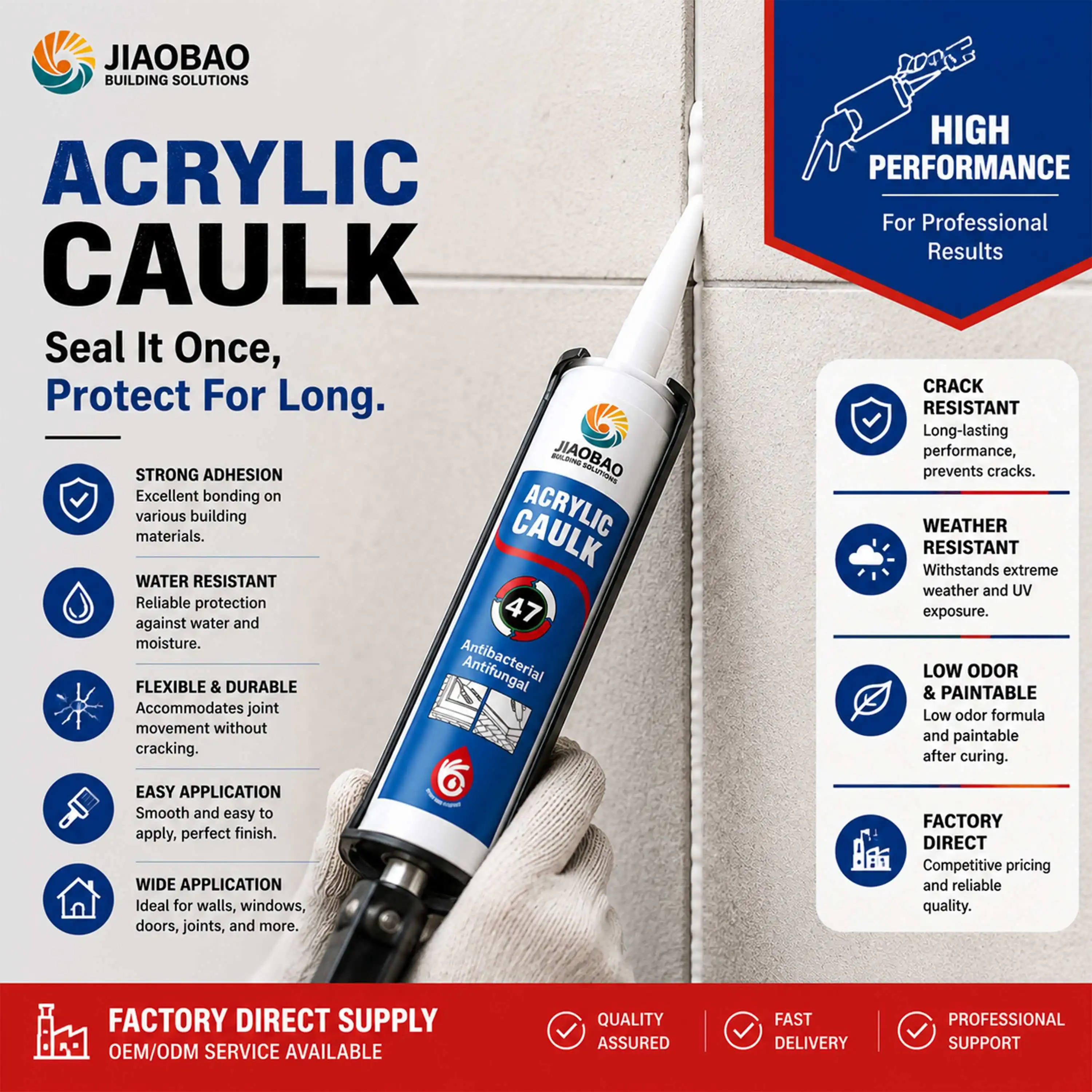
Around -60°C to +200°C is the temperature range where silicone seals can be used. Because of this, they are the best choice for parts that will be outside in the rain and UV light. Sealants made of acrylic work well between -20°C and +80°C, and they stay stable in UV light indoors. However, if they are out in the weather for a long time, the surface can become chalky over time. Acrylic sealants last longer and are less expensive than silicone. They work well for sealing things inside, like window and door frames, dividing walls, and HVAC ducting.
When put on the skin, Jiaobao's acrylic sealant construction grade, one-part RTV acrylic building glue dries in just half an hour, while silicone takes thirty to sixty minutes to dry. Even better, latex paint can be used on top of acrylic seals just hours after they are applied, so finishing teams don't have to wait long to get to work. When many trades work on a big project at the same time, this time benefit cuts down on both the total project time and the cost of labor.
Concrete, clay, and brick are all porous and like to soak up water. Acrylic building seals stick well to these surfaces and don't need to be prepped like silicone does. Silicone usually sticks better and lasts longer to metal or glass than to other surfaces that don't have pores. Acrylics that are made with water don't have any solvents, so they are good for the environment and meet the low-VOC requirements of LEED and SCAQMD. This is becoming more important for city building projects that are paid for by the government and have to follow green buying rules.
Before making a big order, procurement teams should think about three important project factors: how the joints will move, the type of substrate, and how the project will be finished. Construction-grade acrylic sealants work well on pieces of concrete or plaster that need to be painted after they are sealed. Outside expansion joints, glass lines, and anything else that will be wet for a long time should all be made of silicone. When joints fail early and need expensive repairs, one of the main reasons is that the wrong kind of caulk is used.
When you buy in bulk for a job, it's more important that you can trust the supplier than the price per unit. These are the most important things to look for in big sales:
These things keep your project on track and make sure it follows the tender when selecting acrylic sealant construction grade. The source of the purchase is less risky if you buy from a company that can do all three.
Acrylic building sealant from Jiaobao comes in 300ml cartridges and 600ml sausage packs. When used on a large scale, the sausage form lowers the cost per unit and cuts down on packing waste. Both types can be fired with standard skeleton guns that are common on construction sites. This 600ml sausage pack saves you money on materials by cutting down on the length of each joint that needs to be sealed on inside doors and windows in public or multi-unit housing projects.
Get the surface ready right. This is the most important thing for the life of a closing joint. The surfaces should be dried, clean, and free of oil, dust, small particles, and old lubricant. For concrete and stone surfaces, a stiff brush and a dry wipe are usually enough to get rid of acrylic sealants. Because their chemistry is based on water, it sticks to these thin materials without the need for glue.
When should the sealant be used? Between 5°C and 40°C. It shouldn't be used when it's raining or the ground is wet. This recipe from Jiaobao shows zero sag for vertical joints (0mm straight vs. the normal ≤3mm), which means the bead doesn't change shape as it cures. In the first few minutes after putting it down, use a tool to work the joint surface. Once it's dry, don't put water on it or walk on it very often for a while.
Most problems that happen in the field are not sticking well to non-porous surfaces, cracking before they should have because the joint moved too much, more than the sealant's recommended movement range (±12.5% for standard acrylic grades), and paint coming off because it was painted over before the sealant was completely dry. If parts move too much for acrylic, use silicone instead. Also, make sure the paint is dry before painting, and check the fit of the base during the sample-and-test process before giving it to the whole project.
A city in northern China that was building public housing asked for acrylic sealant construction grade, construction-grade acrylic finish to be used to protect the inside sides of about 1,200 door and window frames in a public housing block. There had to be compliance documents, no sag on the vertical frames, and the project had to be fully paintable in order for it to be approved. All three standards were met by the acrylic mixture, and there were no issues with sticking or warping the surface after it was put down. About 15% less trash was made with the 600ml sausage pack format than with the 300ml cartridge format.
A business office building had a unitized curtain wall system that used neutral-cure silicone sealant. The joints were hit by direct rain, UV light, and changes in temperature of about 8 mm per cycle. After 24 months of use, there were no signs of failing to stick together, edges lifting, or color change. This finding shows that silicone works well in open settings where there is a lot of movement and weather. It's clear that procurement teams need to make sure that the chemistry of the sealant is right for the conditions that the joint will be out in.
Both of the case studies show that there isn't just one limit that works everyplace. Acrylic construction sealants are the best value for jobs that are inside, can be painted, and have a porous substrate. Silicone is still the best choice for outdoor joints that move a lot. Get both types of products from the same supplier for mixed-use projects. This can help you keep track of the supply chain and compliance paperwork.
You can choose between silicone and acrylic sealant construction grade based on the needs of the parts of your project. Acrylic paints that meet ASTM C834, dry quickly, can be painted over completely, and stick strongly to brickwork are the most cost-effective and legal choice for building inside.
Silicone is still the best material for old, worn-out parts on the outside that need to be very flexible. Purchasing managers in charge of big projects should get both types of goods from a company that has a past of consistent batches, full compliance paperwork, and reliable phased delivery. This will protect both the quality of the project and its schedule.
Acrylic sealer made for construction is mostly used on parts that will be out of water or direct UV light for a long time, either inside or outside. Most of the time, silicone lubricant is best for parts that are outside, can be seen, and move around a lot. You should always check something's moving capability rate and climate test data before putting it outside.
Jiaobao's acrylic building sealer dries on the skin in half an hour, which is the same or less time than most silicone sealants in the same class. Acrylics, on the other hand, cure when the water evaporates, which depends on how deep the joint is and how humid the air is. Due to the way silicone heals when it gets wet, deep joints may heal faster when it's humid.
Rubber and plastic coatings are both safe most of the time. Because acrylics are water-based and don't have any solvents in them, they can be used safely inside in small rooms that don't have special air flow. Seals made of acetoxy-cure silicone need to be well-ventilated because they give off acetic acid as they harden. When applying, you should always wear gloves and safety glasses. Before using the product on the whole site, you should also read the Safety Data Sheet.
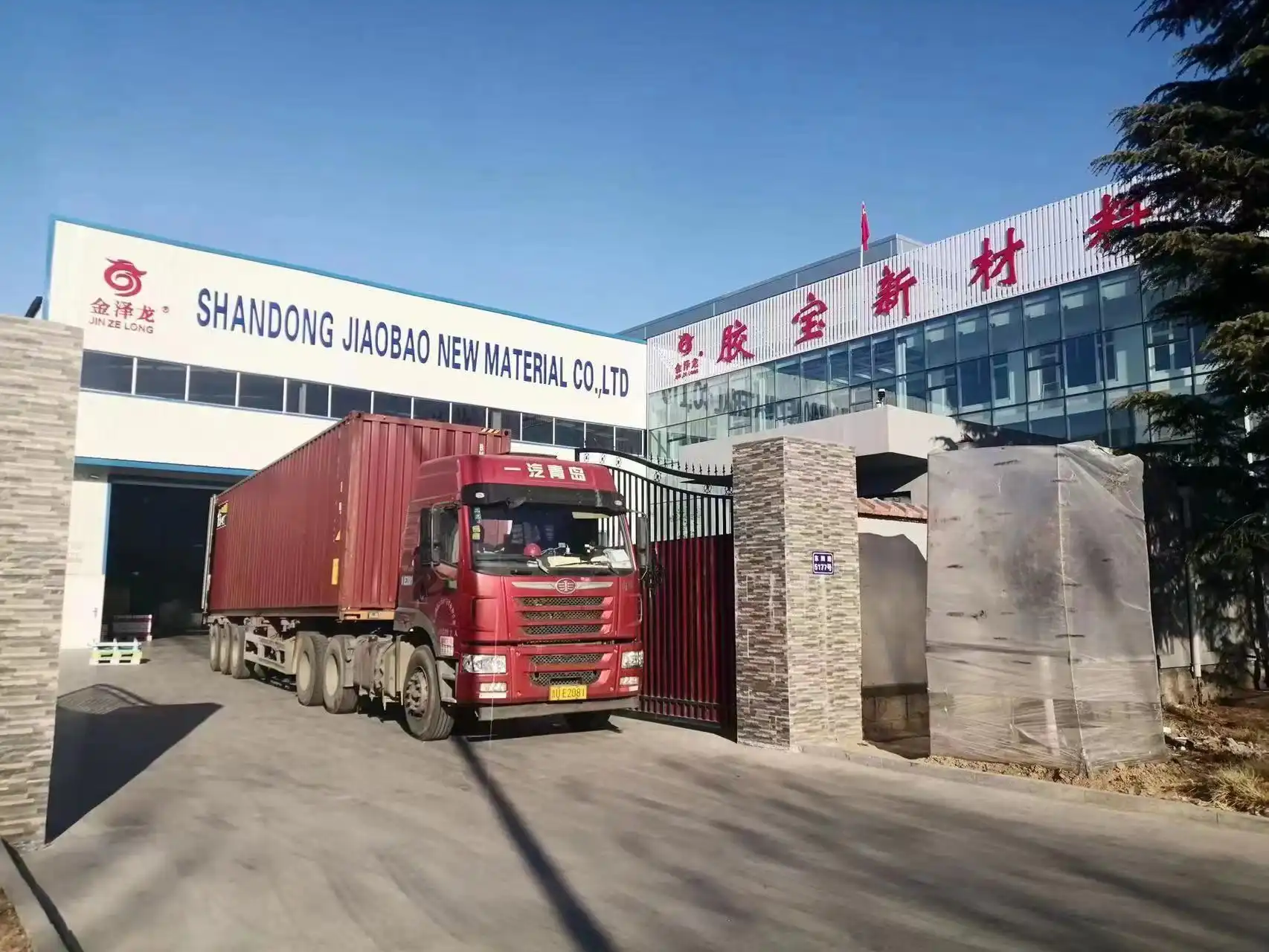
Building-grade acrylic sealant comes straight from our factory in Shandong and is sold on Jiaobao. We can send it to you in one to two weeks and have been making this item for more than 13 years. It has ISO and CE certifications. When you need to buy something, our team is ready to help, whether you need a sample for project acceptance testing or want to talk about a phased bulk supply contract. You can email us at dorashen@cnjiaobao.com or visit shandongjiaobao.com right away to get prices on our acrylic sealant construction grade manufacturer page.

1. ASTM International. ASTM C834: Standard Specification for Latex Sealing Compounds. ASTM International, 2023.
2. ASTM International. ASTM C920: Standard Specification for Elastomeric Joint Sealants. ASTM International, 2022.
3. ISO. ISO 11600: Building Construction — Jointing Products — Classification and Requirements for Sealants. International Organization for Standardization, 2021.
4. Petrie, Edward M. Handbook of Adhesives and Sealants. McGraw-Hill, 2007.
5. Wolf, Alexander T. "Durability of Sealants in Construction: Field Performance Data and Evaluation Methods." Construction and Building Materials, 2019.
6. U.S. Green Building Council. LEED v4.1 Reference Guide for Building Design and Construction: Low-Emitting Materials Credit. USGBC, 2022.
November 16,2023
Enterprise Name
The sealant has very strong adhesion and performs well even on glass and aluminum. After curing, it remains flexible and shows no cracking. Perfect for our facade projects.
November 16,2023
Enterprise Name
Stable quality across batches. Our customers especially like the smooth application and consistent extrusion. It helps reduce installation time on site.
November 16,2023
Enterprise Name
I used it for bathroom sealing. Excellent waterproof performance and no mold issues so far. It's been holding up very well in humid conditions.
November 16,2023
Enterprise Name
The neutral silicone works well on sensitive materials without corrosion. Very suitable for industrial applications requiring stable performance.